A Street Built Out of One Idea
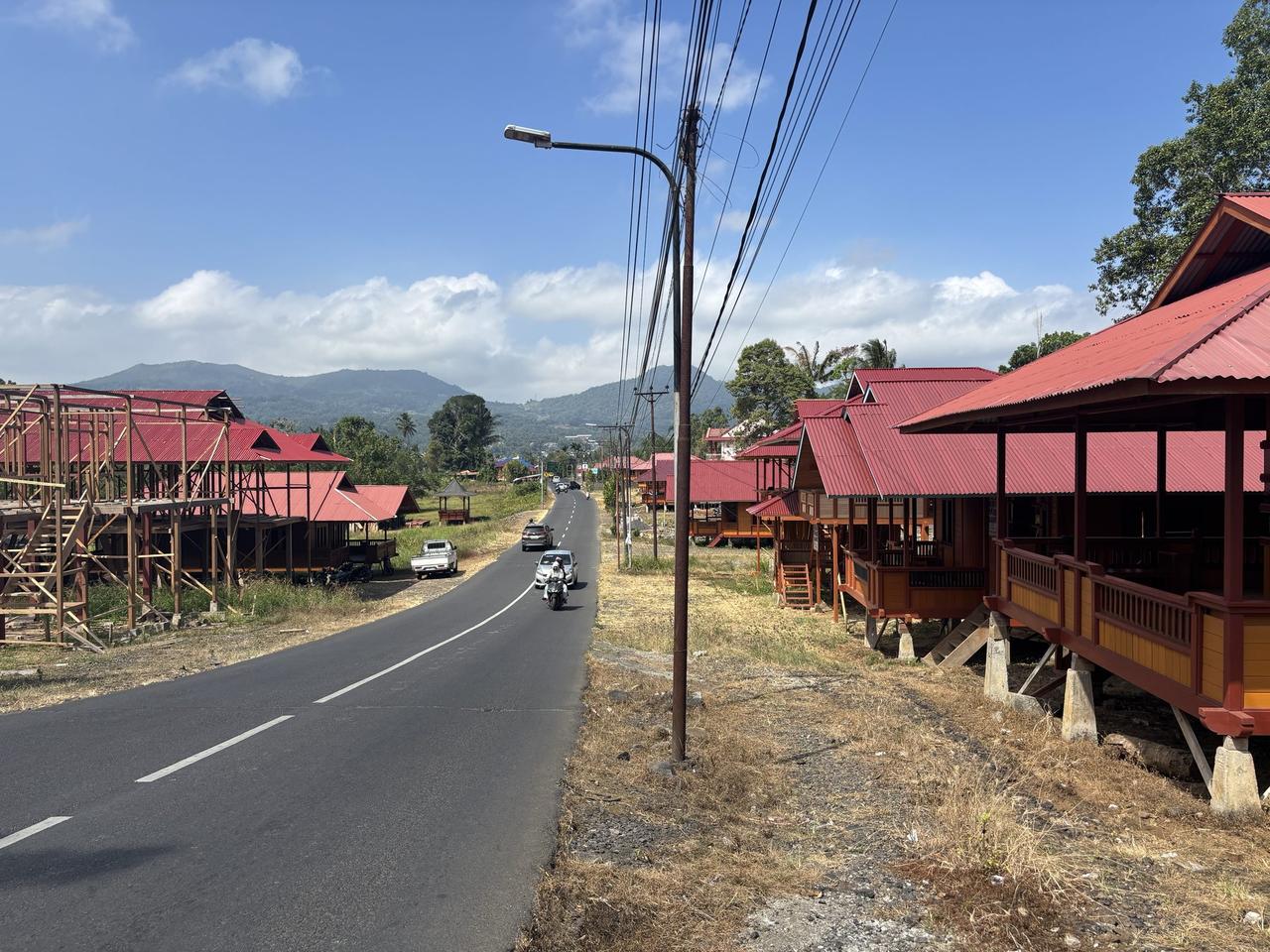
The road out of Manado climbs for almost an hour before the air starts to change — thinner, cooler, carrying the faint sweetness of flowers from Tomohon, the highland town everyone calls the City of Flowers. Mount Lokon rises somewhere ahead, half-hidden in cloud. And then, just past the edge of town, the landscape does something unexpected. The ordinary houses stop. In their place, on both sides of the road, tall wooden buildings appear on stilts, their roofs pitched steep and tiered like folded paper, one after another for what feels like an entire street built out of a single idea. This is Woloan, a village that has been raising traditional Minahasa wooden houses for as long as anyone here can remember.
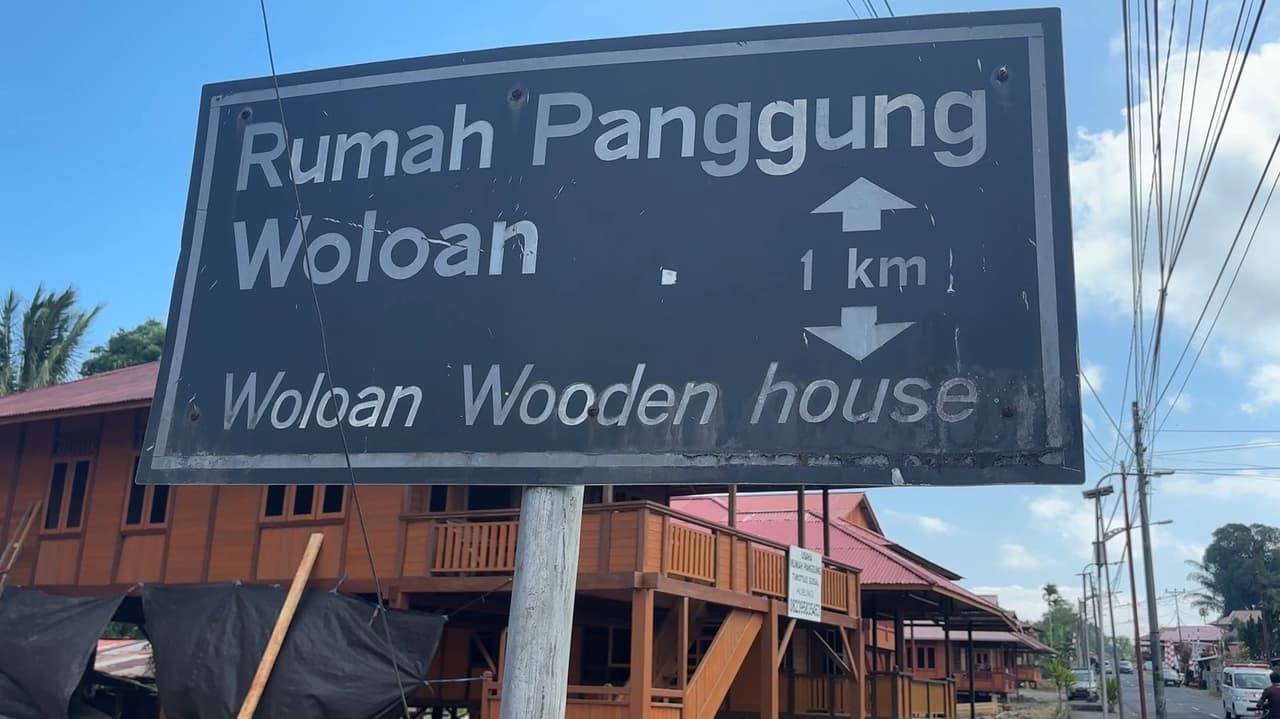
A Showroom You Can Walk Into
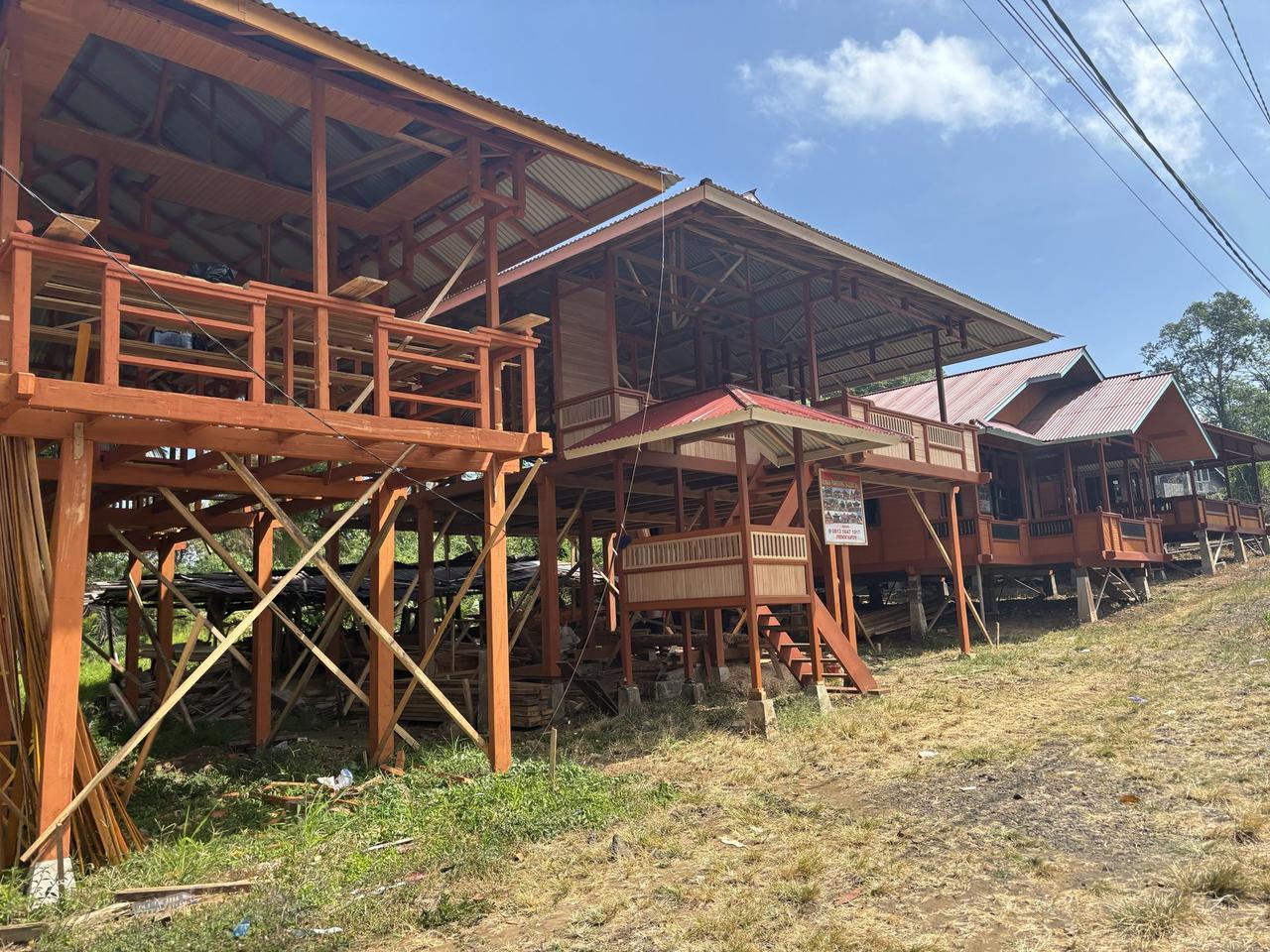
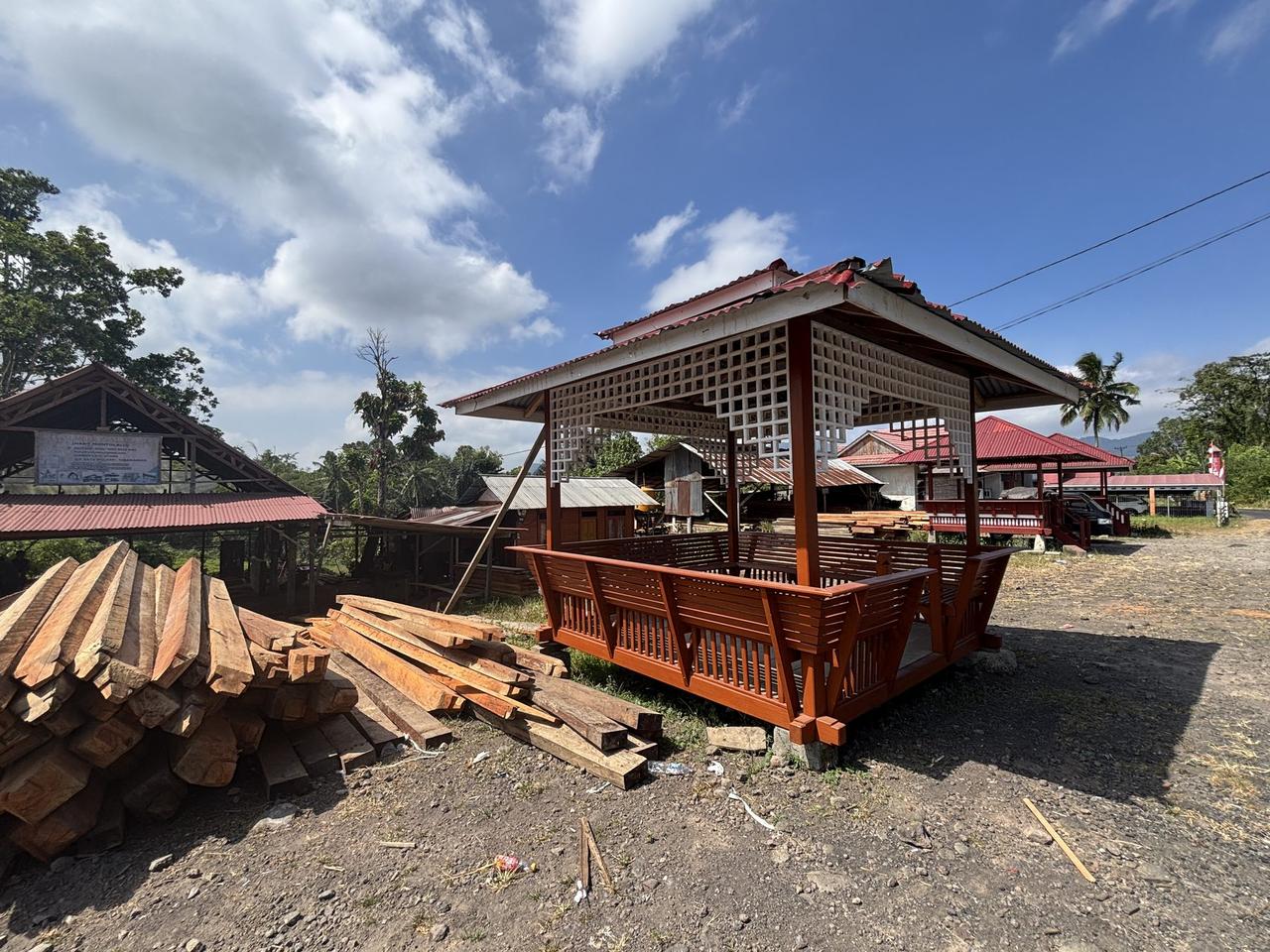
What makes Woloan strange — wonderfully strange — is that none of these houses are actually lived in, not by the people building them. They exist to be sold. Some stand finished and freshly painted, waiting for a buyer to walk up, point, and take one home. Others are still just bones: a frame, a roof, a stack of raw timber underneath, half a house dreaming of becoming whole. Buying one is almost absurdly direct. Choose it on-site, and everything after that is handled for you — delivery, assembly, even the craftsmen who built it travel along to put it back together wherever it's going. By land if the buyer is elsewhere on Sulawesi. By sea if it's leaving the island for good. That simple system has carried these houses to Argentina, to Venezuela, with Woloan's name reaching all the way to the Netherlands and France — an entire export industry, running on a technique older than the word itself.
No Nails, Just Ironwood
Walk closer and the houses start explaining themselves. Every joint here is fitted, never nailed — a method local builders have guarded for generations, long after the rest of the world reached for steel. The stilts aren't just for show, either: raised this way, the houses shrug off earthquakes in a region where the ground rarely sits still. And the wood carries its own quiet legend. Builders work almost exclusively with kayu besi — ironwood, called kayu ariwuwus in the local Minahasa tongue — a timber so dense its specific gravity climbs past 0.91, immune to termites, built to outlive whoever ordered it. Unlike the carved houses of Sumatra, nothing here is decorated. The shape is the decoration: a modest two-room house for a modest budget, a five-room house for those who want more, the price rising one room at a time.
Mapalus
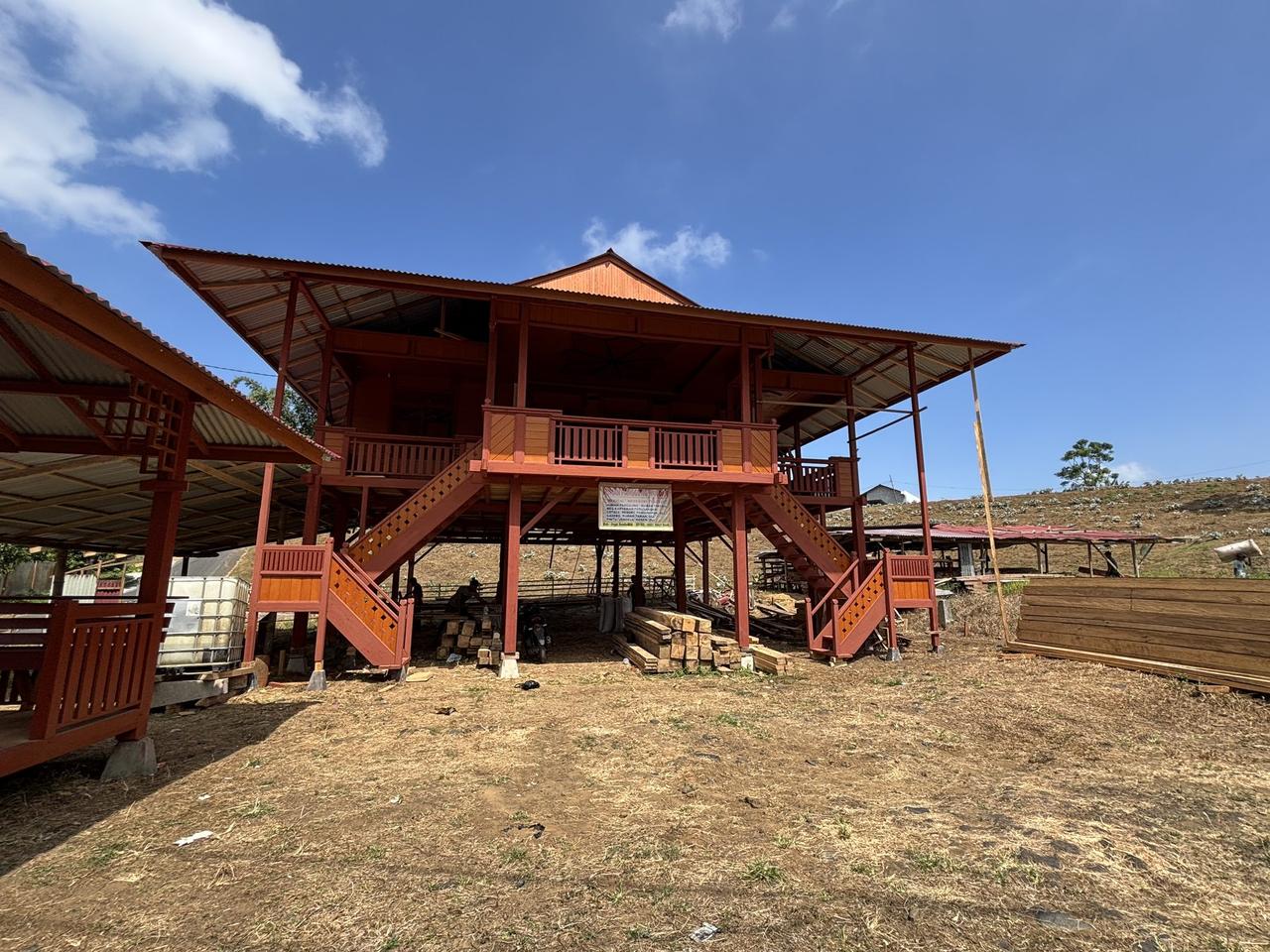
None of it happens alone. The knowledge lives in the hands of whoever learned it from someone before them, and the work itself still runs on mapalus — a local custom where neighbors simply show up to raise each other's houses, expecting nothing back but the same help returned someday. I'd felt this same current once before, a few weeks earlier, among the pinisi shipbuilders of Makassar, where the Bugis call it gotong royong. Different island, different craft, same quiet agreement: some things were never meant to be built by one pair of hands.
Isn't This Amazing?
Craftsmen were out working the day I passed through — mid-cut, mid-joint, building something they clearly weren't building for an audience. There was a certain unhurried confidence in it, the kind that comes from having done this a thousand times before, like they already knew the answer to a question they weren't quite asking out loud: isn't this amazing? Standing at one end of that 200-meter street, watching roof after roof repeat itself toward the hills, I couldn't find a way to disagree.