The Building That Actually Stopped Me
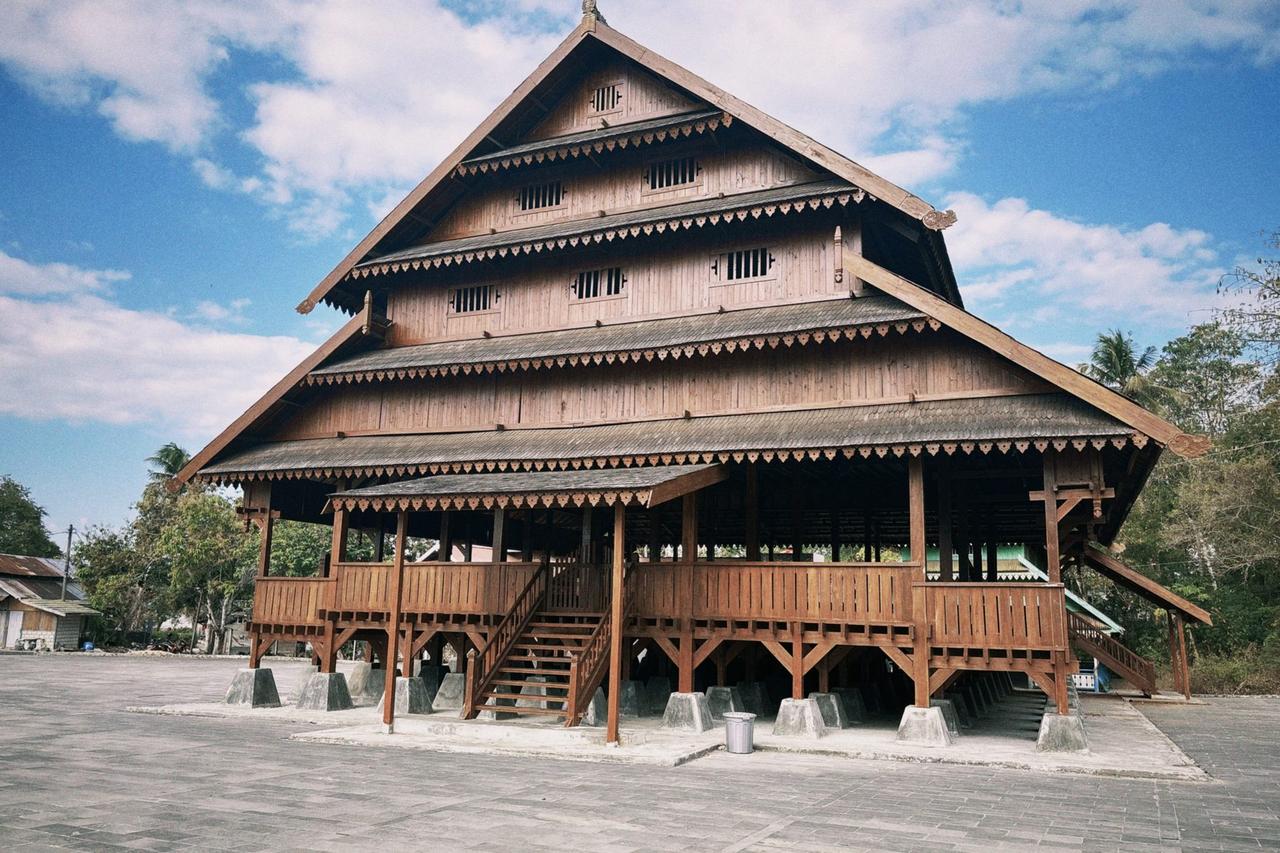
Of everything inside Benteng Keraton Buton, this was the structure that hit me hardest, more than Batu Popaua, more than most of the fortress walls themselves. It's enormous, entirely built of wood, and it sits close enough to the royal mosque that my first guess was some kind of religious building. Someone nearby told me it was used for events and ceremonies, religious ones included, but that wasn't the whole story. What I later learned is that this building, Baruga Keraton, had done some of the heaviest political work in Buton's entire history.
Built at a Turning Point
Baruga is said to have been constructed under the fourth sultan, Shakiuddin Darul Alam, also known as La Elangi. That name should sound familiar if you've read about Batu Popaua: this is the same sultan whose reign marked the shift from automatic hereditary succession to selection by Siolimbona, the people's representative body. Baruga wasn't built as a neutral ceremonial hall dropped into an unrelated moment. It was built at exactly the point Buton's governance was reinventing itself, and its function reflects that timing directly.
Where the Real Decisions Happened
According to local cultural historians, Baruga functioned as the actual center of Buton's political and administrative life. Sultans gathered here to deliberate on economic and political matters as a body, not as individual decree-makers. This is also where a sultan could be formally removed from power, a genuinely serious check on royal authority, and where the selection of a new sultan was publicly announced. It also served as the closing stage of the coronation itself: once a new sultan had sworn their oath at Batu Popaua nearby, they walked straight to Baruga to receive envoys from across the kingdom and accept their pledges of loyalty. If Batu Popaua was where a ruler made their promise, Baruga was where the kingdom formally accepted them, and where, if things went wrong later, that acceptance could be withdrawn.
A Religious Role as Well
Baruga's use wasn't limited to politics. Historically it hosted Kunua, the communal pre-dawn meal held on the sixteenth night of Ramadan, and over time it also became a waiting area for women attending Eid prayers at the nearby Grand Mosque. A building this central to the kingdom's public life naturally absorbed more than one kind of gathering.
One of Eight Buildings the Prime Minister Was Bound to Protect
Old official records, Sarana Wolio and Istiadatul Azali among them, describe one of the core duties of Buton's prime minister, the Sapati, as maintaining the kingdom's central infrastructure: the fortress, the mosque, the palace, the market, and Baruga among them. Baruga's inclusion on that short list of eight essential structures says a lot about how seriously it was regarded within the kingdom's own governing framework.
What Stands Today Is a Reconstruction
Worth being precise about: the building standing here now is a reconstruction, not the original structure, according to local cultural researcher Inran Kudus. It isn't, strictly speaking, an original historical artifact. That said, the entire Wolio area surrounding the fortress was designated a National Cultural Heritage Protection Zone by Indonesia's Ministry of Education and Culture in 2021, and Baubau's own city regulations protect it further as a special zone. Large changes to this historic landscape aren't permitted, which likely explains the decision to rebuild Baruga in wood rather than switch to more modern materials, keeping the reconstruction faithful to what the site is supposed to look and feel like.
A Second Baruga, Not to Be Confused With This One
One detail worth flagging: Buton's history also includes an entirely separate fortress called Benteng Baruga, built around 1632 to 1645 in the Mawasangka region on western Buton as a defense against Tobelo raiders, and reportedly used as a fallback position if the main royal fortress ever fell. Same name, completely different structure and purpose. It's easy to conflate the two if you're reading quickly, so it's worth keeping them separate.
The Same Pineapple, Again
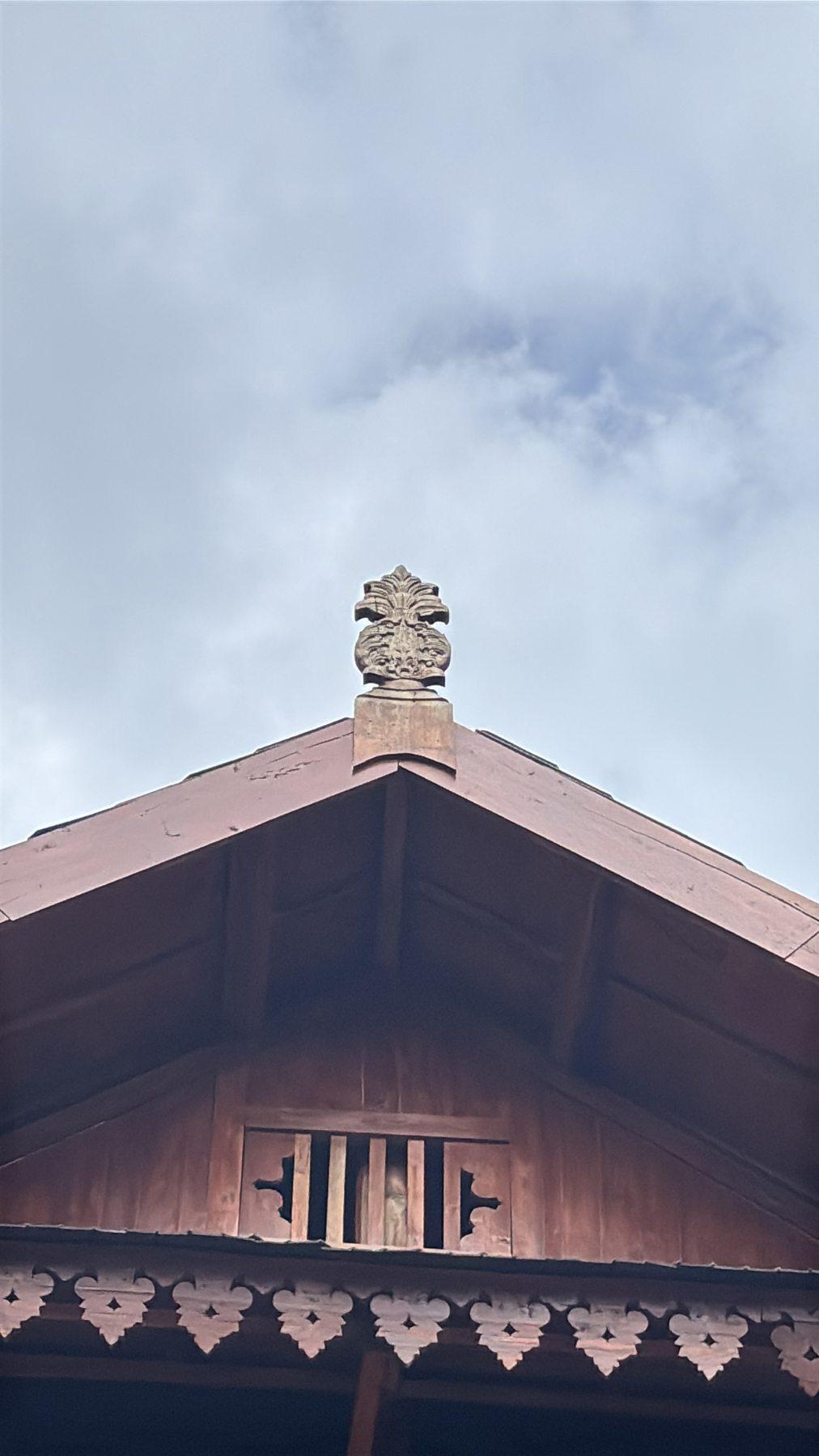
Looking up at the peak of Baruga's roof, there's a carved finial shaped unmistakably like a pineapple, and it's the same symbol I'd already seen at Istana Malige: a deliberate reminder that the throne was never meant to be treated as an inherited family possession. Seeing it recur here, on the very building where sultans were selected and occasionally removed, made the symbol land harder the second time. It's not decoration repeated by coincidence. It's the same idea, carved into two different buildings that both existed to enforce it.
The Quietest Building With the Loudest History
Between the raw scale of Benteng Keraton, the sacred weight of Batu Popaua, and now Baruga's understated wooden frame, this fortress keeps making the same point in different forms: Buton wasn't run by unchecked kings issuing orders from behind stone walls. It was negotiated, deliberated, and when necessary, reversed, and a surprising amount of that negotiation happened inside this one plain, oversized wooden hall standing quietly next to the mosque.