A Market Selling Something Other Than Vegetables
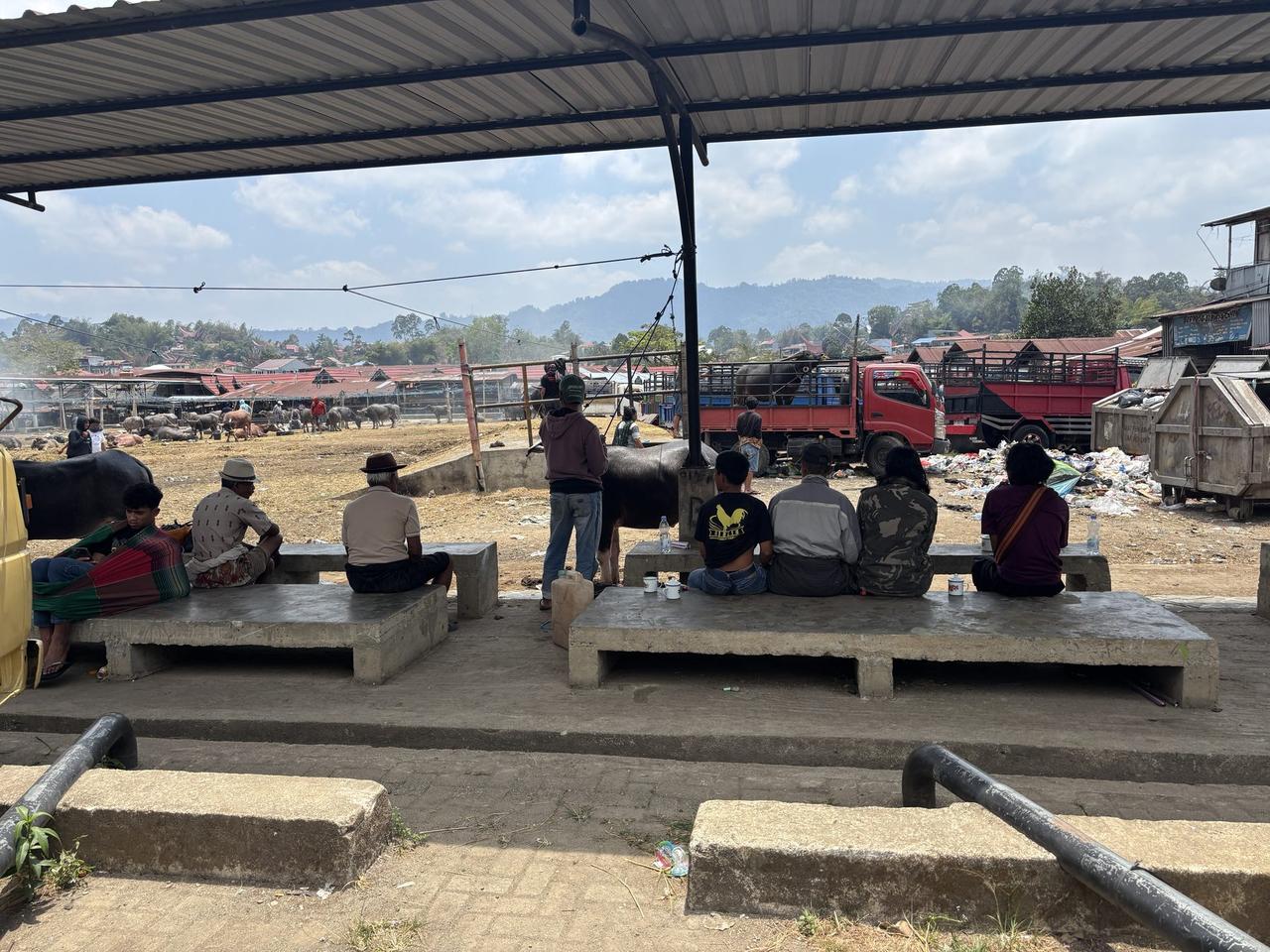
I'd been picturing a market as vegetables, fruit, maybe coffee beans laid out in sacks. Pasar Bolu, a five- to seven-minute motorbike ride straight north out of Rantepao, corrected that assumption fast. Under a long steel-roofed shelter, rows of concrete benches faced out onto an open yard, and the yard itself was full of water buffalo, tied in place, waiting. Farmers had brought their animals in and were sitting somewhere nearby, watching for whoever might actually buy.
Once Every Six Days, and Never Just Livestock
Locals call it Pasar Hewan Bolu, and it's reportedly one of the largest livestock markets in Sulawesi. It doesn't run every day. Toraja keeps a traditional six-day market cycle, and Bolu's full livestock trading only really happens on that schedule, when farmers and brokers haul buffalo in from surrounding villages by truck. I arrived around 11 in the morning and counted, roughly, somewhere near a hundred head on the ground that day. Every one of them was ultimately headed toward the same purpose: a rambu solo funeral, where sacrificing buffalo is considered essential to sending someone properly into the next life. This isn't really livestock trading in the ordinary sense. It's the supply chain for a ritual.
Black, Pale, Spotted: A Price Ladder Built on Color
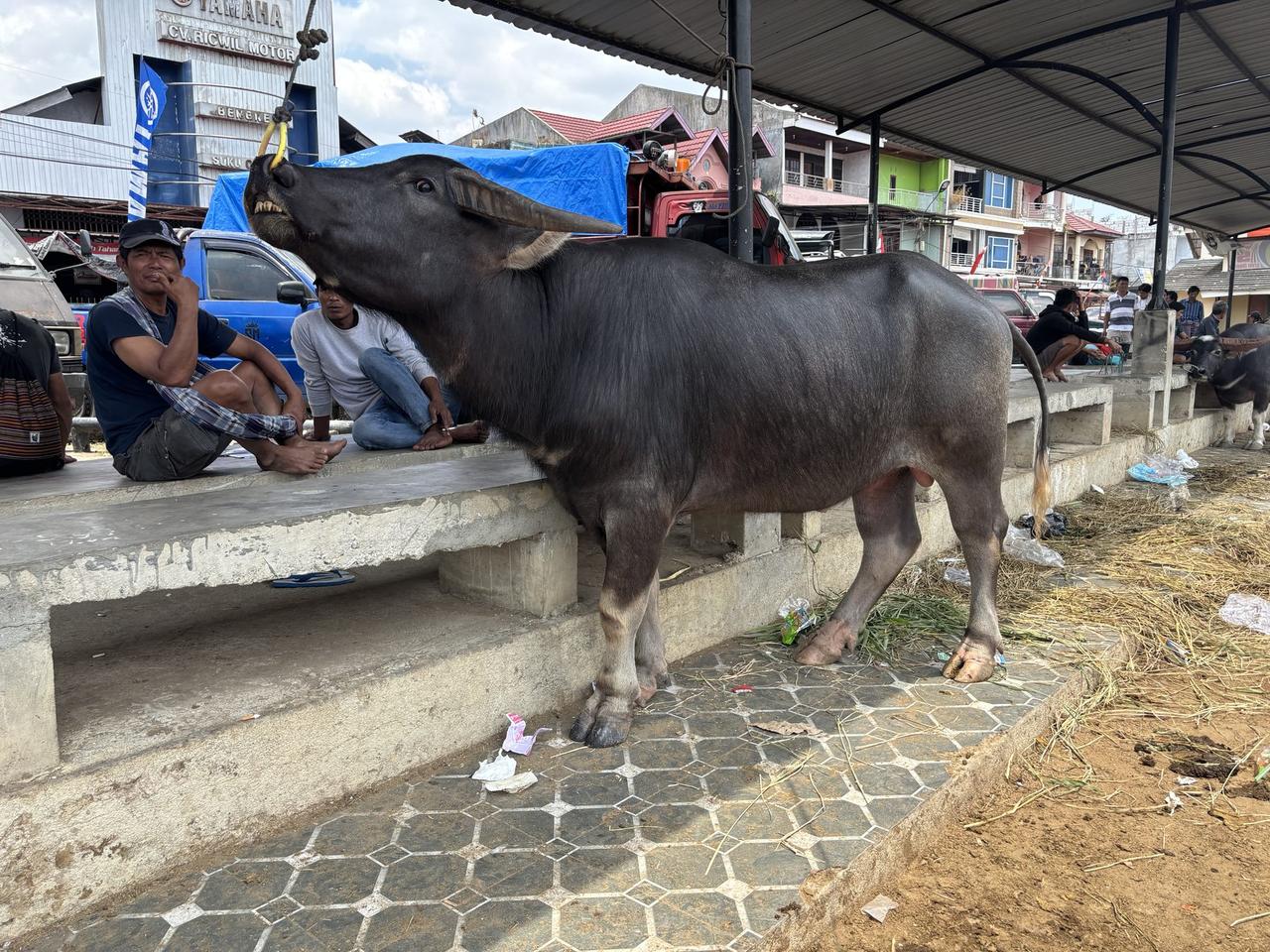
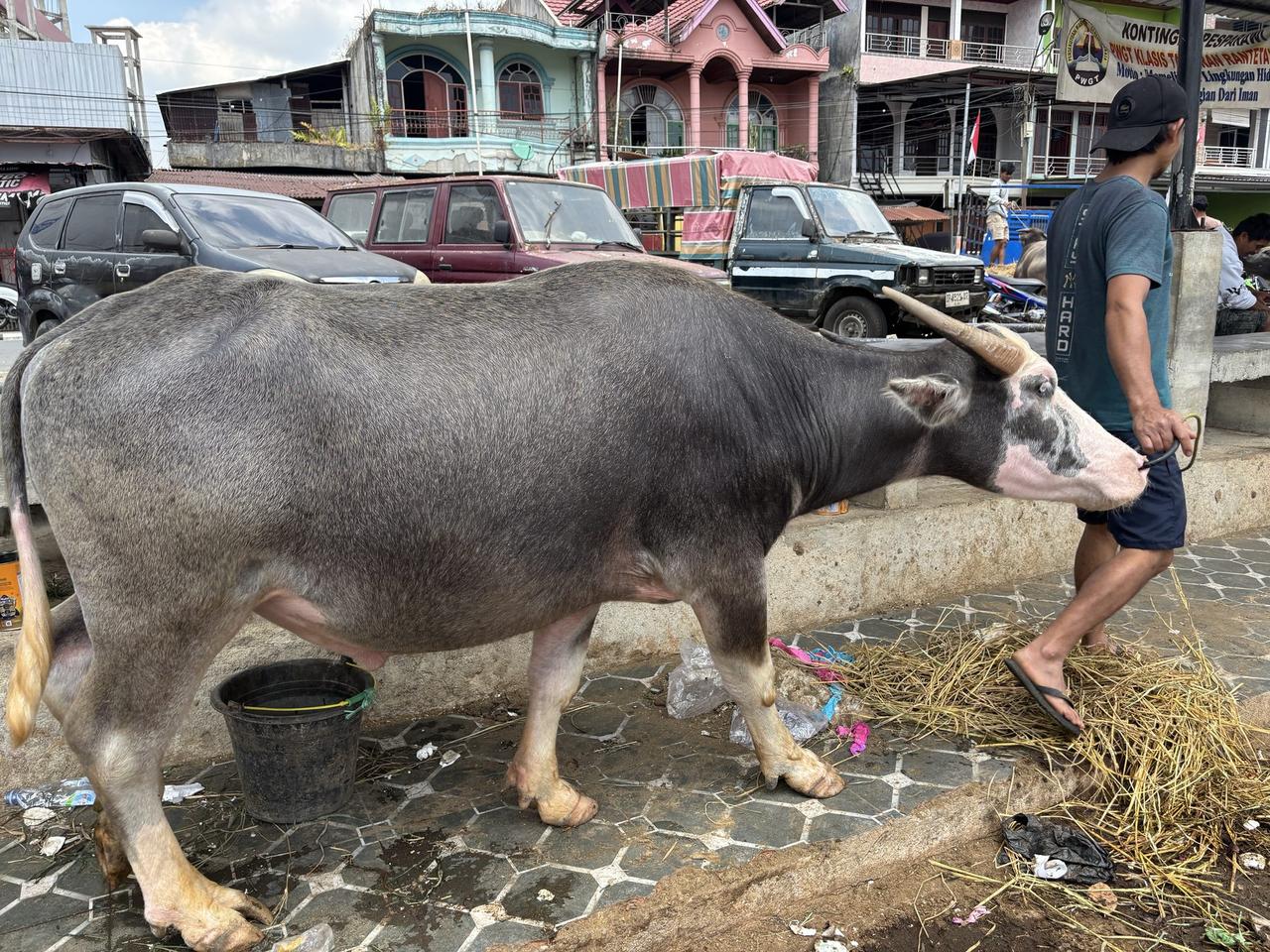
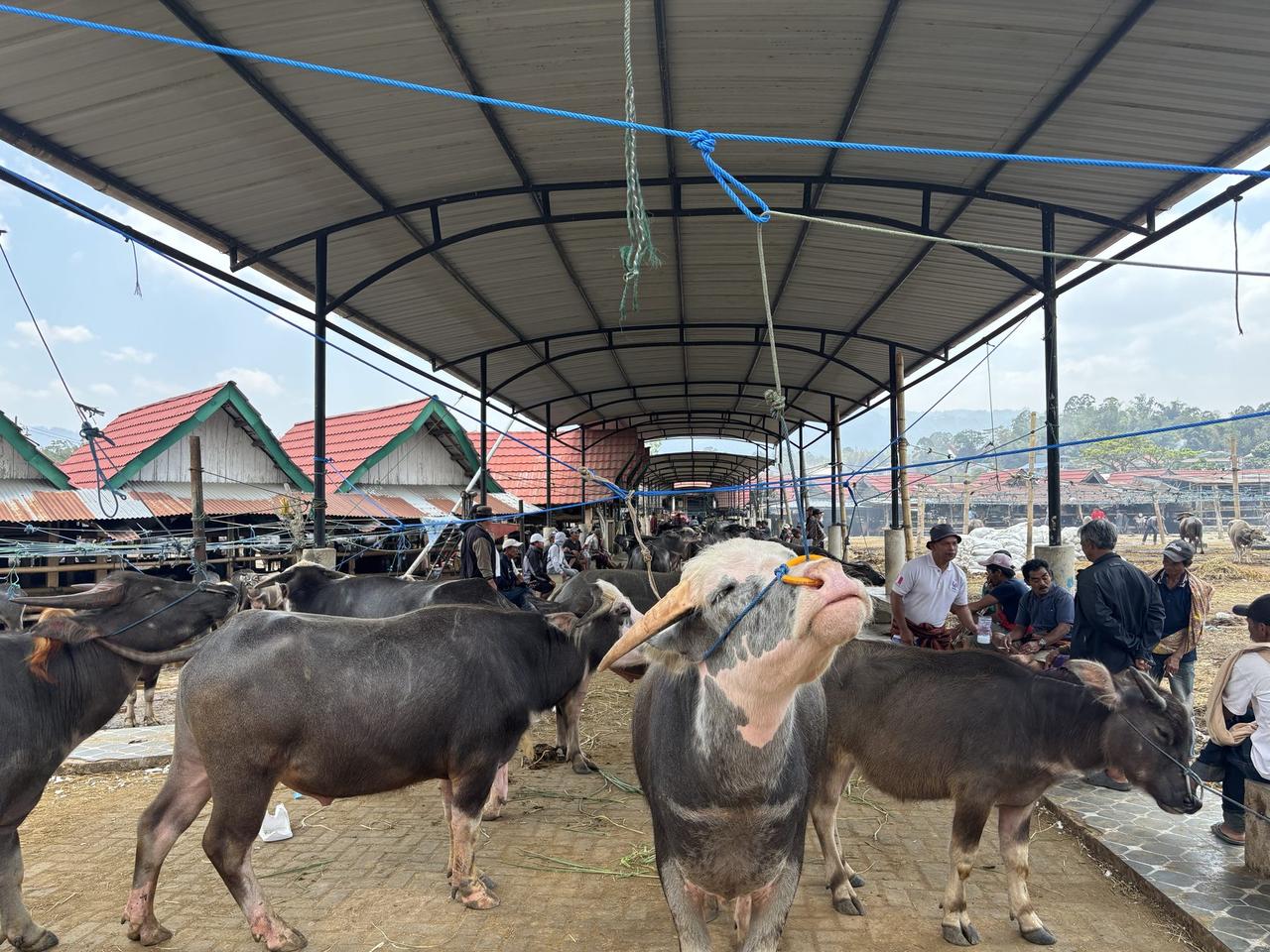
Not every buffalo here looks the same, and the differences aren't cosmetic, they're financial. The cheapest and most common is a fully black animal called tedong pudu, generally priced in the tens of millions of rupiah, still a serious sum but the entry point of the market. Above that sits tedong sambao, a paler, almost pinkish-gray animal sometimes described locally as albino, priced only a little higher. At the very top of the hierarchy is tedong bonga, marked with bold black-and-white patches, and just below it tedong rotong boko, black-bodied with a lighter marking across the back, boko meaning back in the local language. On the day I visited, the animals actually present were mostly tedong pudu, plain black, with rotong boko mixed in among them, one or two standing out with notably lighter faces.
A Sight I Wasn't Expecting From a "Market"
Roughly a hundred buffalo in one place, all destined for sacrifice, isn't something I'd have associated with the word market before this. It's become one of Rantepao's genuine signature sights as far as I'm concerned, distinct from anything else I'd seen described as a marketplace on this trip. Between the scale and the fact that it only happens once every six days, catching it felt like stumbling onto something most visitors miss entirely.
Chasing the Question of Where They Actually Come From
What kept nagging at me was a simple question: a single rambu solo can call for dozens of sacrificed buffalo, so where does that many actually come from? Bolu answers the trading side of that question, but not the raising side. So afterward, I went looking for an actual buffalo farm, with no appointment and no plan beyond spotting an animal by the roadside and asking whoever was nearby if I could talk to them. It was closer to an impromptu, on-the-spot interview than anything arranged, and the owner and family were generous enough to just go with it.
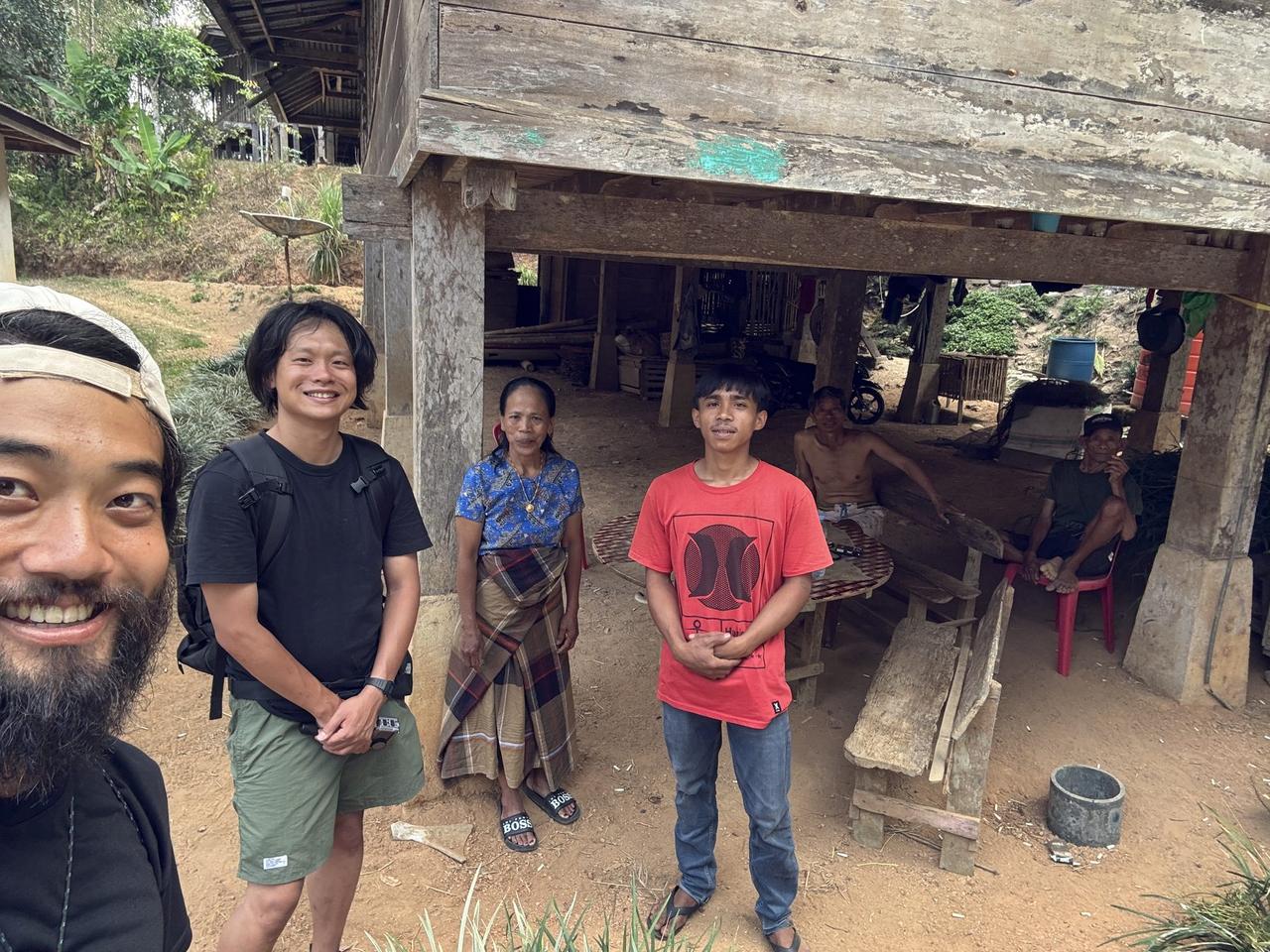
No Names, and an Answer That Trailed Off
At the farm I found the pale sambao type and, more strikingly, a tedong bonga, the expensive black-and-white one, up close for the first time. I asked whether they gave the animals names. They didn't. These aren't pets, they're raised to be sold. I also asked whether it was sad when one finally shipped out. The answer was something like "yeah, a little," but there was a pause before it landed, and my honest read was that the sentiment wasn't especially deep. These are treated more as product than as individual animals, at least emotionally.
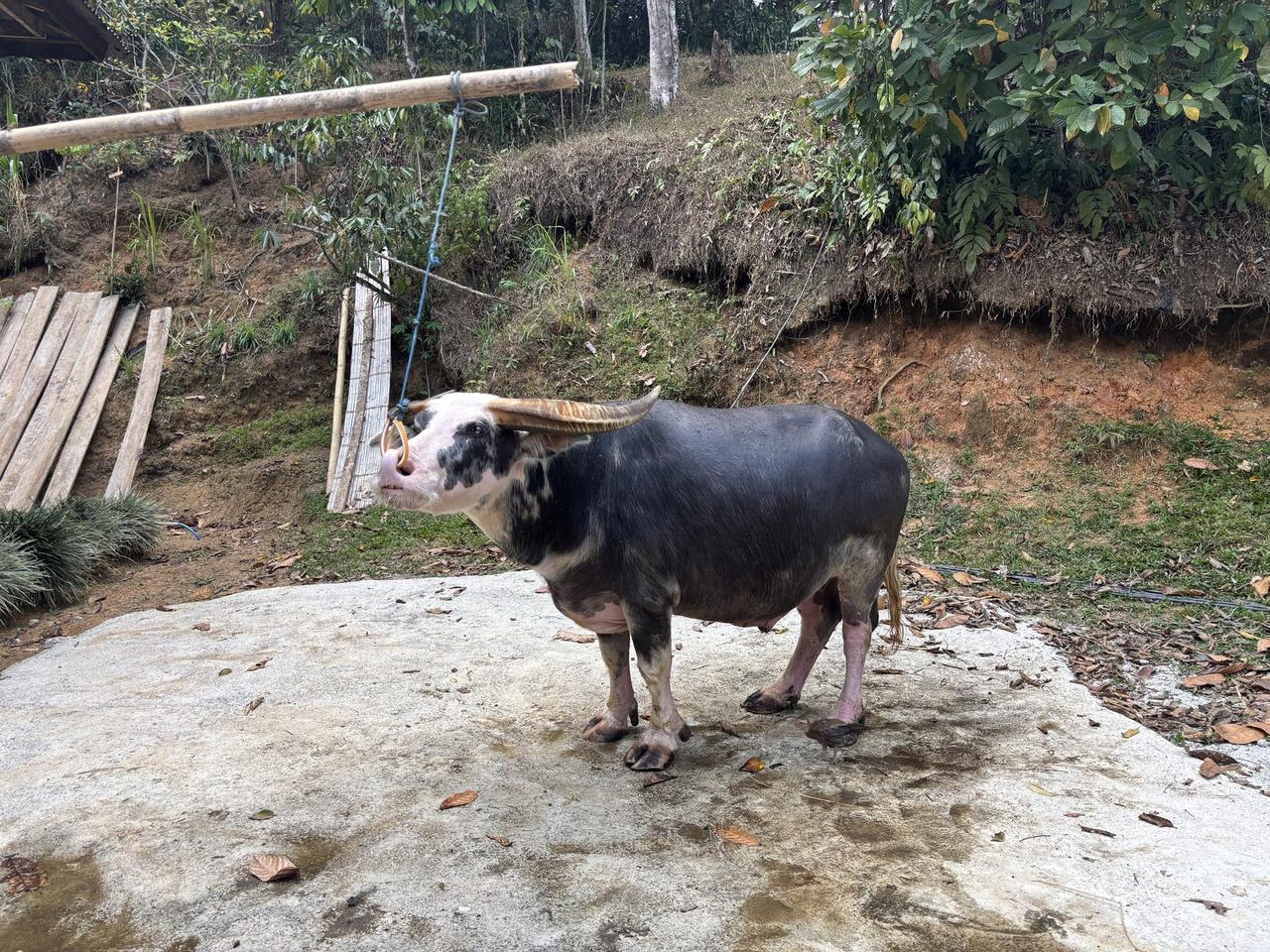
Raised as Product, Cared For Like Something Else
That said, the care contradicted the detachment a little. The tedong bonga in particular was strikingly well-kept up close, its coat noticeably glossy, clearly the result of real, deliberate maintenance rather than neglect. Whatever emotional distance the family kept from naming or mourning these animals, it didn't extend to how they were physically looked after.
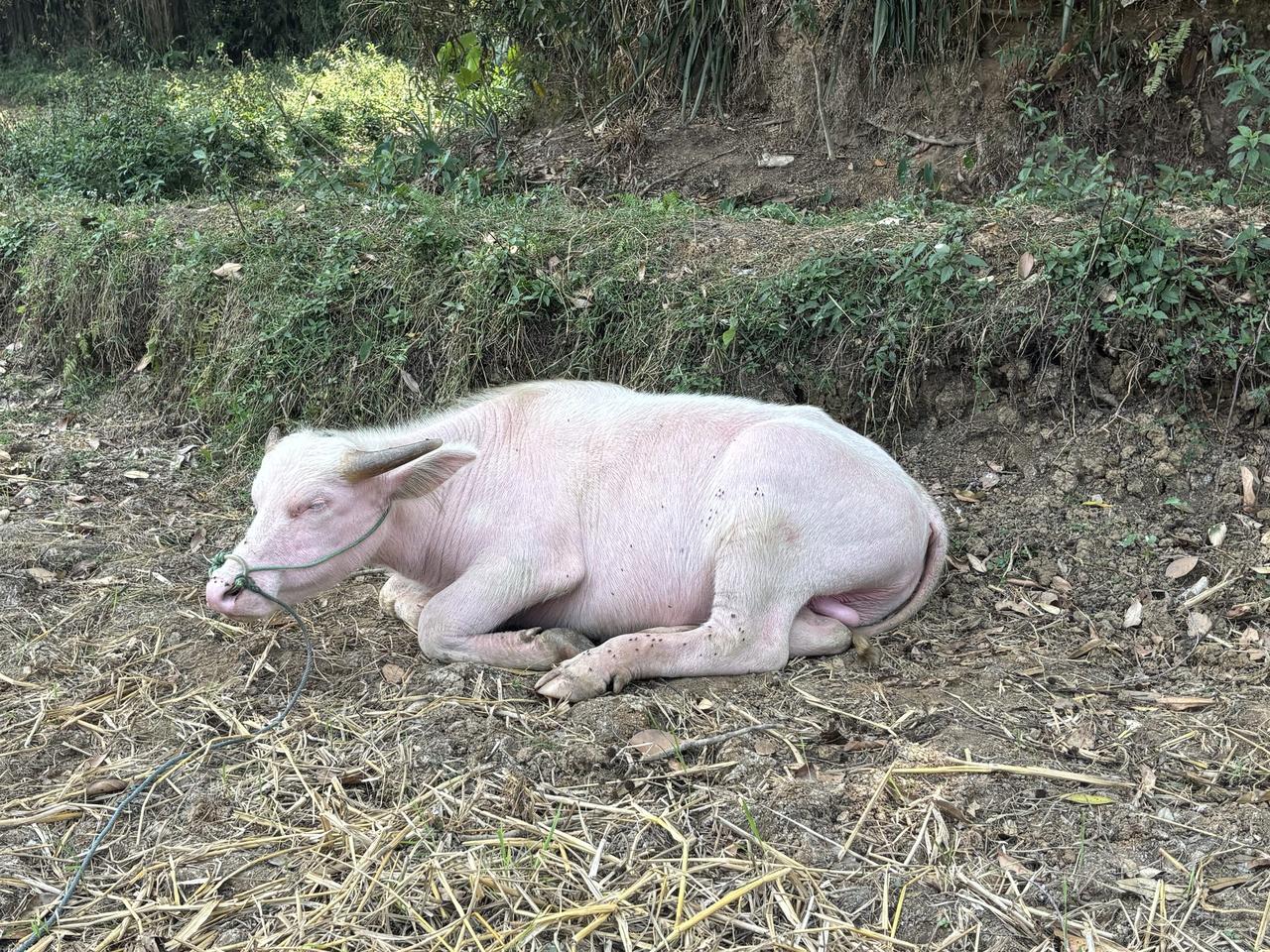
A Handful of Animals, Not a Herd
The scale surprised me too. This farm had four buffalo visible, not forty. Toraja buffalo raising isn't really organized around large operations; it's mostly individuals keeping one or a few animals each. Continuing past Bolu on the road further out, I kept noticing the same pattern: a buffalo or two here and there, never a real herd, which tracks with how much individual attention each one apparently needs.
Understanding the Weight of a Gift
Seeing this side of it, the quiet, small-scale, oddly tender-yet-detached work of actually raising these animals, changed how I think about what happens later when one is sacrificed at a rambu solo. The number of buffalo a family can offer isn't an abstract statistic. It represents this exact process, repeated by individual households, over years, animal by animal, before any of it reaches the market at all.