A Short Stay, One Stop Worth Making
Palu was never going to get much of my time on this trip, so I was picky about what filled the little time it did get. Sou Raja made the list before almost anything else — Kaili country's old royal house, the one building in the region built specifically for a king rather than adapted from something more ordinary. A green, tiered gateway marks the entrance, and past it the house sits at the far end of an open courtyard, close enough to the mountains behind it that they show up in every photo whether you mean them to or not.
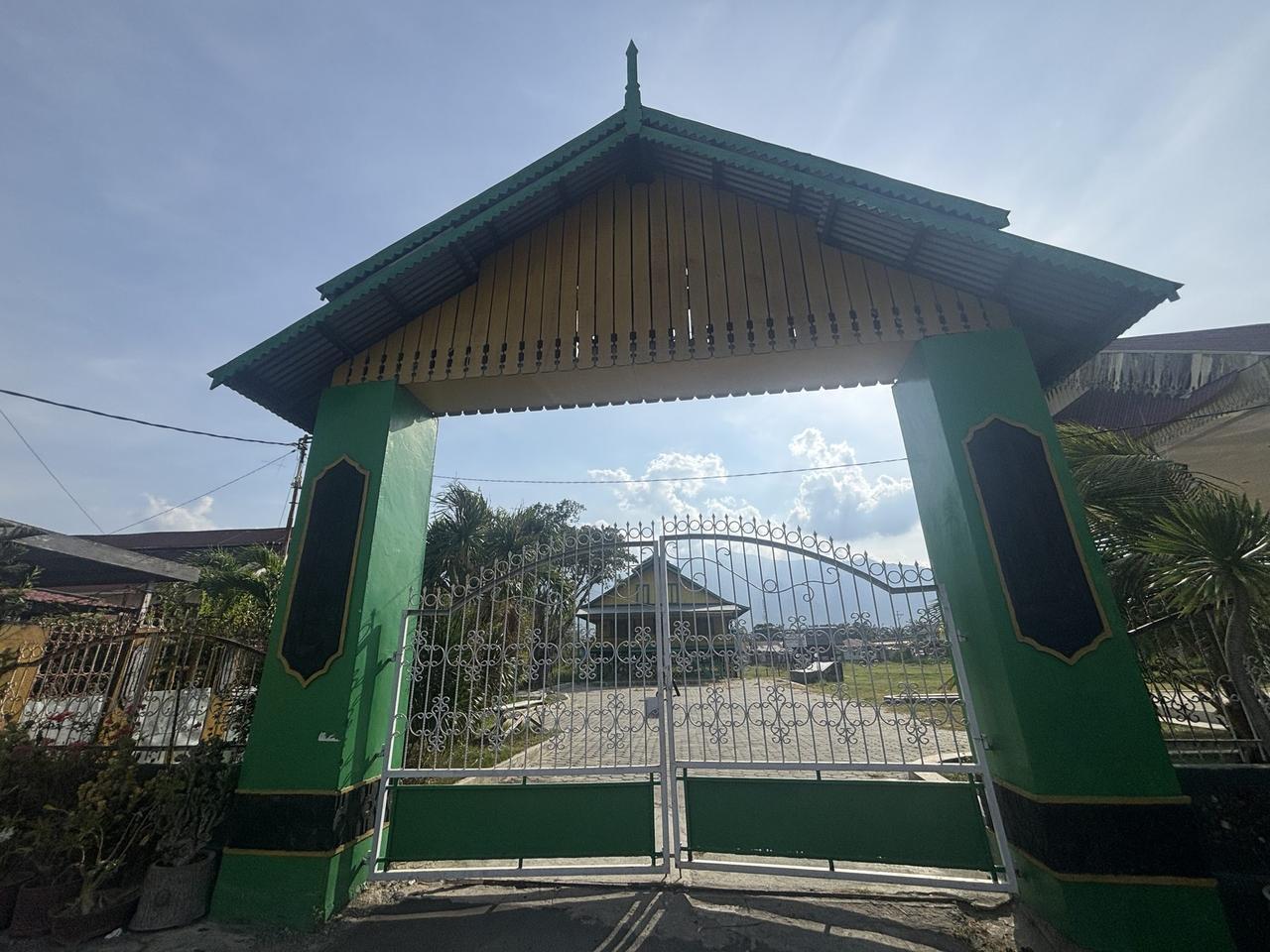
The House Built for a King, Not a Family
The name gives away exactly what it is. Sou means house, raja means king, and put together they mean nothing more complicated than "the king's house" — though locals also call it Banua Oge or Banua Mbaso. It went up around 1892, commissioned by Jodjokodi, king of Palu at the time, and it was never meant to be only a residence. It functioned as palace, government office, and customary council chamber all at once, everywhere the king lived, ruled, and deliberated, under one roof.
That made it, by definition, not a house anyone could simply move into. Kaili society at the time ran on a clear hierarchy — king, then nobility, then the nobility's descendants who'd taken on specialized roles close to the throne, then everyone else — and only the very top of that order ever got to live inside these walls.
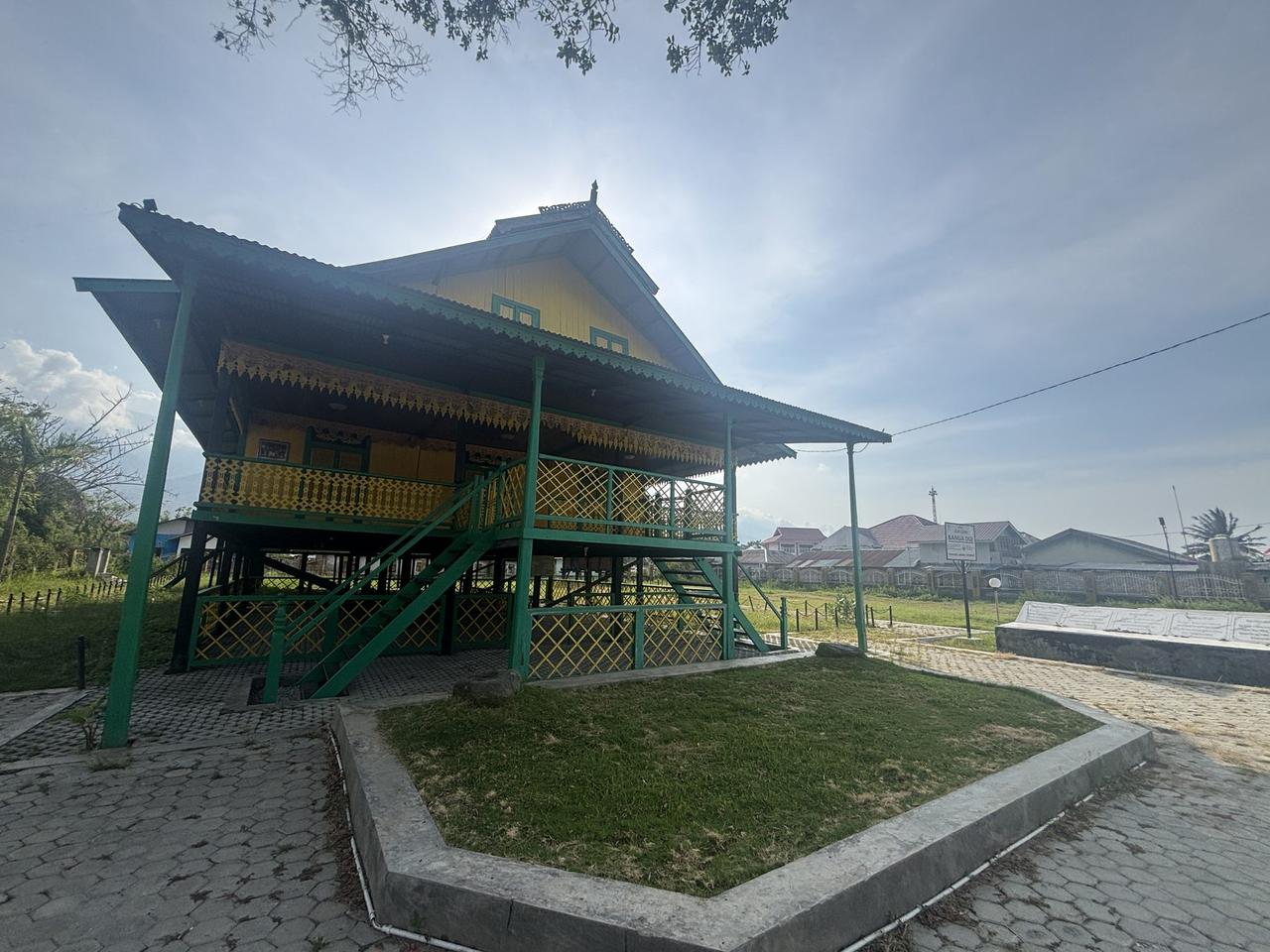
A Bugis-Kaili Hybrid, Built to Specific Numbers
The building itself borrows from two traditions at once, Bugis technique layered onto a Kaili frame, raised on stilts and roofed in a steep pyramid shape that reads as neither purely one style nor the other. The numbers behind it were exact rather than approximate: the site measures 32 by 11.5 meters, the floor area works out to roughly 368 square meters, and twenty-eight main pillars carry the weight of the house above them. The roofline carries its own decoration in carved wooden panels called panapiri, capped by a crown ornament, banko-banko, cut with motifs specific to Kaili design. Underfoot, plank flooring is layered with woven mats. Two staircases, one on each side of the front, connect the ground to the terrace, and each one climbs a deliberately odd number of steps, nine as the usual count.
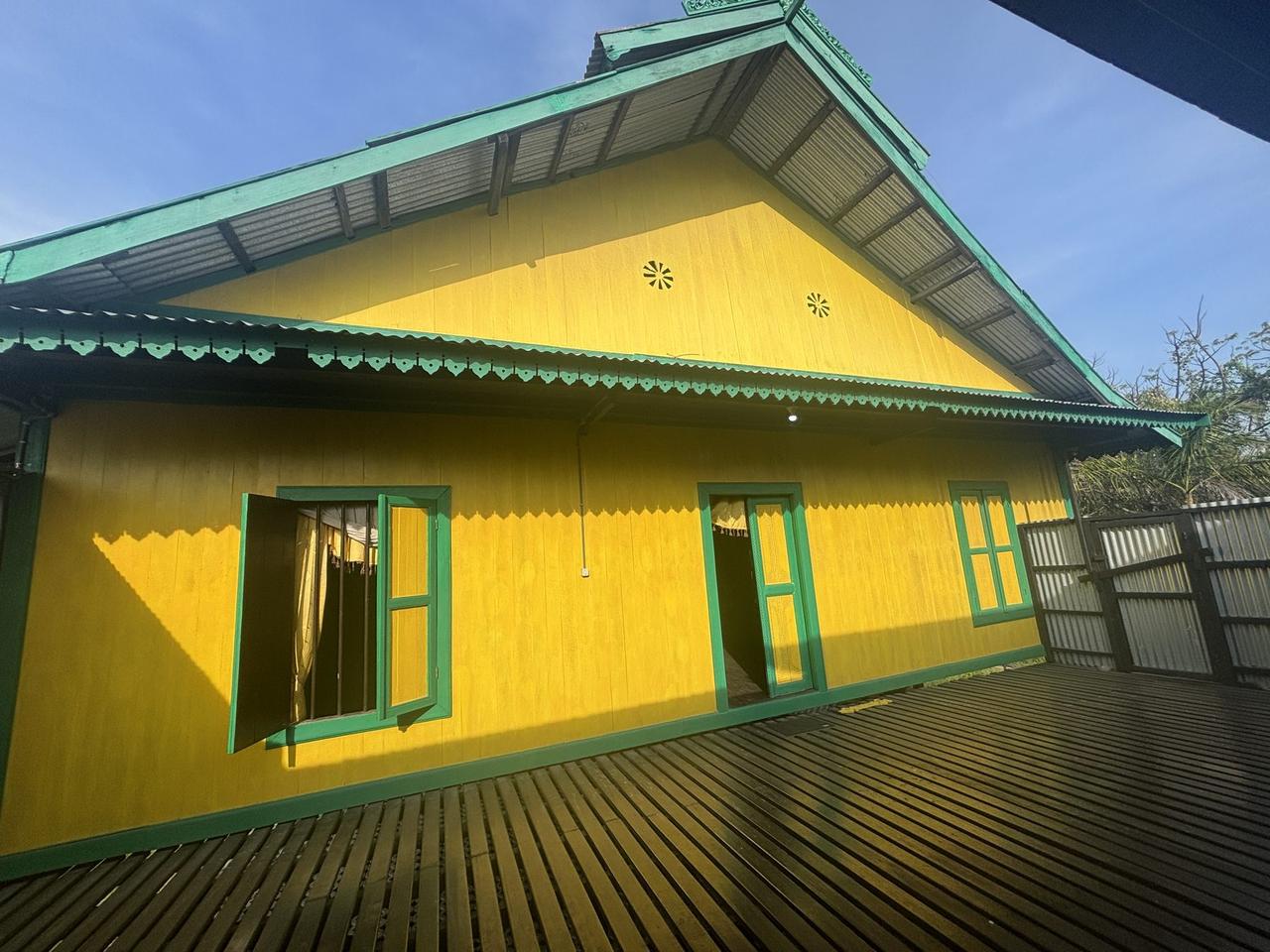
Four Rooms, and the One Only the King Could Enter
Inside, the house divides into four spaces that move from public to private the deeper you go. Gandaria, the veranda, is where guests waited. Ronta Karavana, the front room, handled the actual business of receiving people and running ceremonies. Ronta Tatagana, the middle room, was where the family actually gathered and where matters got discussed, and it was also the king's own bedroom. Kitchen and bathroom sat apart entirely, in a separate building out back, keeping the household's daily functions clear of its public and ceremonial ones.
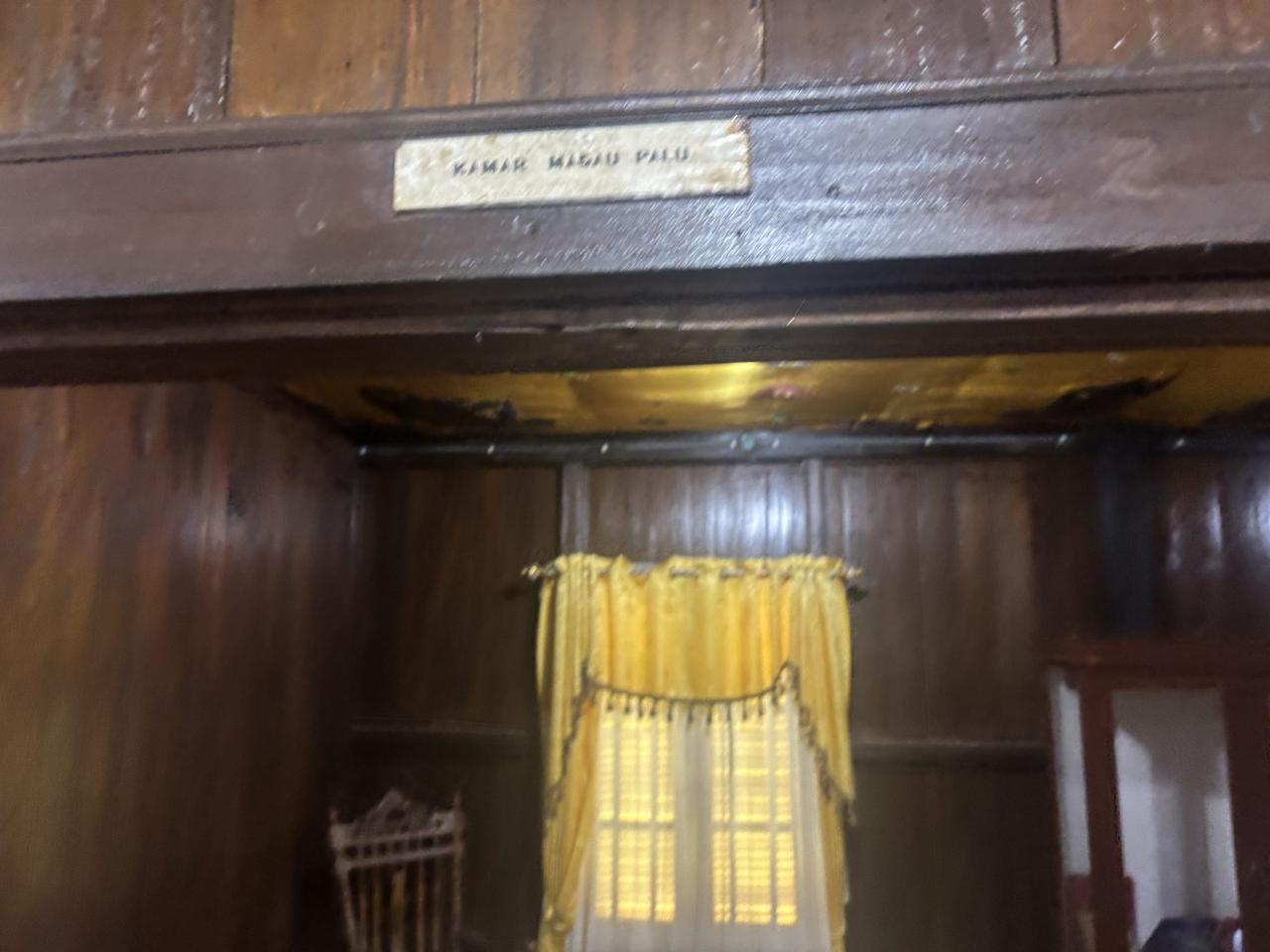
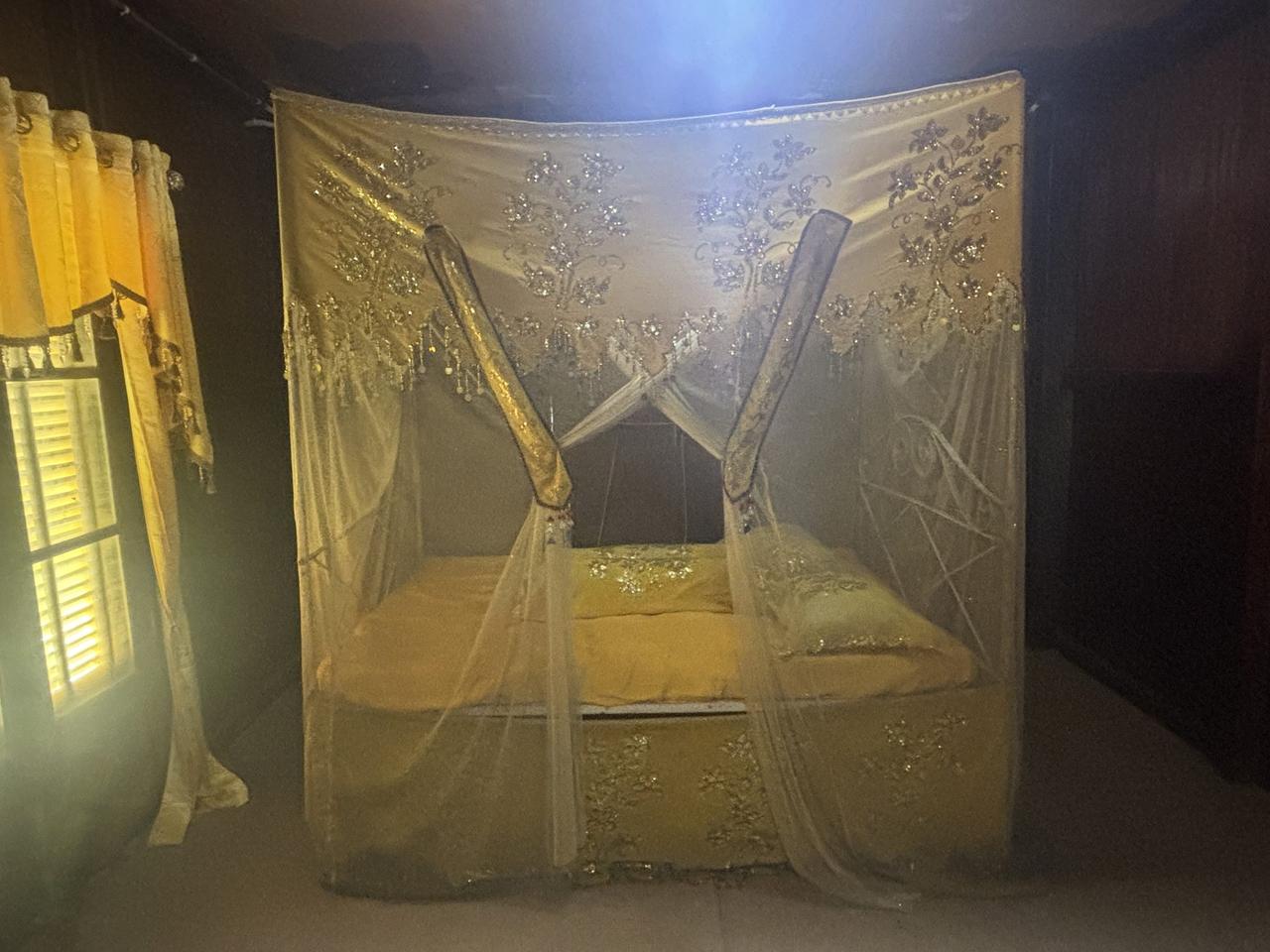
It was that middle room that stopped me. A small wooden placard reads Kamar Magau Palu, the room of the Magau of Palu, and past it the space opens into something genuinely dazzling, gold and silver catching what little light gets in, a canopied bed layered in sheer fabric and beading. My guide was blunt about it: this was for the king and his wife, and no one else. Ronta Lalarana, the innermost room, handled meals and served as the princess's bedroom, one more layer of the same logic, a house organized entirely around who was allowed to be where.
A House That Belongs to the Job, Not the Man
The detail that stuck with me longest wasn't in the house at all, but in how it changed hands. When a king stepped down, he and his family didn't get to keep Sou Raja. They handed it over, the same way an office gets handed to the next person who holds the title. The house was never really anyone's; it belonged to the position of king itself, on loan to whoever occupied it. I'd run into a version of this idea before, in Buton's carved pineapple, where kingship was treated the same way, something you were trusted with rather than something you inherited outright.
One more thing made me smile on the way out. Beside the main house stood a separate granary, raised well off the ground on its own posts and fitted with round discs partway up each support. Nothing fancy, just a rat guard, but a genuinely clever one: any rodent climbing the post hits the flat underside of the disc and can't get past it to reach the rice above. It's a small piece of engineering next to a palace built for kings and councils, but it stuck with me the same way, evidence of exactly how much thought people put into protecting what mattered to them, whether that was a kingdom or a season's harvest.
Sou Raja still stands in Lere, in West Palu, open now as a heritage site rather than a seat of government, not far from Talise Beach and the floating mosque nearby. For the people who live around it, it isn't only a stop on a tourist route. It's treated as something closer to a piece of Kaili identity itself, kept up by people who feel the weight of what they're keeping.