A Palace You Need a Descendant's Permission to Enter
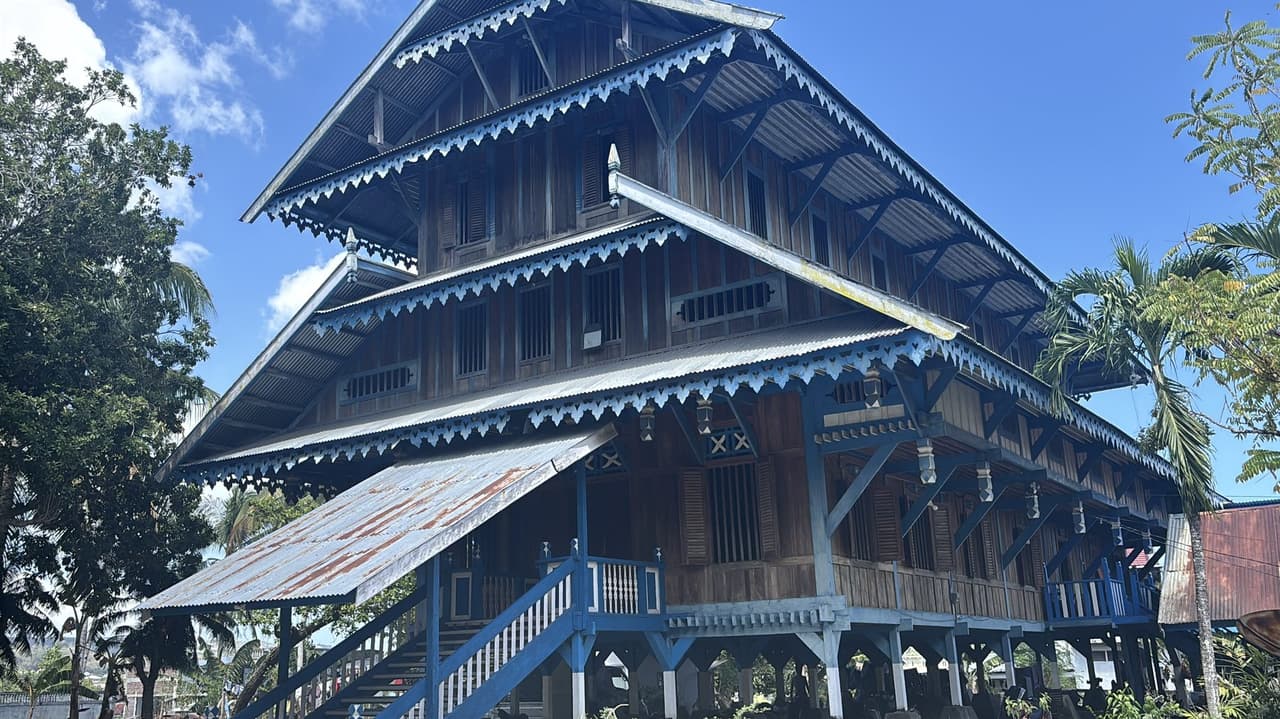
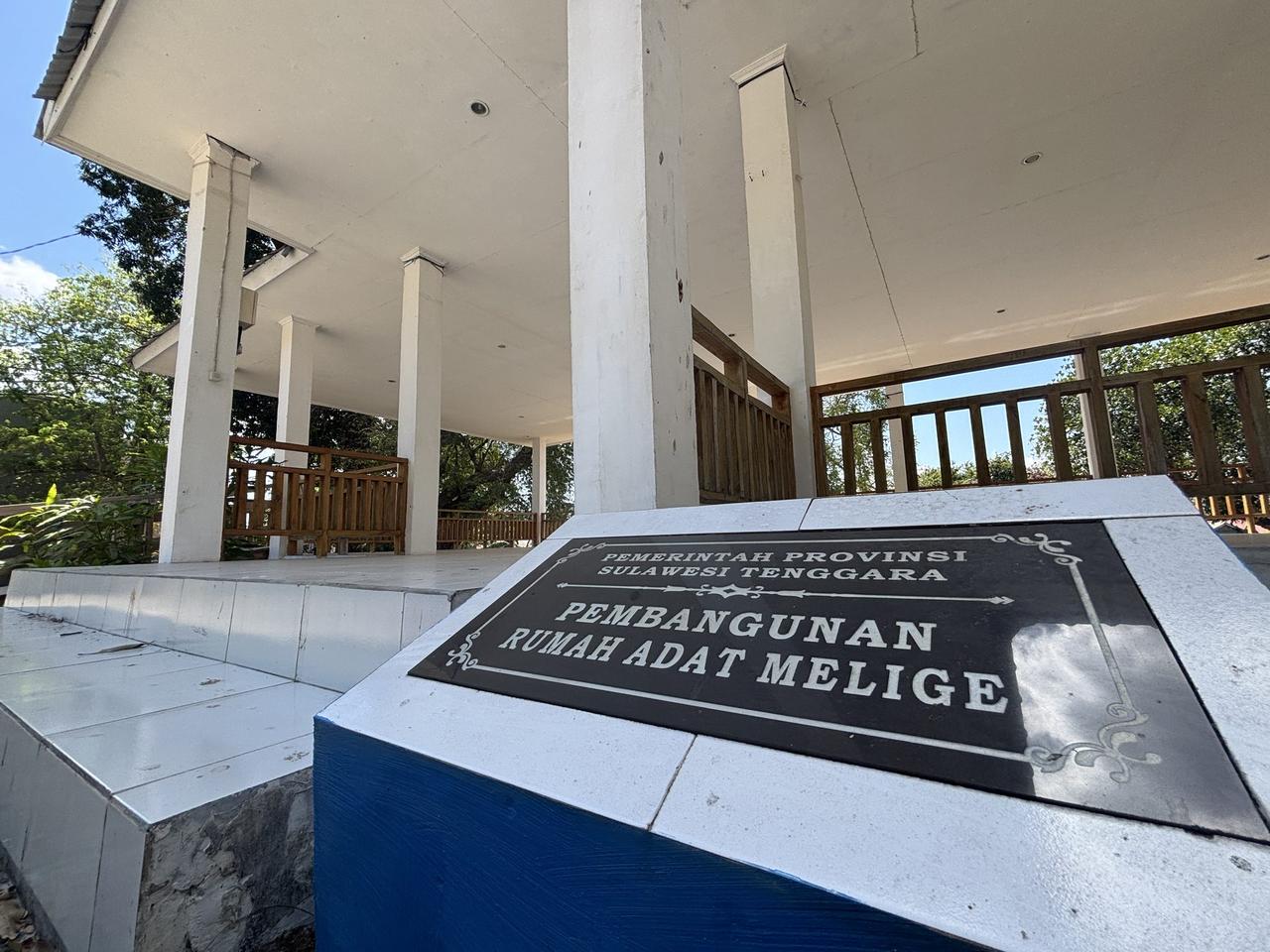
Most of what's left of the old Sultanate of Buton sits inside Benteng Keraton Buton, said to be among the largest fortress walls anywhere in the world, and Istana Malige — also called Kamali — is the wooden palace still standing at its heart, in the Melai area of Baubau's Betoambari district. Walking up, there are two buildings: the large one on the right is the palace itself, the smaller one on the left something closer to a rest stop, a place to sit and cool off before or after. Most visitors don't get much further than the grounds — you can walk the perimeter, take pictures, admire the roofline from below, and that's usually where it ends, since people still live in and around the palace and the inside isn't generally open to the public. Getting past the front step means finding one of the descendants willing to let you in. I got lucky, and the same person who said yes ended up guiding me through the whole building.
Kamali, a House Grand Enough to Need Its Own Name
Istana Malige takes its more common name, Kamali, from a Buton title, Oputa i Malige, and from maligai, a word for a residence grand enough to be called a palace rather than just a house. It went up during the reign of the thirty-seventh sultan, Muhammad Hamidi Kaimuddin, more commonly recorded as La Ode Muh. Hamidi, and was finished sometime in the 1930s. He was one of the last sultans to actually live inside it, before Indonesia dissolved the sultanate altogether in 1960. By most counts this wasn't even the first Malige — something like thirty-eight palaces are said to have been built and rebuilt here across the sultanate's history, this one simply the version that survived. Today it also doubles as a small museum, holding old cannons and a handful of other relics from the kingdom's past.
Forty Pillars, Not a Single Nail
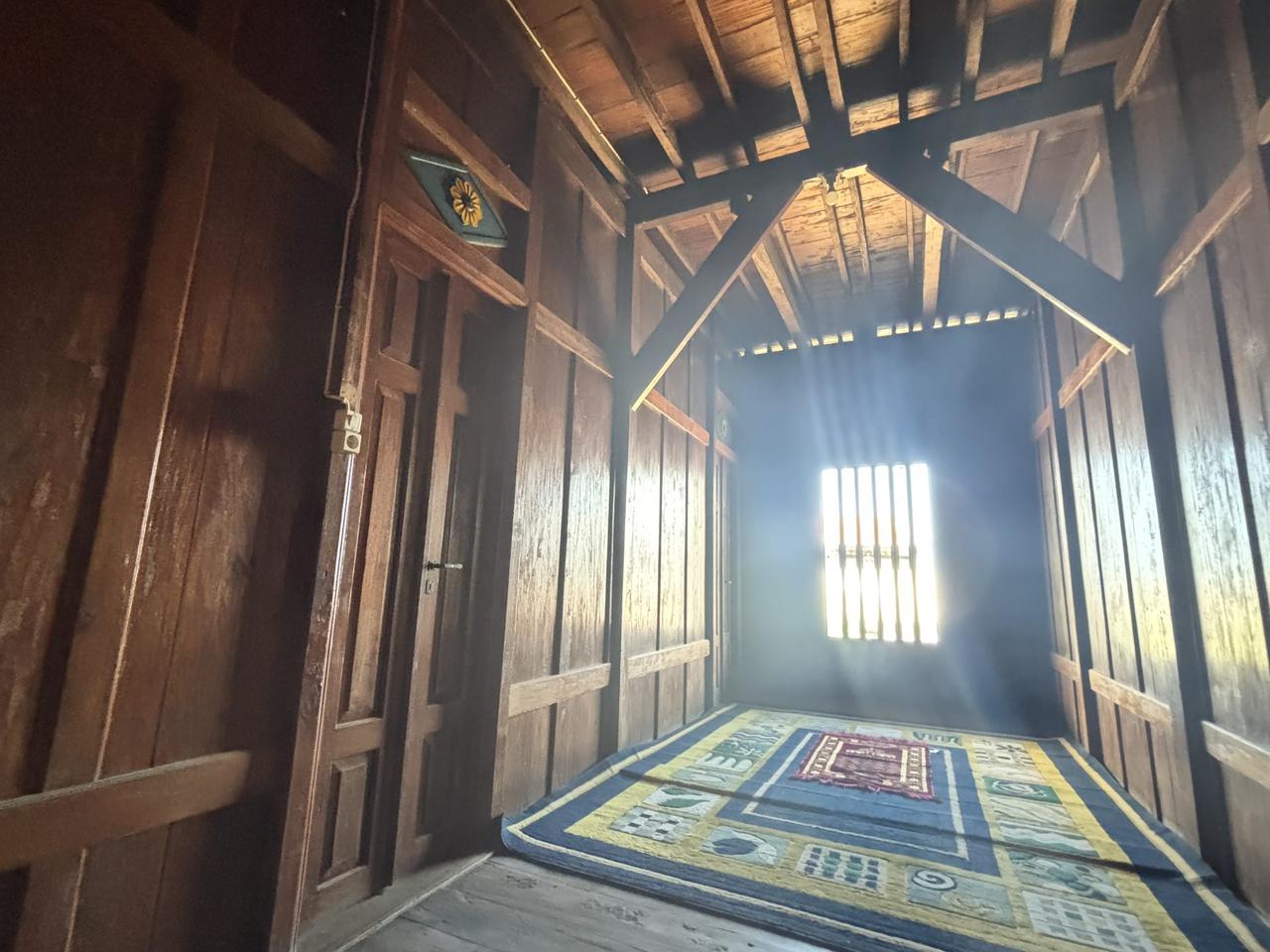
The building rises four stories, though you wouldn't necessarily guess that from outside — the rooms actually shrink floor by floor as you climb, tighter and tighter, until the top floor breaks the pattern and opens back up wider again. Forty pillars, five across the front and eight deep, carry all of it, and not one nail holds any of it together. The whole structure is joined with wooden wedges and dowels alone, fitted precisely enough that it doesn't even need rope to stay standing.
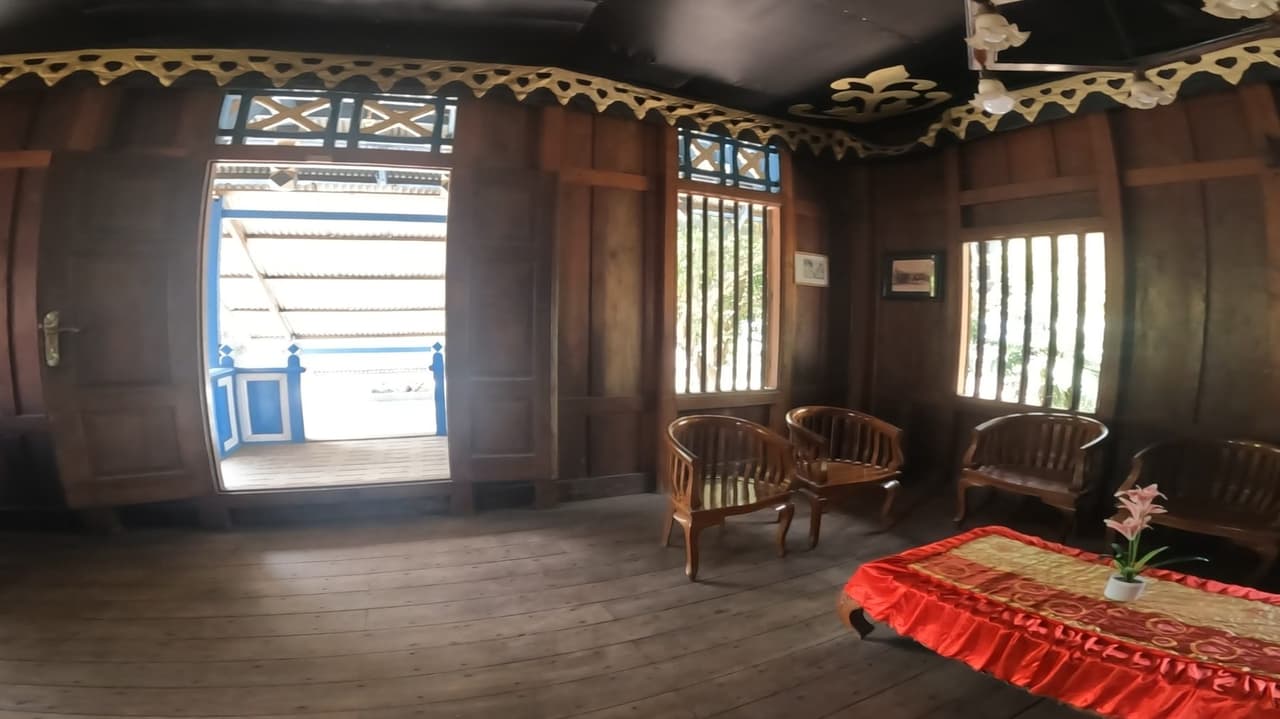
The ground floor alone splits into seven distinct spaces: the first two handle receiving guests and hosting Hadat, the sultanate's customary council; a third splits into a guest bedroom and a guest dining room; a fourth, also split, once housed the sultan's married children; a fifth served as the sultan's own dining room or a space for his closer guests. Walking through now, some of that division still shows in how the rooms are laid out, even with the furniture rearranged for display rather than daily use.
A Sultan's Face in a Gold Frame
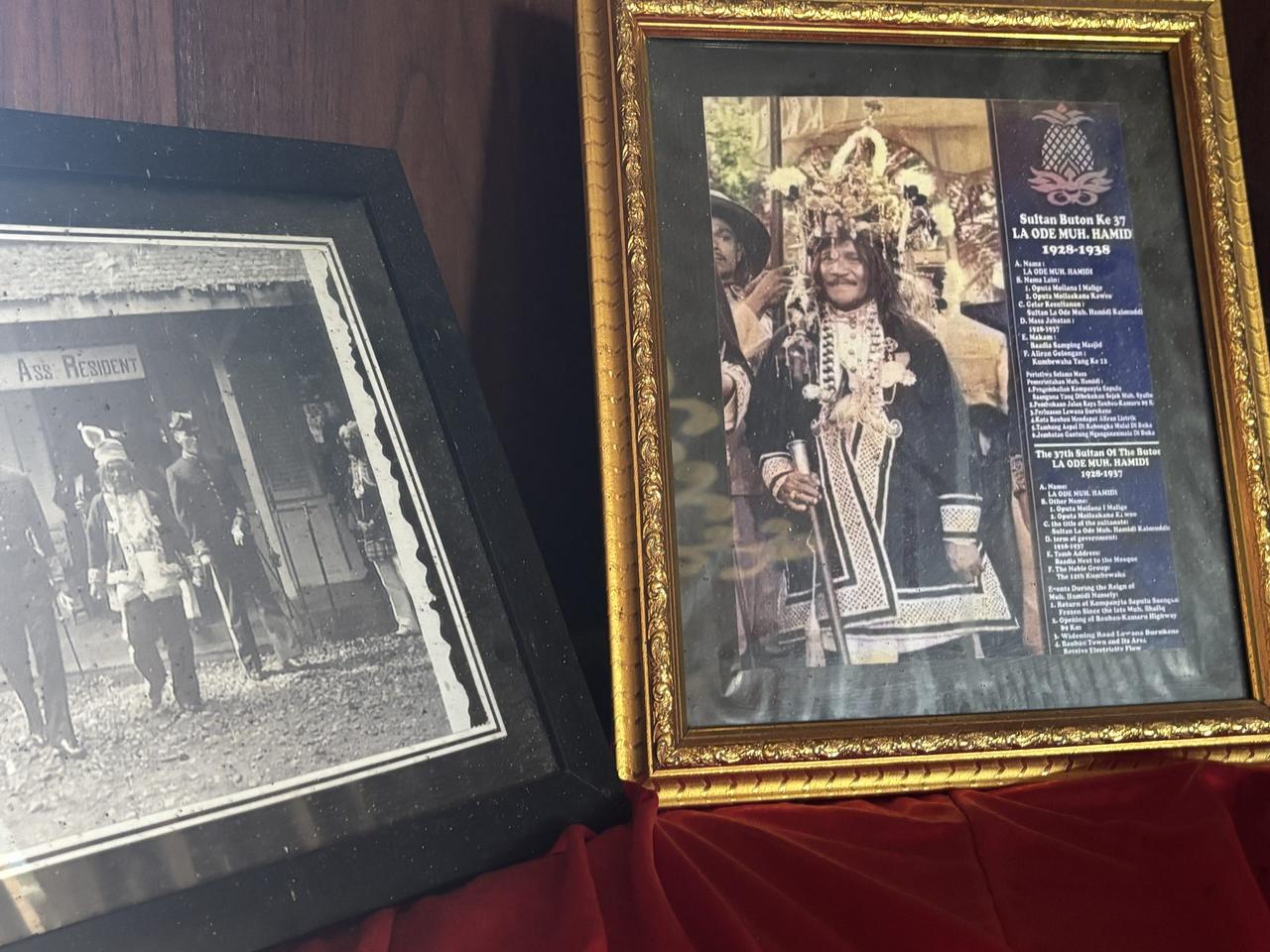
Just inside, two framed photographs lean side by side against the wall, one clearly much older than the other. The smaller, black-and-white print, faded and torn along one edge, shows a group posed outside a building marked "Ass. Resident," a scene from the Dutch colonial period. Beside it, in a heavier gold frame, hangs a hand-tinted portrait: Sultan Buton Ke-37, La Ode Muh. Hamidi, 1928–1938, dressed in an elaborate feathered headdress and a robe marked with the same pineapple emblem that turns up throughout the building, holding what looks like a ceremonial cane. The caption beside it lists what happened under his rule in plain terms — a company's return after a long suspension, a new highway between Baubau and Kamaru, roads widened, electricity finally reaching the town, a suspension bridge going up. It's a strange, useful thing, standing in front of a hundred-year-old face and reading, point by point, exactly what he did with his years in charge.
The Pineapple That Means Only One
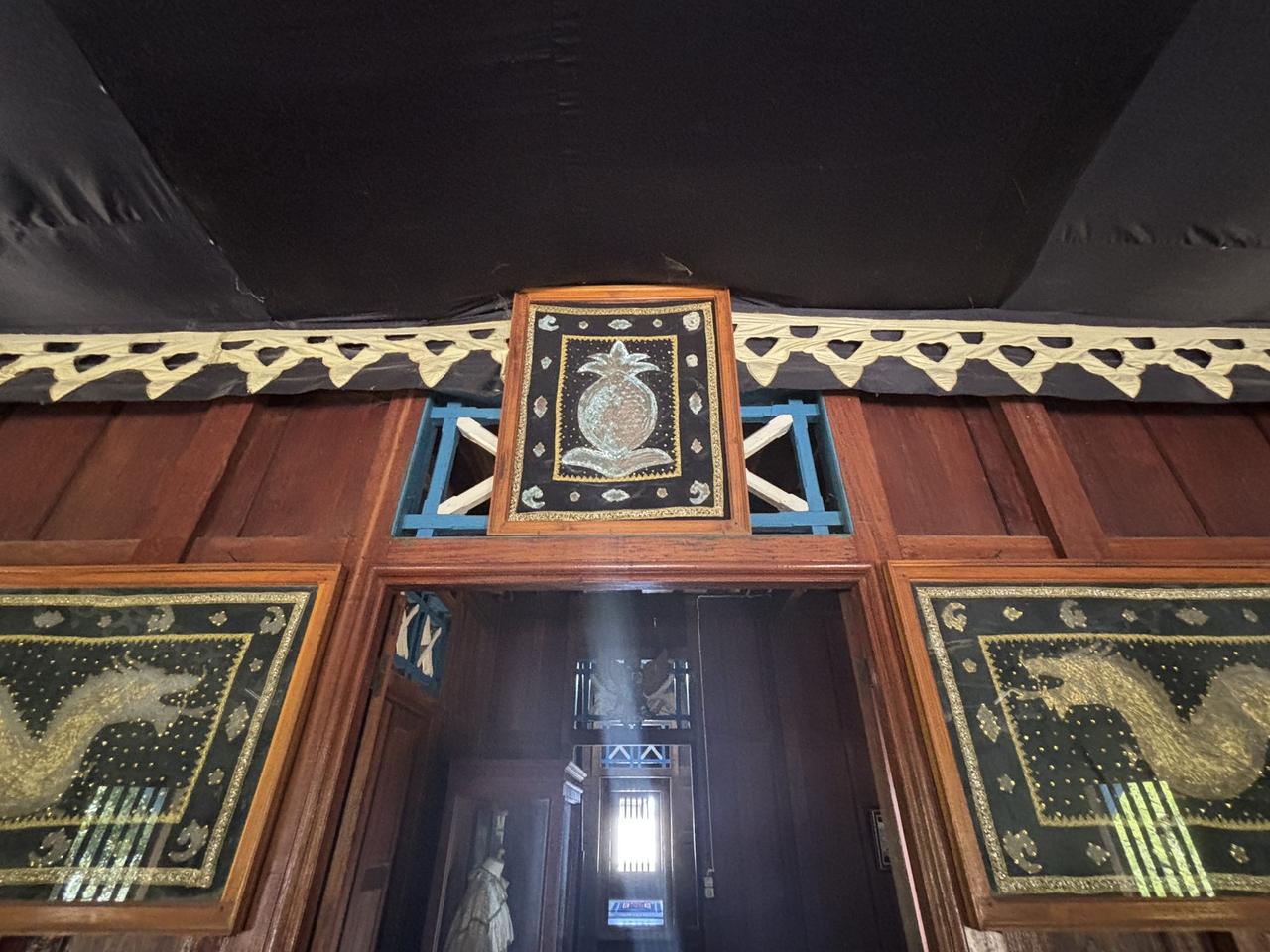
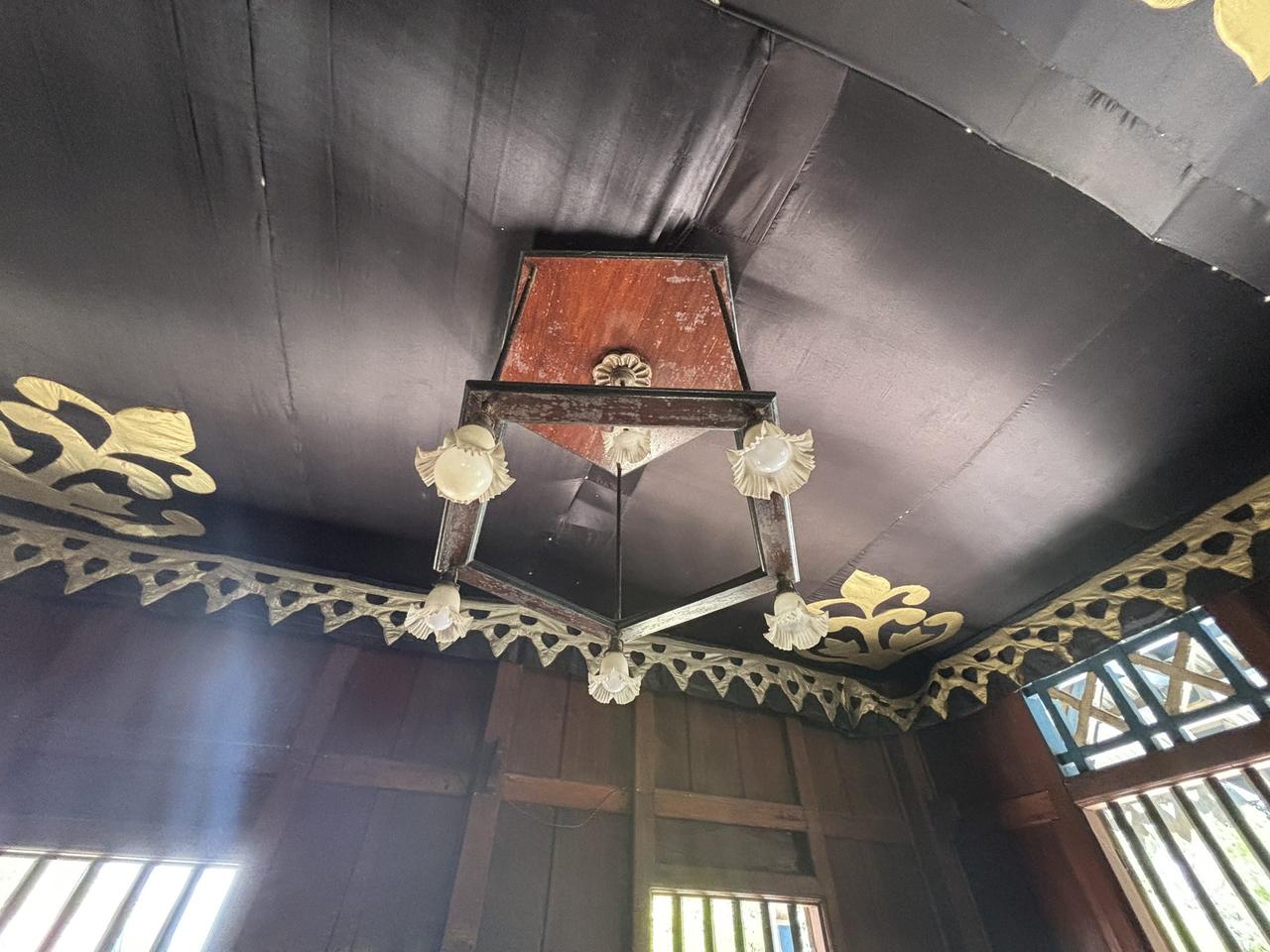
Above one doorway, a small embroidered panel shows a single pineapple, flanked on either side by a pair of gold-thread dragons stitched into darker cloth. My guide walked me through what each one meant. The dragons stand for the majesty of the Buton kingdom itself, nothing more complicated than that. The pineapple carries more layers: a single stalk bears exactly one fruit, meaning there's only ever one sultan at a time; the crown-shaped flower on top means only the sultan sits beneath the kingdom's royal umbrella; and because a pineapple plant sends up its next shoot from its own stem rather than starting over from seed, the succession it points to isn't treated as some simple heirloom passed down automatically. Buton is known regionally for the pineapple as something closer to a civic symbol, and standing under this particular one, it wasn't hard to see why.
A Staircase That Argues With Your Knees
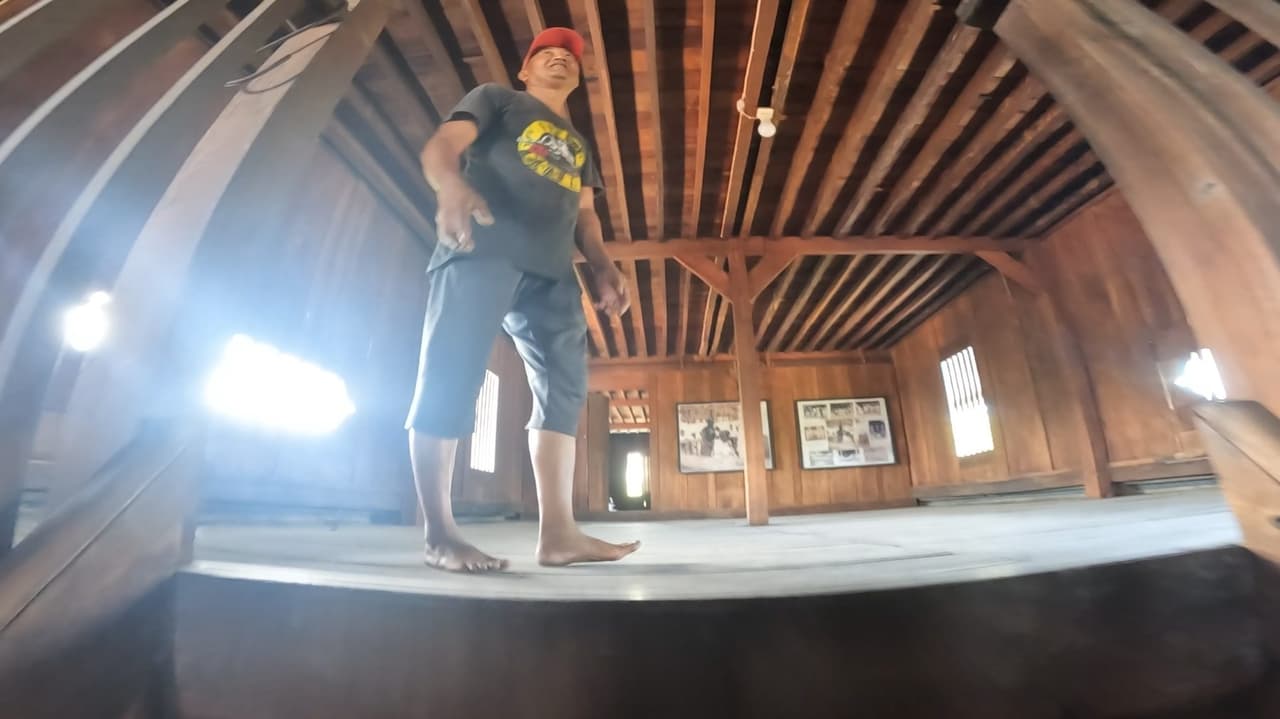
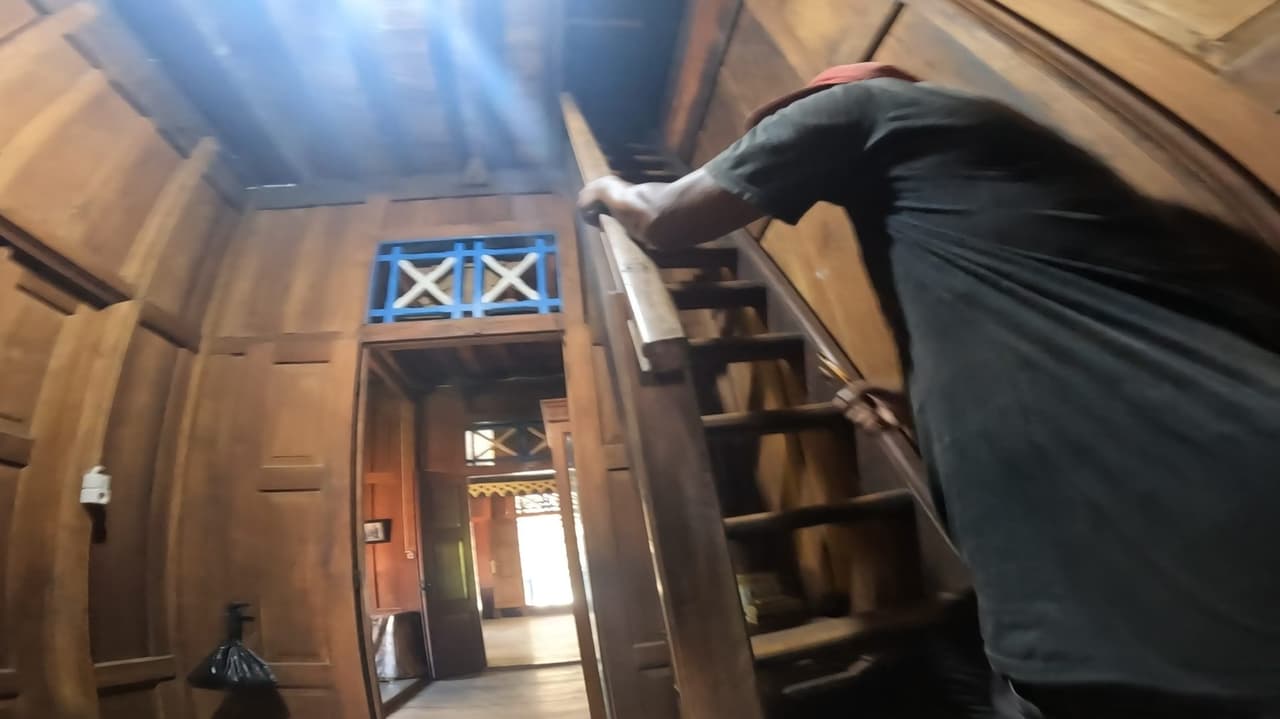
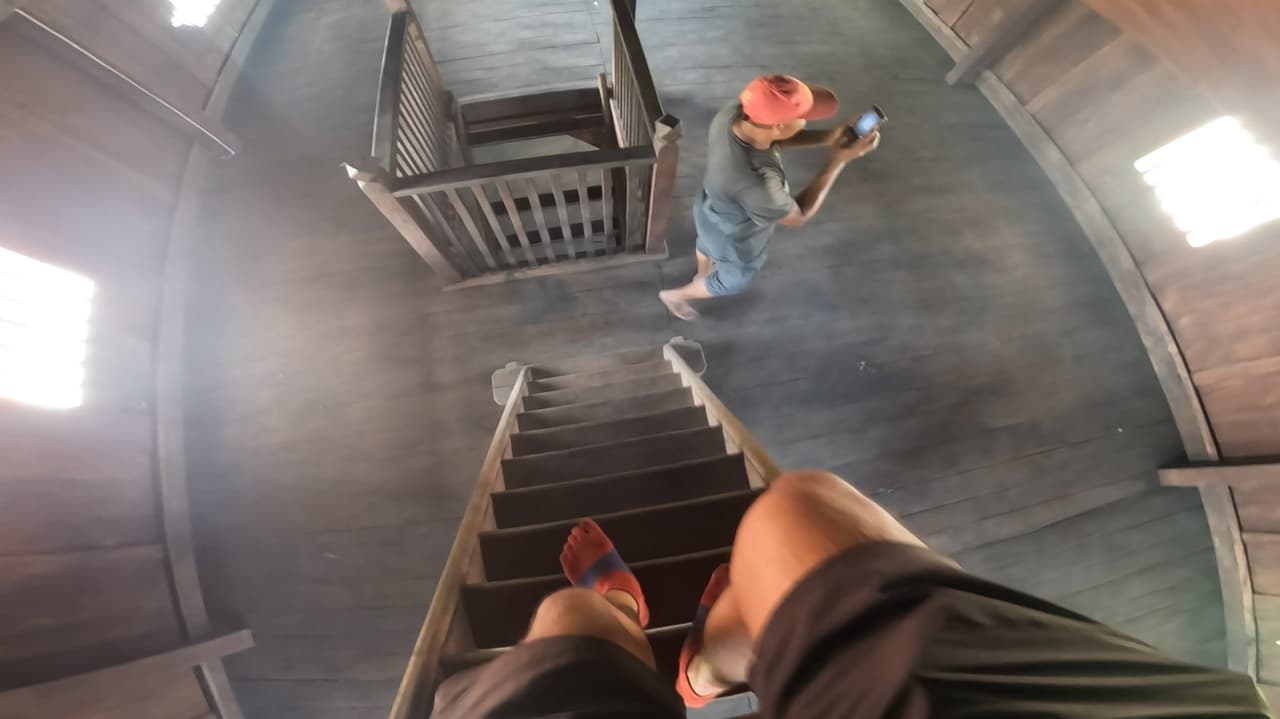
Getting to the upper floors meant one of the steepest staircases I've climbed inside a building that wasn't explicitly built as a ladder. My guide went first, phone out, half-turning back toward me the way people do right before they say "careful here" — and he did, more than once. Between the second, third, and fourth floors, the stairs kept that same angle the whole way up, no easing off, no landing wide enough to properly stop and recover on. It wasn't dangerous exactly, just unapologetically steep, built for people who climbed it every day rather than tourists doing it once.

Rooms for Ten Families, a House Next Door for One
Up on the higher floors, the rooms break apart into smaller units, dotted through the building rather than laid out as one continuous space. My first guess was that each one was meant for a single person, but my guide corrected me — these were built for families, not individuals, and by his rough count the floors together could hold something like ten family units at once. It tracks with something I already half-knew about the region: Indonesia, generally, leans toward people living together rather than alone, and a palace built around family-sized rooms rather than private ones fits that instinct exactly.
What I hadn't expected was where the people actually keeping the place up now live: not inside it at all, but in an ordinary house standing right beside the palace. The family with the standing to grant permission, to guide people like me through the rooms, lives next door rather than upstairs — close enough to still feel responsible for it, far enough that the palace itself stays a building you visit rather than someone's actual home.
The View Baubau Deserves
The fourth floor, the one that widens back out after three floors of narrowing, earns that shape. From up there Baubau spreads out in every direction, roofs and streets and, somewhere past them, the water the sultanate once controlled the trade routes across. Buton's old order of governance is still spoken of locally as resting on five combined principles — Agama, Sara, Lipu, Karo, and Alata — though what exactly each one covers wasn't something either my guide or I could pin down with any confidence that day, so I'll leave the terms standing rather than guess at what I don't actually know. What I do know is what I saw: a house built without a single nail, standing on forty pillars, still watched over by people who live close enough to keep it, but no longer close enough to call it home.