Thirty-Five Thousand Rupiah and a Wall Full of Windows
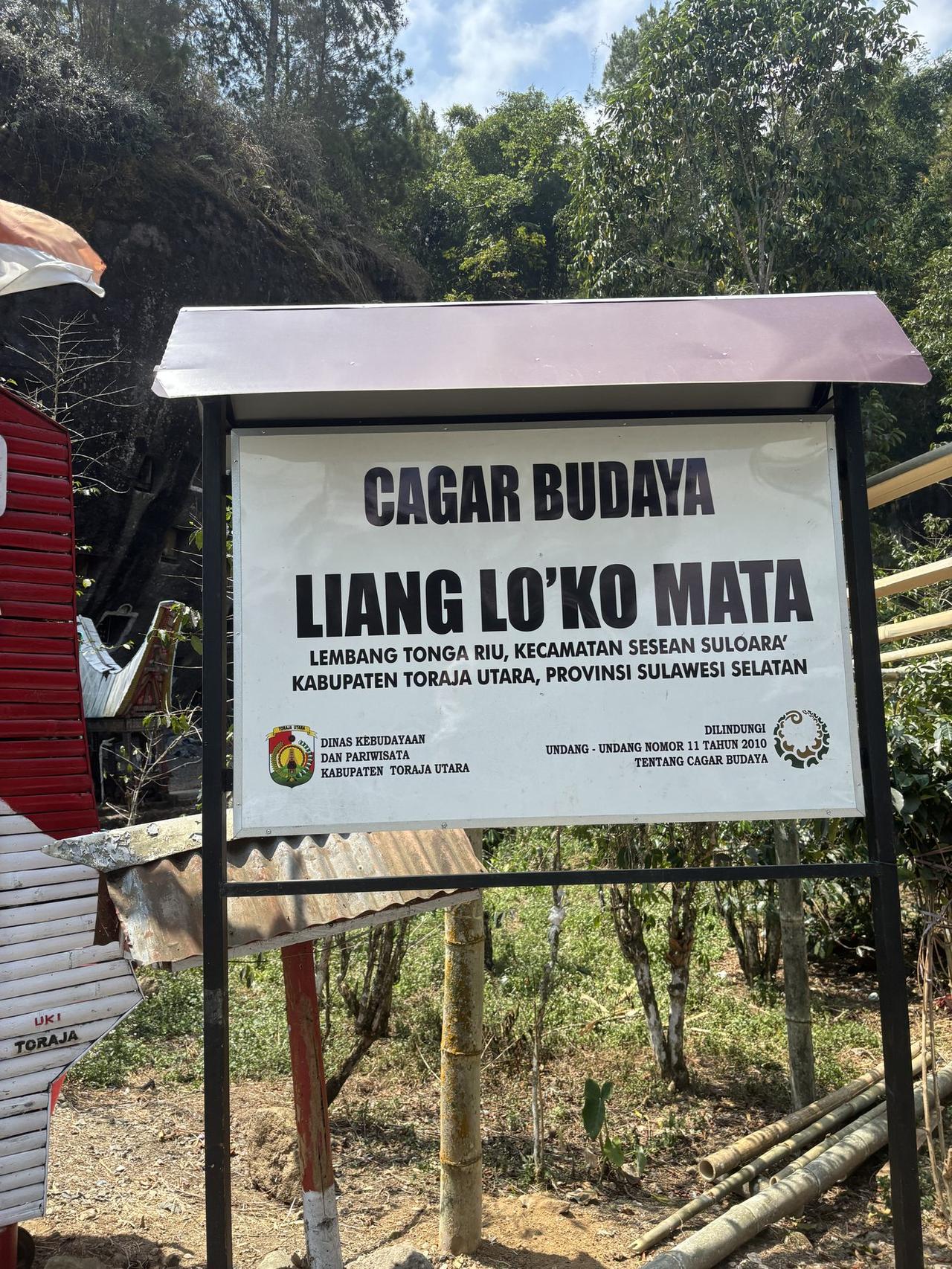
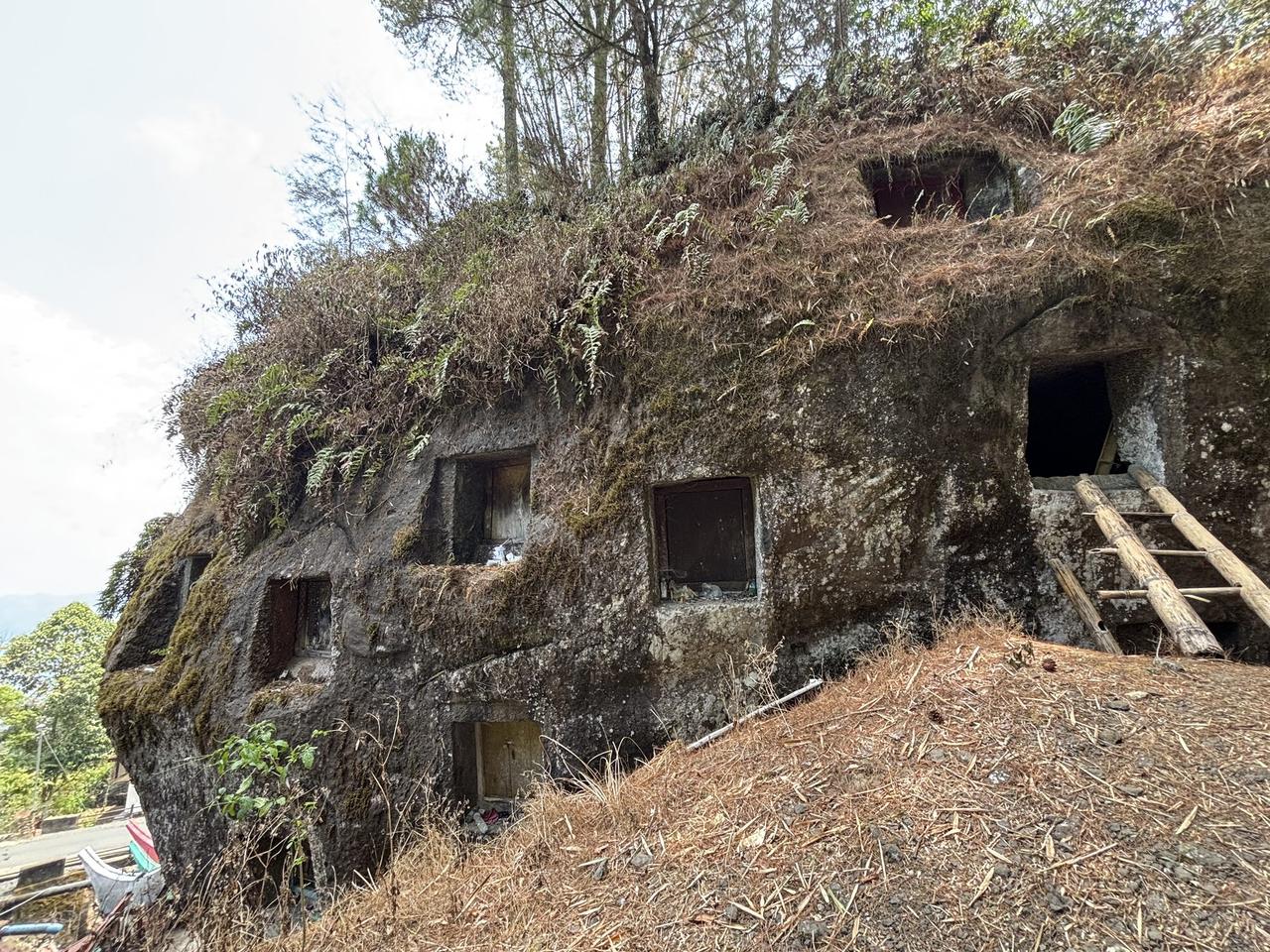
I paid 35,000 rupiah at the gate and walked toward what looked, from a distance, like nothing more than a large boulder sitting in the trees. Getting closer changed that impression completely. The surface was covered in small doors, dozens of them, some painted red or pink, some left bare stone, stacked up the rock in no obvious pattern. A sign at the entrance named the place Liang Lo'ko Mata, in Lembang Tonga Riu. Locally it just goes by Lo'ko Mata, and I understood why the moment I looked at the whole thing at once: every one of those carved openings looks like an eye set into the rock, and the name means roughly that, the rock with eyes, or the eyed stone.
A Family Has Been Buried Here Since the 1300s
This isn't a shared public cemetery in the way I'd normally picture one. It's a single boulder that one family has been using as a burial site for a very long time, reportedly since somewhere around the 14th century. I asked my guide about the ages of what was inside, and he told me the oldest remains currently housed here go back roughly 500 years. Whether the exact number is 500 or closer to 600, the point holds either way: this is one physical rock that has quietly done the same job for a family across dozens of generations, long before anyone visiting today was born.
Toraja doesn't bury its dead in the ground the way I grew up assuming was standard. Bodies go into stone instead, carved directly into cliffs or, here, into one enormous standalone boulder, each family or sub-family claiming its own small chamber on the surface.
Walking Around an Egg Takes About Three Minutes
Up close the boulder is shaped something like an egg, rounded and a little irregular, roughly 10 meters tall. Walking a full loop around its base took about three minutes, which gives some sense of how much surface area is actually available for chambers. And the chambers themselves vary enormously depending on their age. Some of the oldest ones still have fronts made of wood rather than stone, and the wood has decayed to the point where you can tell at a glance the door isn't opening again, not without damaging what's inside. Other openings, newer ones, still have doors that look like they could be opened without much trouble at all.
A Door Cut Too Clean to Believe
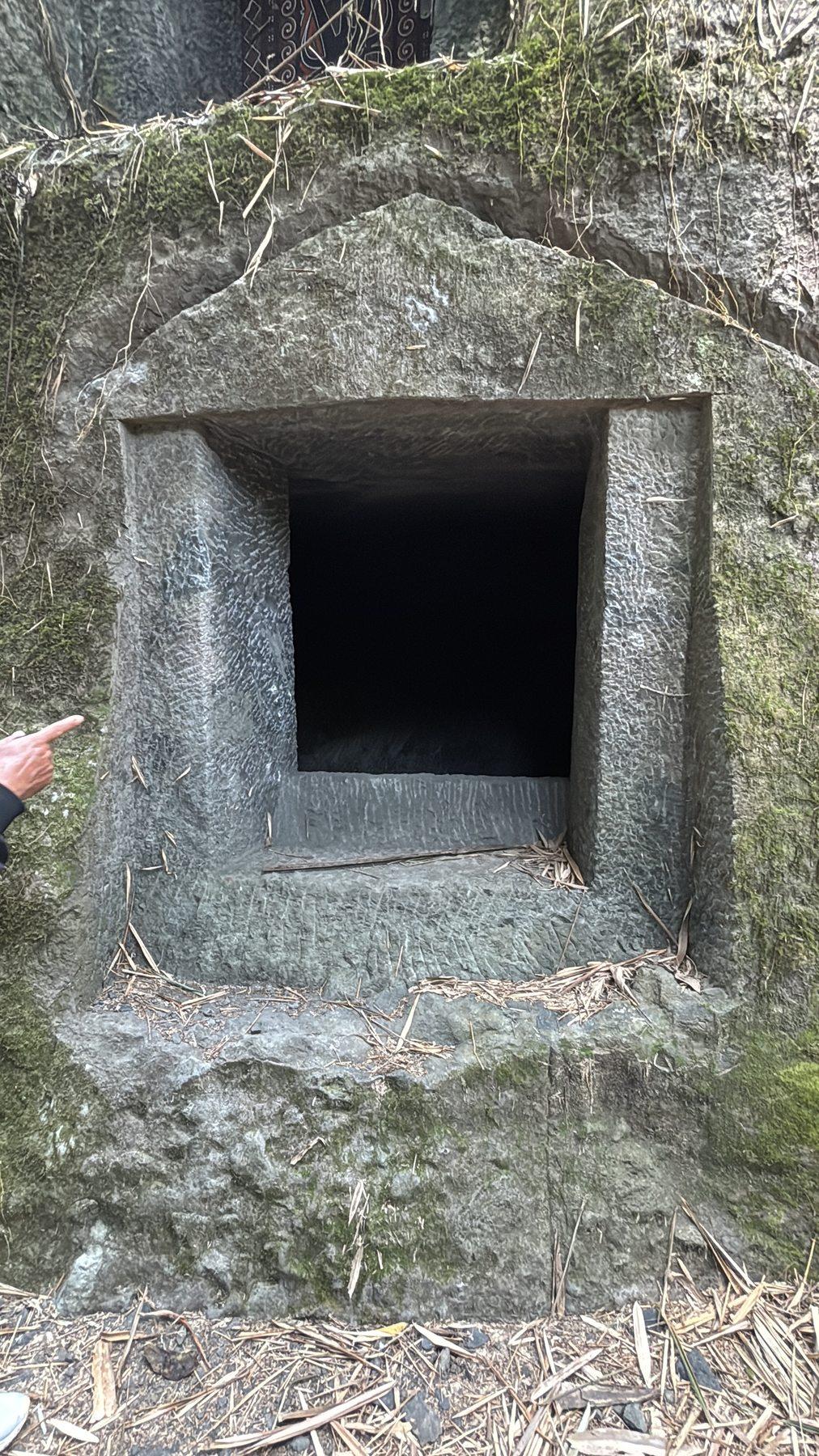
Partway around, my guide showed me a chamber that hadn't been used yet, a liang built for a future burial rather than an existing one. He let me go inside. It measured roughly 2 meters by 3 meters, though he mentioned that size and shape both vary a lot from chamber to chamber, with some noticeably larger elsewhere on the boulder. What actually stopped me wasn't the size, though. It was the doorway itself: cut from the solid rock into a completely clean rectangle, sharp-edged and even, the kind of precision I'd have assumed needed a machine. It didn't. Every bit of that came out of the stone by hand.
Tau-Tau, Buffalo Heads, and Whatever a Family Chooses
The finished chambers each carry some mark of the people who built them. Some have a tau-tau, a carved effigy of the deceased, set just outside or inside the opening. Others skip the human figure entirely and mount something like a buffalo head instead, sculpted directly onto the rock face above the door. There's no single template being followed here; each family seems to have decided for itself what belongs on their own small piece of the boulder.
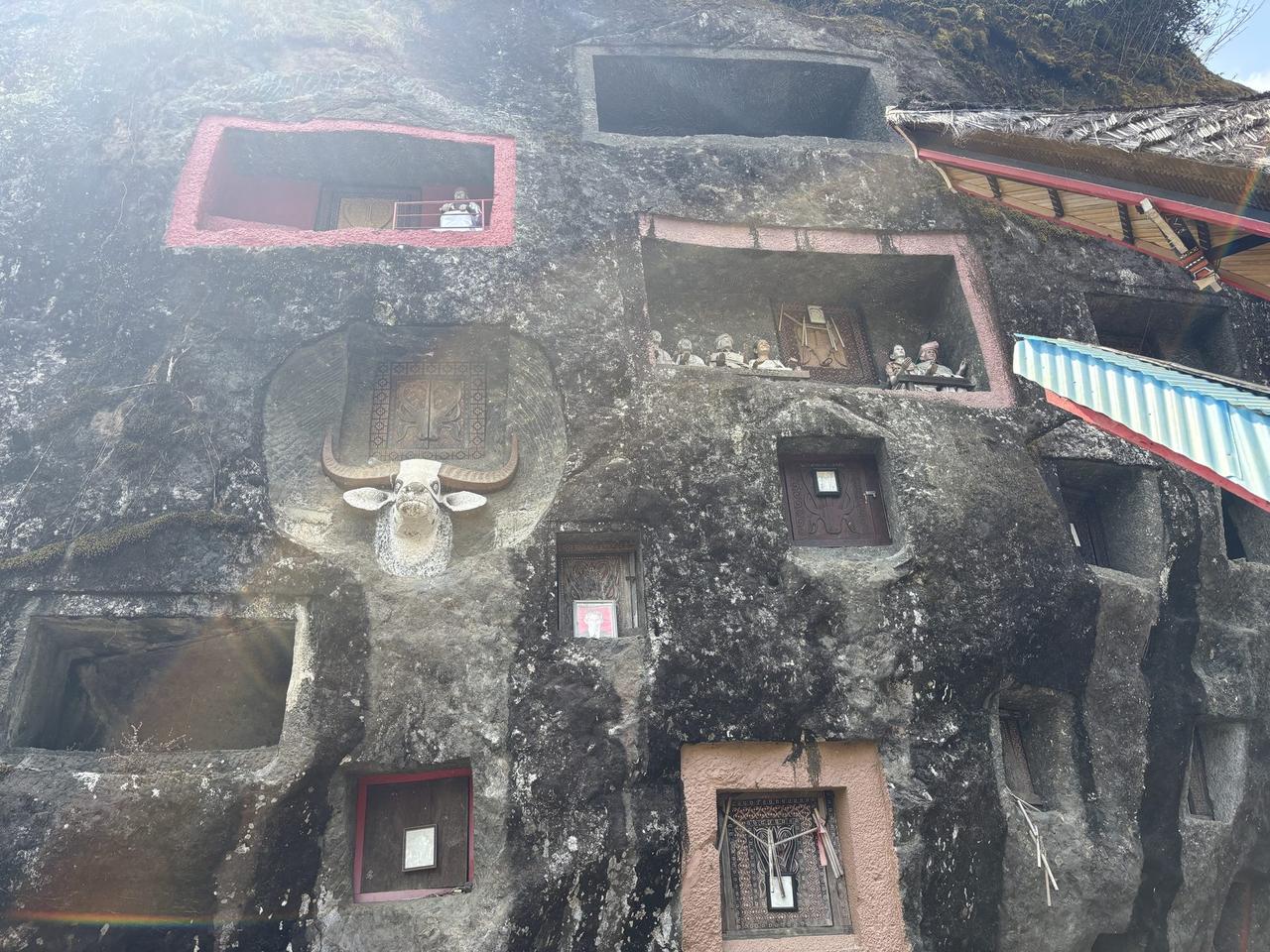
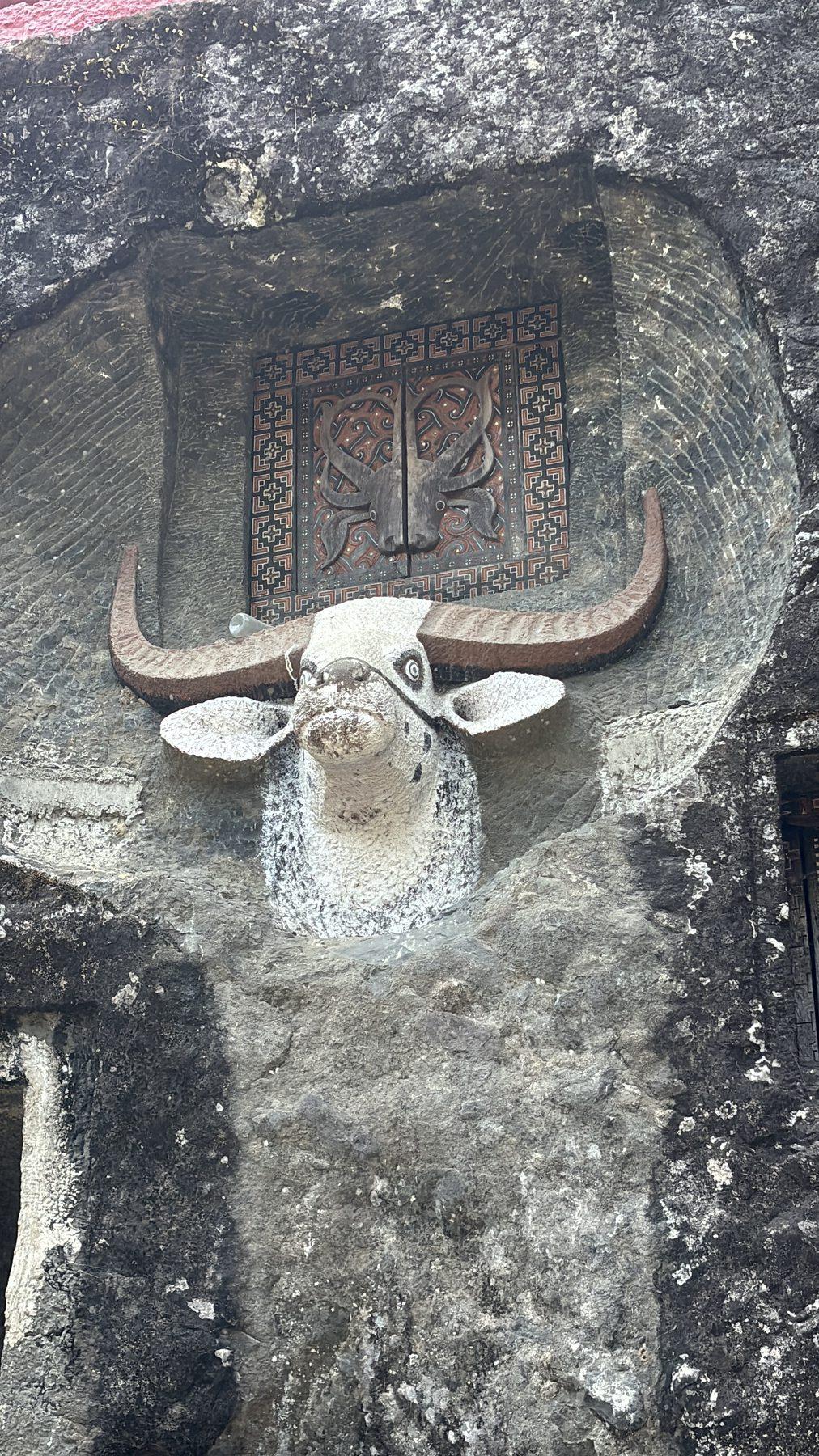
The buffalo isn't just decorative, either. In Toraja funeral custom, sacrificing a water buffalo is considered essential to sending someone properly into the next life, and the more buffalo a family can afford to sacrifice, the more social standing that funeral reflects. That same logic apparently extends to the tomb itself: opening a chamber's door and sealing it again each carry their own small ceremony, and Lo'ko Mata is still an active site for Ma'nene, the ritual in which families periodically bring their ancestors' remains back out, redress them, and return them to the stone. This isn't a preserved relic being kept for visitors. People are still coming back to it.
Watching One Being Made
Curious how any of this actually gets carved, I took a 15- to 20-minute motorbike ride to a spot where a new liang was being cut, away from the main boulder entirely. The site was clean and orderly in its own way despite being an active worksite, rock dust and tools scattered around a half-finished opening. Right now the door was cut into something close to a square. According to the person working there, it would eventually be widened into the same long rectangle I'd seen back at the boulder, with the stone worked down evenly on one side until the shape matched.
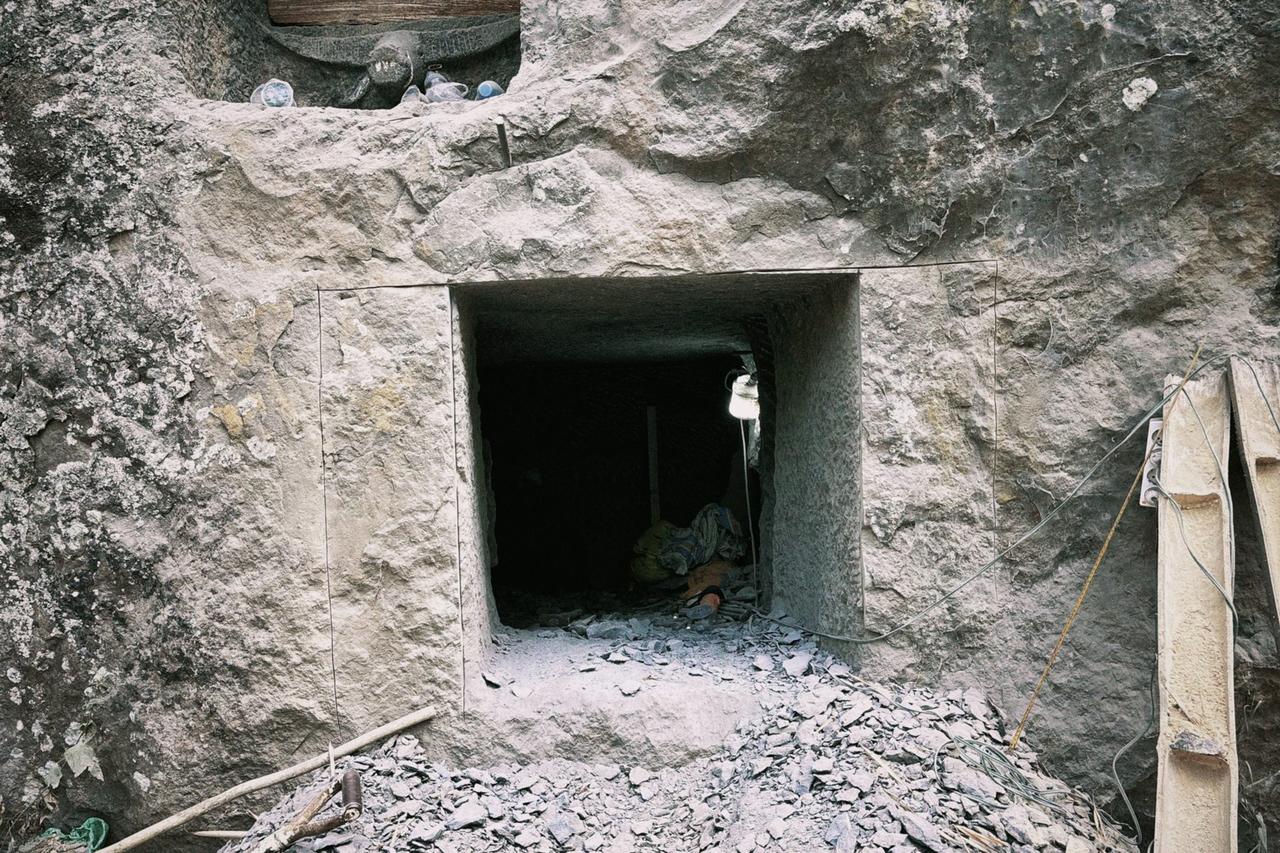
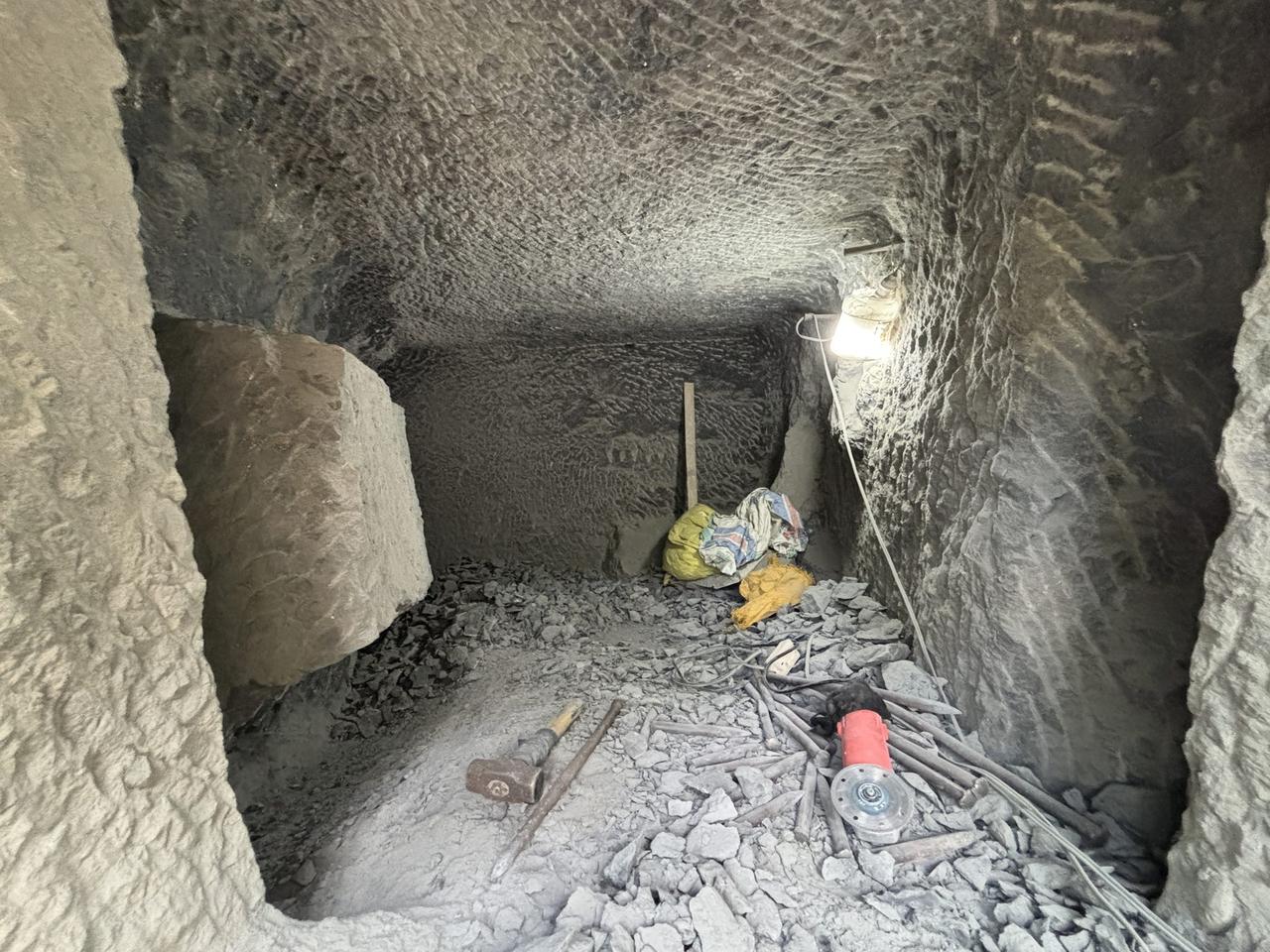
He told me a single chamber takes a minimum of nine to ten months to finish. That number made more sense once I thought back to something else about Toraja funeral custom: a person who has died isn't immediately treated as dead. For years afterward, the body is kept at home, and the family speaks of them as merely sick, or sleeping, while everyone gathers the resources and relatives needed for a proper rambu solo funeral. That waiting period isn't wasted time from the family's side. It's exactly how long it takes to also finish the room the person is eventually going to occupy.
The Weight You Don't Expect
On the way out of the workshop, there were cut stone blocks sitting on the ground near the entrance. I didn't ask their exact weight, but trying to lift even one corner was enough to tell me it wasn't happening without real effort. Liang like this exist all over Toraja, tucked into hillsides I'd otherwise have driven straight past. Seeing the actual labor behind just one of them, from the finished doors on the boulder back to that half-cut square in the workshop, was the part of the day I keep returning to.