A Last Morning With the Family
Five days after I'd first seen this compound quiet and half-finished, the last day of Rambu Solo began inside the house itself, family gathered in one of the rooms of the tongkonan in the low morning light, photographs of relatives looking down from the walls above them. Counting back to the opening prayer on Day One, this family had been holding this ceremony for eleven days total. Everything that followed that morning, the felling of trees, the building of a funeral bier, the procession itself, was the last of it.
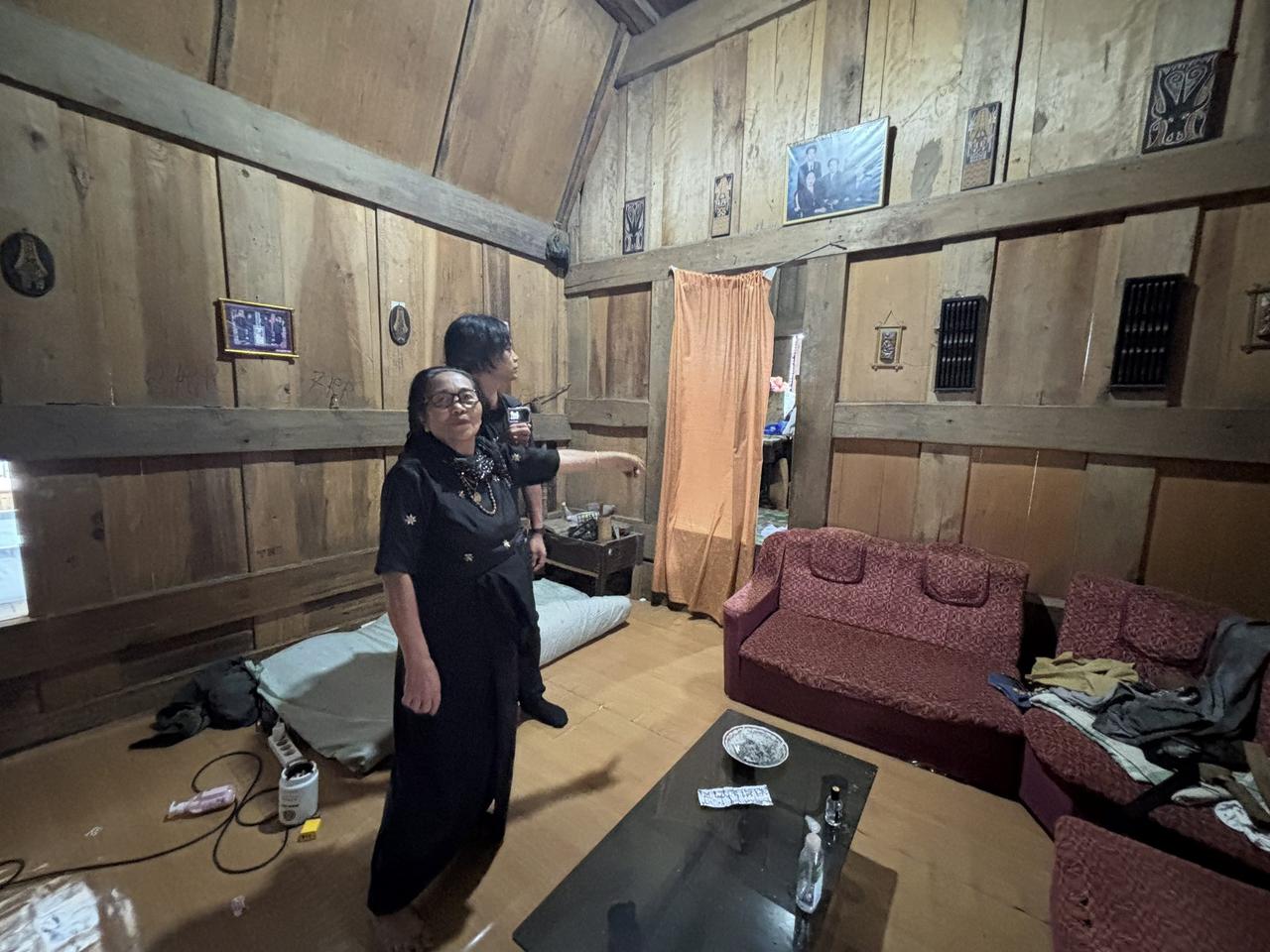
One Last Visit to Where They'd Rested
Before anything else happened, there was a quieter stop at the room where the bodies had rested since the ceremony began, a simple bed made up with white lace cloth, a framed portrait watching over it, small offerings of food and drink set on a stool beside it. This is what Meaa refers to, moving the deceased out of the place they'd stayed and toward the grave that would complete the journey. Seeing the space this plainly, after days of watching the more public, crowded parts of the ceremony, was the moment Day Five felt most personal to me.
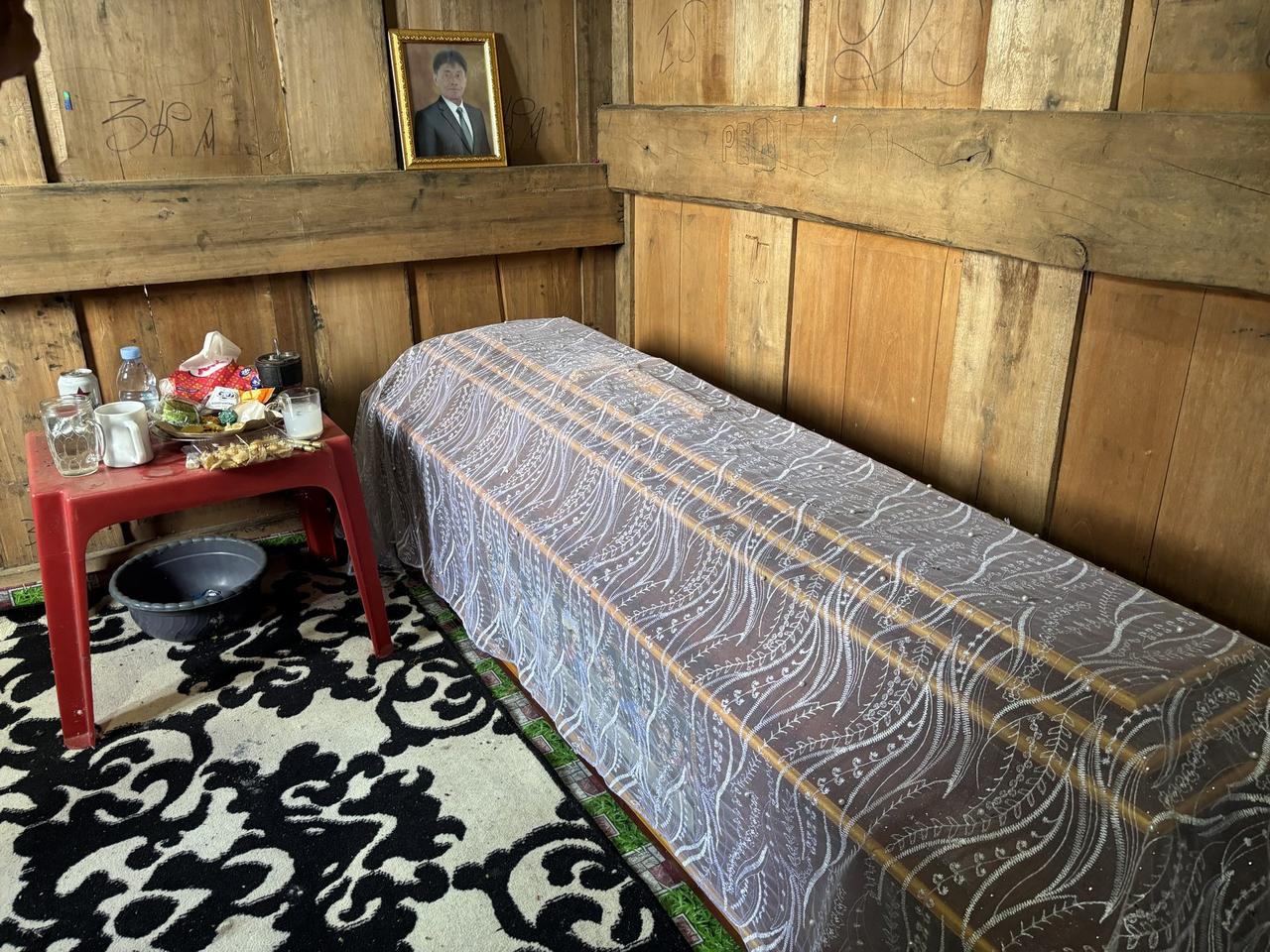
The Whole Community Comes Down to the Plaza
By the time I made it back down to the main compound, it was full in a way I hadn't seen even on the busiest of the earlier days, guest pavilions packed, and a group of local schoolchildren in uniform filing down toward the plaza to take part. Ma'kaburu', the burial itself, isn't a private family matter here. It's the day the widest possible circle, family, guests, neighbors, even the local school, comes together to see two people through to the end of the ceremony built around them.
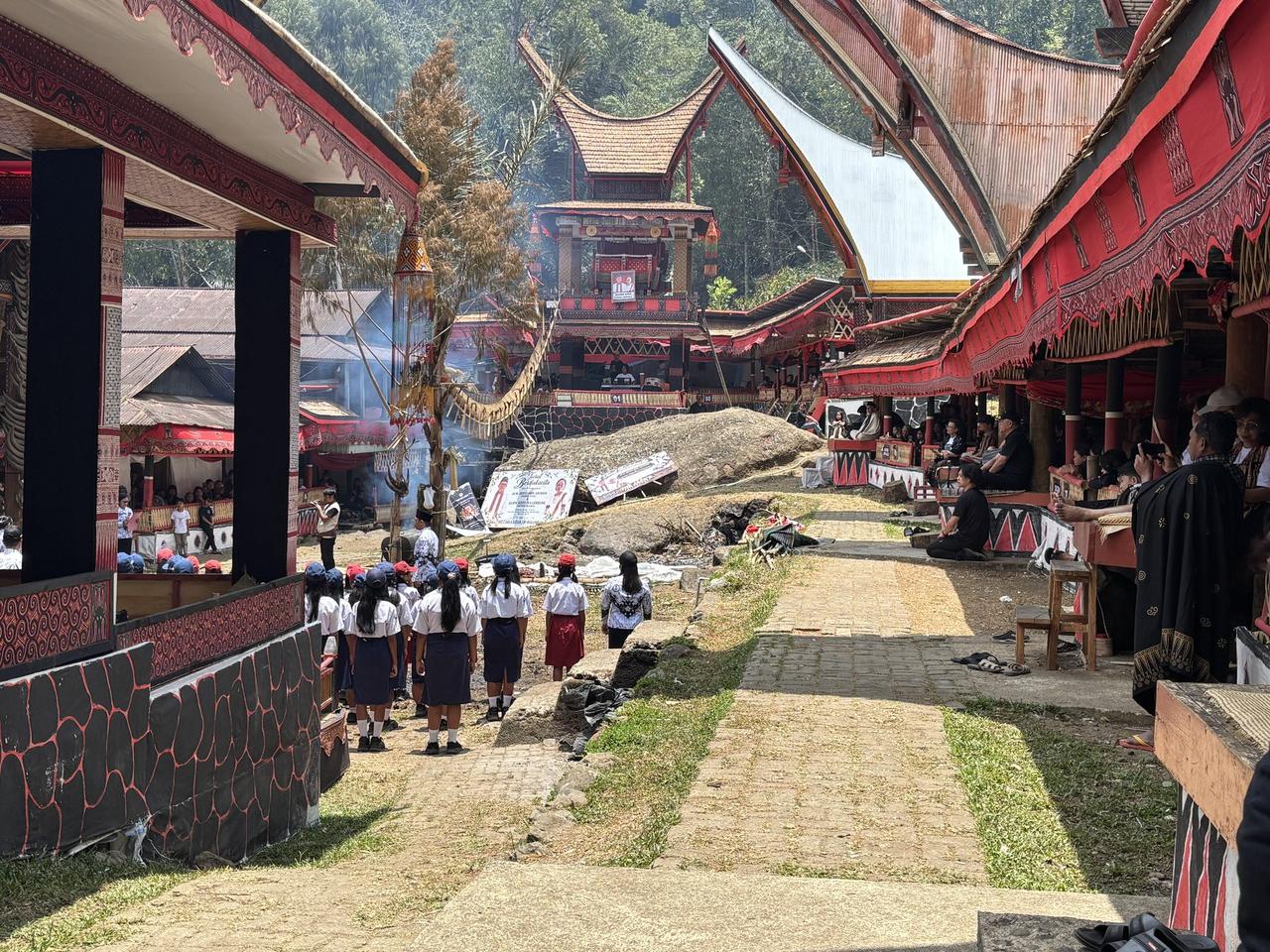
Building and Readying the Funeral Bier
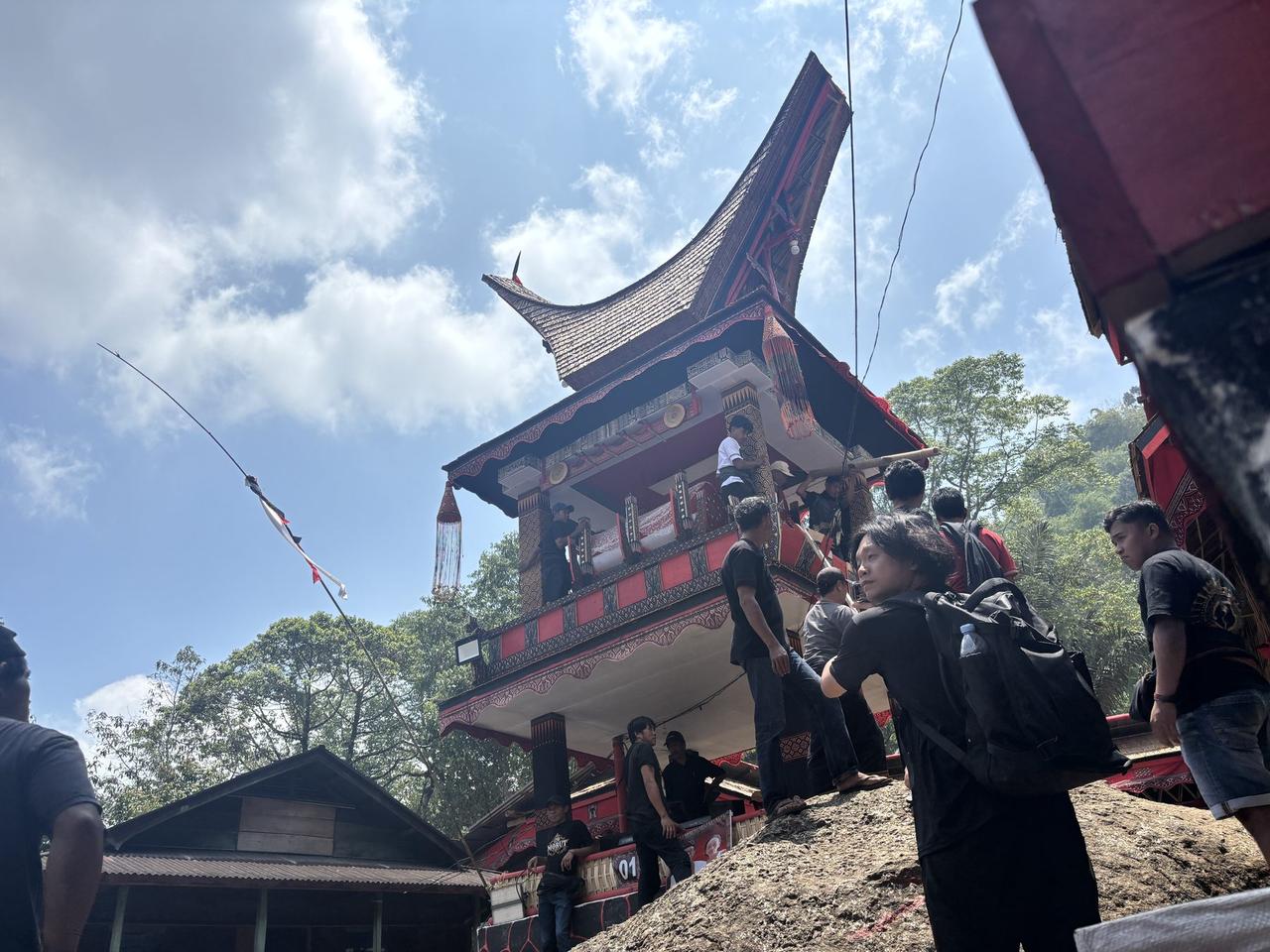
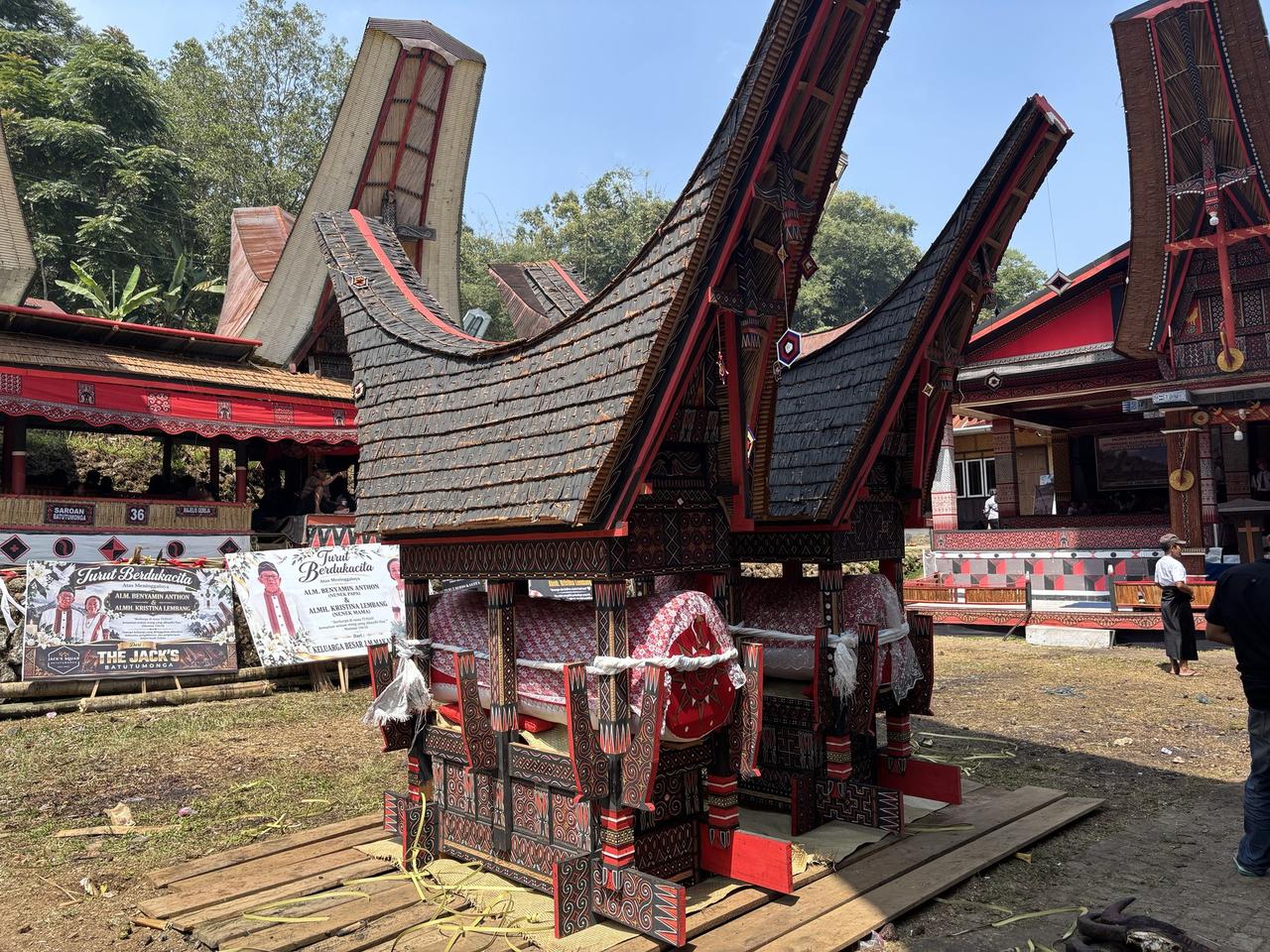
Off to one side, a group of men worked a long curved piece of wood over an open fire, bending it into shape by hand for what I realized afterward was the bier, a structure built specifically to carry Benyamin and Kristina's coffins to the grave, shaped like a miniature tongkonan itself, roof and all. By the time it was finished and set up on top of a boulder overlooking the plaza, tassels hanging from its eaves, it looked less like scaffolding and more like a small building constructed for exactly one purpose and exactly one day of use.
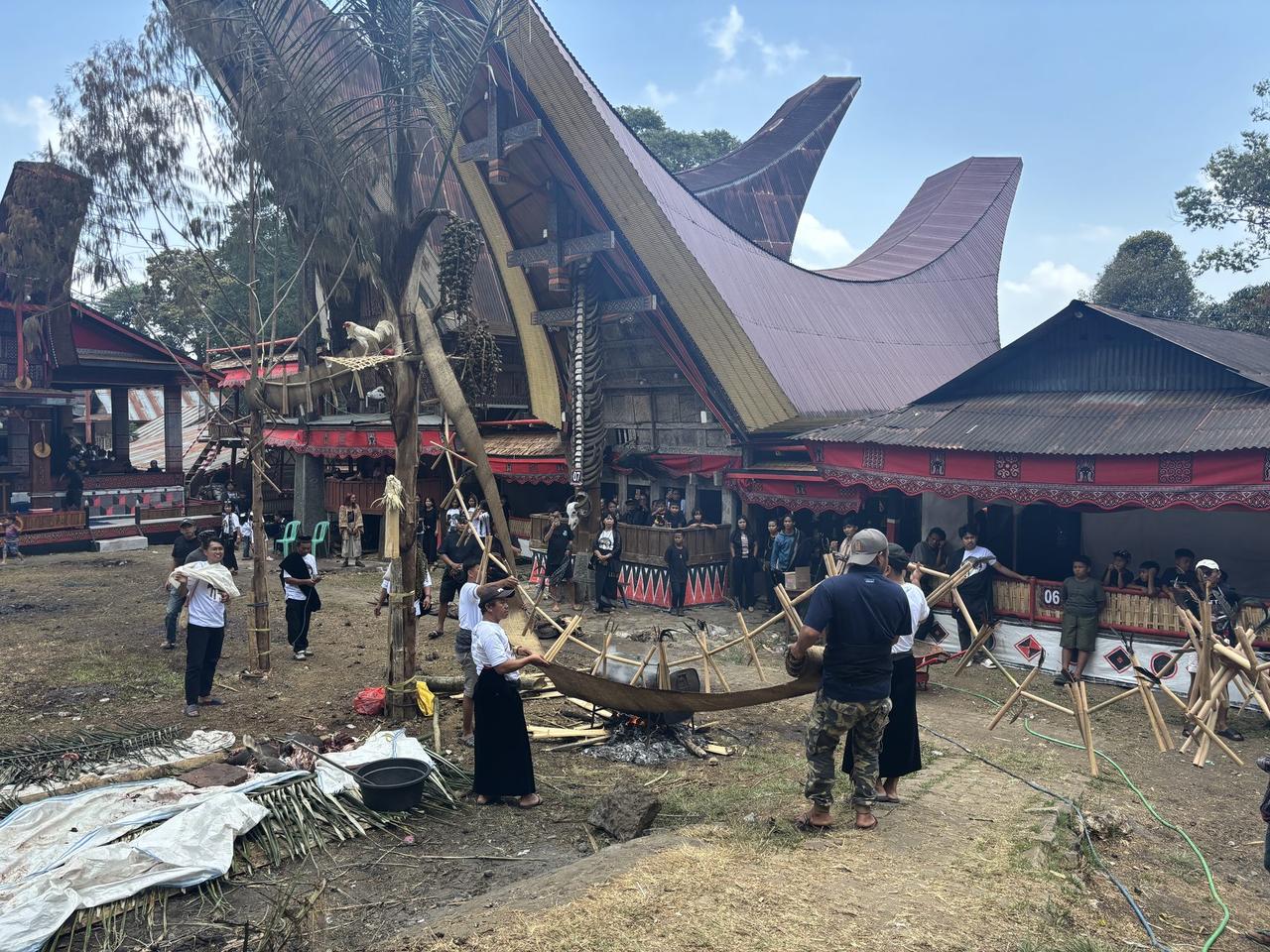
Felling the Two Trees at the Plaza's Center
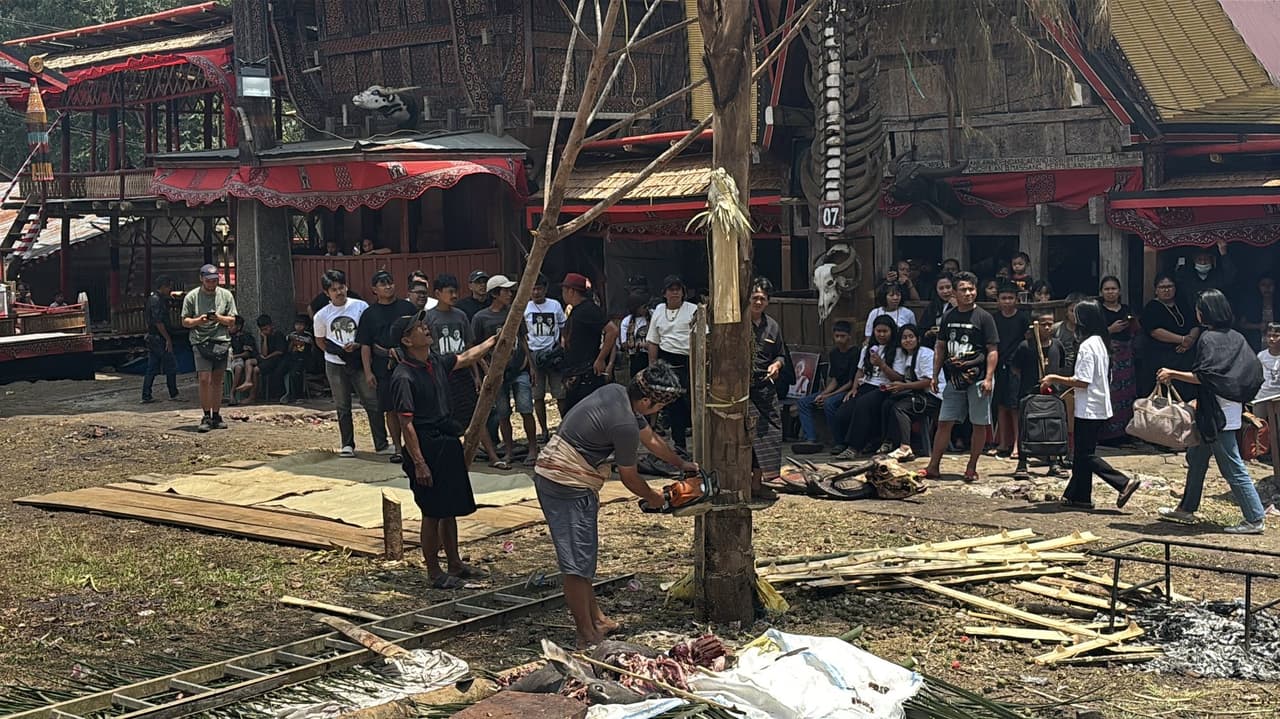
Two trees had been standing in the middle of the plaza the whole time I'd been visiting, and on this last day, someone finally cut them down, a chainsaw through the trunk and shovels afterward to dig out what was left of the roots. It read as a practical decision as much as a ceremonial one, clearing the ground the procession needed to pass through, but the timing wasn't incidental. Nothing that had stood in this plaza for the length of the ceremony came down until the ceremony itself was ready to end.
Carried Out on a Tongkonan of Their Own
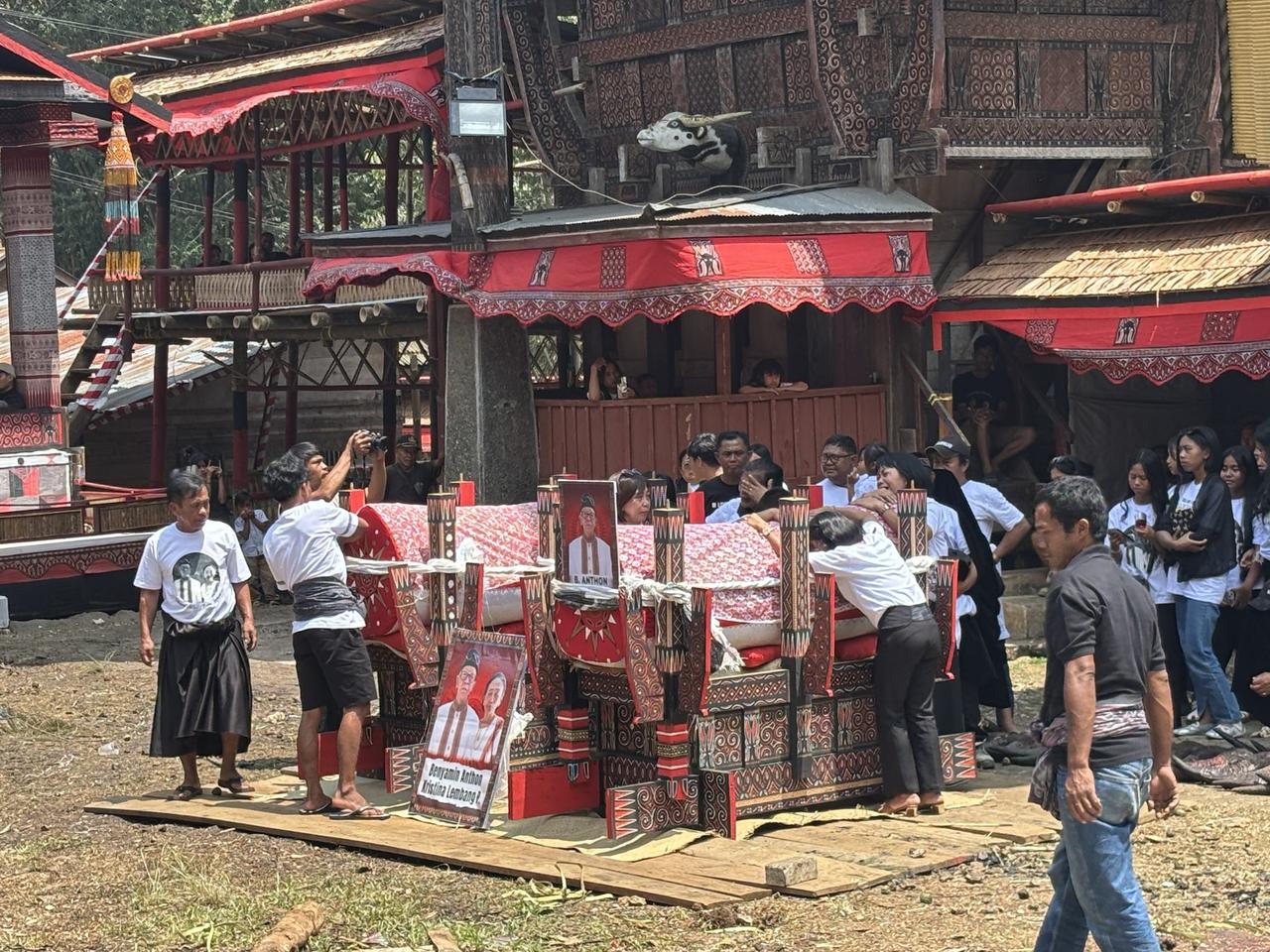
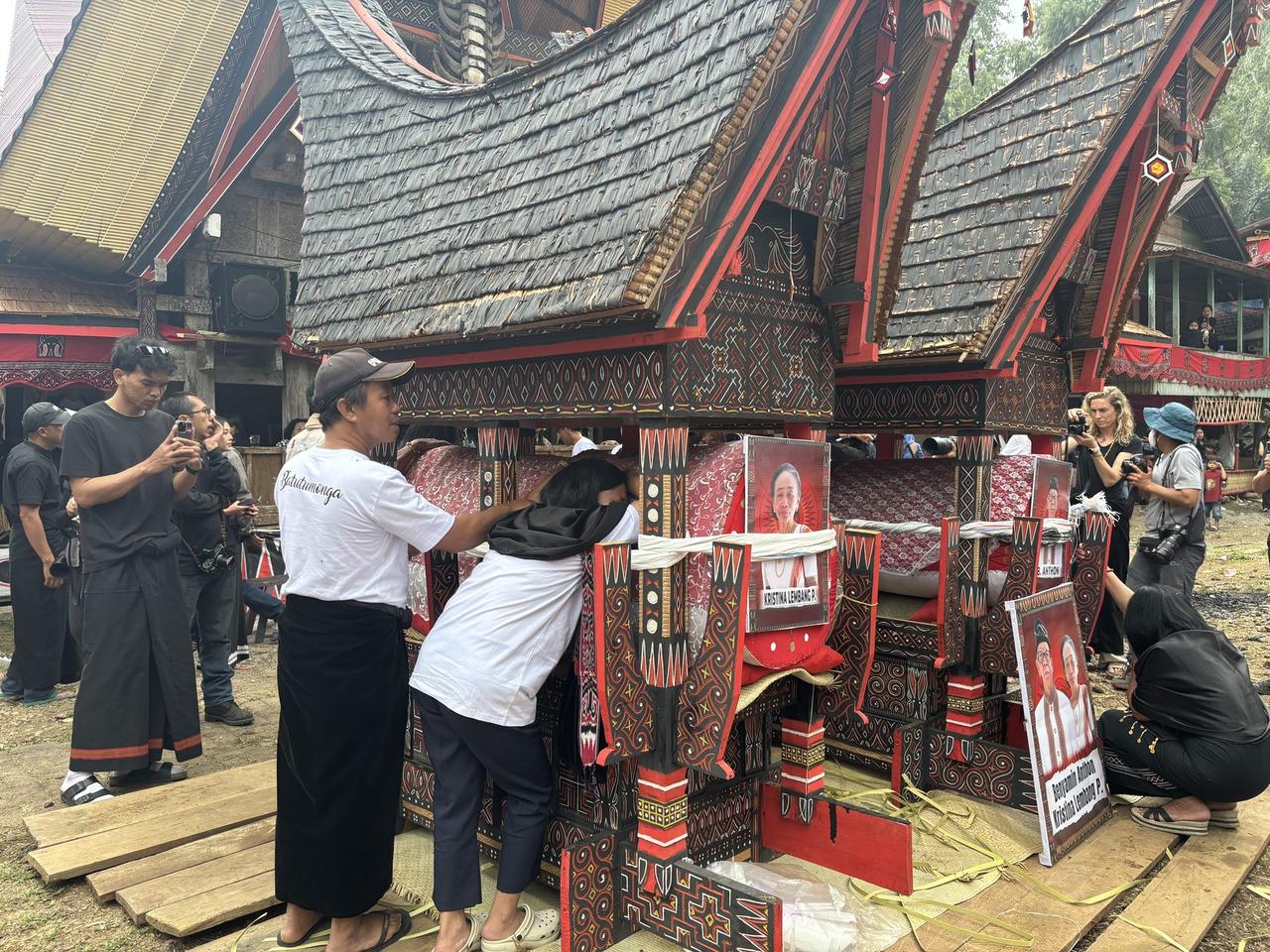
The coffins came out of the Lakian and onto the finished bier together, wrapped in red and white lace, a portrait of each of them fixed to the structure alongside a card printed with their names, Benyamin Anthon and Kristina Lembang. Signboards reading Turut Berdukacita, the same formal condolence I'd first seen posted outside the Lakian on Day One, now stood beside the bier itself rather than a fixed building, ready to travel with it. Dozens of hands lifted and steadied it at once as it was carried out from beneath the trees, the small tongkonan shape rocking gently above the crowd.
Grief Loud Enough to Be Heard
Beside the bier, family members held onto the coffins and cried, loudly, without holding back, and I was told this isn't just tolerated but expected: crying out loud at this exact moment is considered important, a way of honoring the two people being carried out rather than something to be managed or minimized. A pastor's burial service followed once the procession reached the grave, prayers offered before Benyamin and Kristina were finally placed inside, one of the region's Liang or Patane tombs completing, at last, the journey to Puya that this entire eleven-day ceremony had been built around.
Riding away after Ma'kaburu' closed, I kept coming back to how differently this compared to funerals as I understood them growing up in Japan, where the instinct is almost always toward compact and quiet. Here it was the opposite in every direction, more time, more money, more people, more noise, and standing in the middle of it, I couldn't call that excess. It looked, instead, like a very deliberate choice about what someone's life is worth marking. And it isn't even finished here. Someday, years from now, this same family will open this same tomb again for Ma'nene, and Benyamin and Kristina will be brought back out into the light one more time, dressed, spoken to, and returned, the same circle I'd first watched close on a different family's tomb just weeks before this one began.