Mantunu, Split Across Two Days
By the third day, the compound had a name for what was coming: Mantunu, the water buffalo sacrifice, the actual center of Rambu Solo that everything else had been building toward. The family split it in two, a distinction I hadn't expected. Day Three, called Tondok Salian, was for obligations owed to people from outside the village, guests and relatives who'd traveled in the way I had. Day Four, Tondok, belonged to the local community itself, the people who'd lived alongside this family for years. I ended up experiencing the two days as one continuous escalation rather than two separate events, and by the family's own account, that's not far off: there were simply too many buffalo, and too many people with a stake in the outcome, to fit into a single day.
Why It Has to Be a Buffalo
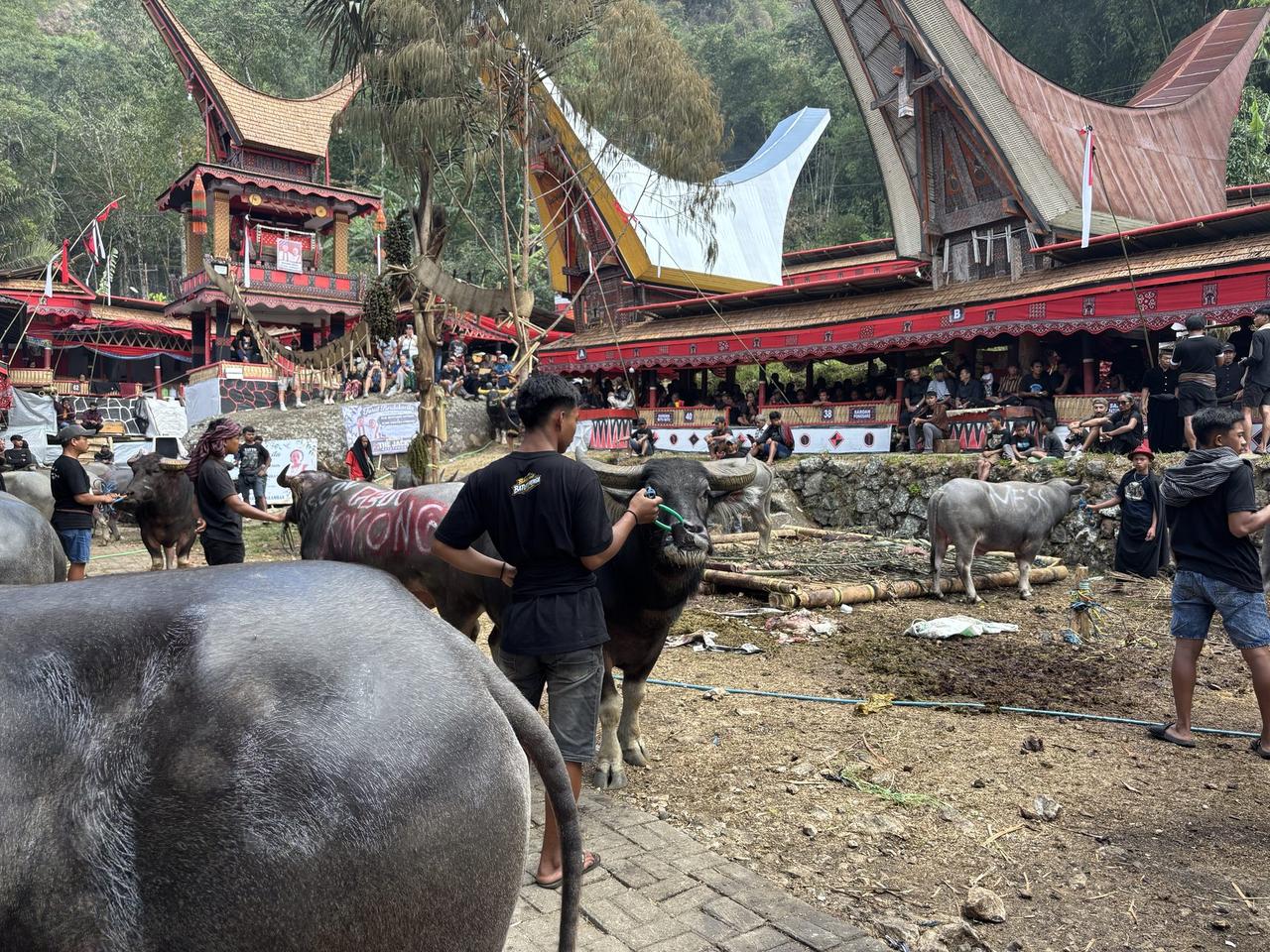
I'd already heard the reasoning behind tedong as a sacrifice during Ma'nene, an animal companion for the journey to Puya, the afterlife, and a direct reflection of how much a family can afford to honor someone. Rambu Solo is where that reasoning reaches its fullest scale. This was the same market logic I'd watched play out at Pasar Bolu, buffalo selling for tens of millions of rupiah, except here the price tag wasn't abstract anymore. Each animal led into the plaza that day represented a specific, considerable amount of money, spent specifically so this particular family could be honored as thoroughly as their standing required. Chalked names and markings on some of the buffalo told me they'd already been assigned, gifts from specific families waiting for their moment.
The Sacrifice Itself
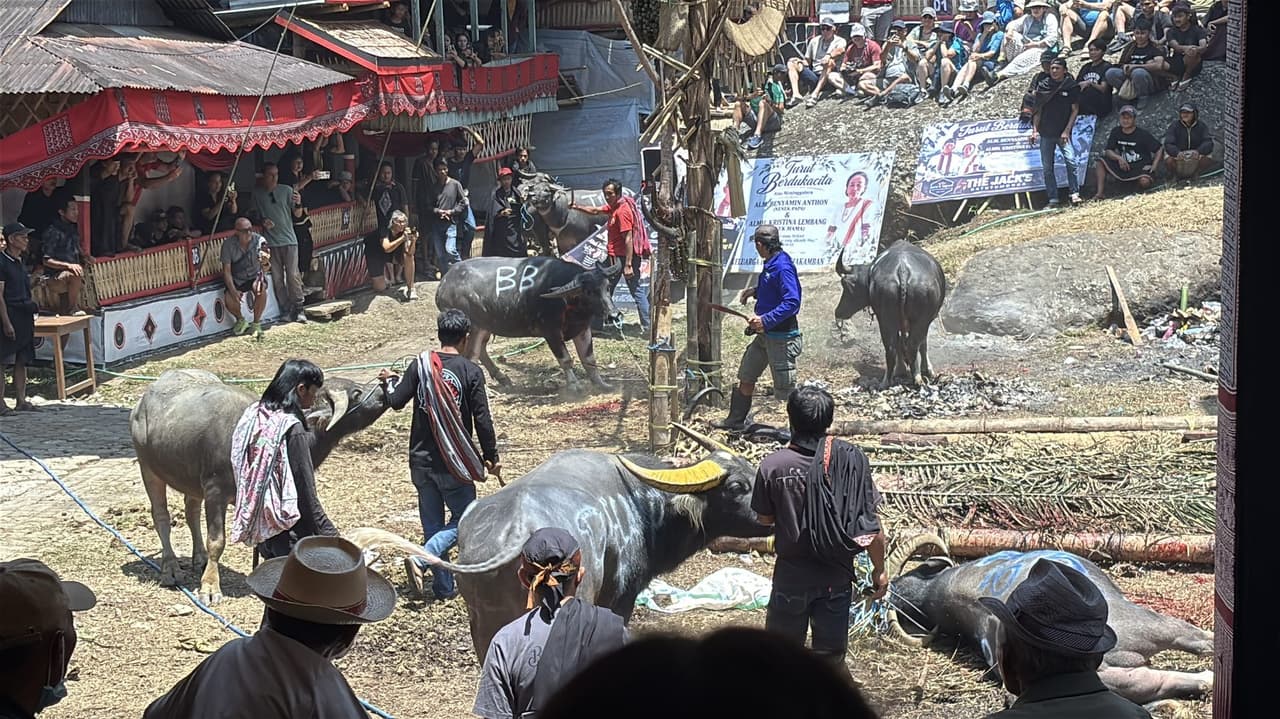
A note before this section: the photograph below shows the moment of the sacrifice itself, including blood. If that's not something you want to see, feel free to skip past it.
I'd seen a water buffalo sacrificed once already, during Ma'nene, where the animal was struck through the chest and went down quickly. Rambu Solo does it differently: a cut across the throat instead, and the difference in what that does is hard to overstate. Blood came out with real force, the animal struggled, and the whole scene had an intensity nothing on the earlier days of this ceremony had prepared me for. It didn't happen once. Buffalo went down one after another, each preceded by a short address in Toraja I couldn't follow but was told carried genuine respect for the animal and for the person being honored. I won't pretend it wasn't shocking to watch. It was. But nothing about how the family and community treated it read as careless or without weight, and I came away understanding that the intensity itself is part of what makes the gesture mean as much as it does here.
Horns for the House, Meat by Rank
What followed each sacrifice was methodical in a way that balanced out the violence of the moment before it. Hides were removed, organs set aside, and the horns kept back specifically to be mounted later on the family's tongkonan, a lasting, visible record of wealth and honor that anyone passing the house would be able to read for years. The meat itself doesn't just get handed out. Toraja custom assigns cuts according to social rank and role, a system that turns the division of an animal into a quiet display of the community's own structure, who stands where, who's owed what. Day Three's distribution ran mostly to people from outside the village; Day Four's stayed almost entirely within it, the family's own neighbors receiving their share last, and closest to home.
A Meal That Ended the Hardest Two Days
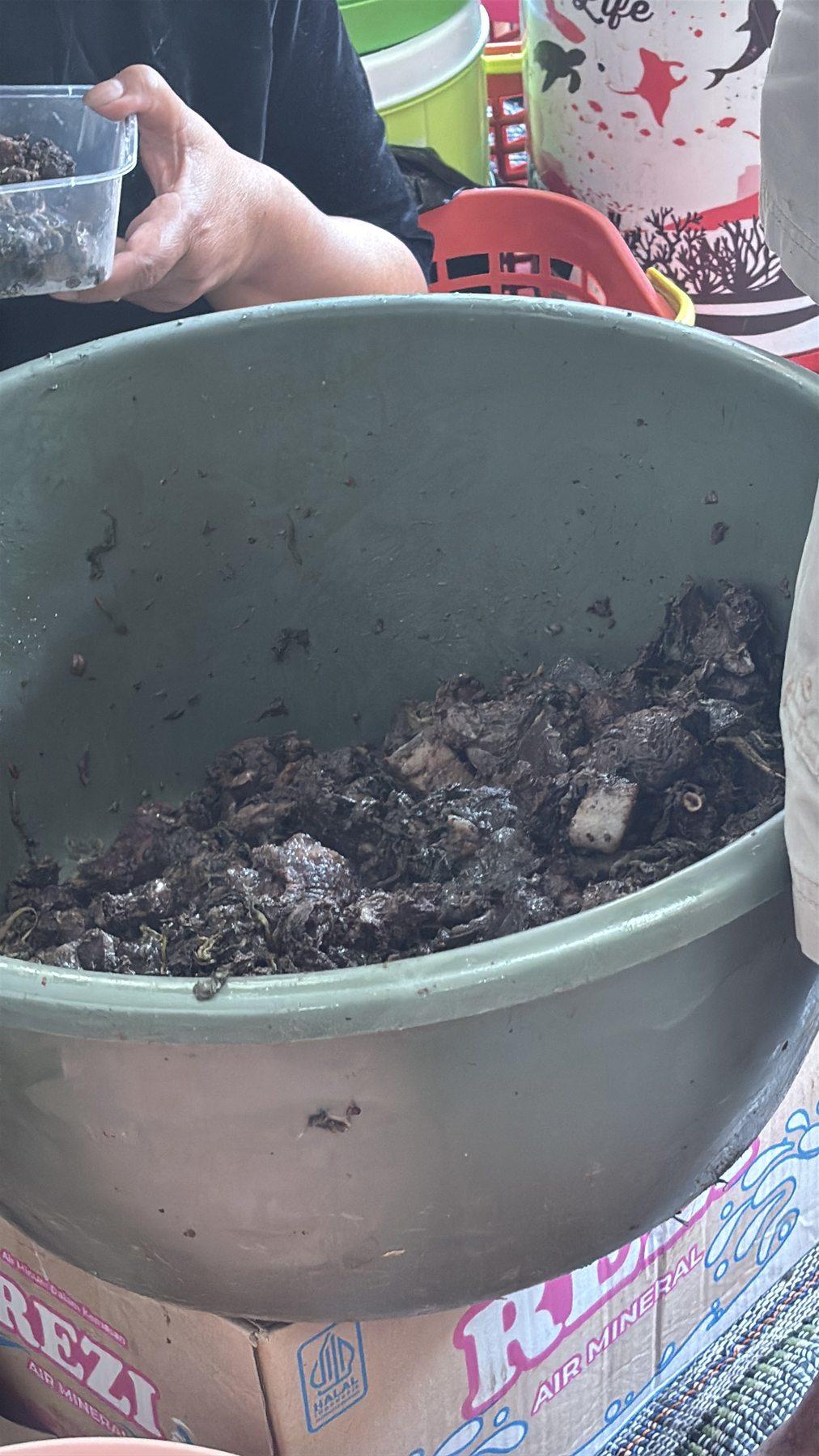
By the time the meat actually reached a plate, it was hard to connect it back to the morning's intensity, and maybe that's exactly the point. We ate together as a group, fatty cuts and lean cuts both, and it was, without exaggeration, some of the best meat I've had anywhere in Toraja. Sitting there afterward, I kept thinking about something the family had said almost in passing: that none of this counts as cruelty to them, that a ceremony this large, this costly, and this intense is precisely how much they believe the two people at its center deserved. I'm not sure I'll ever watch something like Mantunu without feeling the shock of it again. But I understood, more than I had on any single day before it, why they wouldn't have it any other way.