A Morning That Started Before the Sun
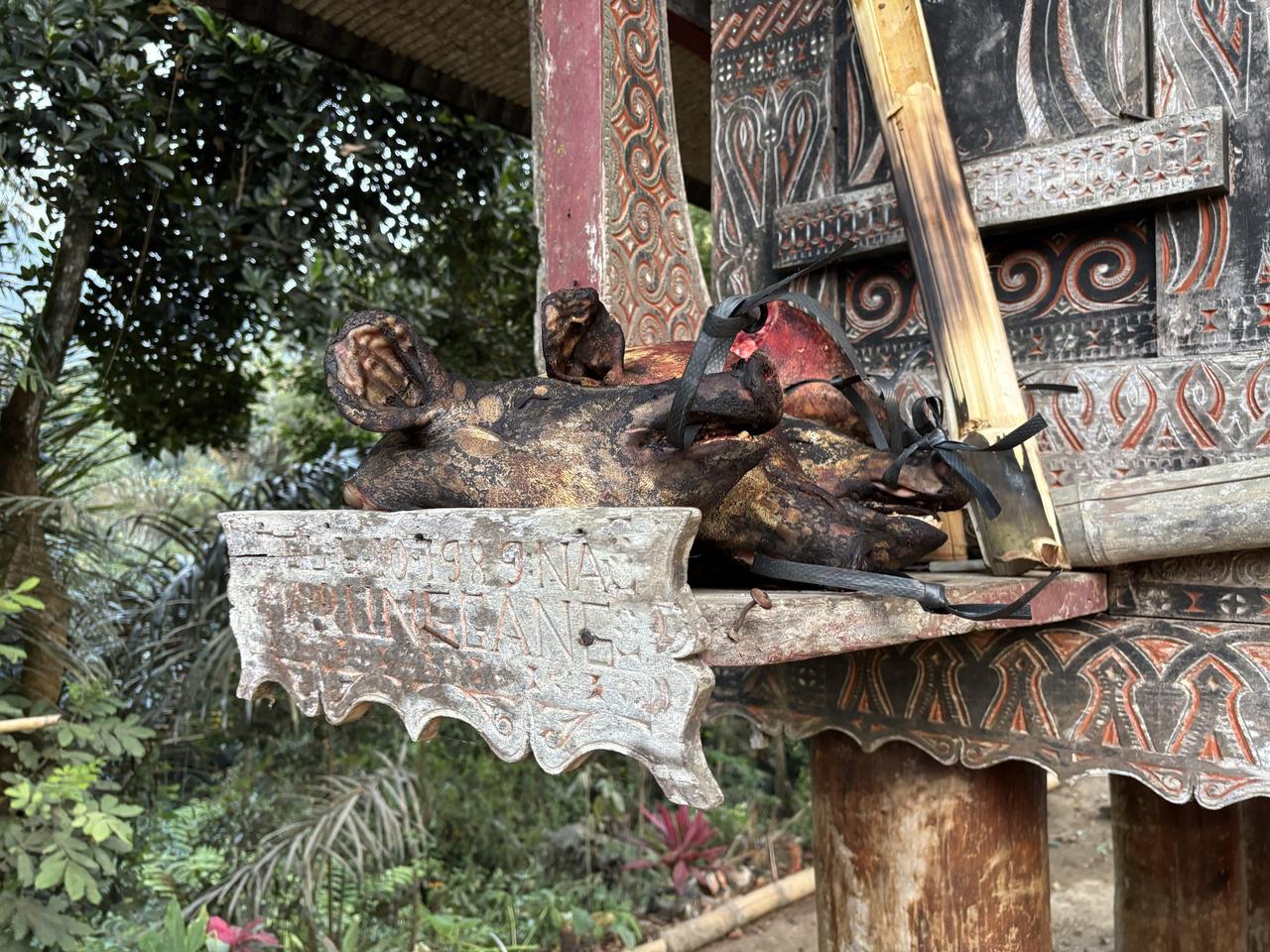
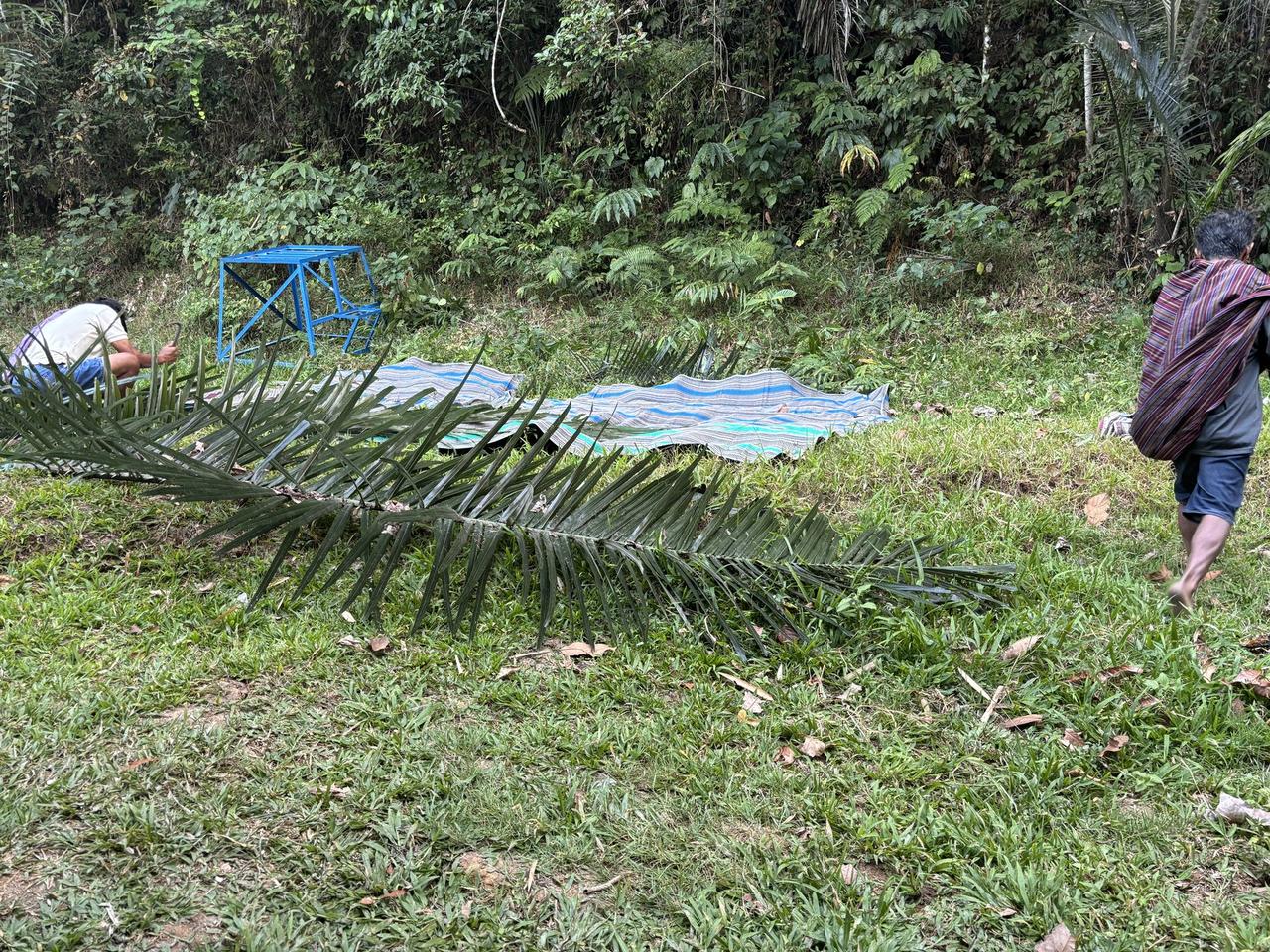
The family had offered me a place to sleep in the tongkonan itself the night before, since the buffalo ceremony was starting early and there was no point riding back down to Rantepao just to turn around a few hours later. Waking up, the first thing I noticed was a pig's head still mounted on the house's carved balcony rail, left over from the offering the day before. By four in the morning, people were already moving, and by the time I was properly awake, banana leaves were being spread out across the ground in long overlapping sheets, the same kind of surface I'd watched pork get butchered on the day before, except this time everyone knew exactly what was coming.
Words Before the Water Buffalo
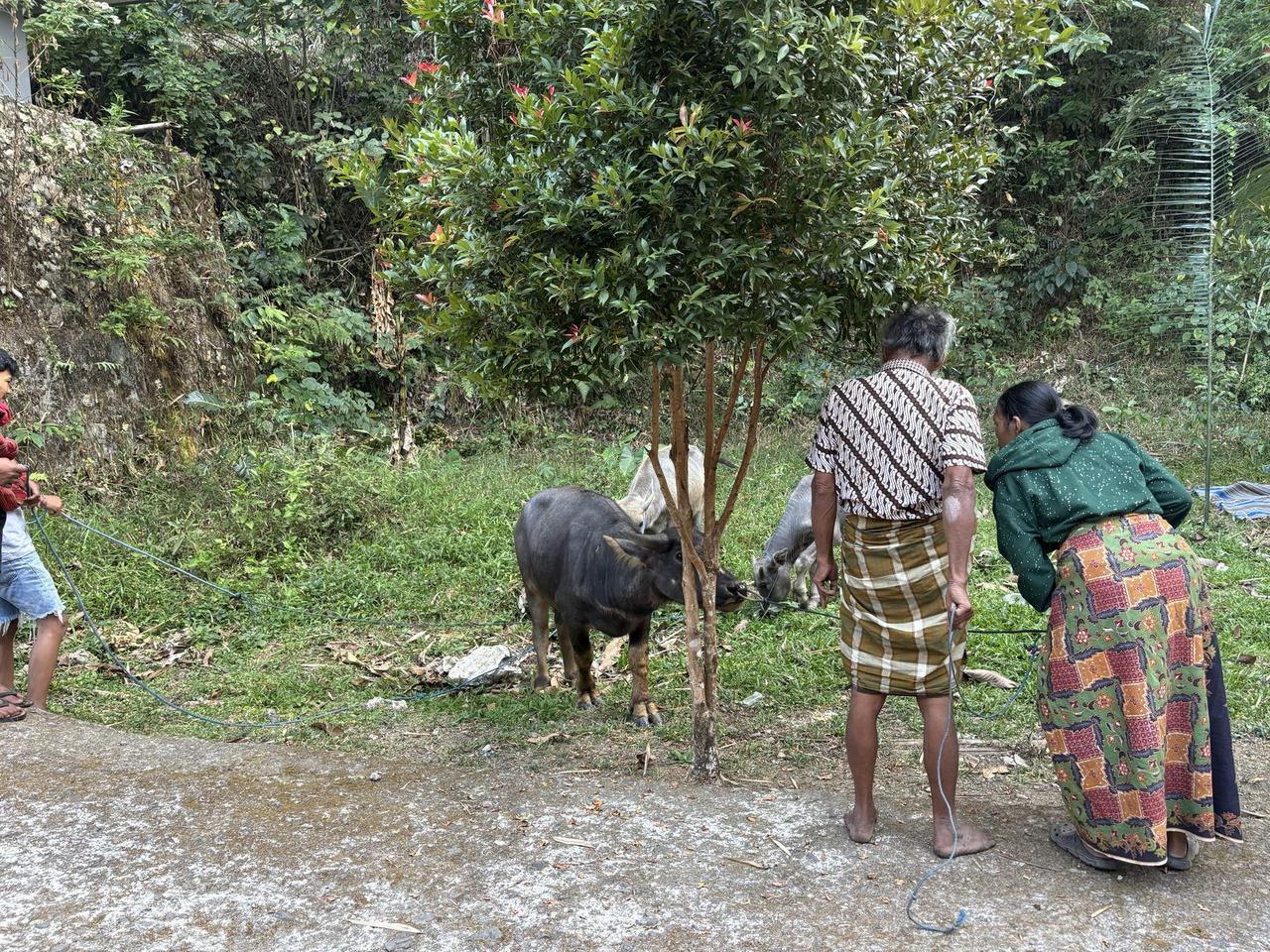
A water buffalo, tedong, is not treated as ordinary livestock anywhere in Toraja, and this day made that as clear as anything I'd seen at Pasar Bolu, where I'd watched buffalo sell for tens of millions of rupiah destined for exactly this kind of ceremony. It's considered a companion for the journey to Puya, the afterlife, and the number a family can afford to sacrifice reflects both their standing and how deeply they honor the person being sent off. Before anything happened to the animal, the men gathered holding what looked like wooden ceremonial swords and spoke, in Toraja language I couldn't follow directly but was told afterward carried real respect toward the animal and real weight about what the ceremony meant to the people performing it.
The Water Buffalo Ceremony
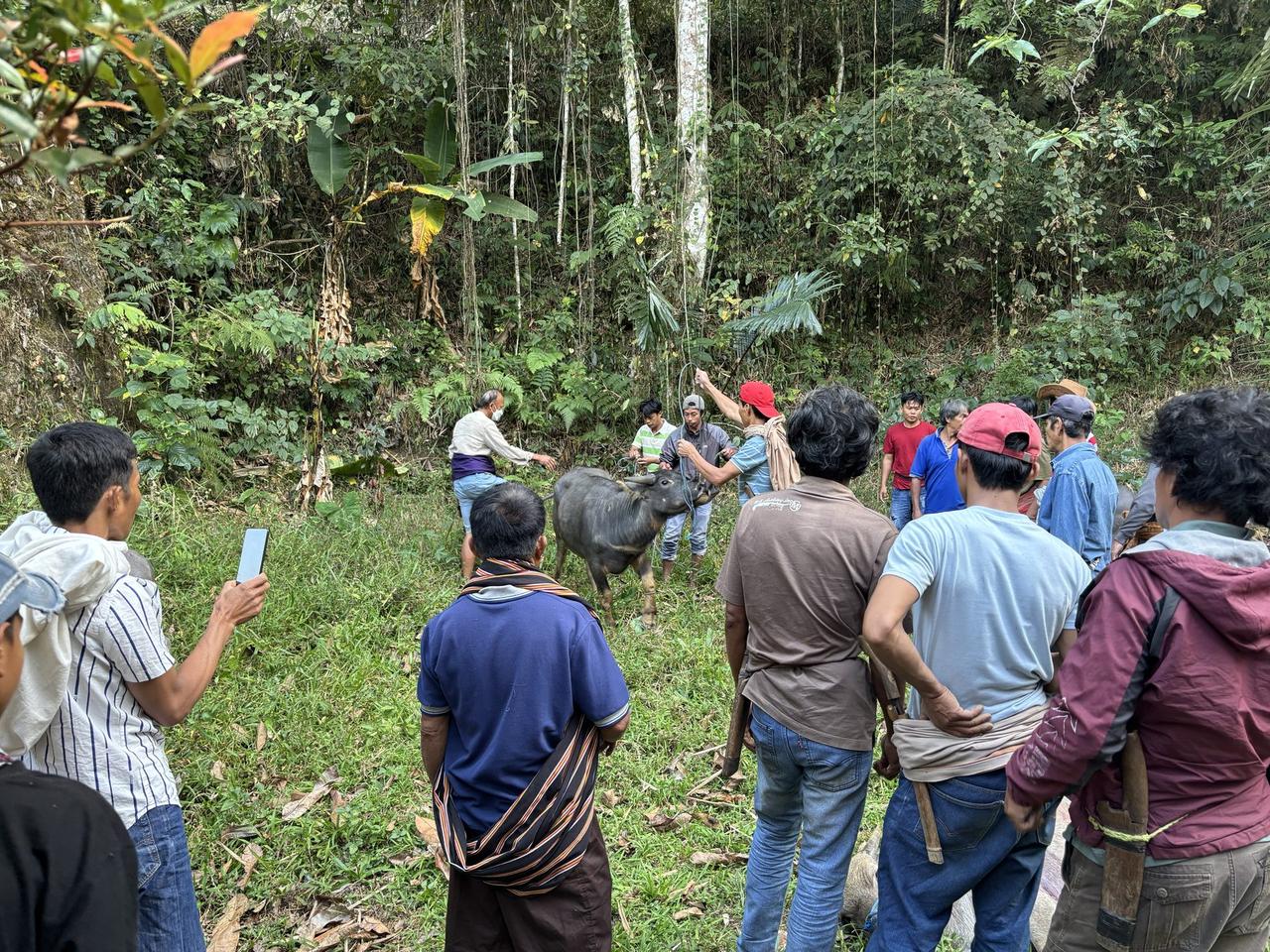
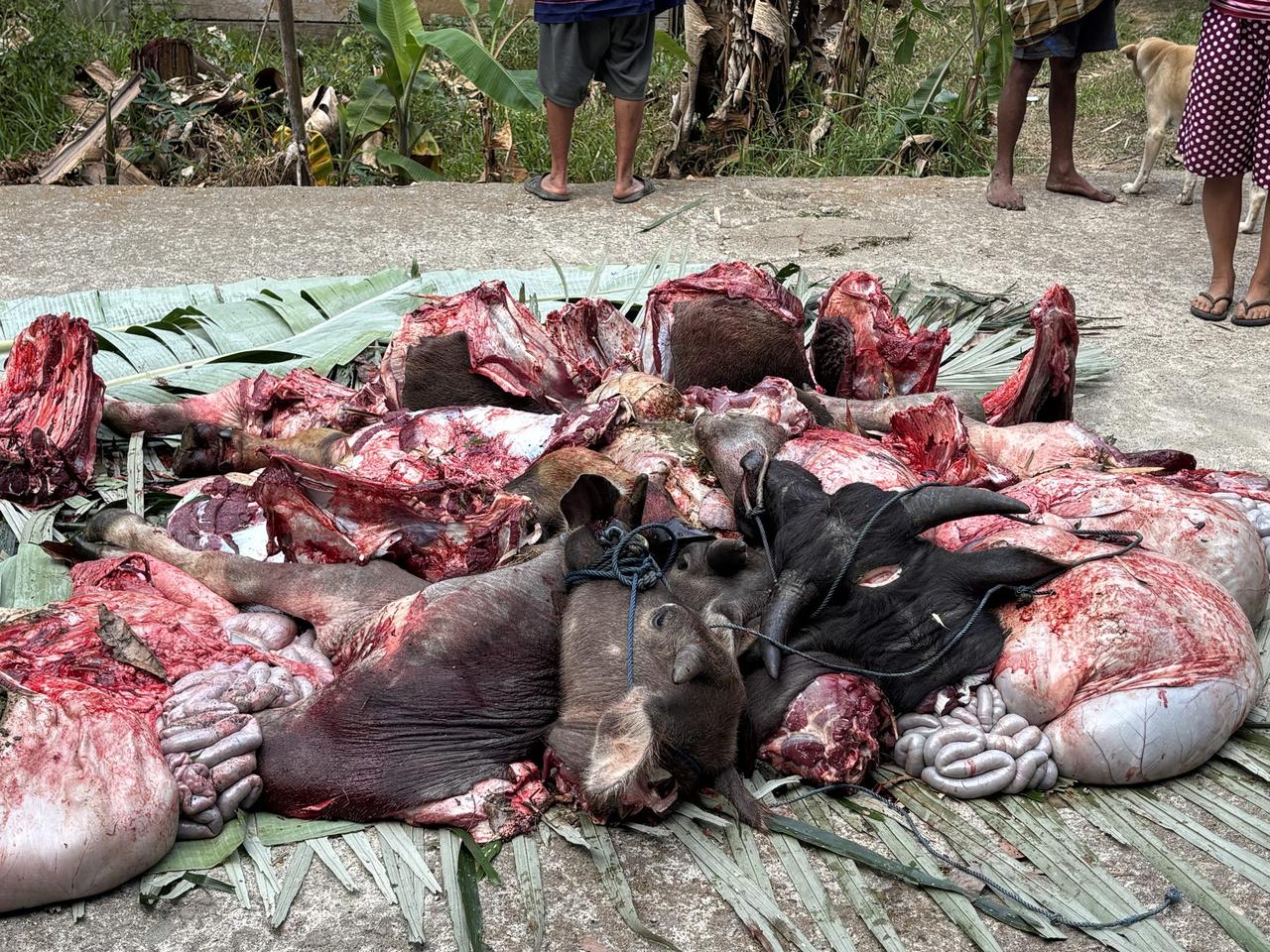
A note before this section: the photograph below shows the sacrifice itself. If that's not something you want to see, feel free to skip past it.
The ceremony took place just after seven, the whole family gathered in a clearing to watch. What happened was quick, and it was clearly the most solemn moment of the entire five days, a sharp contrast to how loud and warm parts of Day Two had felt. Nobody treated it lightly, and nobody looked away either.
Nothing Left to Waste
What came next was the same process I'd watched with the pigs on Day Four, scaled up. The buffalo was butchered on the spread banana leaves, organs and cuts separated and laid out methodically, nothing set aside or discarded. Seeing it right after the ceremony itself, rather than a day removed the way I'd experienced it with the pigs, made the connection between the sacrifice and the meal that would eventually come from it feel much more direct.
Carrying the Offering to the Tomb
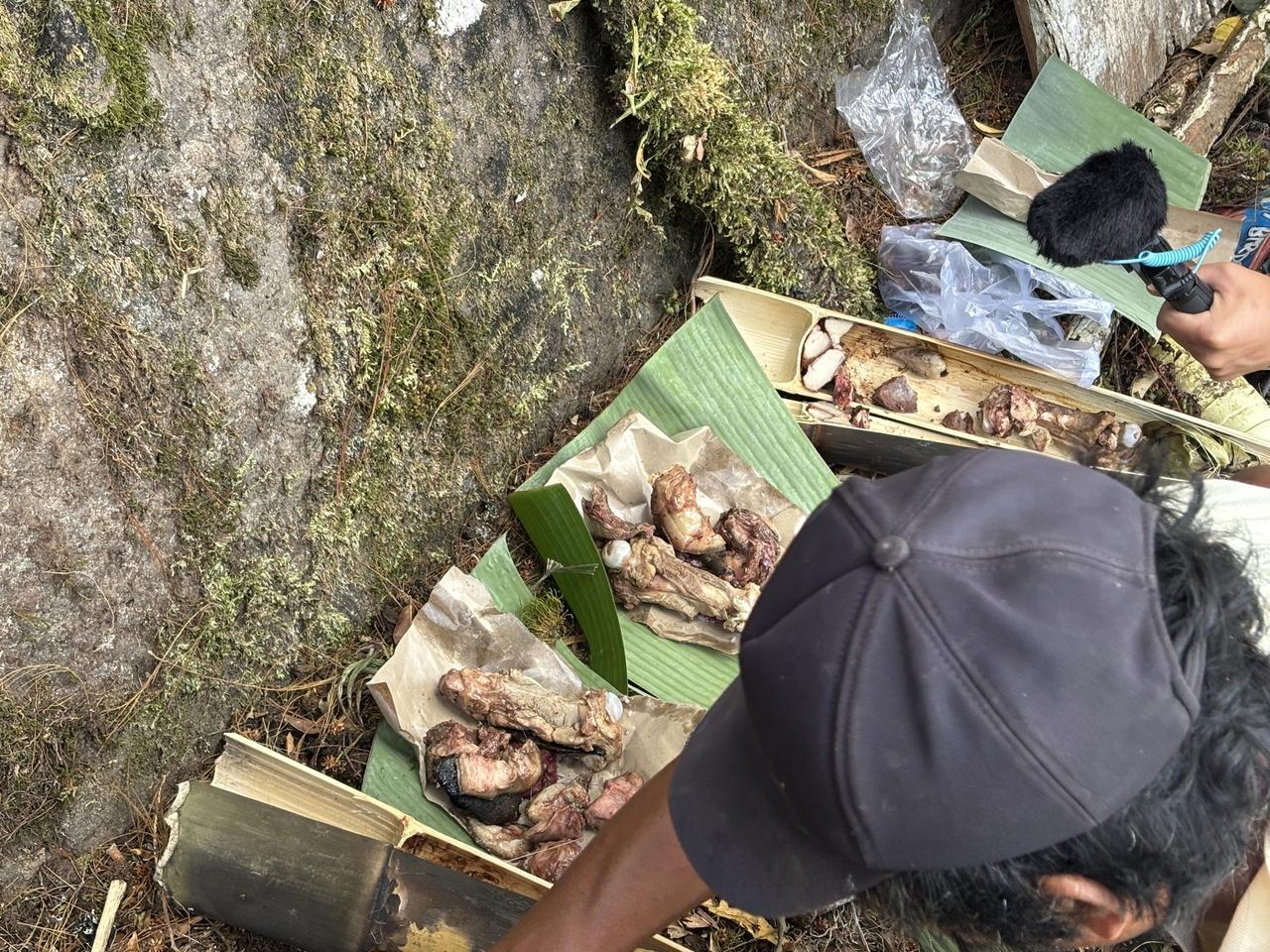
Once the meat was ready, portions of it, along with the pork that had spent the previous day slow-roasting in bamboo, were carried to the tomb itself and set in front of the ancestors one last time. This was the actual moment of thanks, food placed before the people the entire five days had been organized around, a final "we've cleaned your home, we've looked after you, watch over us" before anything else happened. It struck me as the quietest kind of gratitude, food rather than words, set down and simply left there.
Closing the Door That Opened on Day One
Before the tomb was sealed for what could be another three, four, or five years, the family gathered panggang, betel leaf, lime, and areca nut, along with whatever else felt right, and laid it all together as a final offering.
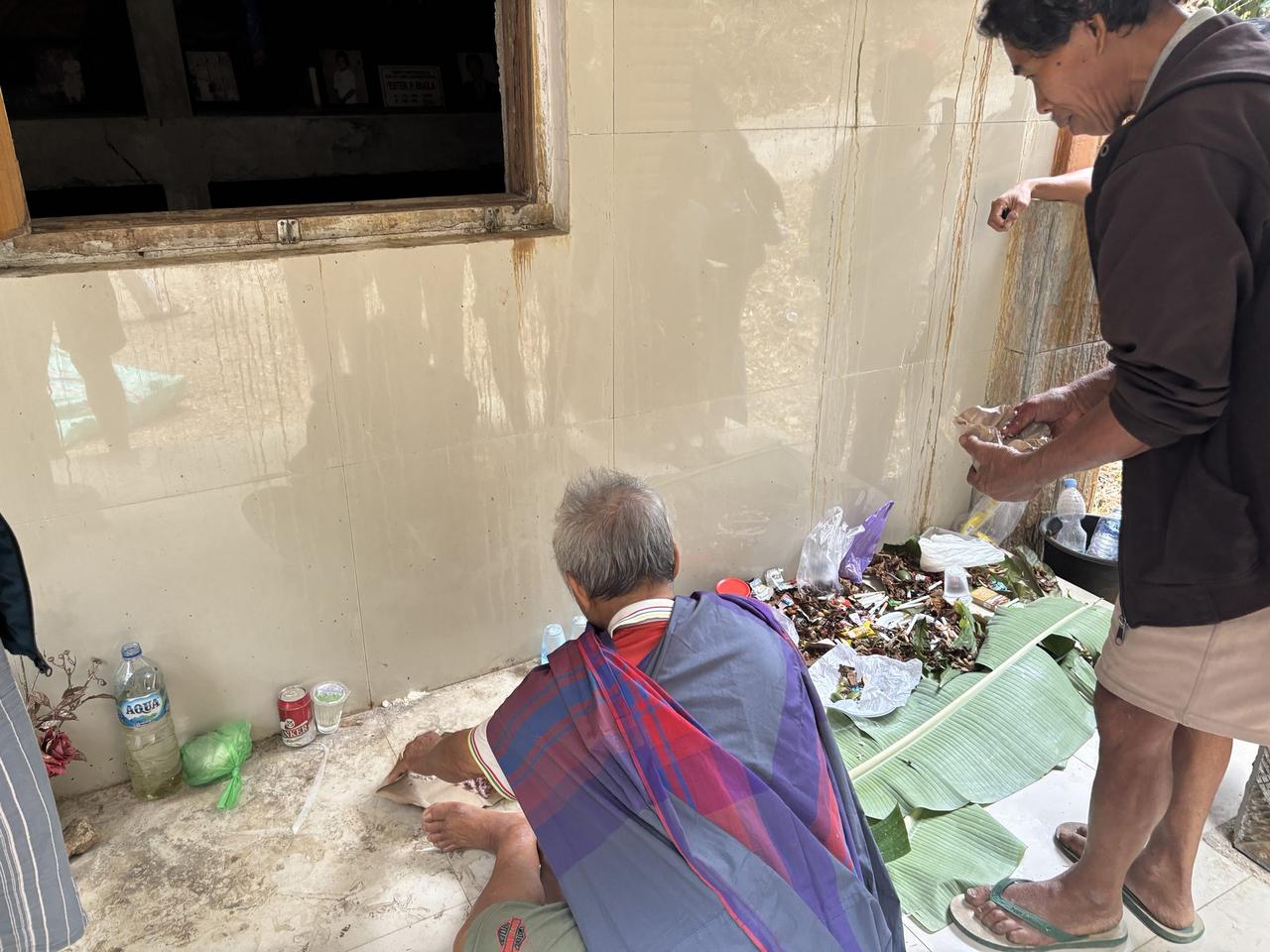
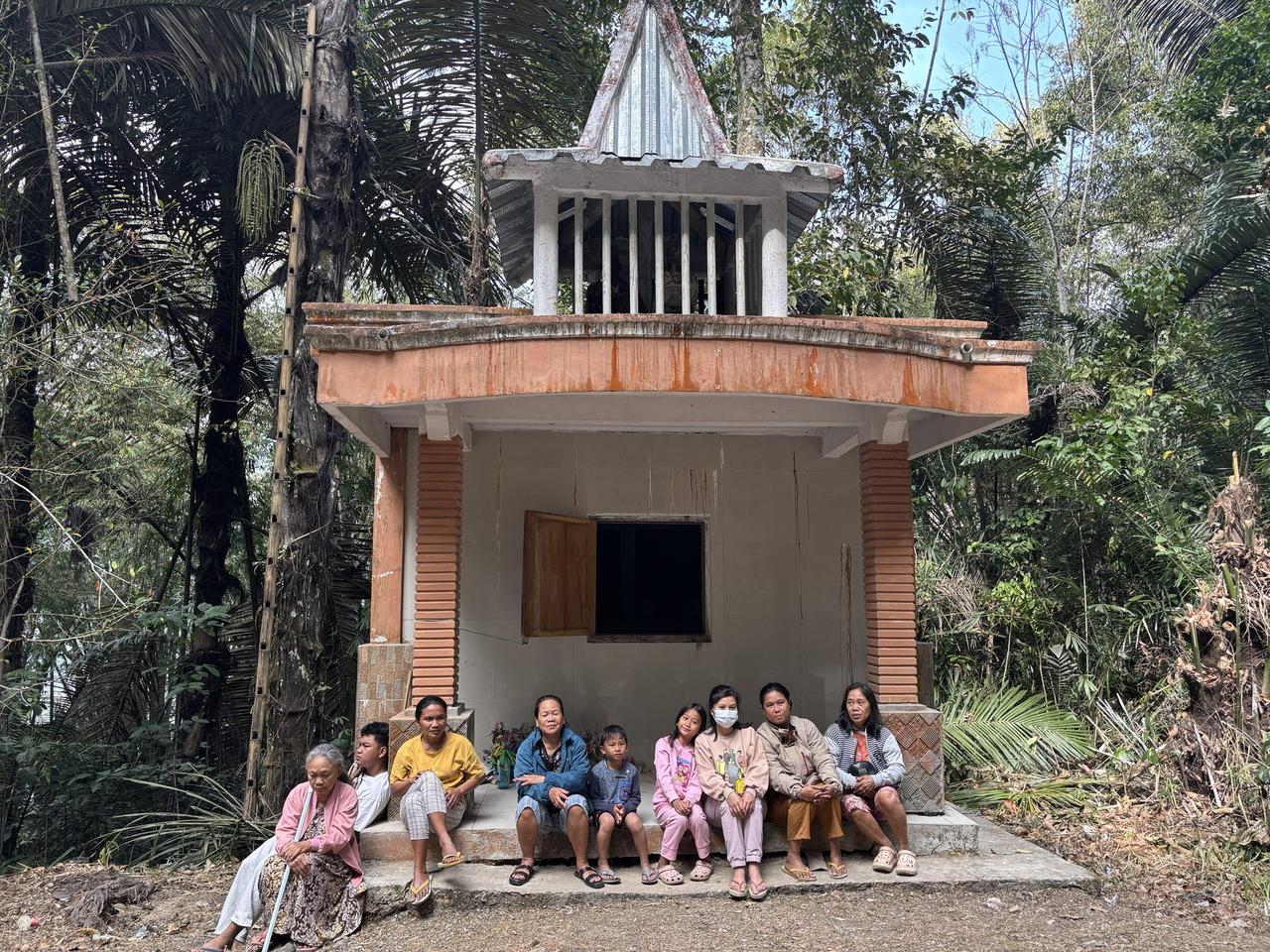
Then the door closed. Whatever type of tomb it was, Patane or Liang, this was the same door I'd watched opened carefully on Day One, and shutting it now brought the whole arc back around to where it started: open, reunite, clean, offer, close. Sitting for a family photo afterward at the Patane, everyone still in the clothes they'd worn all week, felt like the natural way to mark that the circle was finished.
A Meal, Then a Fight That's Not Really a Fight
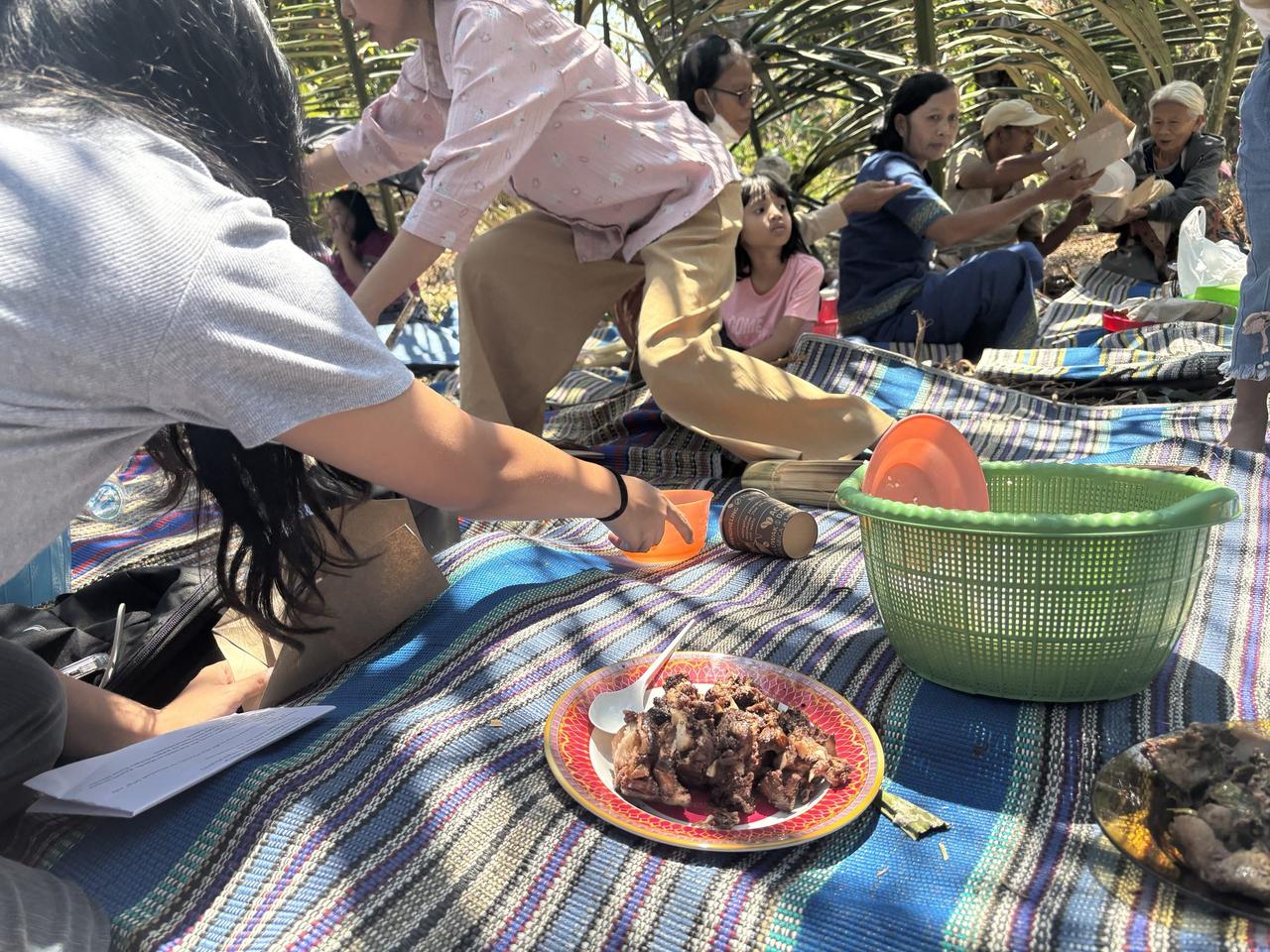
After the tomb closed, everyone ate together, woven mats spread out in the shade, plates of the buffalo and bamboo-roasted pork passed around to family who'd traveled in from elsewhere in Indonesia and abroad just for this. About an hour later, we moved roughly a kilometer to a different spot, where meat gathered from several villages was pooled together in the middle of an open ground for what looked like an auction, followed by another round of shared food.
The very last thing I saw that day was Sisemba, a village kicking festival I didn't manage to photograph, things were moving too fast by that point. Men and boys face off in an open field and kick at each other with bare feet, no grabbing allowed, meant as a celebration of the harvest and a show of strength heading into whatever comes next. There's a rumor that it once settled real disputes between villages, though nobody could confirm that for certain. What I can confirm is that the kicks looked completely genuine, faces set and serious, both among the adults and the kids who went at it just as hard. And yet the rule afterward is absolute: no grudges, no anger carried home. Something that violent immediately followed by that much composure felt like the perfect way to end five days built entirely around the idea that Toraja's dead are never really gone, just occasionally, carefully, brought back into the light before being sent to rest again. Watching the whole arc from Day One's opened door to this field full of kicking, laughing men, I understood something about this ceremony I don't think I could have gotten from any single day alone: the quiet care of the first three days and the noise of the last two aren't in tension with each other. They're the same gratitude, expressed in two completely different registers.