A Third Village, and a Quieter Kind of Work
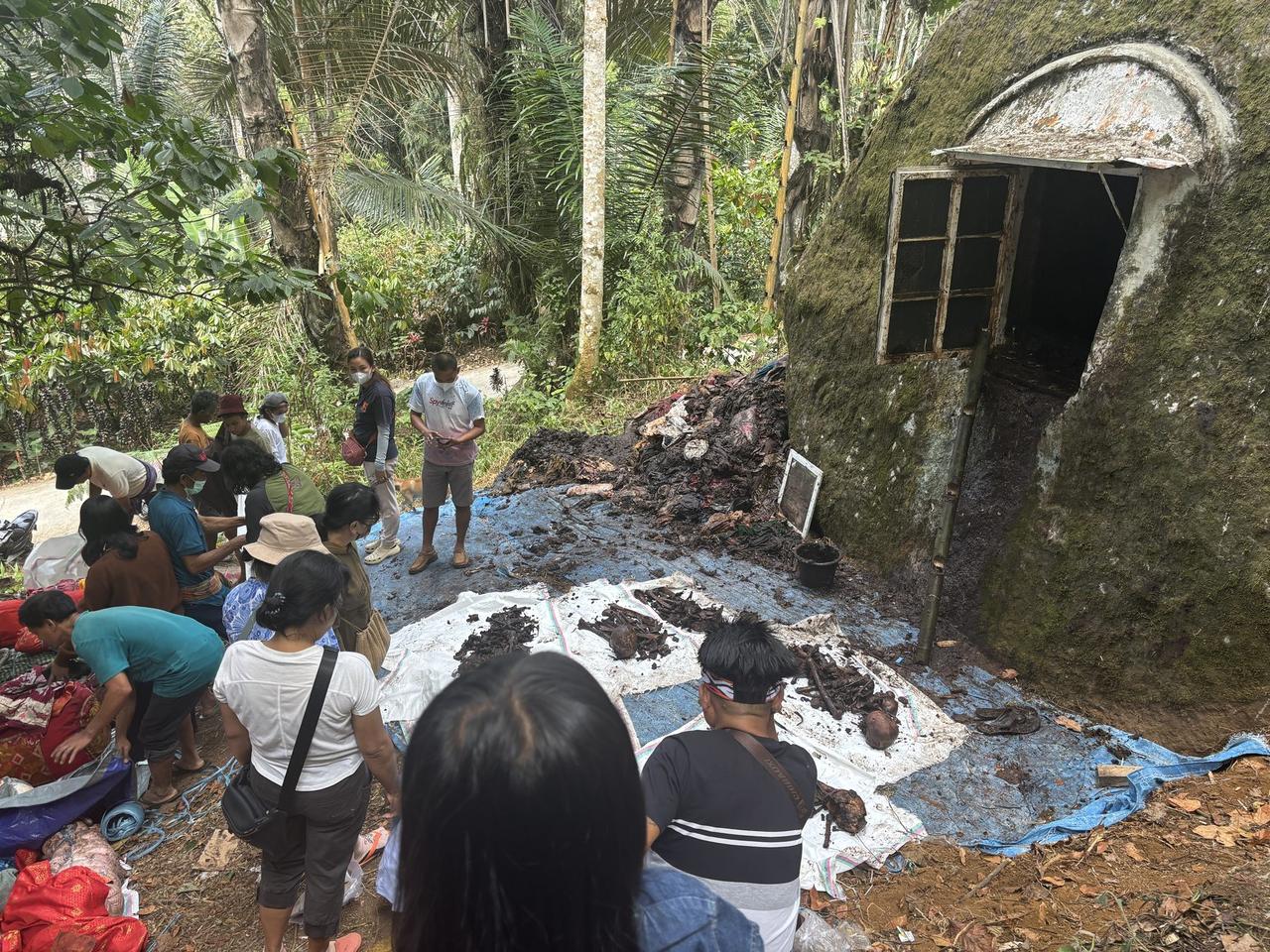
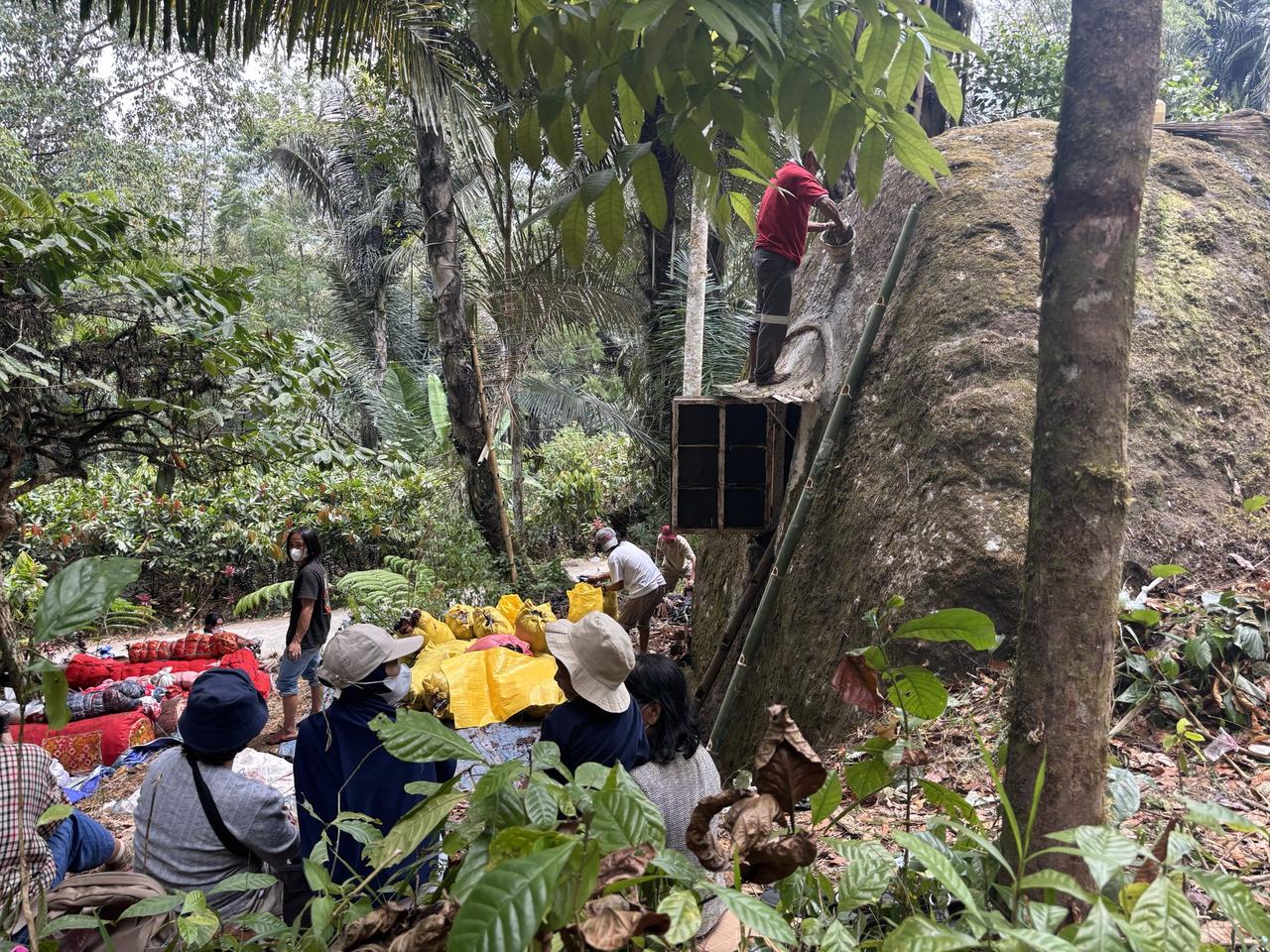
Of the four Ma'nene ceremonies running that week, I'd already visited the highest site on Day One and Two. For Day Three I went to a different one, the middle of the four, where the coffins had already been carried out and the family was now working on something less dramatic but no less necessary: cleaning out the tomb itself. A pile of old debris sat off to the side on a tarp, whatever had accumulated in the chamber over years of being sealed shut, while family members worked around the open rock face clearing out what was left inside.
Old Bones the Cleaning Turned Up
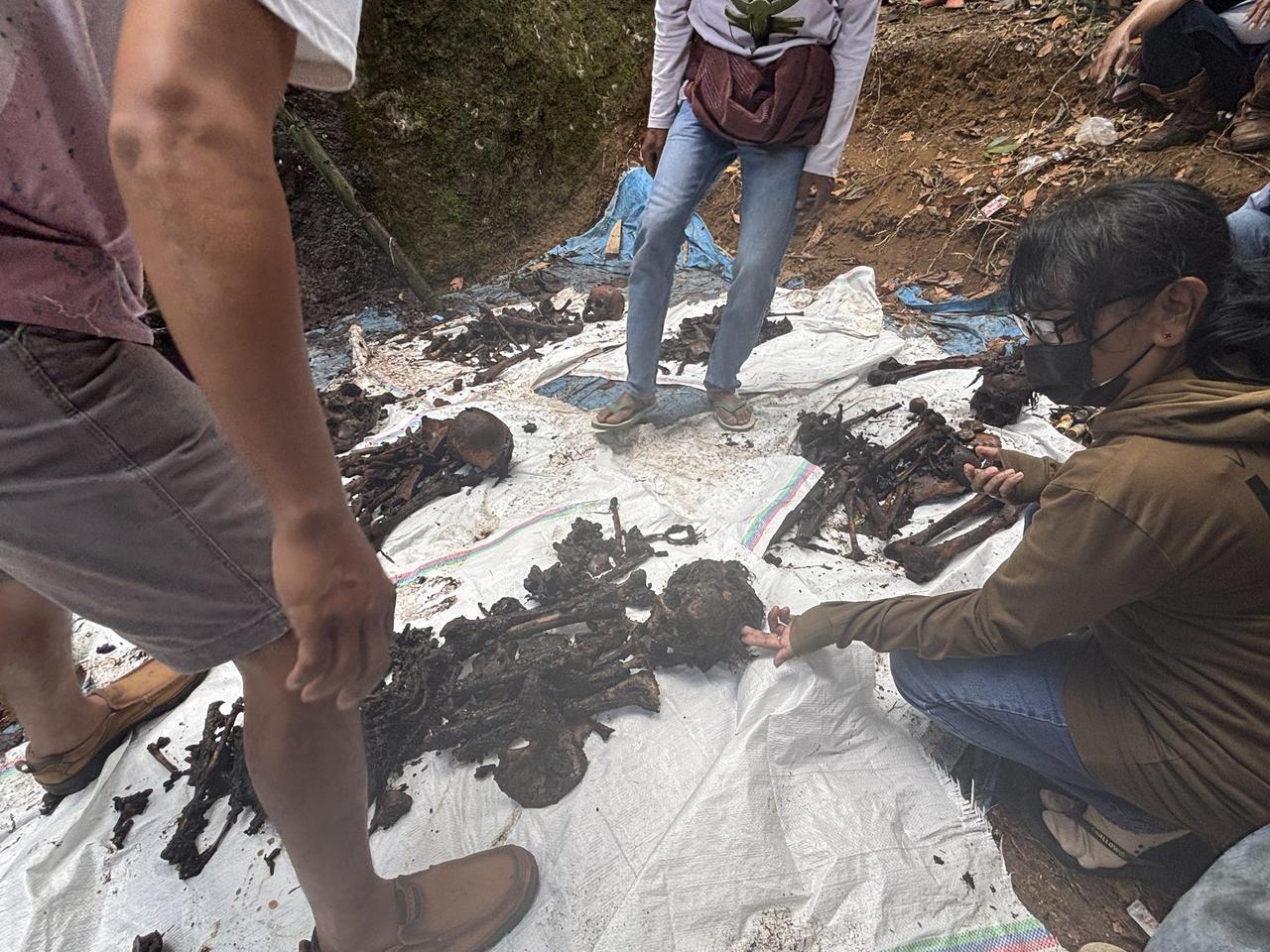
Partway through, the cleaning turned up something I hadn't expected: loose bones and a skull, laid out on a tarp to be gathered and put back in proper order. Nobody seemed alarmed by it, just matter-of-fact, another part of the job. The family explained that the overall shape of Ma'nene stays consistent from one household to the next, open, reunite, clean, return, but the details and the pace are entirely up to whoever's running it that year. Some families move through all of it quickly. Others take their time. This particular chamber wasn't especially large from the outside, but it went back further than I expected, and dozens of family members had been laid to rest inside it over the generations. Most of the people doing the actual climbing and cleaning that day were young, which matched something I'd already noticed on Day One: whatever skill and comfort this work requires, it's clearly still being handed down rather than fading out.
The Day Nobody Was Smiling
This was the day the mood actually changed. Day Two had been warm, loud almost, full of families laughing and talking to relatives they were happy to see again. Day Three felt different, quieter, and more than once I noticed people who just looked a little sad. It took me a while to place why, and then it clicked: this was the day everything goes back into the rock. Getting to see someone again after years apart is one thing. Watching that same person disappear back into a sealed chamber, possibly for another three or four years, is a different kind of feeling entirely, even when everyone involved understands and accepts why it has to happen.
Sealing the Door Again
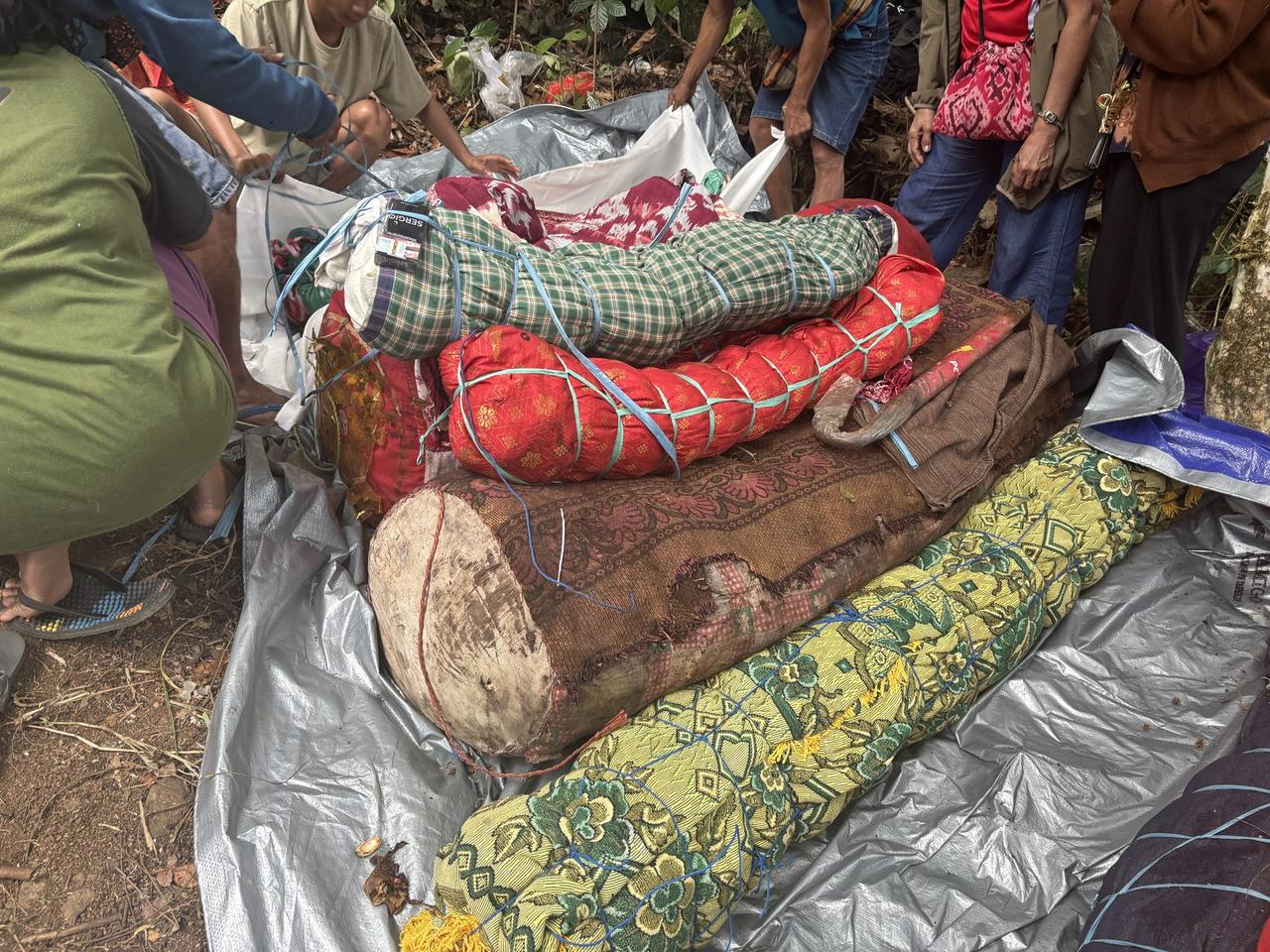
Once the chamber was clean and the wrapped bundles were carried back inside, the last job was closing everything back up. I watched a man standing on top of the boulder itself, working plaster into the seam around a reopened door frame, sealing it the same way it must have been sealed the last time this family gathered here. A Patane, being a built house rather than carved stone, gets a version of the same treatment at ground level: swept, straightened, and shut again rather than resealed with plaster. Either way, the effect is the same. What had been opened for three days, first for inspection, then for reunion, then for cleaning, was now closed once more, and would likely stay that way for years.
A Meal for Anyone Who Came
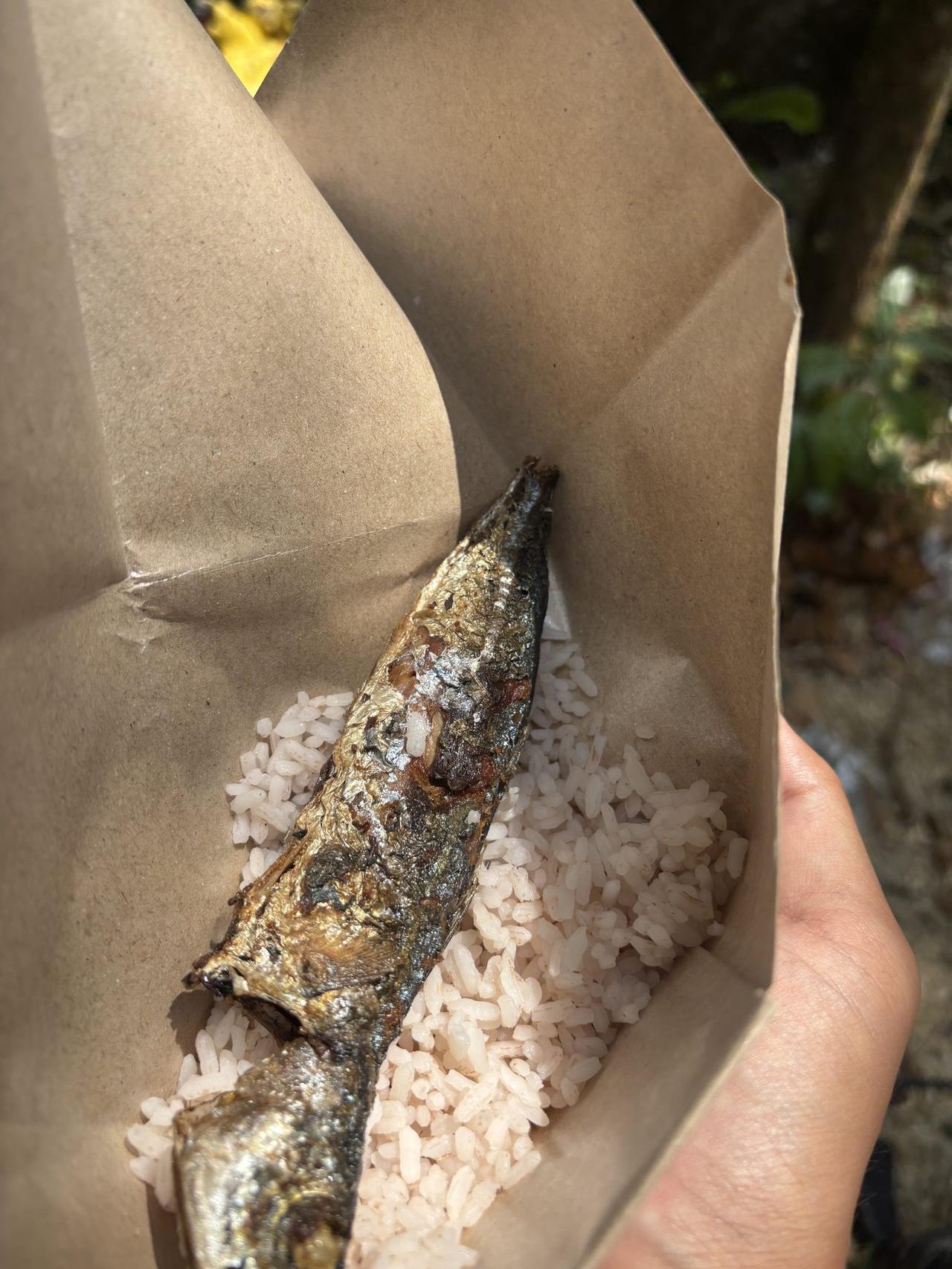
Once the work was actually finished, the family fed us. Grilled fish over rice, wrapped simply in paper, handed over generously and without hesitation, the same way it had been on the first two days too. What struck me each time was how consistent the welcome was regardless of the day's mood. Even on a day this quiet, with people visibly a little down about sealing a chamber shut again, nobody treated a visitor as an intrusion. If anything, being there and showing the right respect for what they were doing seemed to be met with real gratitude that someone had bothered to come at all.
Baro, Poured From a Bamboo Tube
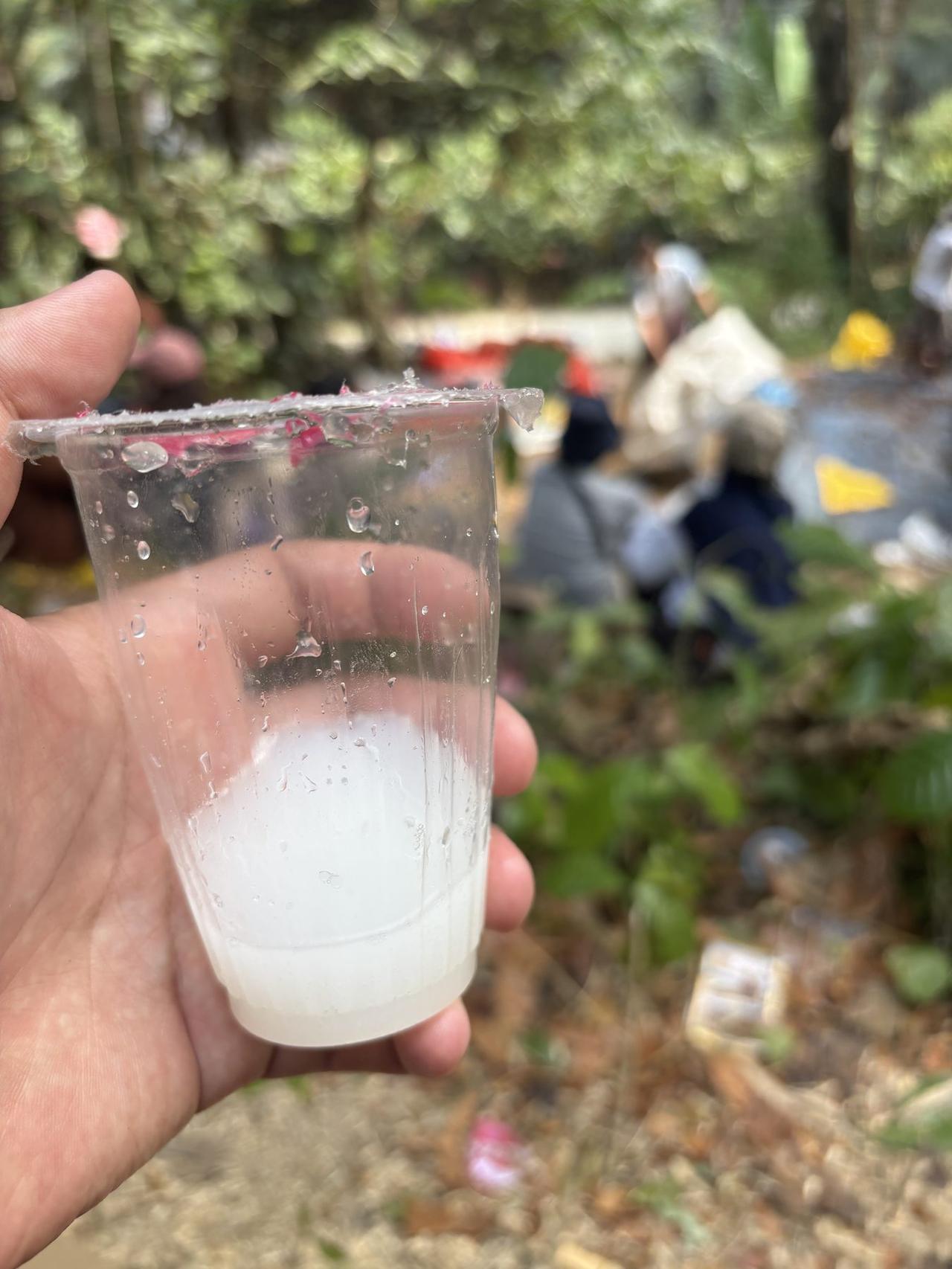
The day closed with baro, a cloudy white palm wine usually served straight from a length of bamboo. It had a noticeable sourness to it, and I was told the strength varies a lot from batch to batch, sometimes mild, sometimes considerably stronger. It reminded me of a drink I'd had once in the Philippines, something similarly pale and fermented, and it's apparently a close cousin of tuak, found under different names in different parts of Indonesia. Of the versions I've tried so far, baro was easily the most approachable. Drinking it standing near the boulder, with the tomb freshly sealed behind us, felt like the right way to close out the three days that make up Ma'nene's core arc: open the door, welcome the ancestors back, then clean up and see them off again, all before whatever comes next in the ceremony begins.