A Tip From an Acquaintance
I heard about this one the way I hear about most things worth going to: secondhand, almost in passing, from someone who happened to mention it while we were talking about something else entirely. A festival, up in the hills outside Ambon, this coming Tuesday. That was the whole pitch. I didn't have a name for it yet, didn't know its history, didn't know it was the first time it had ever happened. I just knew there was a motorbike ride and a mountain village waiting at the end of it, so I went.
The Village Behind the Name
The ride out took ten or fifteen minutes from the city, uphill the whole way, ending in Negeri Hatalai, a village in the Leitimur Selatan district on the Ambon peninsula. Hatalai isn't just any village stop on a festival circuit; by local history it's considered the founding site of the wider Hatalai community, the place the rest of it traces itself back to. Holding a brand-new cultural festival here, rather than in Ambon city itself, wasn't a random choice. It put the event on ground that already carried some weight before a single tent was pitched.
Paying to Get In
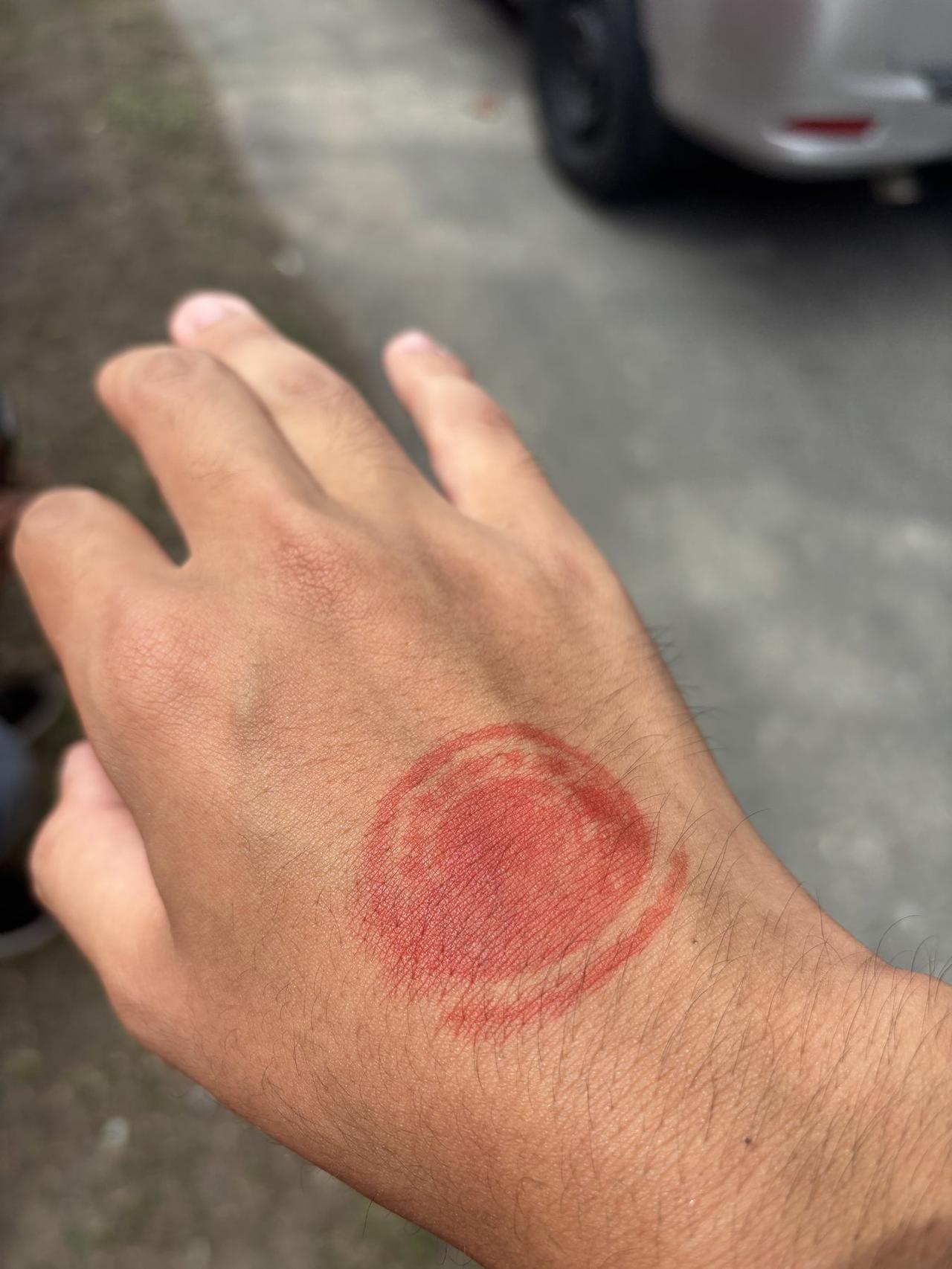
Entry cost somewhere between Rp30,000 and Rp35,000, and the process was refreshingly analog: pay, then get checked in with a hand stamp instead of a ticket or a wristband. Mine came out as a solid red circle stamped across the back of my hand, still visible hours later. It's a small detail, but it's the kind of thing that tells you a festival is new. Nobody had ordered wristbands yet. Somebody just had a stamp, and it did the job.
First Sound Inside the Gate
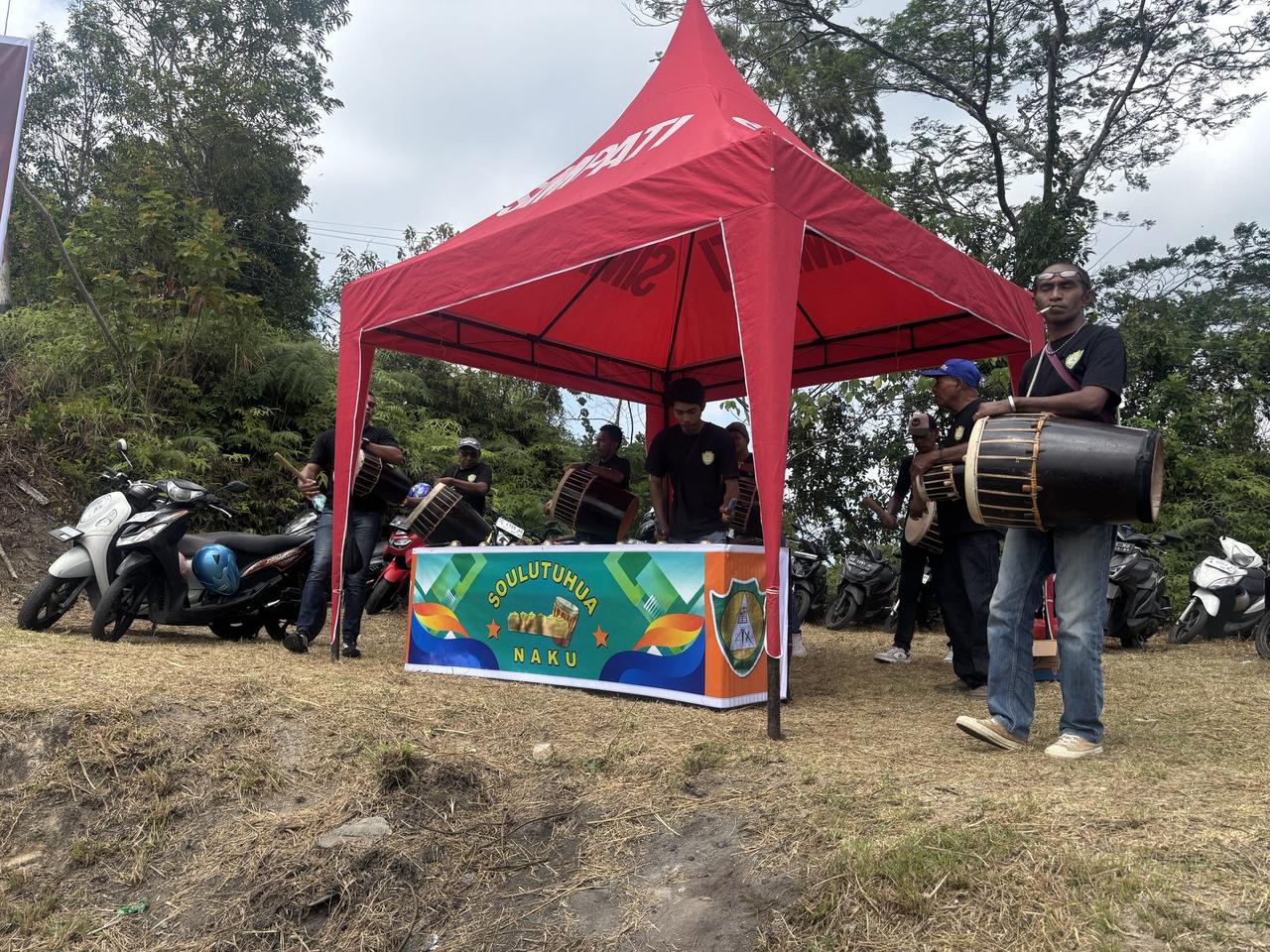
Straight past the entrance, off to the right, a group was already playing tifa under a red tent marked Soulutuhua Naku. I'd seen tifa before, but picking one up, or watching someone else's drumsticks work one at close range, still surprised me: the drum looks heavy, a solid hollowed log with skin stretched across the head, but it's actually light, and the sticks working it are thin, almost delicate for the sound they're pulling out. It set the tone for walking in. Nothing formal about it, no announcer, just a group of guys under a tent playing because that's where the entrance naturally put them, and everyone walking past got a little bit of welcome they hadn't asked for.
Faces Painted Black
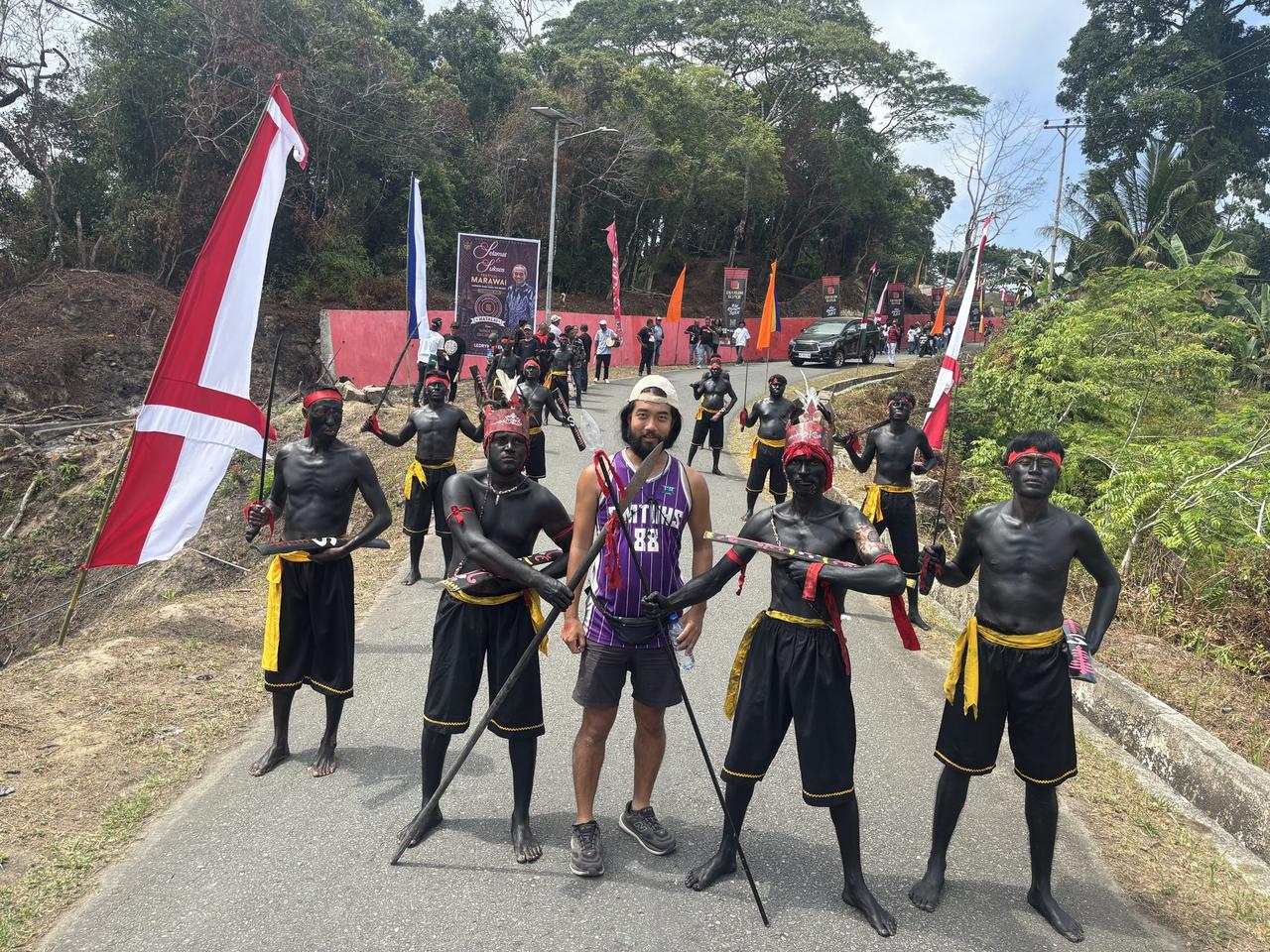
Further in, I ran into a group getting ready for Cakalele, and this is the part of the day that actually stopped me. Their bodies were painted fully black, headbands and sashes in red and yellow, and they were holding real blades, not props, something locally called balang, gripped in the left hand. Cakalele is a war dance, and the name itself apparently carries that meaning: caka relating to evil spirits, lele meaning something like going wild or frenzied. Traditionally it was performed before or after battle, or to pacify ancestral spirits, and the performance leans into that history, frenzied shouting that's meant to look and sound like something closer to possession than choreography. I was told plainly to keep some distance, that the blades were real and the performers weren't exactly restrained while holding them. I still ended up posing for a group photo with them anyway, flags waving on both sides of the road, which in hindsight was probably more access than I strictly needed, but nobody seemed to mind.
A Governor's Idea for a Very Local Festival
What I only pieced together afterward is how new all of this actually was. Festival Marawai had never happened before this exact day, August 25, 2026, the very first edition, initiated by Maluku's governor, Hendrik Lewerissa, under the theme Harmoni Nada Cinta Par Negeri. Ambon's mayor, Bodewin Melkias Wattimena, was there too, and the day opened with a balloon release, the kind of gesture that signals a government is trying to make something feel like an institution before it's had the chance to become one. Officially, the festival is also positioned as a lead-up to the 15th General Assembly of the East Ambon Island Klasis, a larger church-affiliated gathering scheduled for 2027, which explains why a first-time village festival came with this much official presence attached to it. Thousands turned out from villages across the Leitimur peninsula, well beyond what a typical village event pulls in.
The governor's message leaned hard on two ideas that come up constantly in how Maluku talks about itself: Pela Gandong, a kind of brotherhood pact binding villages to each other regardless of religious line, and Ale Rasa Beta Rasa, roughly "what you feel, I feel," a shorthand for shared suffering and shared obligation. He talked about wanting gotong royong, communal cooperation, to keep functioning as an actual practice rather than a phrase, and about wanting Marawai to become an annual fixture on the region's tourism calendar rather than a one-time thing. The mayor added his own ask, that every village in the area set up its own sanggar budaya, a cultural studio, so that dances like the ones on display here have somewhere to be practiced and passed down between festivals rather than assembled once a year.
Ukulele in the Afternoon Sun
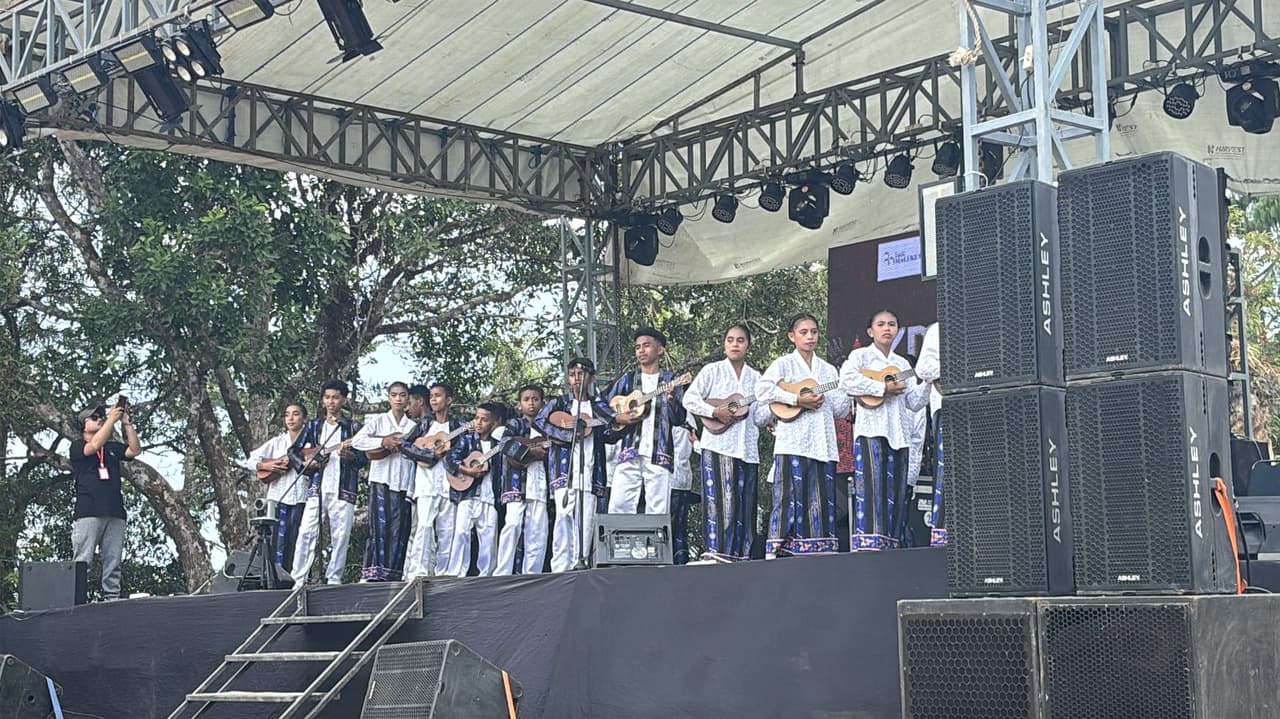
Deeper into the grounds was a proper stage and performance area, with acts of all ages rotating through. One group that caught me was entirely on ukulele, dressed in white shirts and blue-and-gold traditional cloth, standing in a row and playing together rather than dancing. I'd half expected this to connect to something I'd find out about later, but it turns out it didn't map onto anything more specific than exactly what it looked like: a group performing on ukulele, part of the day's music lineup rather than a named traditional dance. Sometimes that's the whole story, and it's worth including on its own terms.
Bamboo Poles, Live at Last
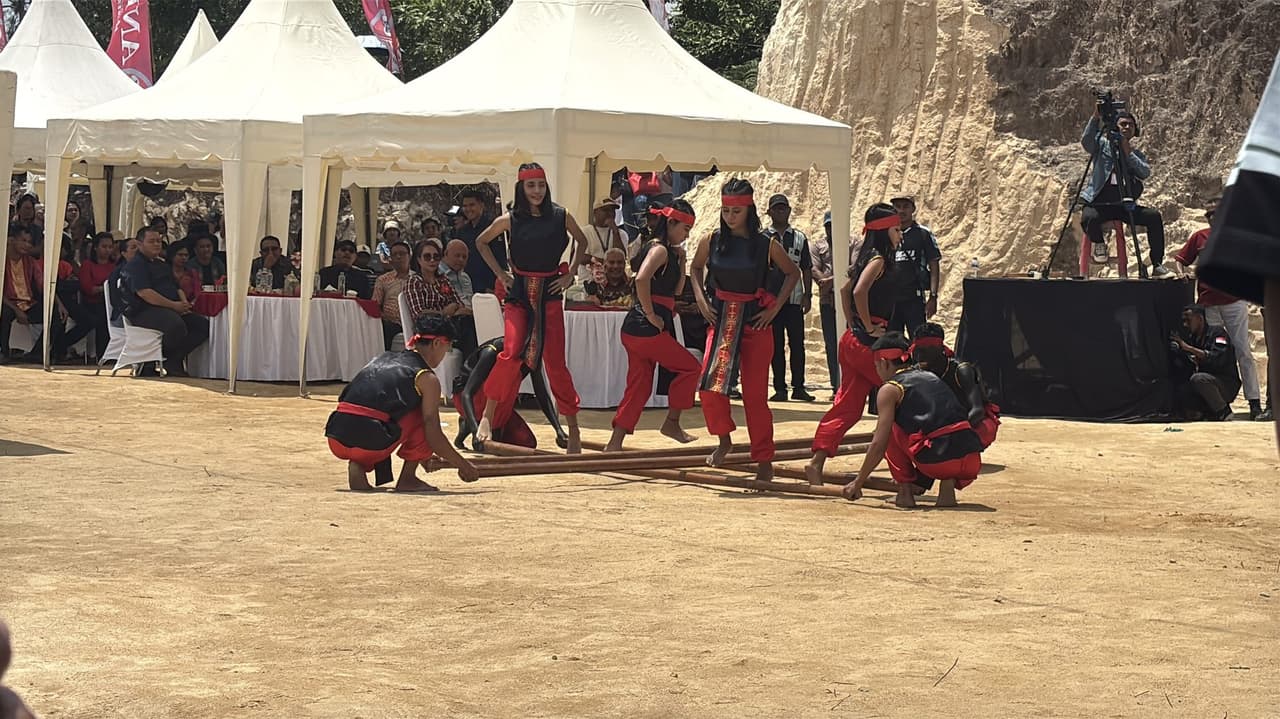
The performance that actually got to me, though, was tari saureka-reka, the bamboo-pole dance that's originally from Ambon and that I'd only ever seen on television before this. Dancers jump between a shifting lattice of poles while a team on the ground claps them open and shut in rhythm, starting slow, building to a much faster clip, then easing back down again. Watching it happen in front of me rather than through a screen changed how I understood it completely; the timing looks almost impossible until you're standing close enough to see how deliberately the ground team and the dancers are reading each other. Somewhere among the crowd I also heard that someone had earlier gotten up uninvited and belted out a rap-style pop song, the kind of unscripted moment that a festival this size can still make room for. I didn't manage to get a photo of that one. Some things you just have to have been standing in the right spot for.
Beans I Didn't Expect to Like
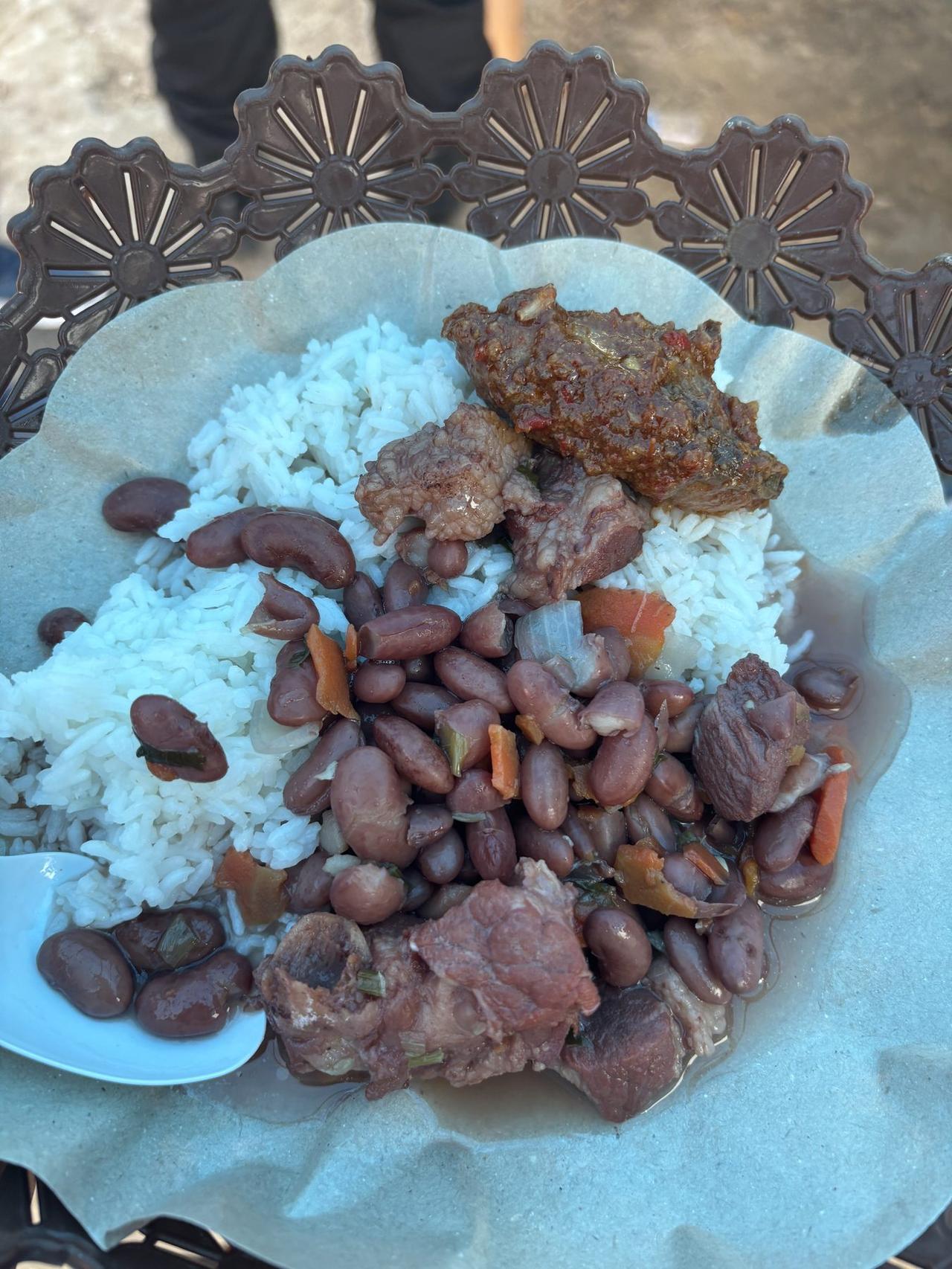
Around midday I was handed a plate of food I wouldn't have chosen for myself: rice, meat, and a heavy serving of red kidney beans stewed with tomato and onion. I don't generally go looking for beans, but this one won me over completely, soft, well seasoned, and clearly cooked slow enough to actually take on flavor rather than just filler status next to the meat. It's a small moment, but it's the kind of thing a first-time festival gets right without needing a marketing plan behind it: someone's actual home cooking, served because that's what you do when people come to your village.
When the City of Music Takes the Stage
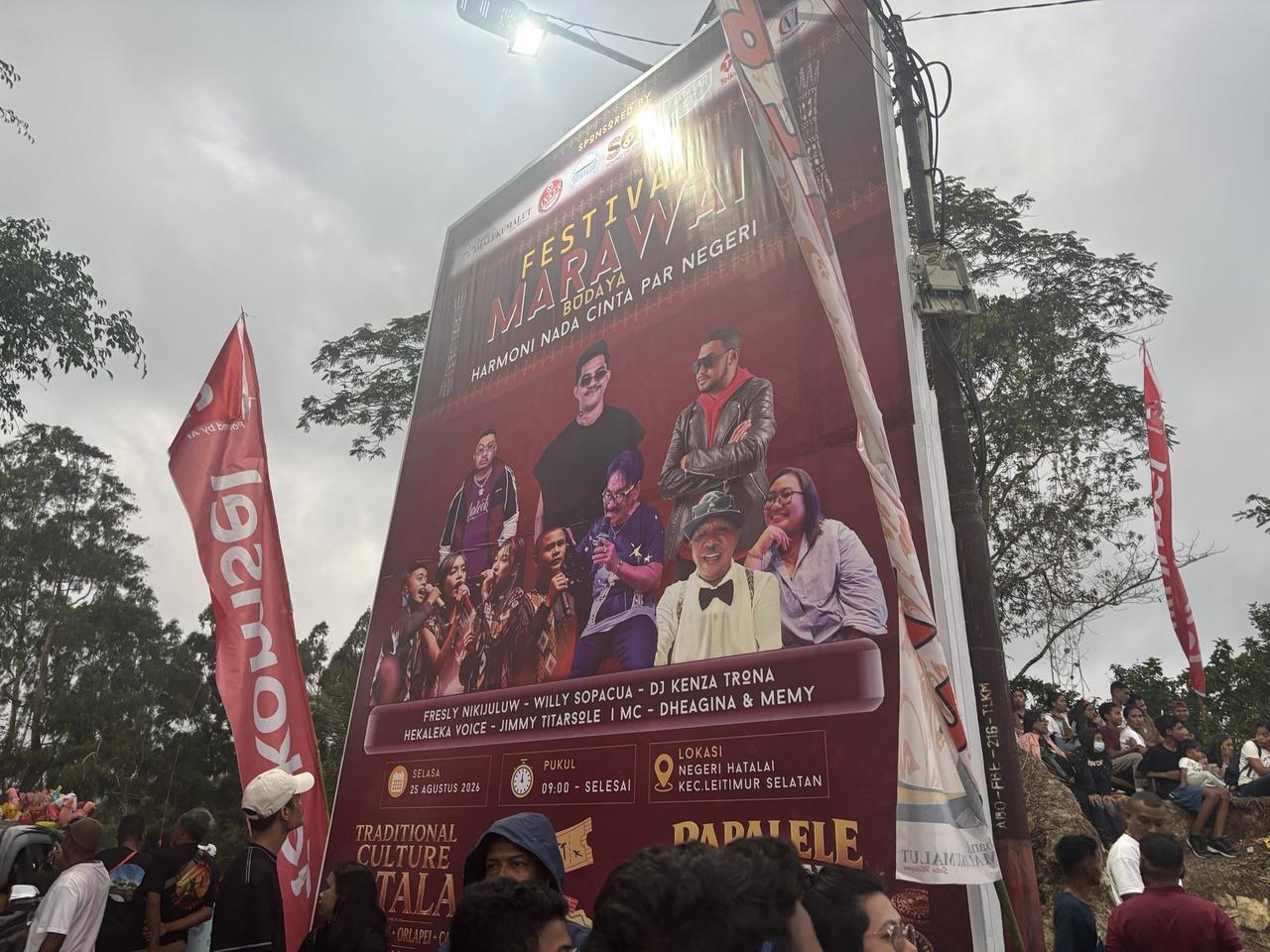
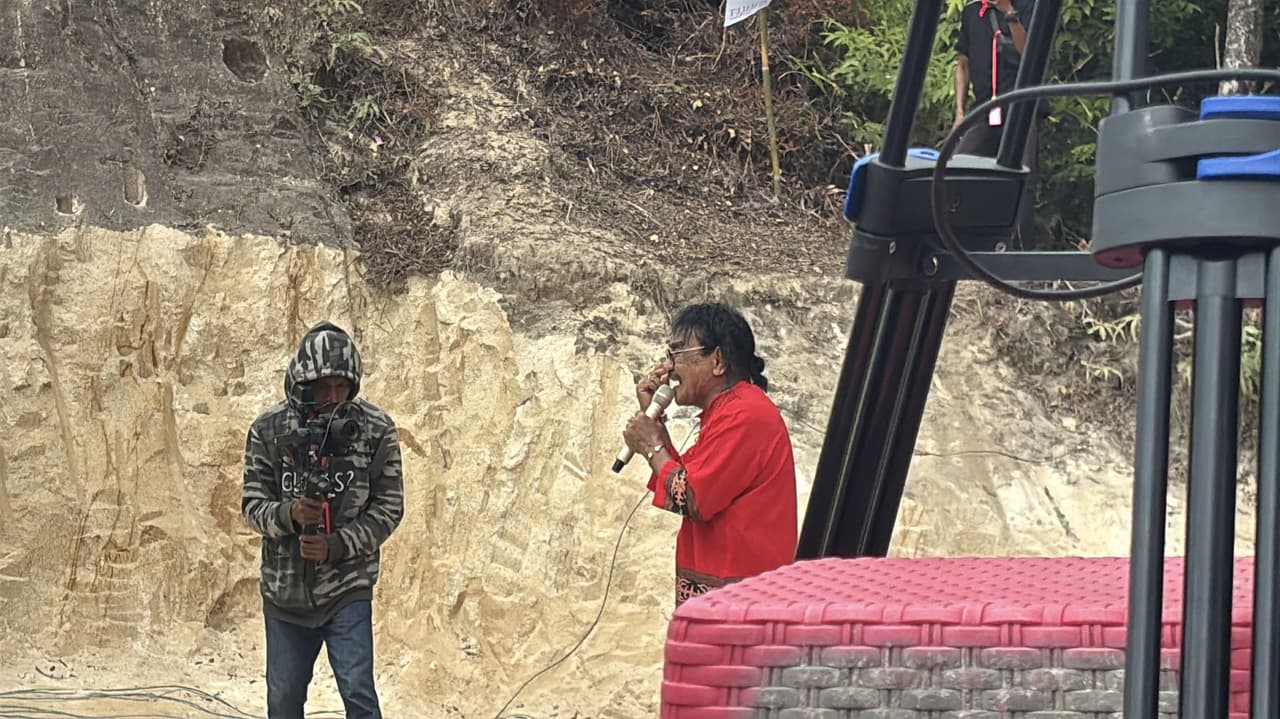
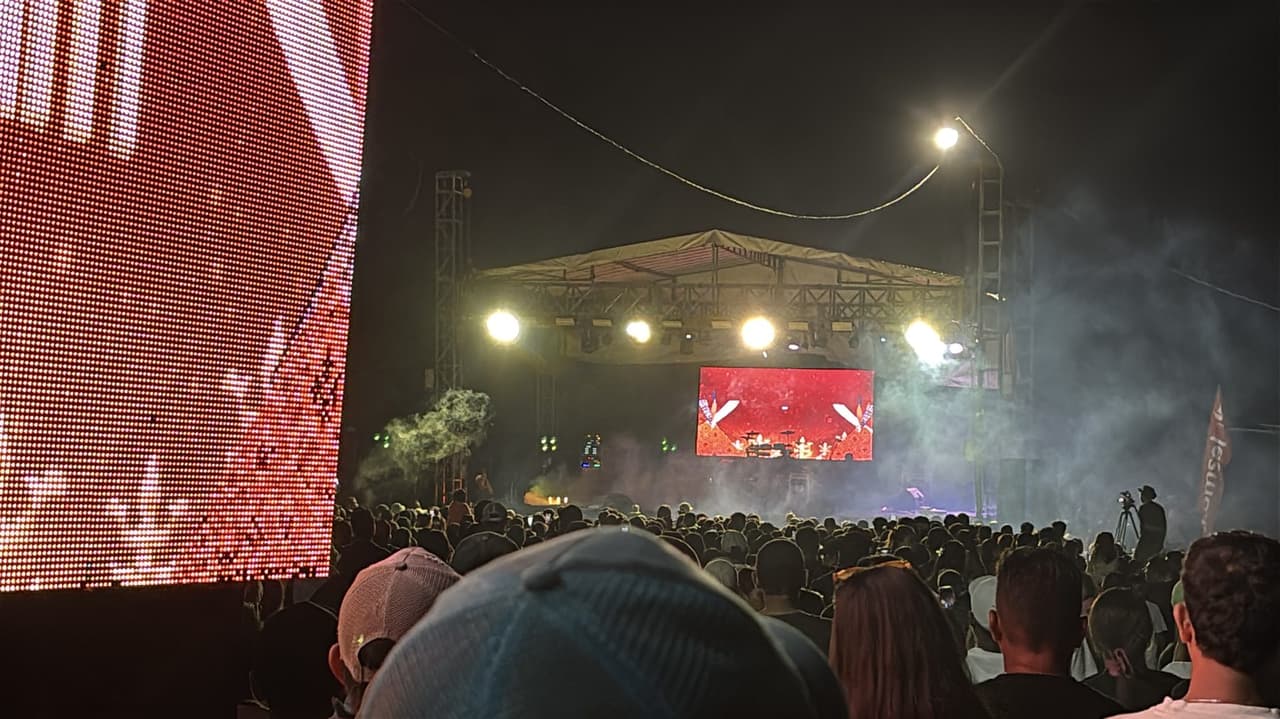
By evening the whole event shifted gears into a proper concert, and this is where Ambon's reputation as a city of music actually showed itself. The banner listing performers named Fresly Nikijuluw, Willy Sopacua, DJ Kenza Trona, Hekaleka Voice, and Jimmy Titarsole among others, and one of those official acts, an older performer in a red shirt working the crowd with a hand mic while a cameraman tracked him from the side, gave the night stage the kind of polish a village festival doesn't always manage on its first attempt. The crowd by then had grown well past anything I'd seen earlier in the day, packed in close under stage lighting and a haze of smoke machines, everyone facing one direction for what had turned, without much ceremony, into a full regional concert.
Ambon's Newest Old Idea
I've spent enough time around Ambon's tifa performances and its tototuan boat traditions, and around the batik-adjacent patterns of Baju Cele, to recognize the raw material Festival Marawai is actually built from: nothing here was invented for the occasion. Cakalele, saureka-reka, tifa, all of it existed long before this specific Tuesday in August. What's new is putting all of it under one governor-backed banner, in one village, on one date, and calling it a festival with a name attached. That's the same move I watched happen on a much bigger scale at FKAT in Tawau, a festival now in its eleventh year and pulling in guests from as far as Kazakhstan. Marawai is standing at year one of what could be the same kind of trajectory, or could just as easily stay exactly the size it is now. Nobody at Hatalai seemed to know which yet, and honestly, that uncertainty was part of what made the whole day worth the ride up the mountain. I'd go back for the second edition just to see which way it tips.