Years in the Making, and Still Only Beginning
I'd already seen how much Toraja death rituals ask of the living through Ma'nene, but a Rambu Solo funeral operates on a completely different scale. What I was watching begin in a village near Batutumonga wasn't the start of the process, it was the start of its ritual second half. The actual preparation, gathering enough money, enough livestock, enough agreement among the extended family, had reportedly taken years rather than months. Nothing about this looked like an ordinary funeral held over a weekend. Time and money on this scale simply aren't spent that way anywhere else I've seen in Toraja.
A House for the Mother, a Barn for the Father
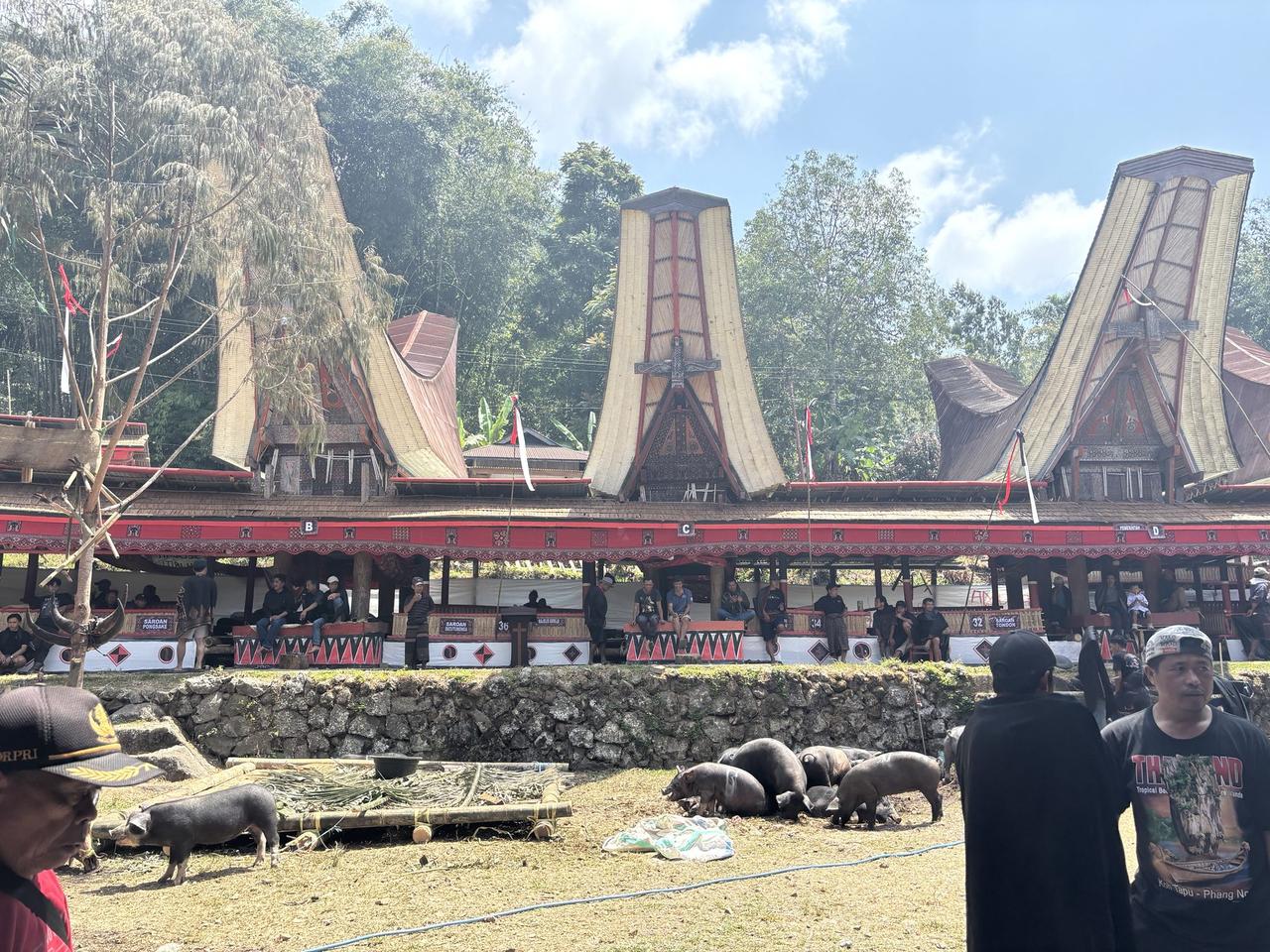
The layout of the venue itself carries meaning before a single ritual act happens. Two structures face each other across an open plaza: the alang, a raised rice barn, and the tongkonan, the traditional family house. I was told the alang represents the father, storing rice to provide for the family, while the tongkonan represents the mother, sheltering and raising the children. The space between the two, where the main proceedings actually take place, is called Ulu Bapa. Around it, numbered and lettered guest pavilions ring the plaza, already set up and waiting for the much larger crowd expected on the days ahead.
The Lakian, Where the Body Waits
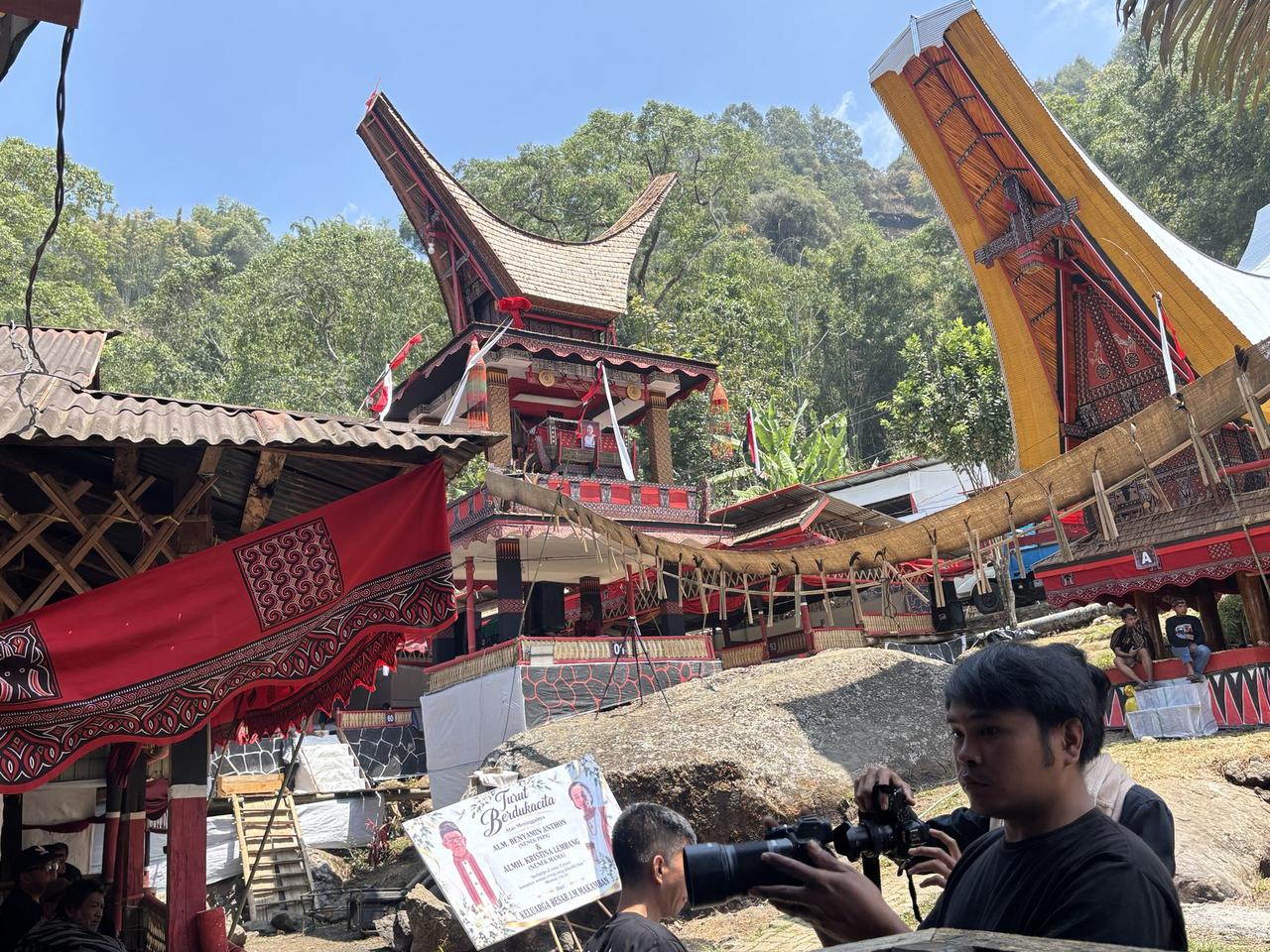
Close to the tongkonan stood a third building, two stories tall and shaped like a smaller tongkonan itself, called the Lakian. This is where the body stays for the duration of the ceremony, and it's from here, I was told, that it will eventually be carried out and brought to the tomb on the final day. In front of it stood a memorial board reading "Turut Berdukacita," a formal expression of condolence, with photographs and the names of the couple being honored: Benyamin Anthon and Kristina Lembang. Seeing their names displayed so plainly made the scale of everything else around it, the buildings, the pavilions, the years of preparation, feel a lot less abstract.
A Pig, Then a Prayer
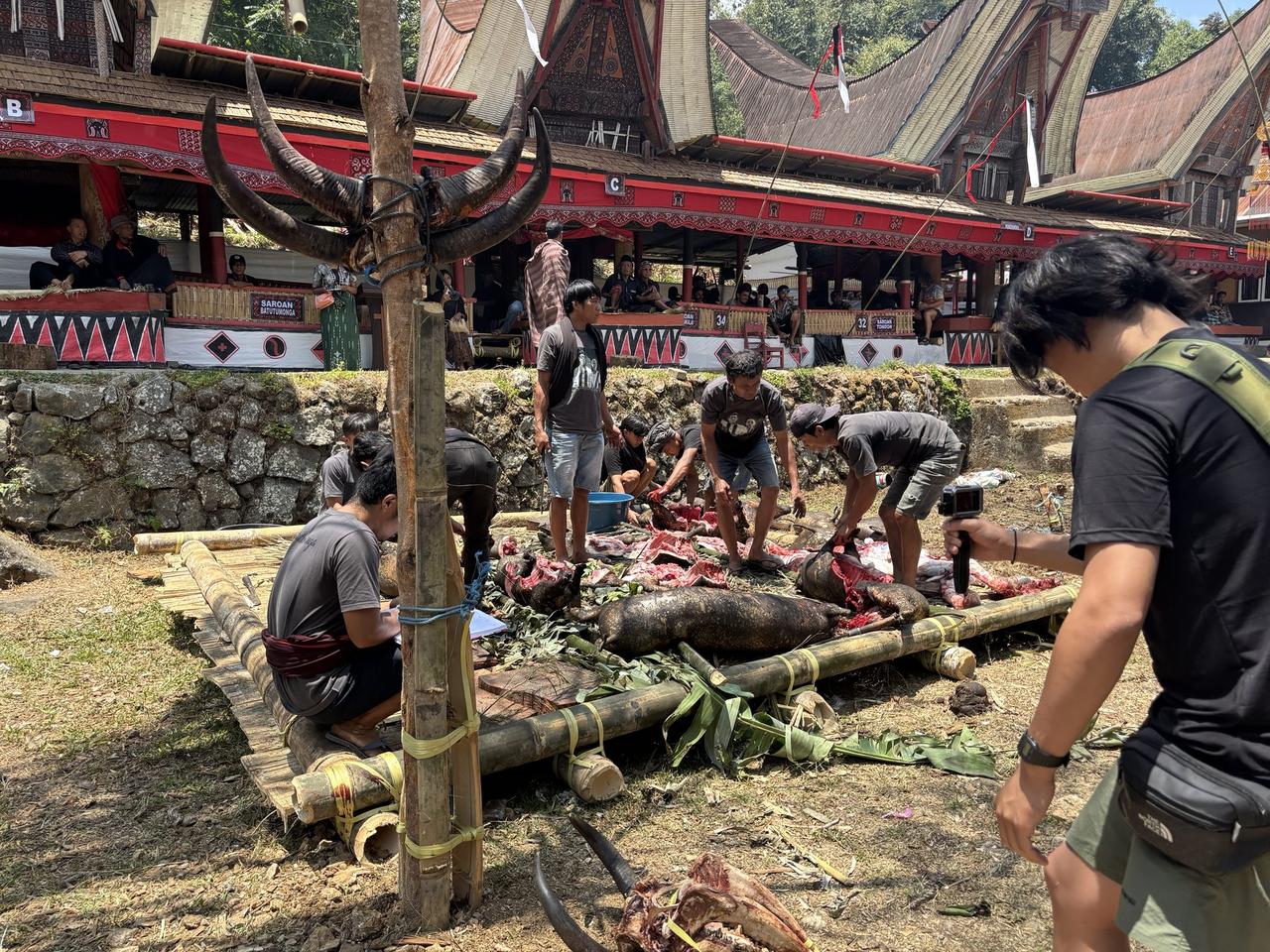
The day's events opened with a pig sacrifice, echoing the same offering logic I'd already seen during Ma'nene, respect for the dead paired with gratitude for what the living have been given. Afterward, the formal ceremony began, and I joined partway through the opening prayer service, Ibadah Ma'pamula. A pastor read from scripture, hymns were sung, and the family prayed for the souls of the two people being honored and for the days of ritual still ahead to go smoothly. Rambu Solo carries both threads at once, the older Aluk To Dolo tradition and the Christian faith many Toraja families now practice alongside it, and this opening prayer was where I could see both running through the same room at the same time.
A Quiet Close to a Long First Day
Compared to what I was told was coming, Day One felt more like a threshold than an event of its own. There was no single dramatic moment beyond the sacrifice and the prayer, and the family described it less as a beginning to build up to and more as a first marker passed, one piece of a much longer week now formally underway. The bigger occasion, I learned, was already scheduled for the next day: guests arriving specifically to present water buffalo in honor of the deceased, a different kind of gathering entirely from this quiet, prayerful first step.