From Care to Offering: The Fourth Day Begins
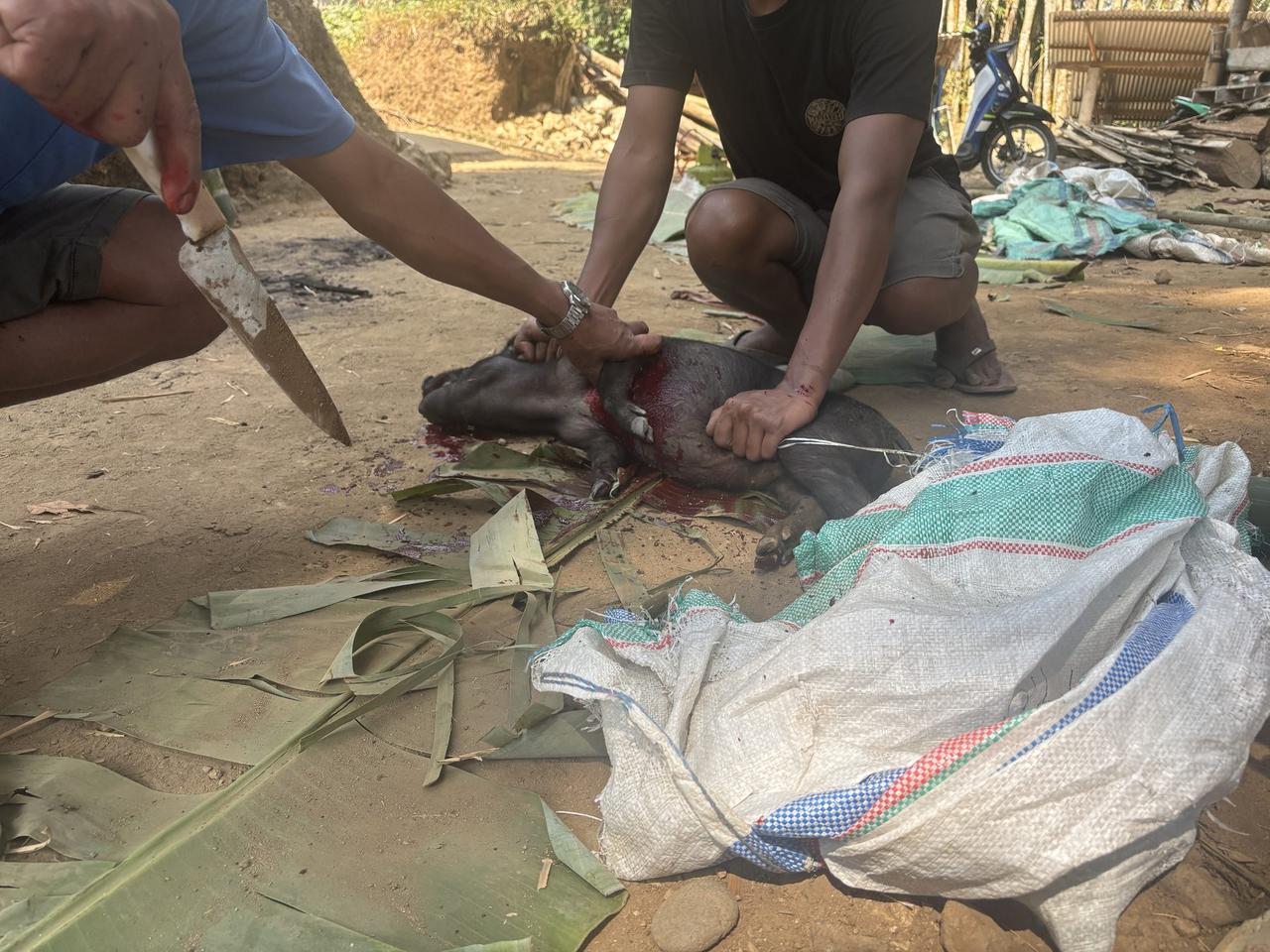
Three days of opening tombs, greeting ancestors, and sealing everything back up had a certain hush to them, even at their warmest. Day Four broke that mood completely. This was the day the ceremony turned from quiet maintenance into something closer to a feast, and the first sign of it was the sheer number of pigs. Dozens were brought in and sacrificed that morning, one after another, the actual center of the day's work.
Why Toraja Sacrifices at All
The reasoning behind it runs through pretty much every Toraja ceremony, not just Ma'nene: an animal sacrifice is considered the most meaningful offering a family can give, whether to ancestors or to the wider forces looked after by tradition. It carries two threads at once. One is straightforward respect and gratitude toward the ancestors being honored. The other is gratitude for abundance, a harvest brought in safely, a family able to gather and see this entire process through. Pigs and water buffalo are the two animals that carry this weight in Toraja custom, pigs on this day, buffalo, the more prestigious of the two, reserved for the final day still to come.
Turning a Sacrifice Into a Meal for Everyone
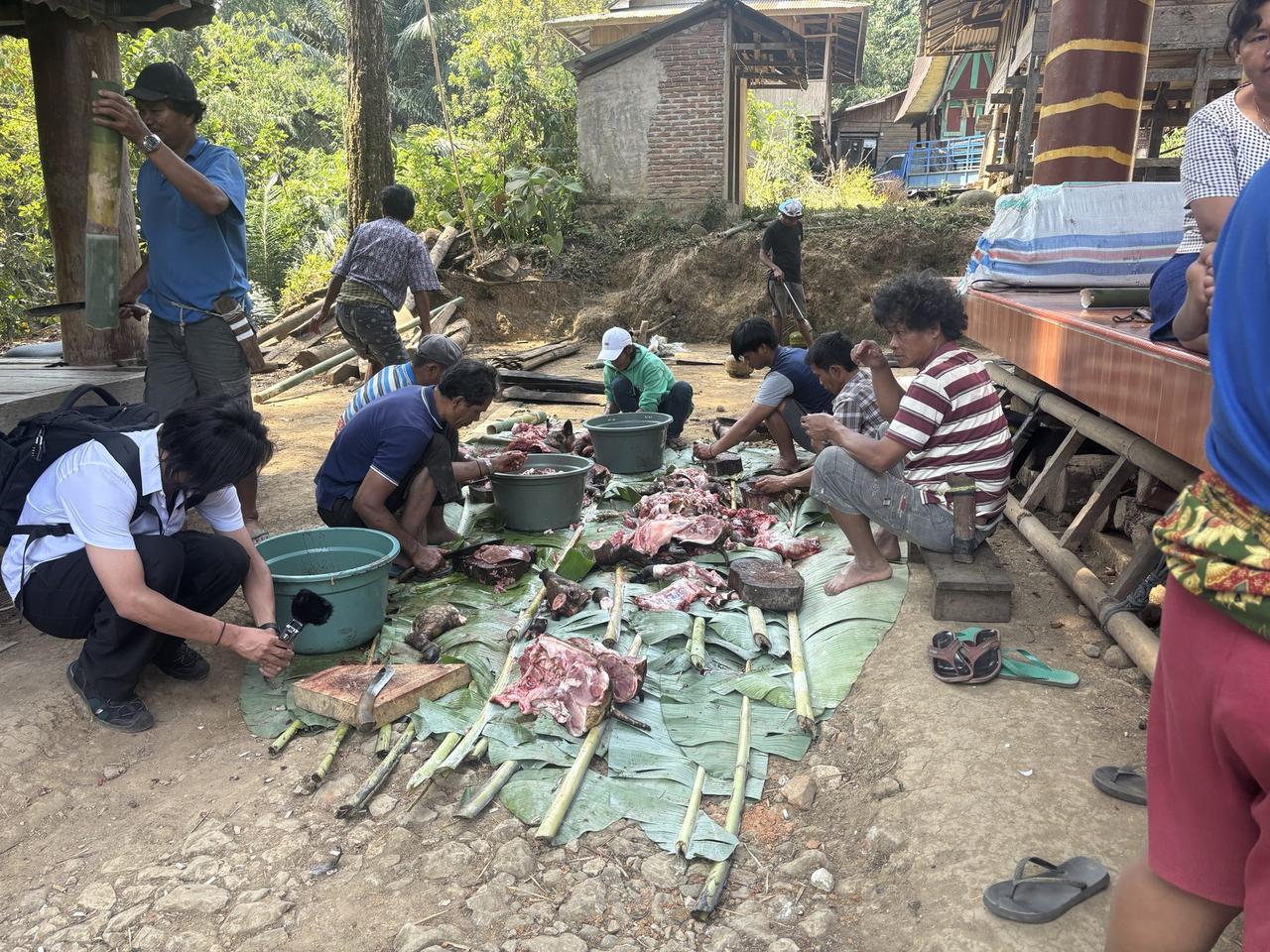
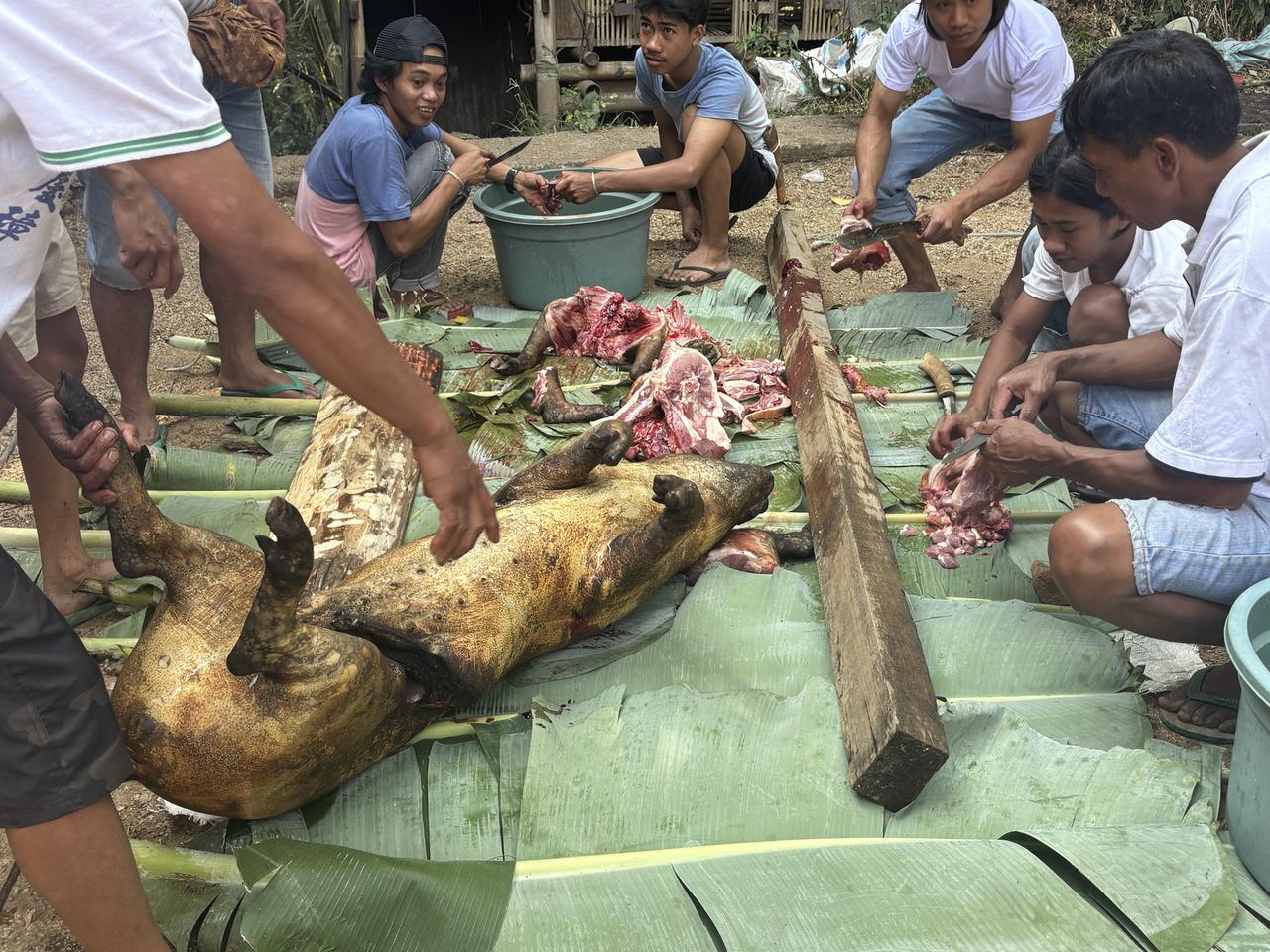
What happens immediately after a sacrifice is where the day actually opens up. Nothing goes to waste and nothing sits around: the animal is butchered on the spot, laid out across broad banana leaves, and broken down piece by piece by a rotating group of men working with buckets of water at their knees. With dozens of pigs going through this same process at once, the whole clearing turned into an assembly line, blood, cleaning, cutting, happening in parallel at several stations rather than one at a time.
Bakar: Packing Bamboo Tubes for the Fire
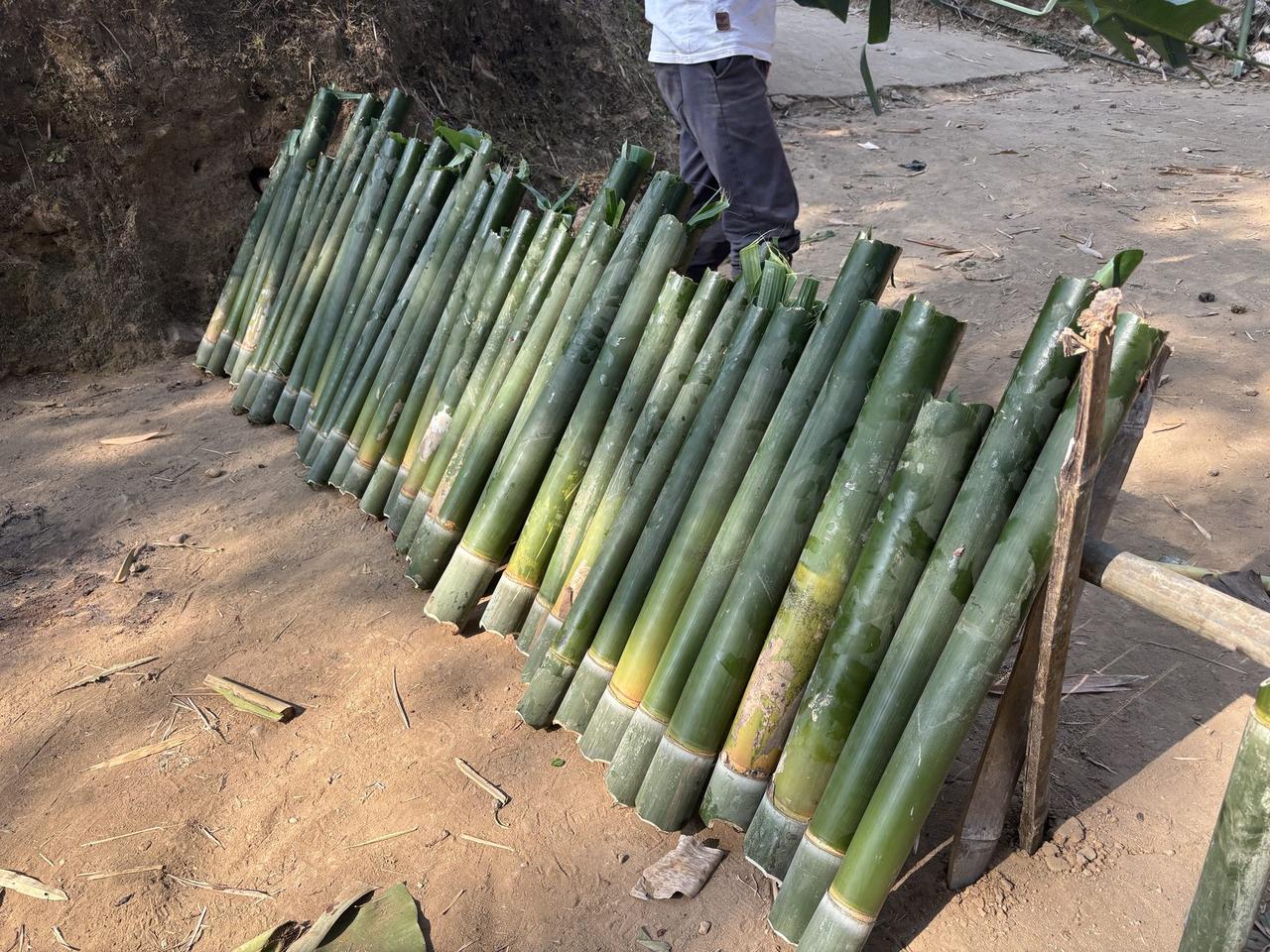
Once the meat was portioned, it went straight into bamboo, along with vegetables and spices, packed tight and topped with a stopper of leaves. This is pa'piong, a Toraja cooking method built entirely around bamboo as both container and vessel, and by the time I saw the finished rows of tubes leaned upright against the slope, there were more of them than I could easily count. The process itself has a name too, bakar, and watching men move down the line stuffing tube after tube felt less like ceremony and more like a small factory running on muscle memory.
A Long Line of Tubes Over Open Flame
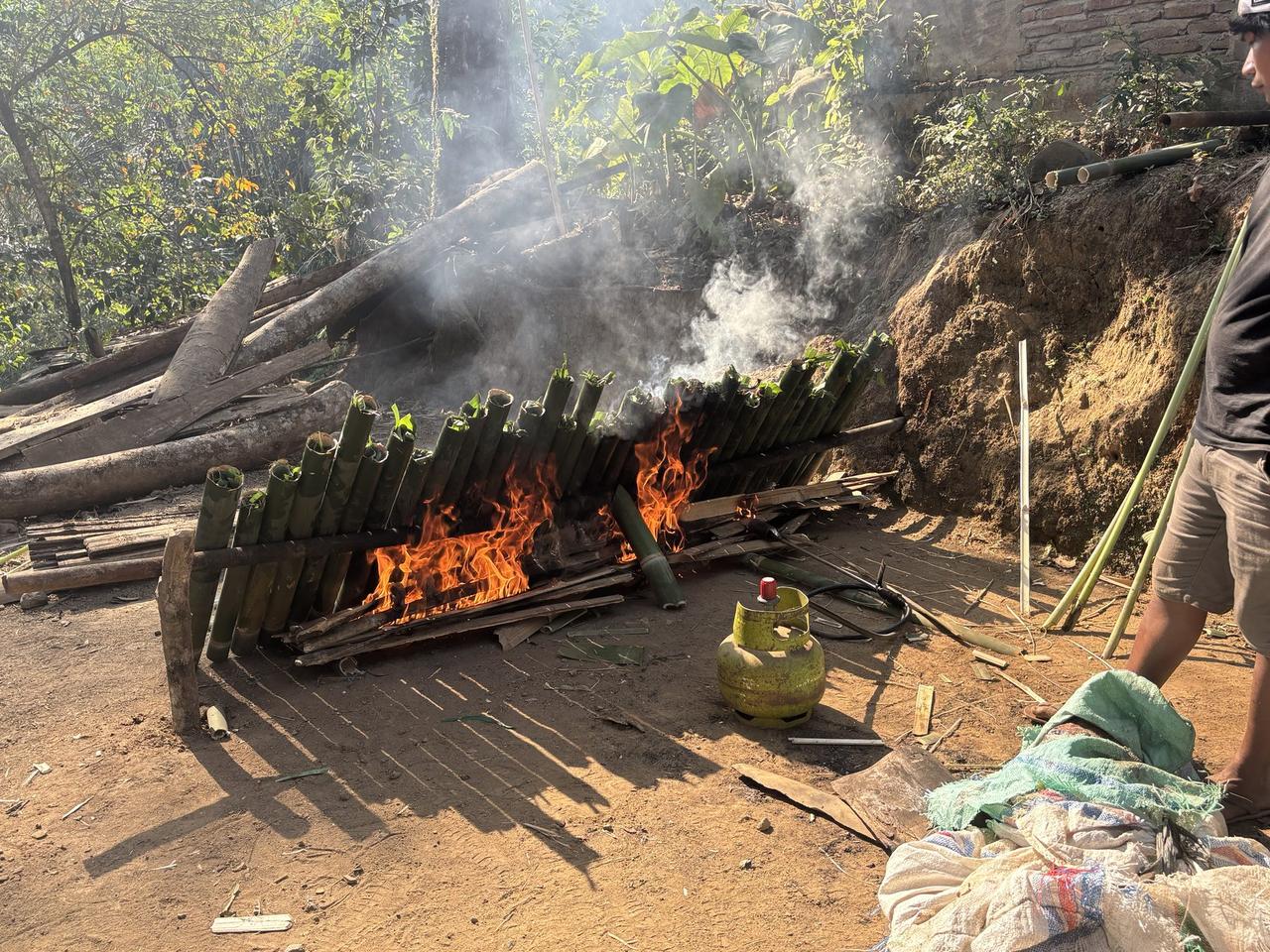
The packed tubes went straight onto open fire, leaned in a row over burning wood and propped up by a gas canister someone had dragged over to help feed the flame. Smoke rolled off the whole line as the bamboo blackened and the contents cooked slowly inside. Curiously, almost none of it was eaten that day. I had a small taste, but the real purpose of everything roasting in front of me was tomorrow: this pork is meant for Day Five, both as an offering at the tombs and as the meal that brings the whole extended family together at the end of the ceremony. After three days built around ancestors and one day built around fire and meat, it was clear the two threads were about to come together. Tomorrow, with a water buffalo added to the offering, Ma'nene reaches its actual close.