A Festival I Almost Missed
I hadn't planned my stay in Tawau around anything in particular. I was just there long enough that an acquaintance mentioned, almost in passing, that a festival was on that week, the kind of tip that could easily have gone unheard. It didn't. I found my way to a row of tents strung along a closed-off street, an arch overhead spelling out SELAMAT DATANG in letters big enough to read from a block away, KALI KE-11 and 2026 stamped beside a globe logo that made clear this wasn't a small neighborhood affair. Festival Kebudayaan Antarabangsa Tawau, the eleventh edition, and I'd nearly walked past the whole thing without knowing it existed.
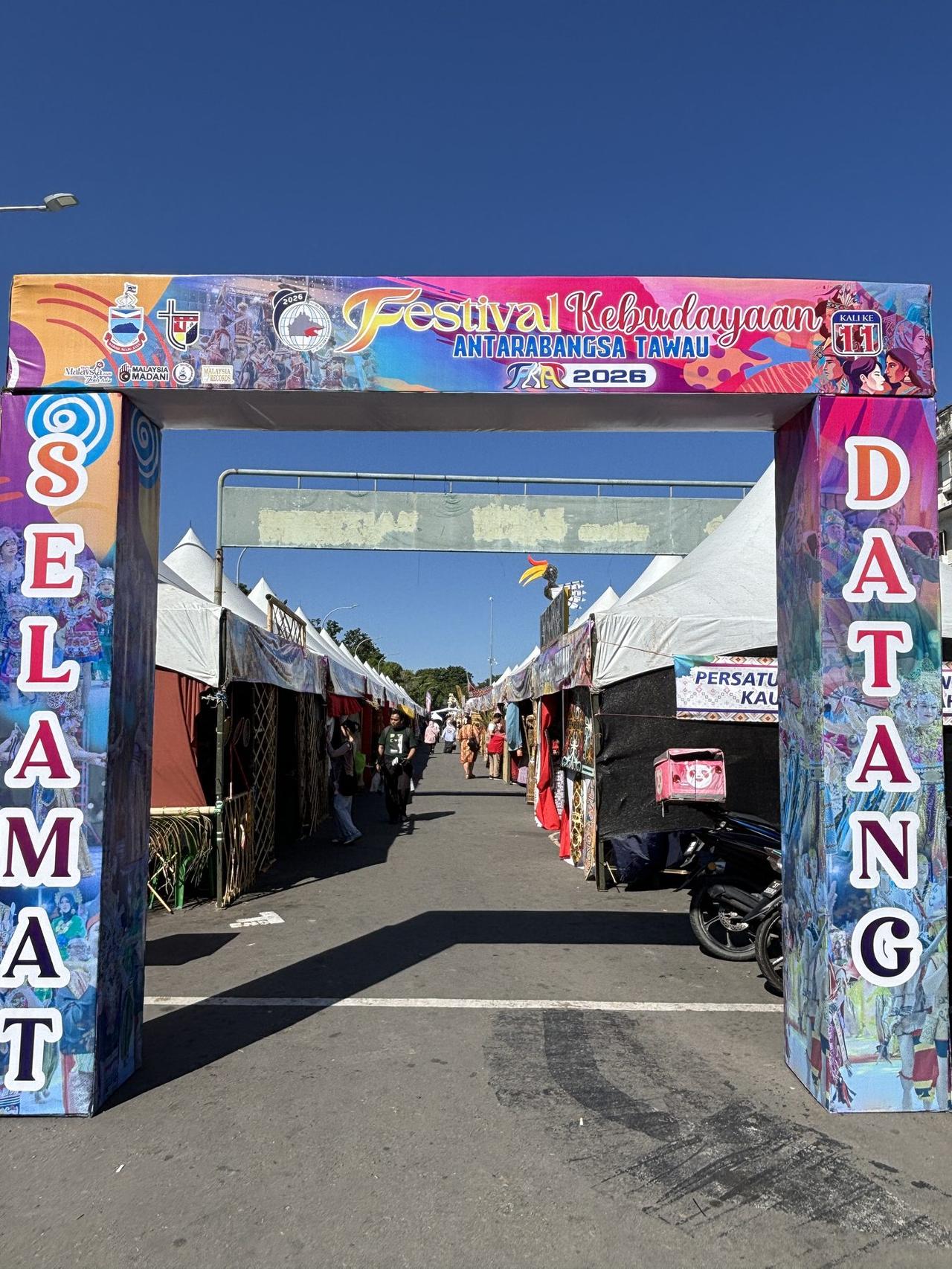
Eleven Editions, and Getting Bigger Every Year
FKAT runs in cooperation with Majlis Perbandaran Tawau, the city council, and by its eleventh year it had grown well past a single afternoon. The 2026 edition ran a full week, July 25 through August 1, based at Dataran Majlis Perbandaran Tawau, with the closing night on August 1 built around performances, trade exhibitions, sales booths, family activities, and food stalls all at once. What struck me most, once I started asking around, was how far the guest list had started reaching beyond Sabah. Indonesia and Kazakhstan both joined officially for the first time in 2026, alongside returning participants from Cambodia and Uzbekistan, with Sri Lanka expected to join just before the event opened. Sabah's Youth, Sports and Creative Economy Minister, Nizam Abu Bakar Titingan, had spoken about FKAT growing into something closer to a global platform, and Tawau's local authorities were talking openly about positioning the city itself as a cultural tourism destination. The Indonesian Consulate in Tawau treated its own booth as a piece of formal diplomacy, not just a cultural display. A street fair that started as a way to showcase Sabah's own coastal and inland communities to each other had quietly turned into something with passport stamps in it.
Three Visits, One Festival
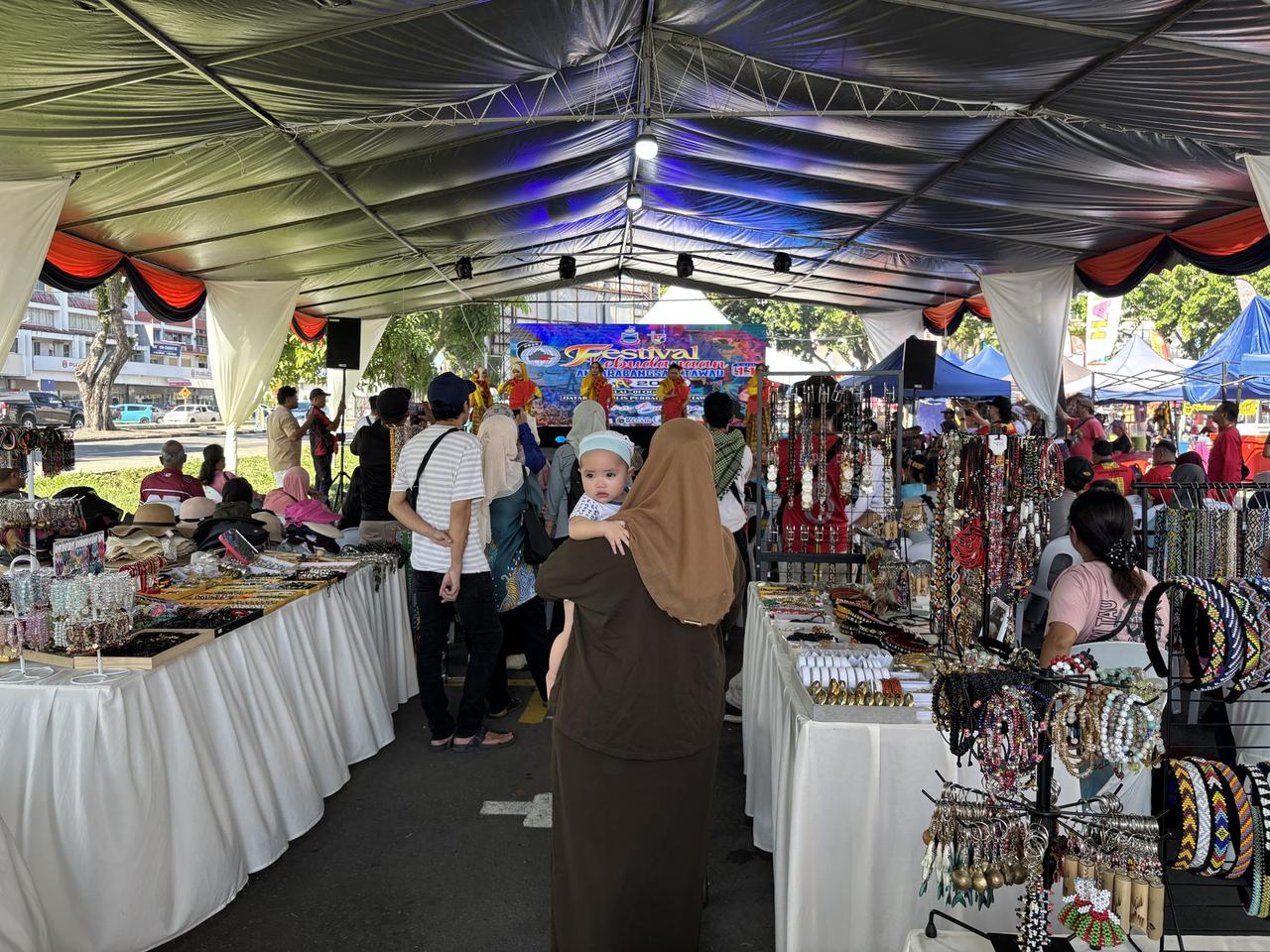
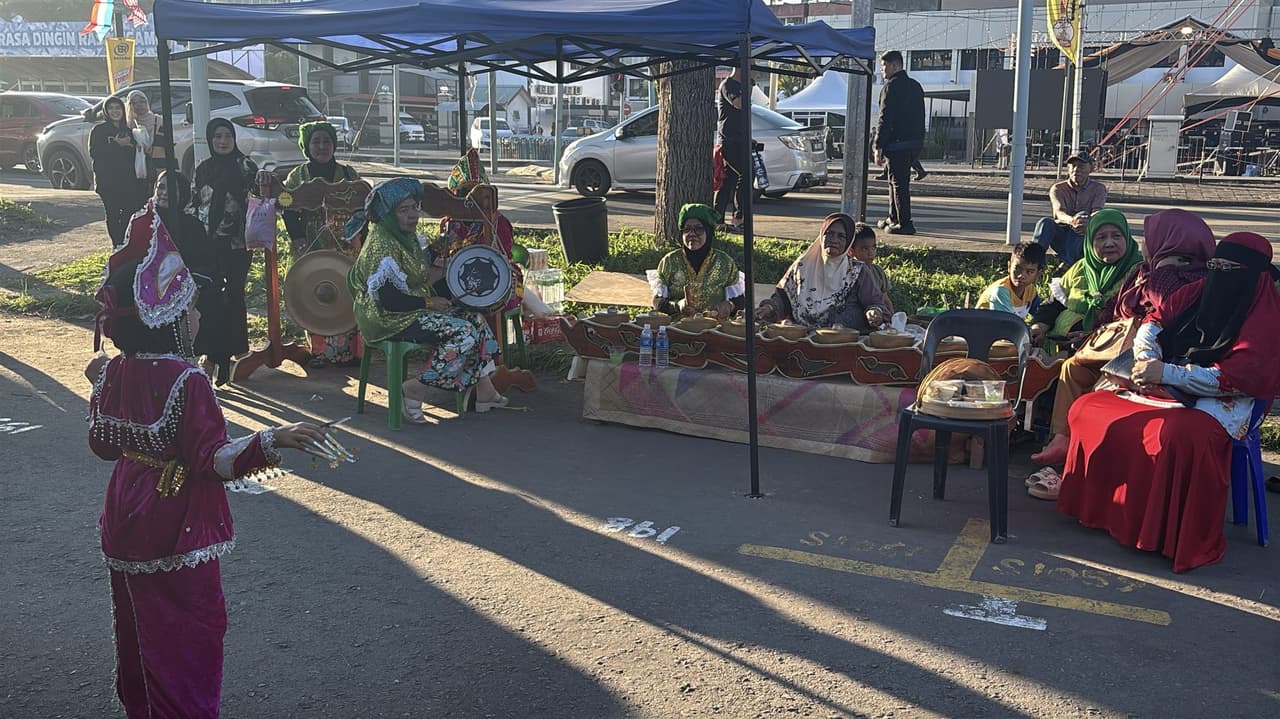
I went three separate times over the course of the week, and the shape of the festival was the same each visit: a long row of ethnic booths, each one built out like a small pavilion with its own theme and decoration, a midday area behind the booths where groups took turns performing dances and music, and then, once the sun dropped, a much bigger stage event out front. My third visit happened to land on the final night, August 1, and it showed. Streets that had felt easy to wander through in the afternoon filled in tight by evening, a full concert underway with performers most of the crowd around me clearly recognized by name. I didn't go in with any plan beyond looking at booths, and came out having made friends I fully intend to look up again.
Kadazan Dusun: A Liquor Label With the Brewer's Name on It
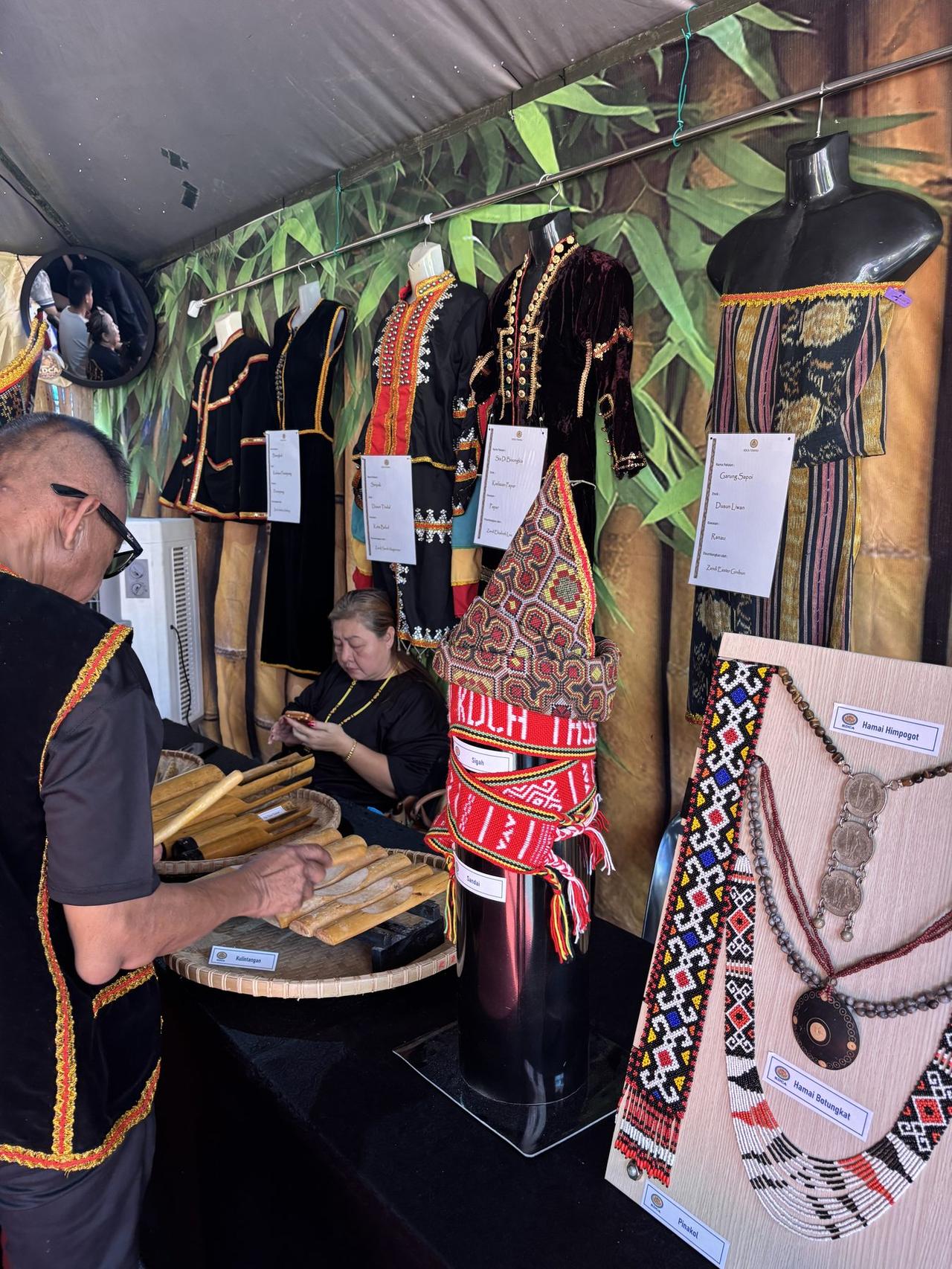
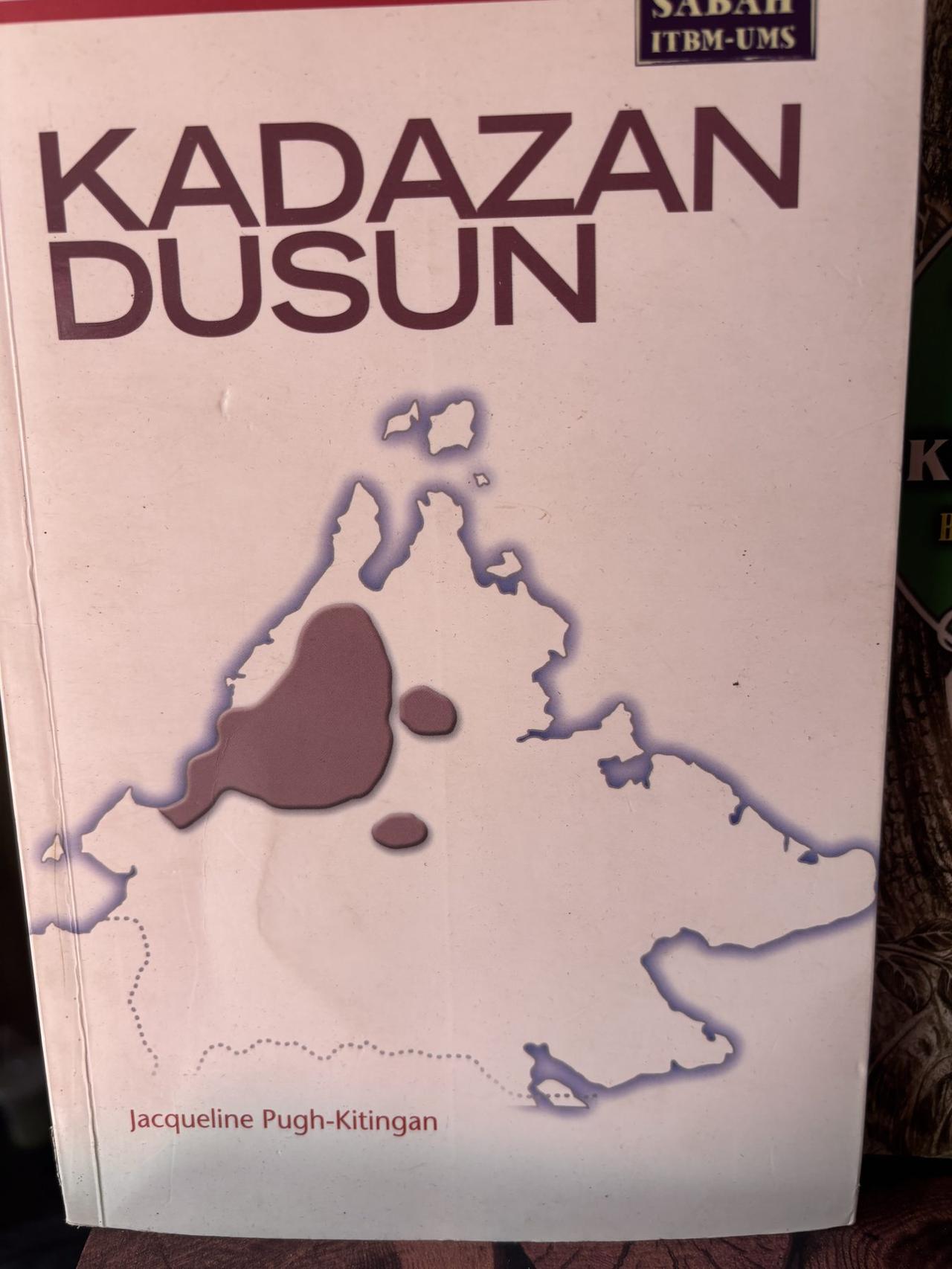
The Kadazan Dusun booth ran deep rather than wide. Traditional dress hung along one wall, each outfit labeled not just by name but by the specific district or sub-group it came from, Dusun Liwan, Ranau, Papar, a level of detail that turned a simple costume display into something closer to a map. A man worked through a stack of kulintangan gongs off to one side, laying them out piece by piece, while a nearby board held beaded jewelry under names I hadn't heard before, Hamai Himpogot, Hamai Botungkat, Pinakol, each one distinct in pattern and clearly meaningful to someone who actually knew how to read them. A copy of an academic reference book on Kadazan Dusun culture sat out for anyone curious enough to open it.
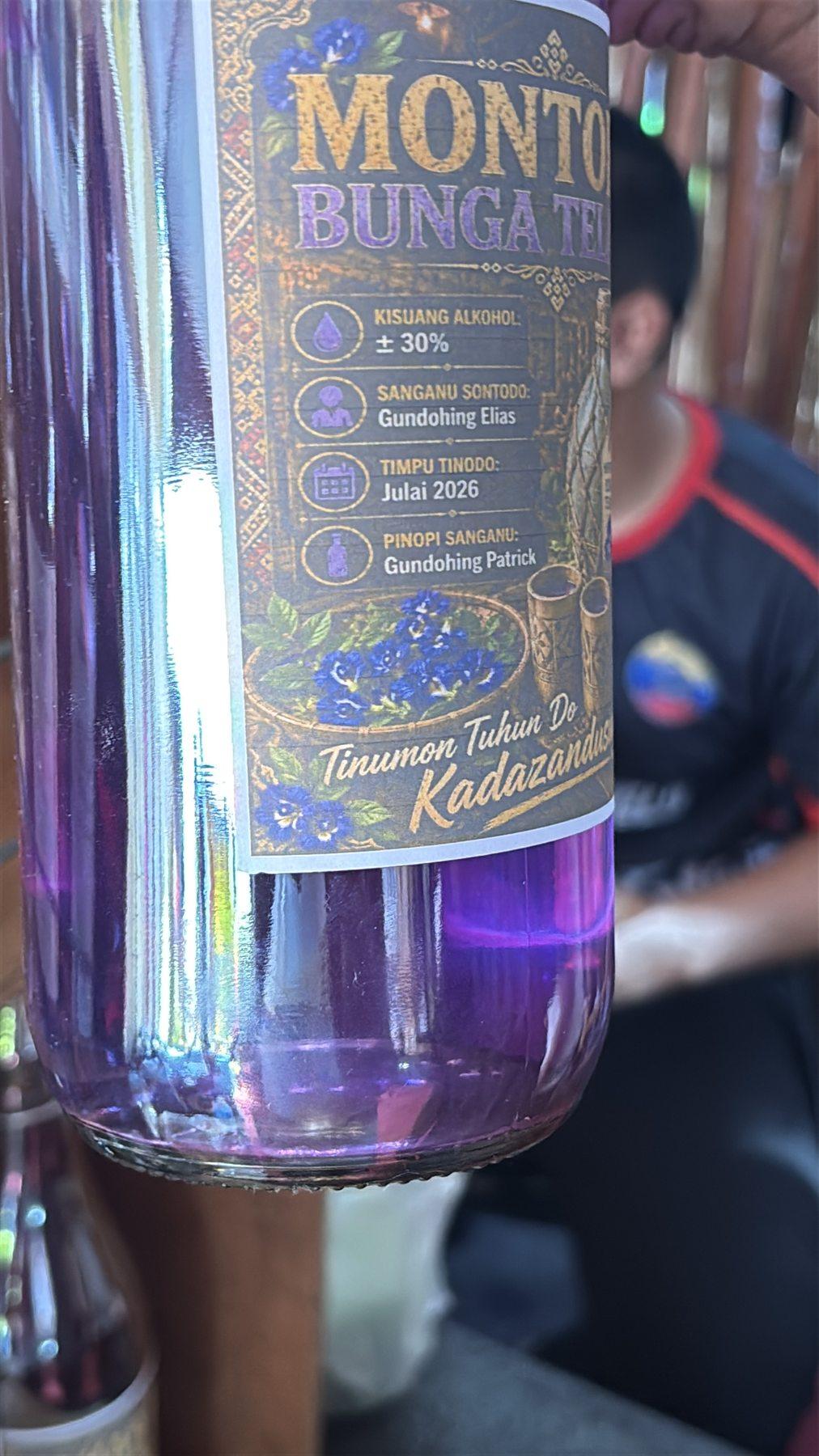
What actually stopped me was a bottle. Montoku Bunga Telang, a butterfly-pea-flower liquor, purple enough to glow under the tent lighting, with a label laid out like a spec sheet: alcohol content roughly 30 percent, brewer's name, bottling date, July 2026, right down to the person credited with packaging it. I've had plenty of local drinks introduced to me with a story and a shrug. This was the first one that came with something closer to a certificate of authenticity.
Toraja: Buffalo, Blowpipes, and a Pavilion Named for a Rebel
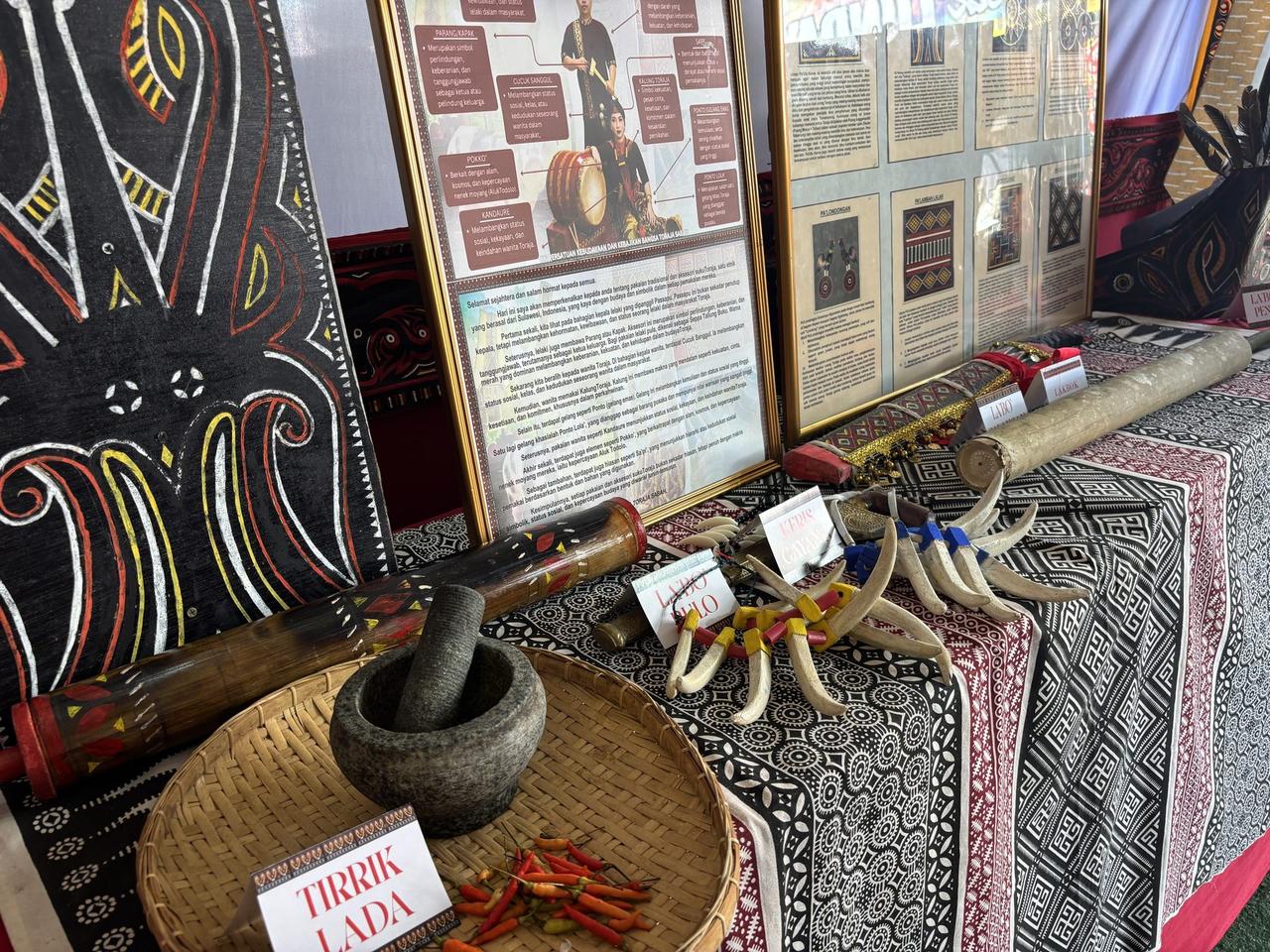
The Toraja booth gave me more to take in than almost any other stop that day. A staff member walked me through the economics of Rambu Solo, the funeral rite that demands a buffalo sacrifice, and the numbers were staggering on their own terms, a single animal running seven or eight million yen or more depending on its markings. Alongside that sat a chili-tipped blowpipe, a hunting weapon I hadn't expected to see next to a funeral custom, and a board breaking down exactly what each part of traditional Toraja dress signals, a parang or kapak carried by a man reading as protection and responsibility toward his family, a kalung, a beaded necklace worn by women, marking status and standing rather than simple decoration. Off in its own case sat a woven basket of small, fierce-looking chilies labeled Tirrik Lada, a strange, welcome bit of the everyday dropped in among all the ceremonial weight.
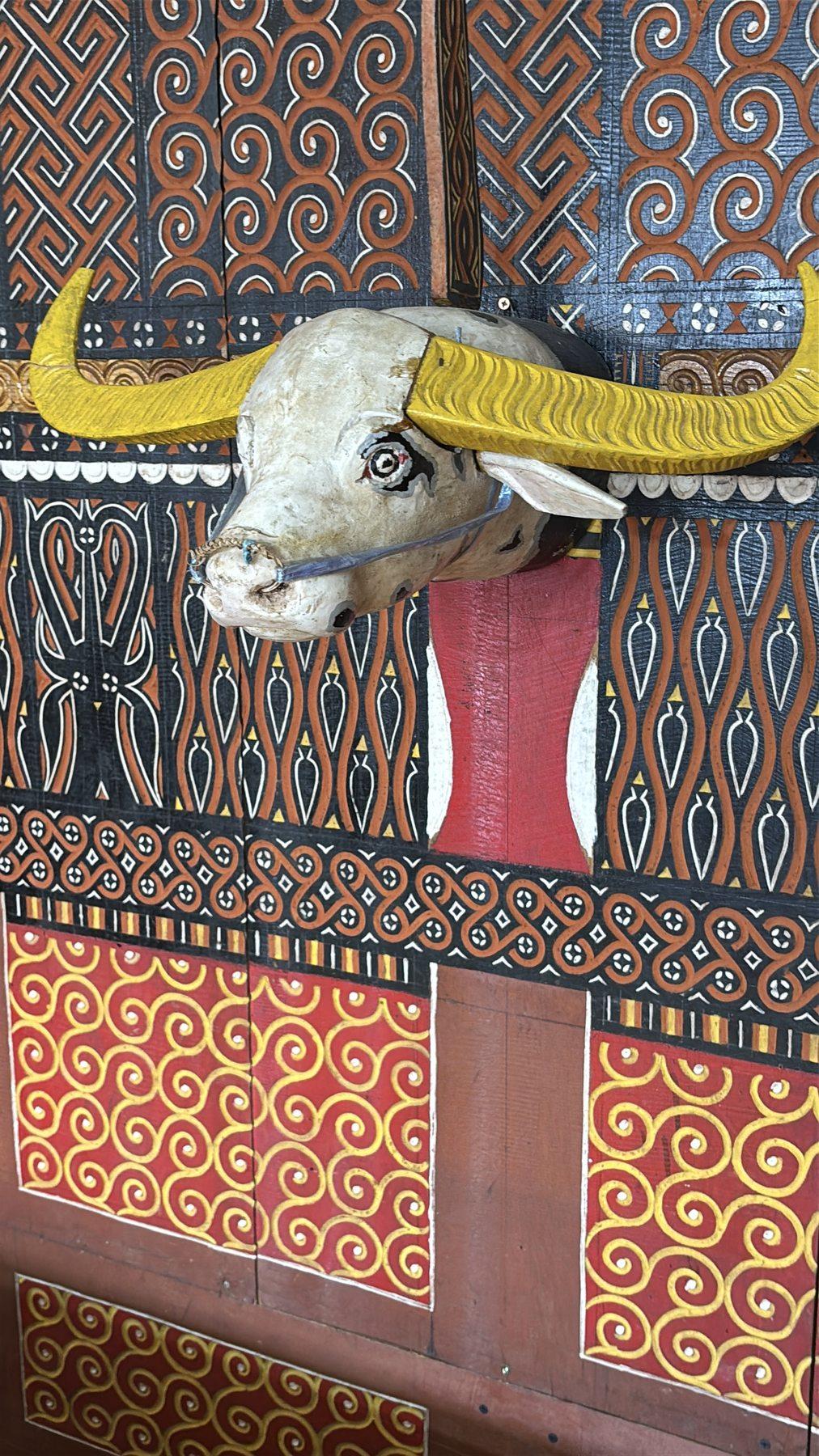
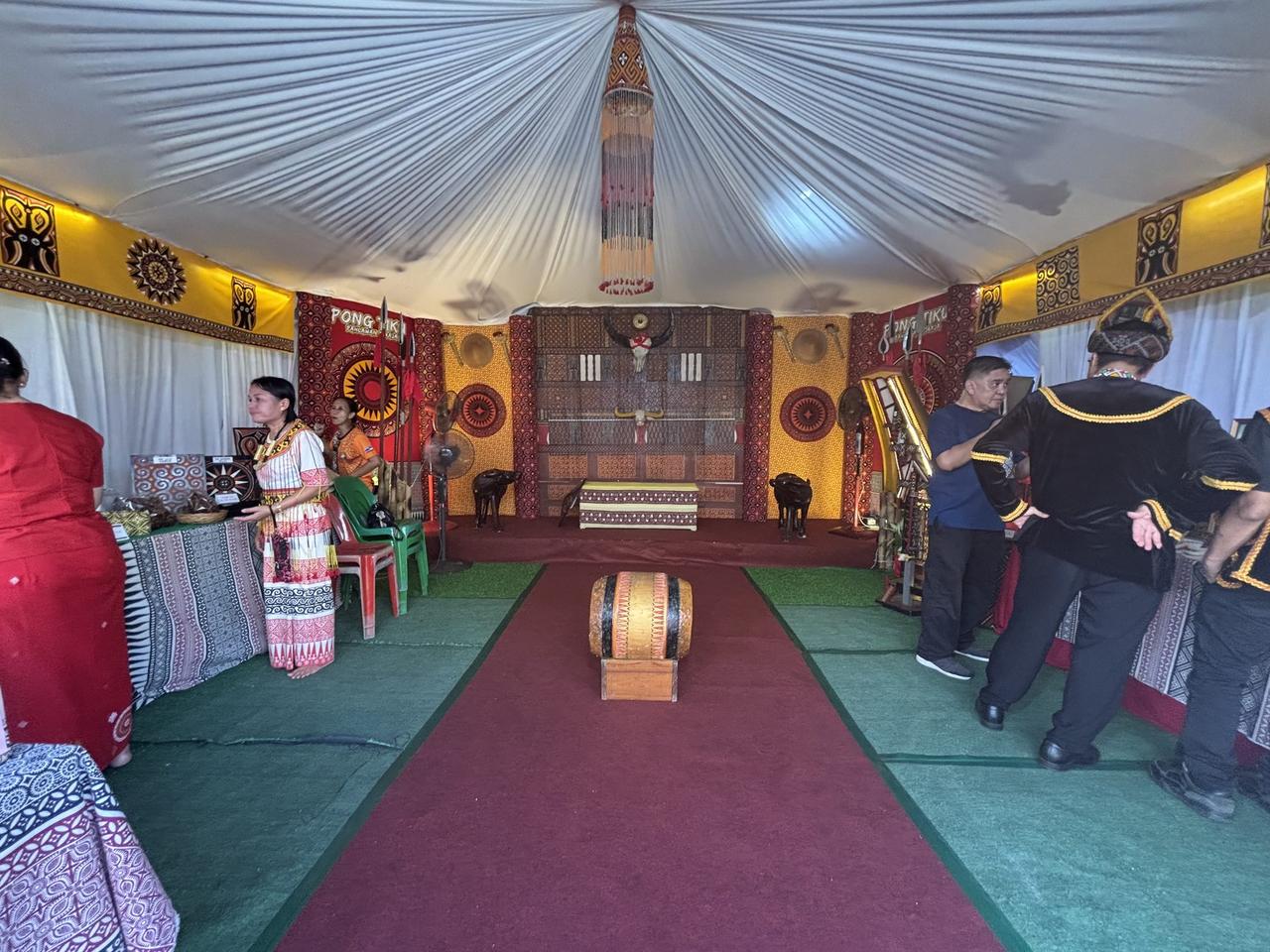
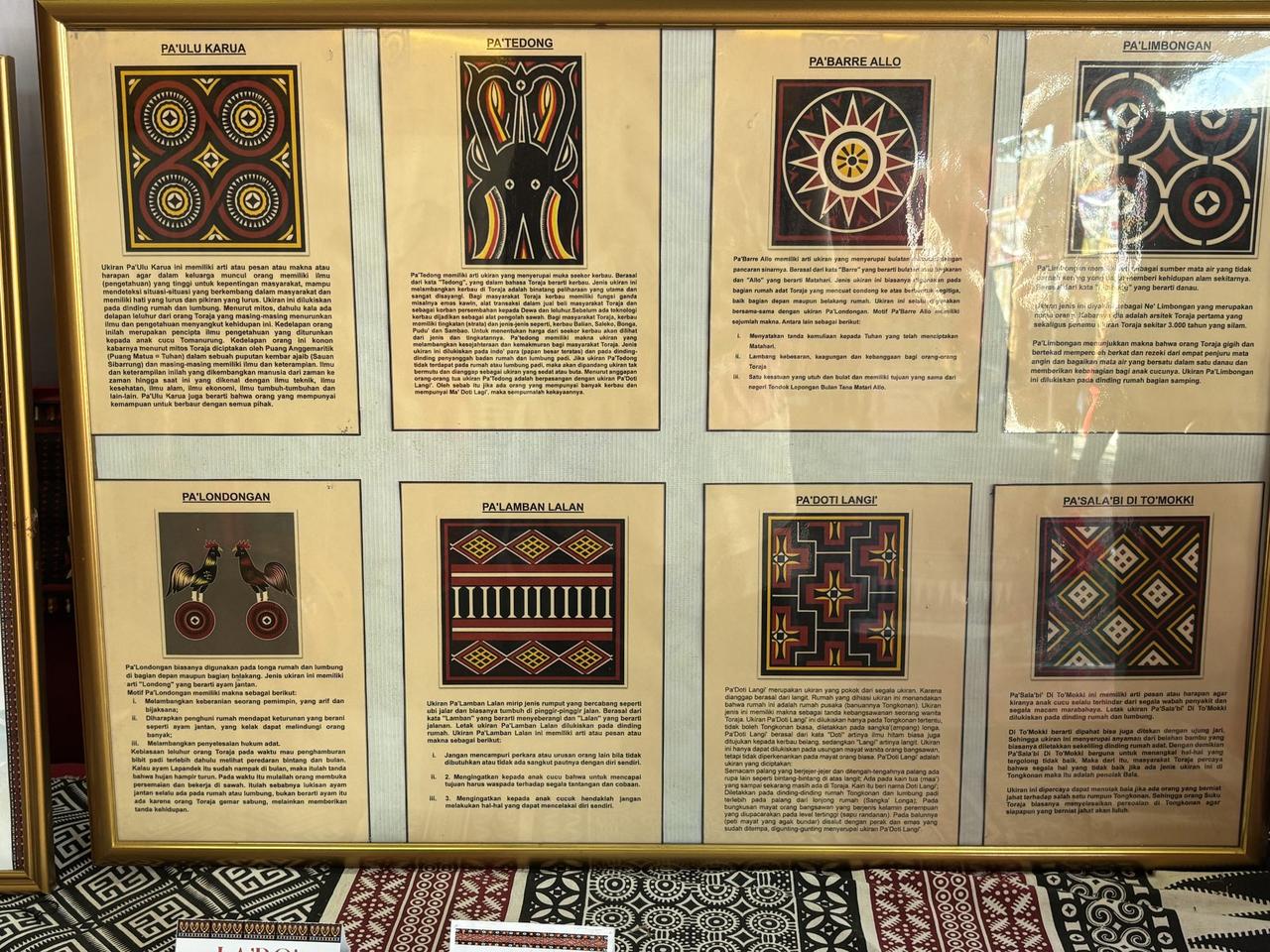
The booth itself was built as a full pavilion named Pong Tiku, after the Toraja resistance leader who fought Dutch colonial forces in the early twentieth century, complete with a buffalo skull mounted over a carved tongkonan-style facade and a set of gongs and a floor drum set up for anyone willing to try them. On a nearby board, among a full set of eight named woodcarving motifs, two stood out enough to remember afterward: Pa'Tedong, carved to resemble a buffalo's face, standing in for the wealth and prosperity buffalo represent in Toraja life, and Pa'Doti Langi', considered the most fundamental of all Toraja carvings, reserved only for a proper ancestral house and said to carry something close to protective power.
Visaya: Getting Pulled Into the Photo
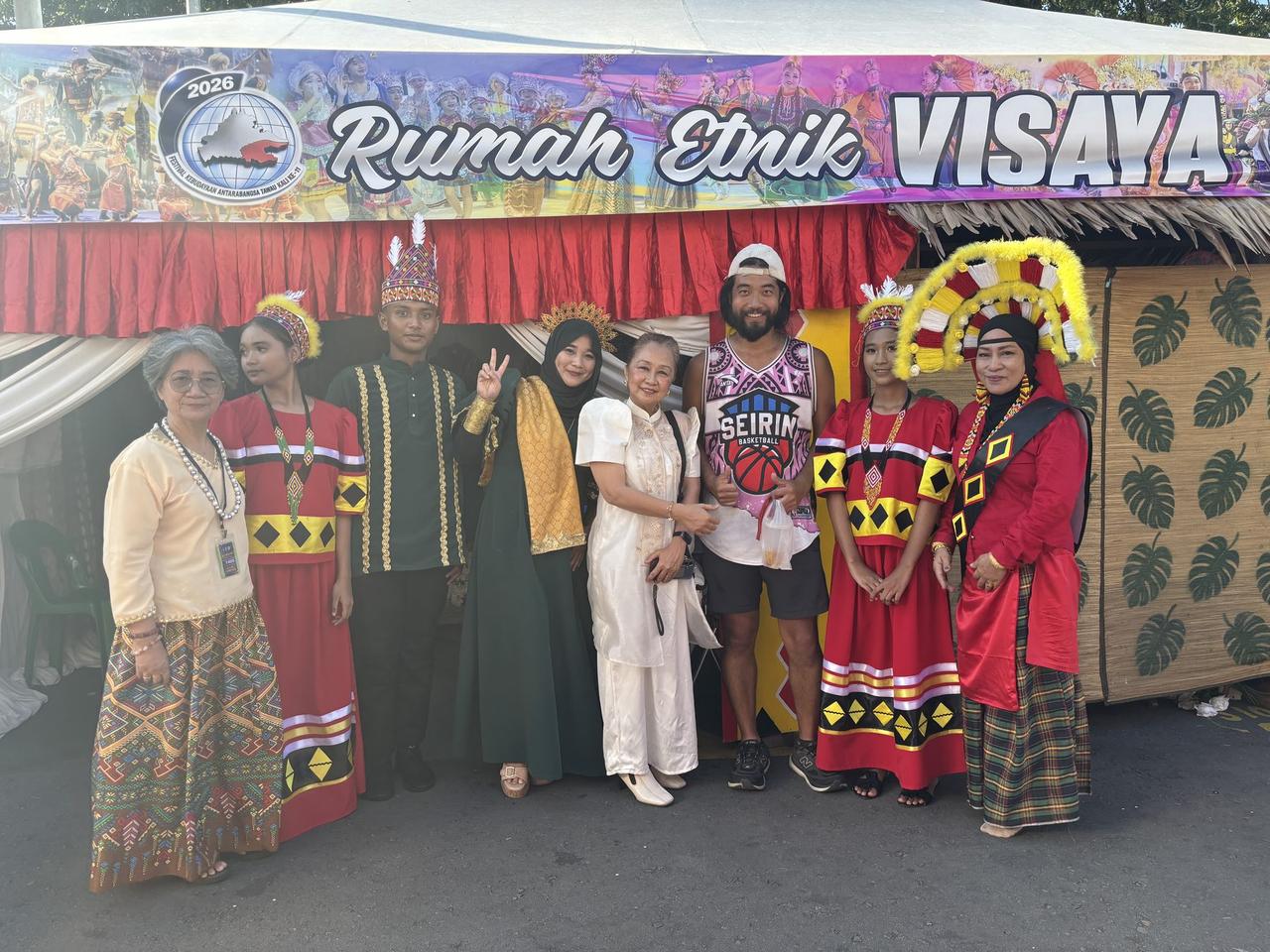
A few booths down, Rumah Etnik Visaya turned out to be less a display to look at than a group of people determined to make me part of it. Wedding attire hung along the back wall, heavy on red, black, and gold, feathered headpieces catching the light. I didn't get far into asking questions before I was handed a jersey, posed in the middle of the group, and photographed like a member of the wedding party rather than a visitor passing through. It's the kind of hospitality that doesn't leave much room for note-taking, which is probably exactly the point.
Tidung: A Golden Dragon Boat With Its Own Kingdom
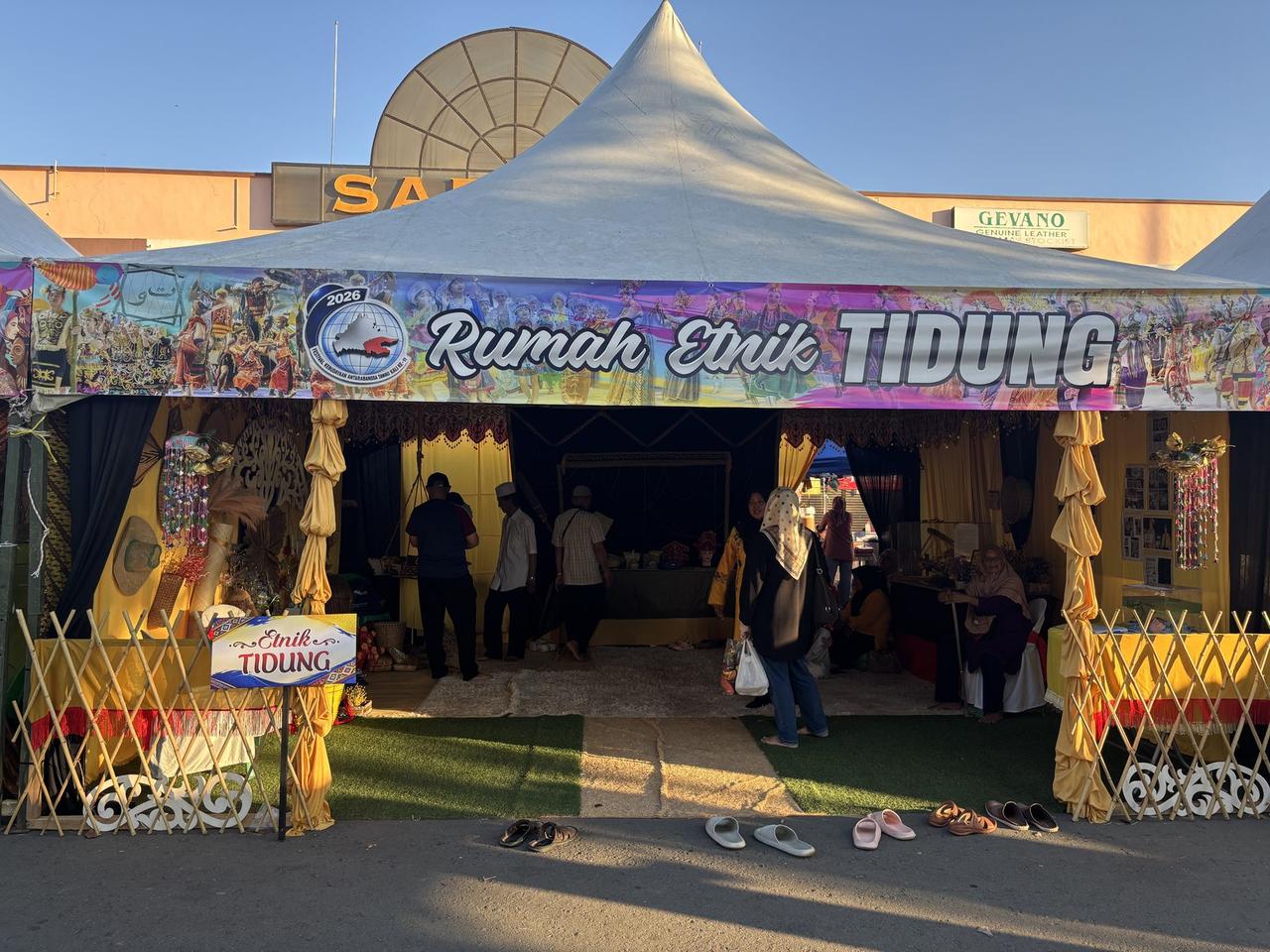
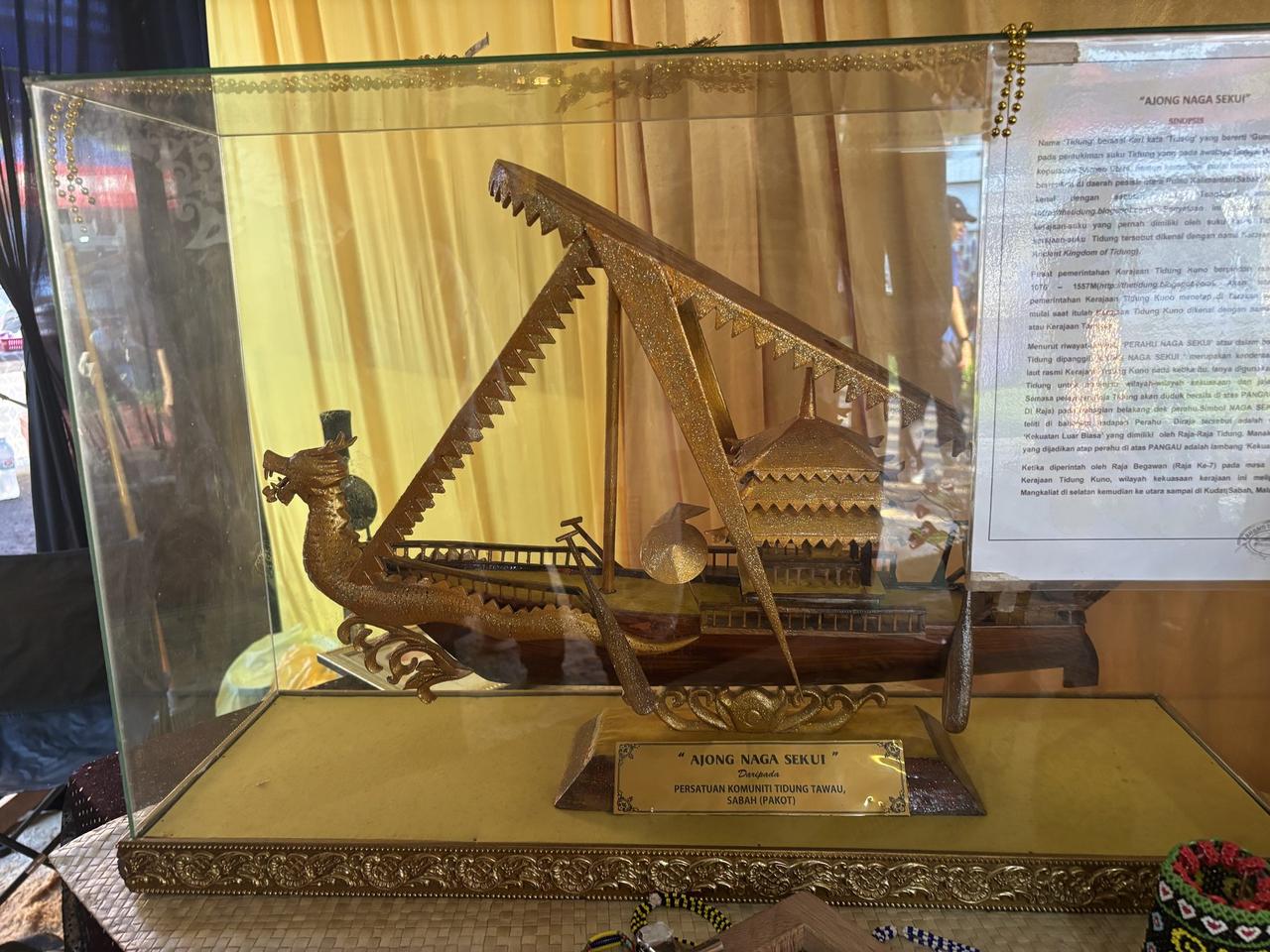
Rumah Etnik Tidung sat under a bright yellow tent, sandals lined up in a neat row outside the entrance the way they would be outside a house. Inside, behind glass, was the booth's centerpiece: Ajong Naga Sekui, a gilded model boat carved into a dragon's head and tail, ornate enough that it took a second look to register it as a boat at all rather than a piece of temple architecture. A synopsis panel beside it traced the name back to Kerajaan Tidung Kuno, the ancient Tidung kingdom said to have ruled from roughly 1076 to 1557, describing the real vessel as the kingdom's official seaborne transport, the one its rulers would have used to move between territories under their control. A small model on display, but it carried the weight of an entire kingdom's history behind the glass.
Kaili: A Familiar Name in an Unexpected Place
Nothing at the festival caught me as off guard as this one. Kaili was a name I already knew, not from research done in preparation for Tawau but from Palu, weeks earlier, where I'd stood inside Sou Raja, the old royal house of the Kaili kings, and walked the shoreline near the floating mosque built in memory of the scholar who brought Islam there. Here it was again, on the other side of the Sulu and Celebes Seas, part of Indonesia's newly expanded presence at FKAT in 2026.
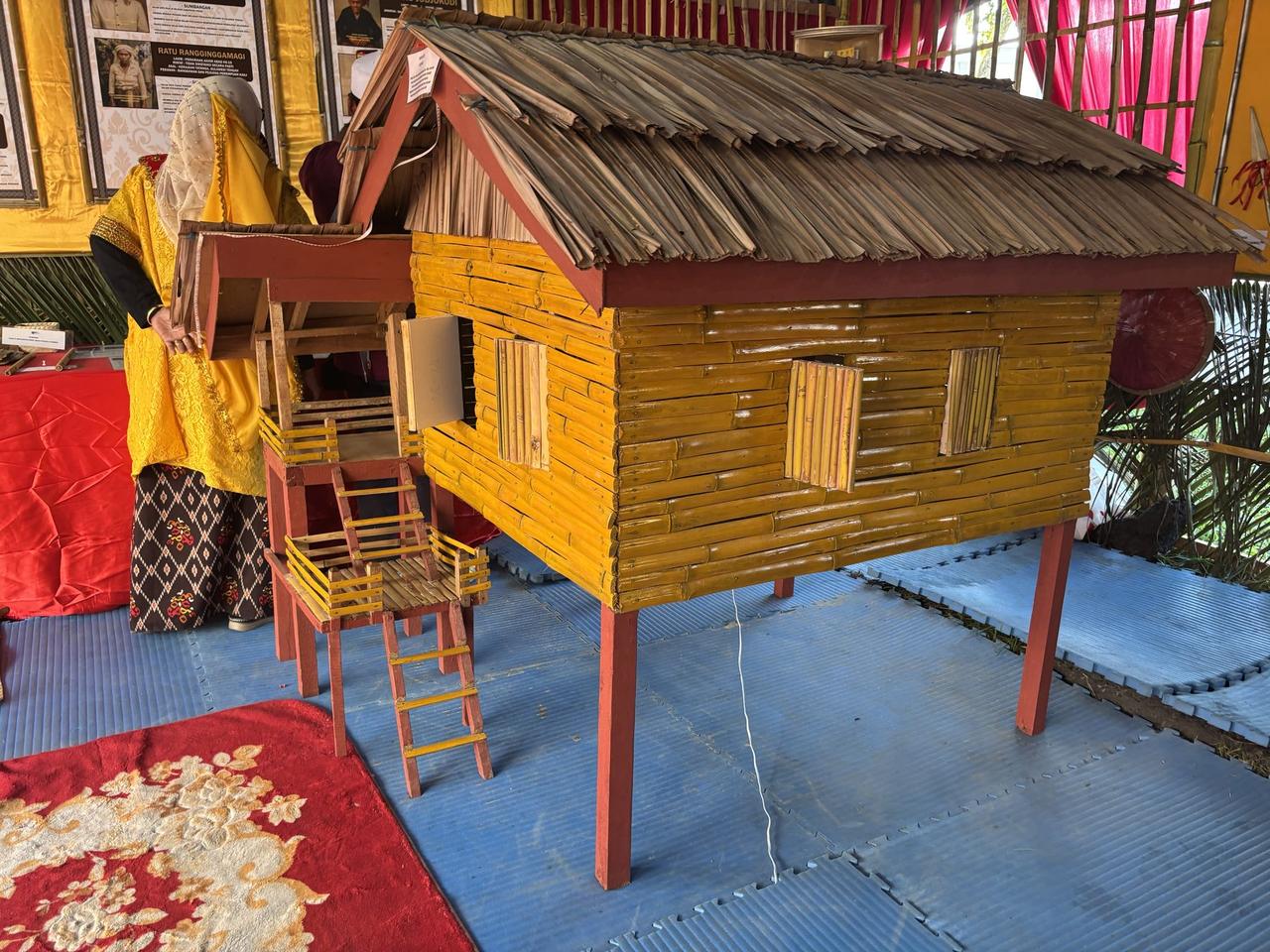
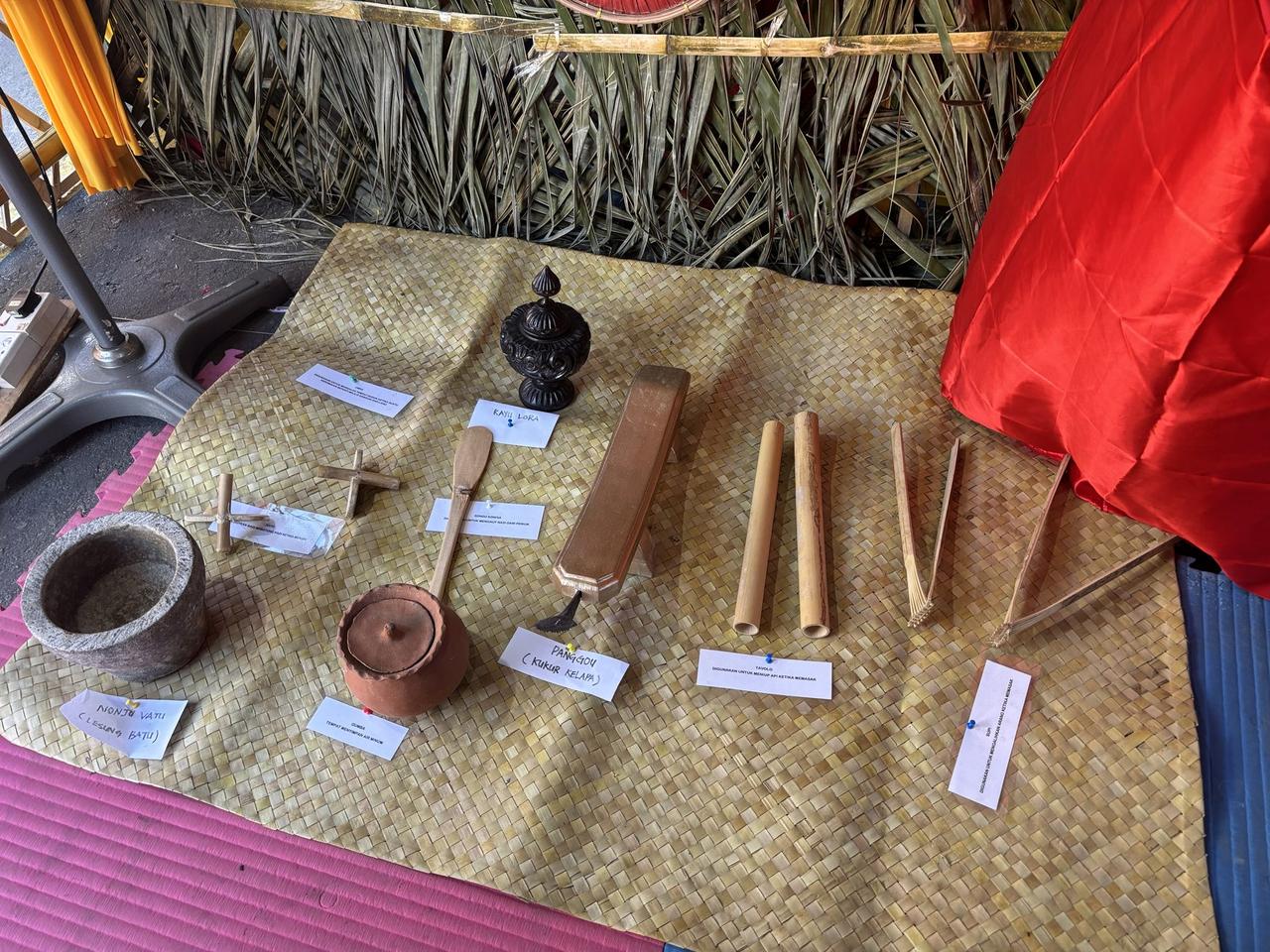
The booth centered on a small model of a traditional stilt house, raised well above the ground on wooden legs with a ladder leading up to its entrance. I was told the height wasn't decorative, that houses like it were built that way specifically to keep wild animals from reaching whoever lived inside, the same basic logic, someone pointed out, behind Japan's old pit dwellings solving the opposite problem. Beside it, a woven mat held a full set of traditional kitchen tools labeled by name, a stone mortar called Nonju Vatu, a water container called Gumba, a coconut grater called Panggou, each label written in a language distinct from the Malay used everywhere else at the festival. And propped up nearby, almost easy to miss, a panel telling the story of Ratu Rangginggamagi, a Kaili noblewoman and fighter from Central Sulawesi's past, a piece of exactly the kind of history I hadn't expected to run into again so soon, and certainly not this far from where I'd first heard it.
Bajau: A Boat Outside, Dancing in the Street
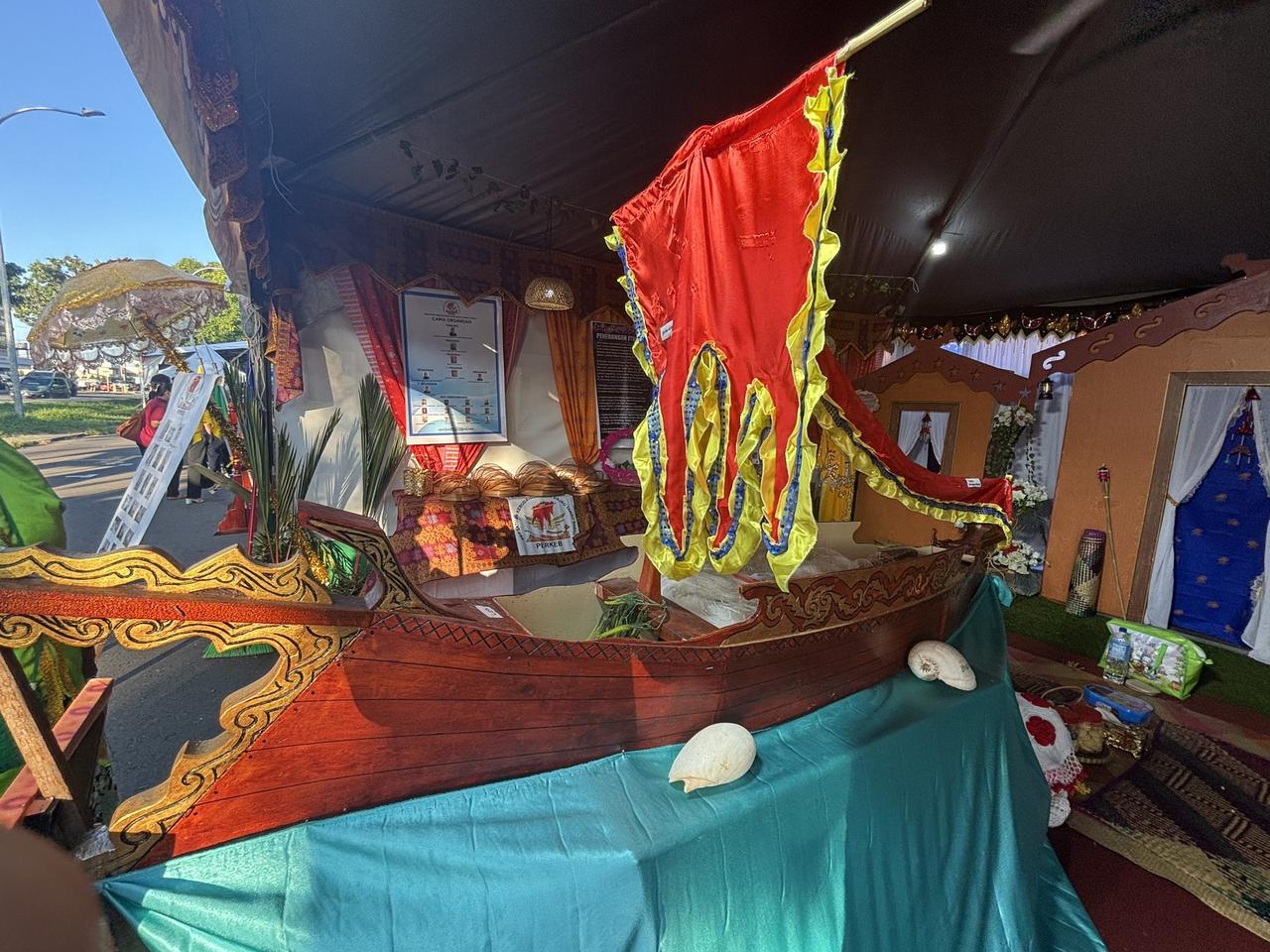
The Bajau booth kept its own boat, teal cloth draped over the hull, a red-and-yellow flag rigged above it, seashells set out along the edge like they'd simply washed up there. Outside, people danced in the street in front of it while I was there, no formal stage or announcement, just movement that seemed to start whenever enough people gathered to make it worth doing.
Dozens of Cultures, One Growing Stage
By the time I left on that third night, I'd lost any real count of how many ethnic groups had booths along that street, dozens by my own rough sense of it, and that was before factoring in a festival now actively recruiting participants from as far away as Kazakhstan and Sri Lanka. Some of what I saw connected straight back to things I'd already spent time learning about elsewhere in this region, the Kadazan Dusun sompoton, the Bajau's alar bimban wedding dress, the Suluk kris sundang, all of it not sitting behind museum glass somewhere but actually being worn, played, and danced by people who'd set up a tent for the week to share it. FKAT started, as far as I can tell, as Sabah showing itself to itself, its coastal communities and its inland ones sharing the same street once a year. Eleven editions in, it's become something wider than that, and standing in the middle of a closing-night crowd that had grown too dense to move through quickly, dancing already spilling past the edges of the main stage, it wasn't hard to believe the ambition behind that growth was earned rather than just declared.