Twenty-Five Minutes Uphill to a Site With Two Kinds of Tomb
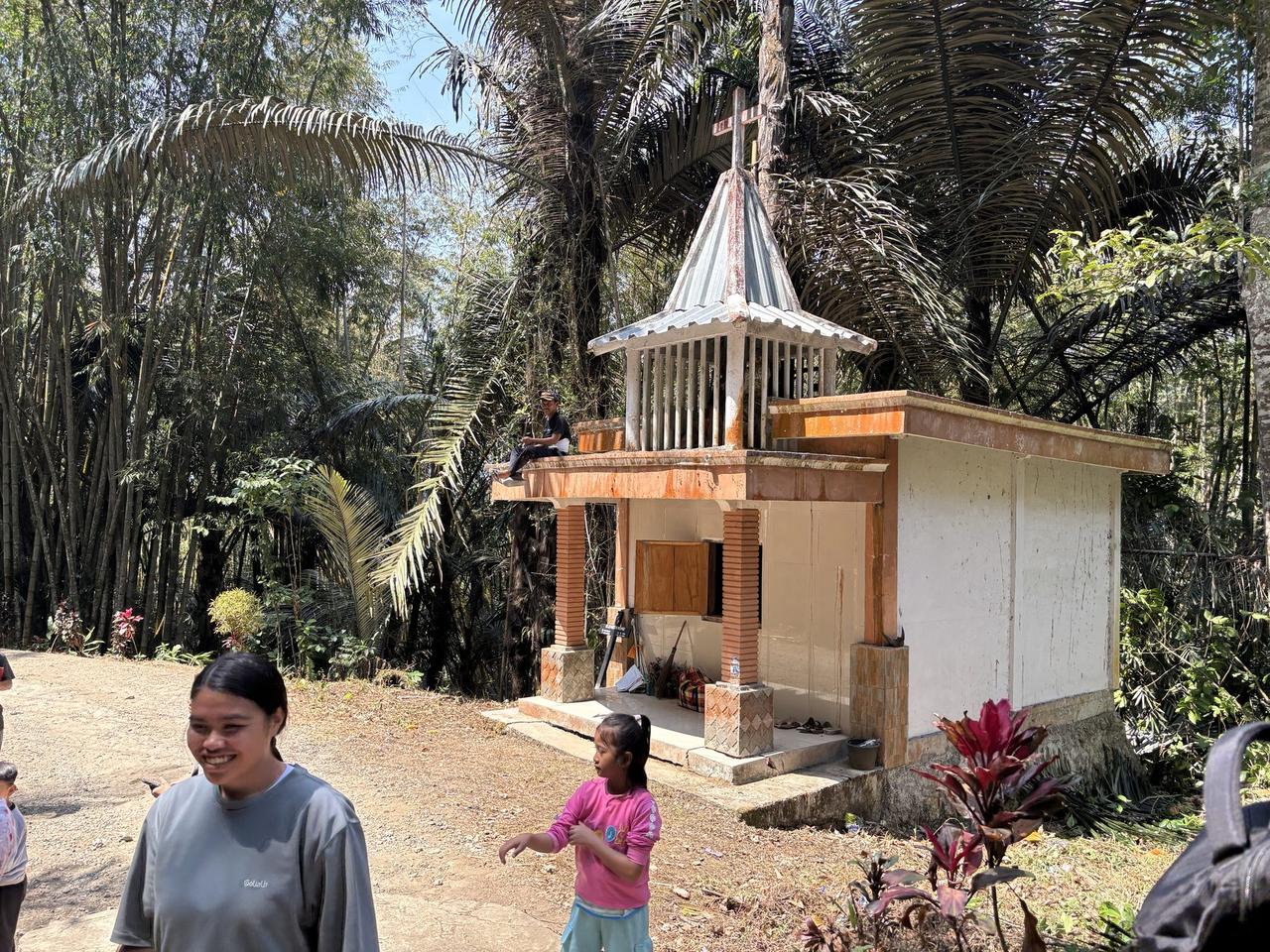
It took about twenty to twenty-five minutes by motorbike, climbing steadily out of Rantepao, before I reached the village. Four separate Ma'nene ceremonies were happening there on the same day, scattered across different family sites, and I chose the one sitting highest on the hill: a single site built around one large boulder, holding four rock-cut tombs and, near the bottom of the path leading up to it, one more tomb of a completely different shape. Small, white, house-like, with a peaked tin roof and a plain cross fixed to the top, it looked almost like a wayside chapel until someone told me what it actually was. This was a Patane, and the boulder further up the slope was full of Liang. Toraja has more than one way of housing its dead, and this site, for whatever reason, had settled on using both.
A Day for Opening, Not Yet for Reuniting
Ma'nene runs five days in total, and what struck me first was how little of Day One actually resembles the ceremony's reputation. This isn't the day ancestors get carried out, redressed, and posed for photographs with their descendants, the images that tend to circulate online. Day One is quieter than that. Extended family gathers at the tomb, prayers and small offerings are made to the ancestors under Aluk To Dolo, the traditional Toraja belief system, and then the actual physical work begins: carefully opening the tomb doors that have been sealed since the last time this family performed the ritual. Nobody touches a coffin yet. Nobody pulls anything out. The entire point of the day is just getting the doors open again, safely, and confirming what's on the other side before anyone commits to going further.
Roughly Ten Doors Cut Into One Boulder
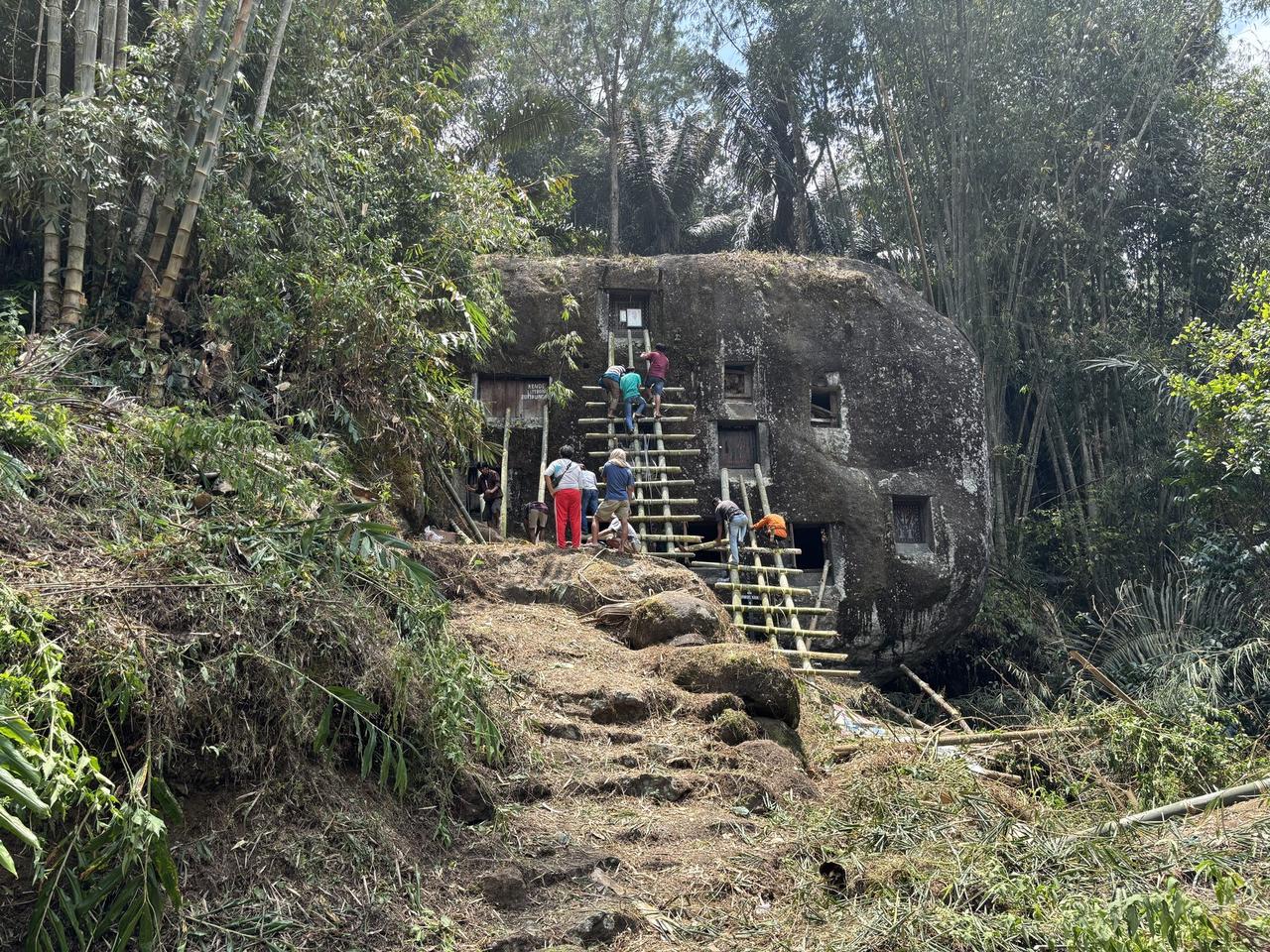
Up close, the boulder was riddled with openings, somewhere around ten of them, each one a rectangular doorway cut directly into the stone at a different height. None of them had stairs or a permanent way up. Instead, the family was building bamboo ladders on the spot, lashing pole to pole against the rock face while other relatives waited below, passing up tools and adjusting the angle as the structure grew taller. It wasn't a single ladder either. By the time I arrived, three or four separate lattices of bamboo were leaning against different parts of the boulder at once, each one aimed at a different door, so several tombs could be opened in parallel rather than one at a time.
Climbing Ten Meters to a Door You Didn't Build
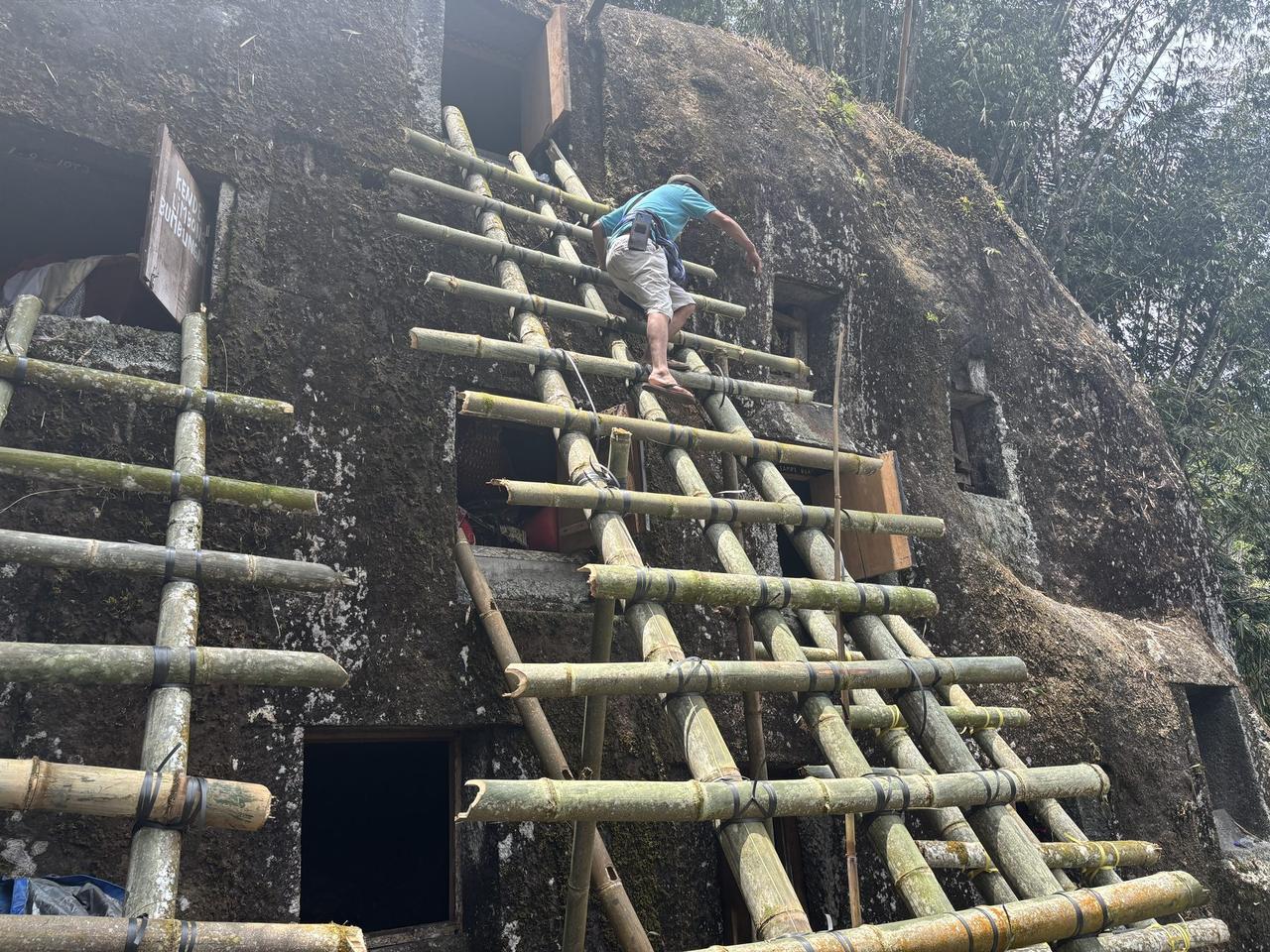
I ended up climbing one of the ladders myself, close behind a man in a teal shirt who moved up the lashed bamboo with a kind of ease that made it clear this wasn't his first time doing it. The door we were headed toward sat close to ten meters off the ground. Once inside, the chamber turned out to be roughly two meters by three, and what actually stopped me was how clean the carving was, sharp corners, even walls, the kind of precision that gave no hint it had been cut by hand rather than machine. What stayed with me longer than the climb itself was watching how the ladders came together in the first place. Nobody was reading instructions or working from a plan. It was a skill clearly still passed down and still alive among younger members of the family, and seeing it practiced so casually, as just another part of getting the day's work done, made it land harder than if it had been staged as a demonstration.
What a Door Left Shut Has Been Keeping
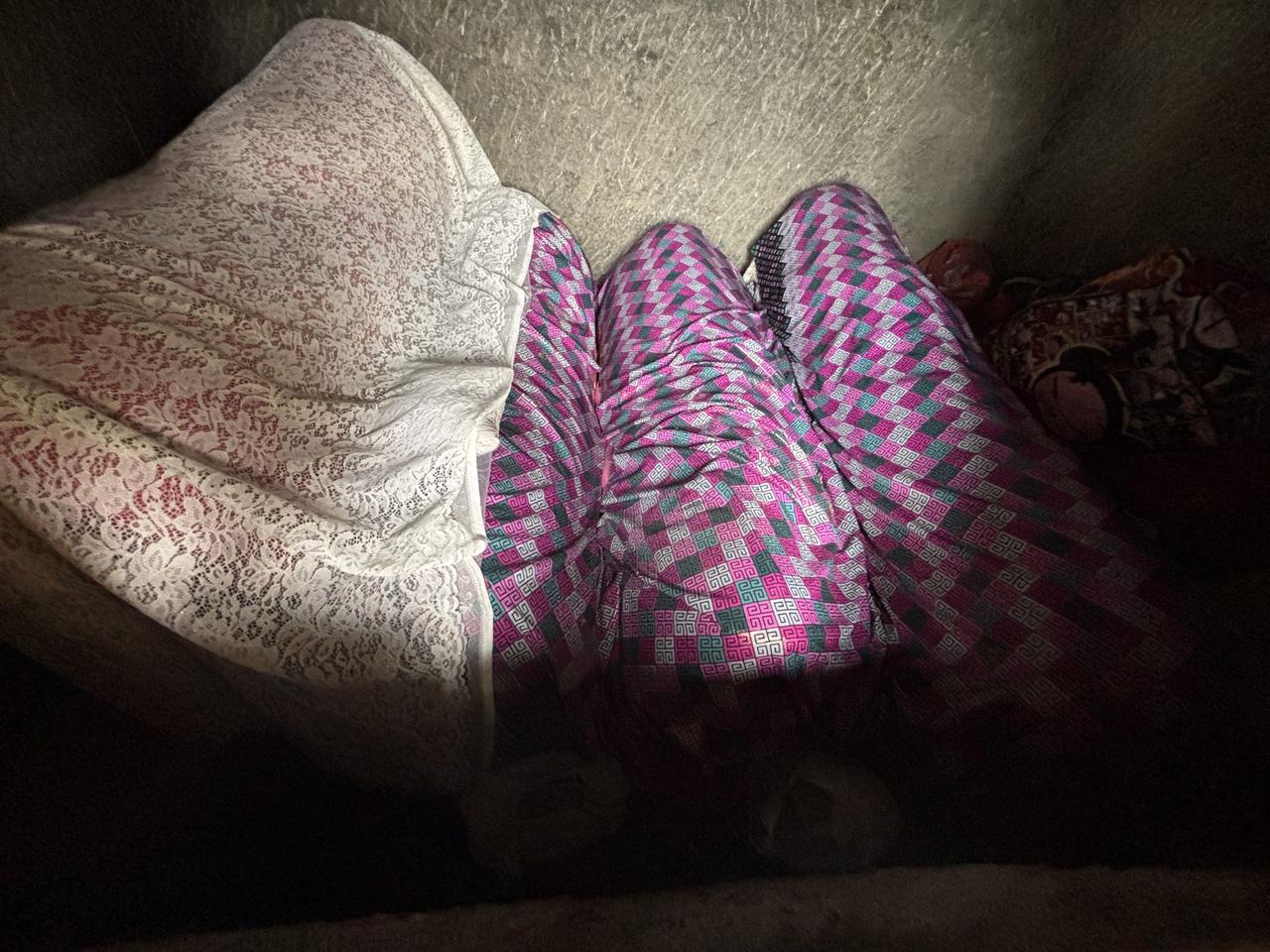
Once a door was actually open, the inside wasn't left in darkness for long. A little light was enough to make out what was there: coffins pushed close against each other in the small space, wrapped in cloth, some in plain white lace, others in bright pink and teal geometric patterns clearly chosen with some care rather than grabbed at random. Nothing was rearranged, and nothing was lifted out. This was the entire task for Day One completed, the door open, the contents visible, confirmed to still be resting exactly where the family had left them the last time. I won't pretend it wasn't a strange thing to look directly at. But strange isn't the same as wrong, and standing there, it was hard to see this as anything other than a family checking in on people they hadn't stopped considering part of the household.
More Room, More People, Same Care
By the time I made my way back down to the Patane at the bottom of the site, the comparison with the Liang tombs above was hard to miss. The Patane's interior held noticeably more space and, from what I was told, a higher number of people laid to rest inside it than any single chamber in the boulder. It made a kind of practical sense once I thought about it: a structure built rather than carved can simply be made bigger, while a Liang is limited by whatever the rock happens to allow. But the attention paid to each didn't seem to scale with size. Whether it was a two-by-three chamber ten meters up a bamboo ladder or a house-shaped tomb at ground level holding many more, the same unhurried care went into opening it.
That was really the whole of Day One: doors opened, contents checked, nothing rushed and nothing skipped. The reunion everyone associates with Ma'nene, the part where ancestors are actually brought out into daylight, was still a day away. This first day was just the quiet, necessary work of making sure that was even possible.