Back to the Same Compound, Now Ready for Guests
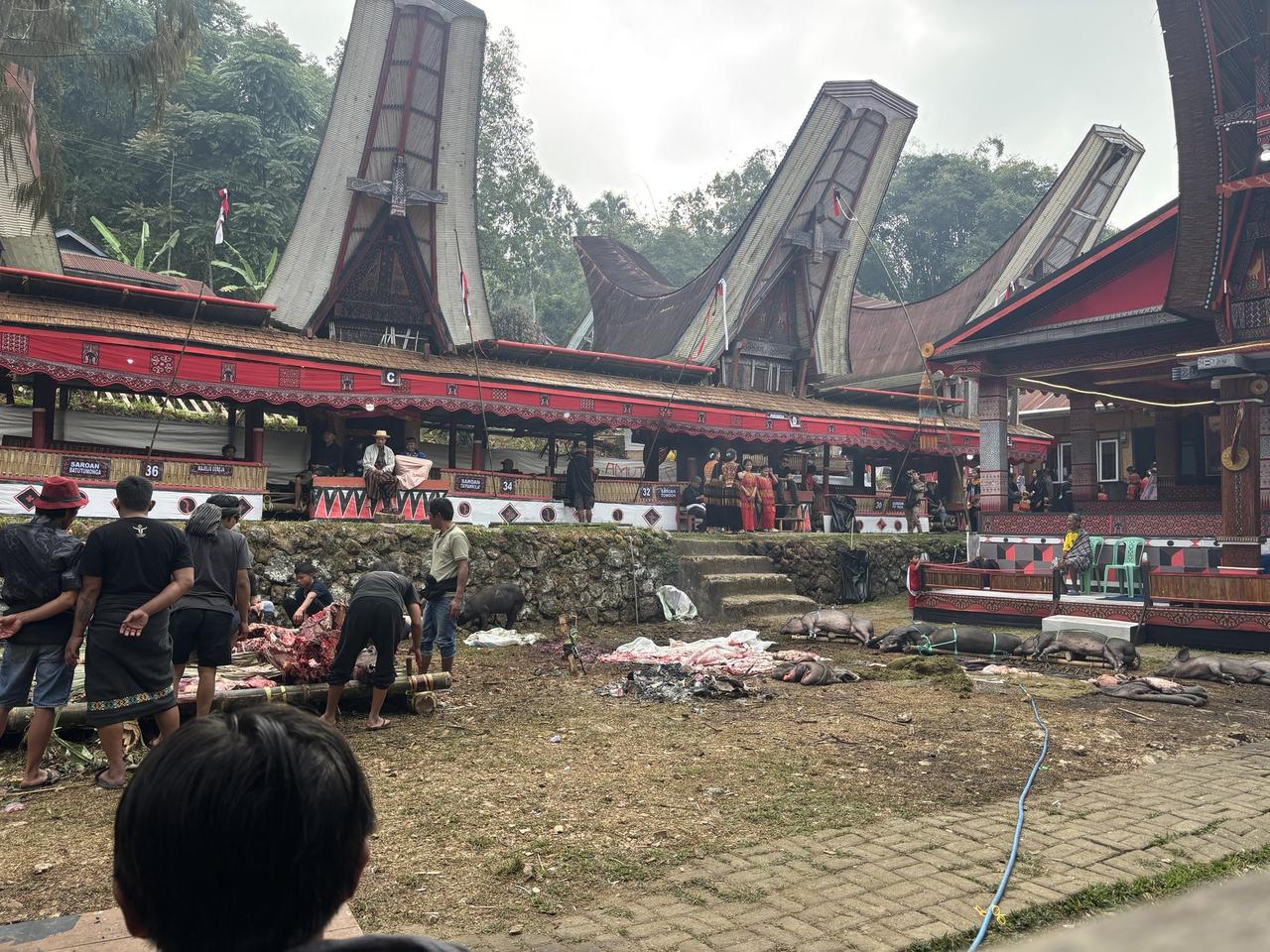
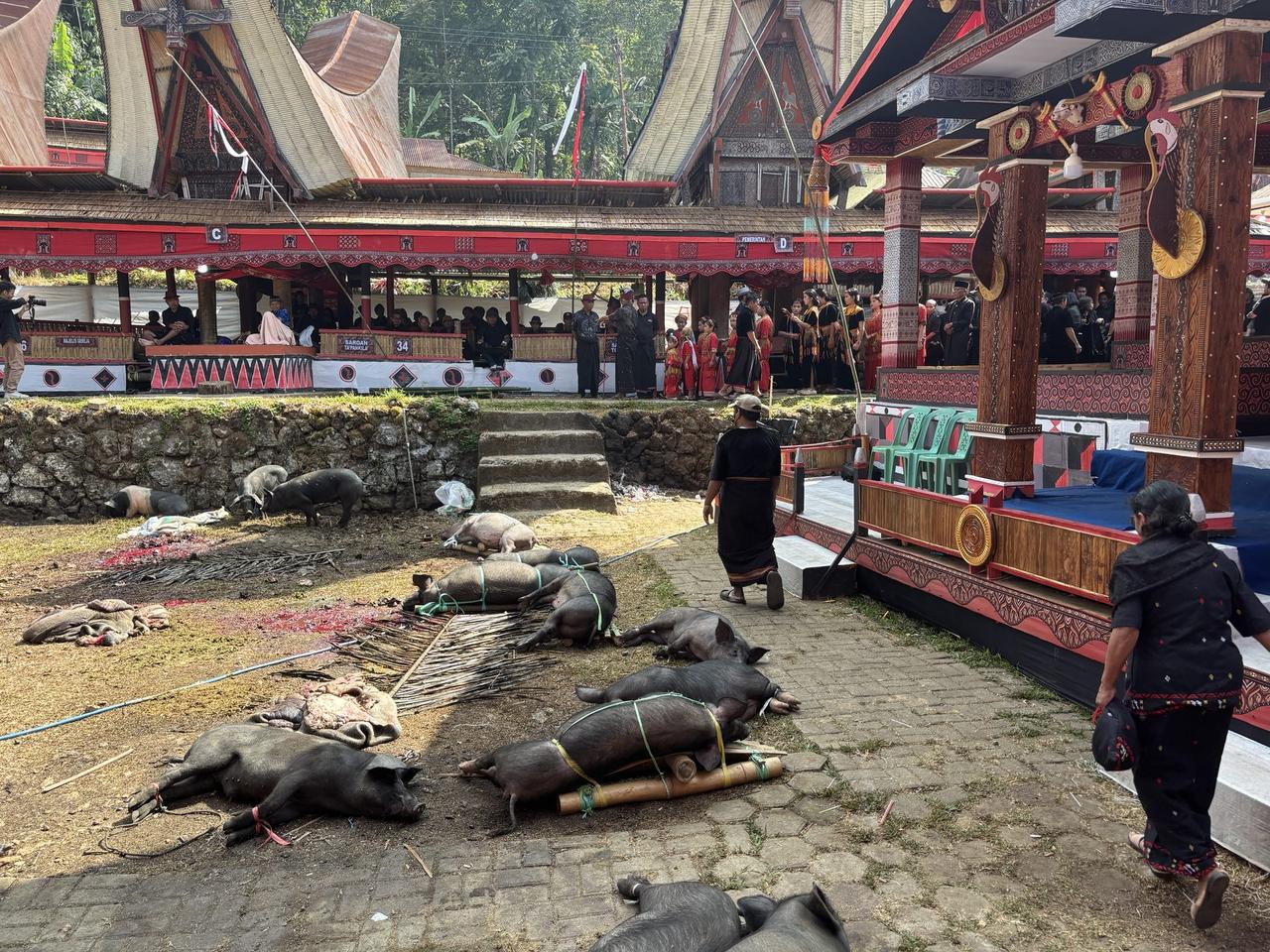
I recognized the plaza before I recognized anything else, the same alang and tongkonan facing each other across Ulu Bapa, the same Lakian standing off to the side with its condolence signboard still up. This was the same funeral, the same family, Benyamin Anthon and Kristina Lembang, just one day further into a ceremony that clearly needed the extra day to build up to what was coming. Where Day One had felt quiet and almost administrative, this compound was now unrecognizable: pigs tied and waiting everywhere, banana leaves spread for butchering, and pavilions that had been half-empty the day before now filling with people arriving from somewhere else.
Terima Tamu: A Funeral That Runs on Debt and Memory
The day has a name, Katongkonan, or more plainly Terima Tamu, receiving guests, and once it was explained to me the whole event stopped looking like a funeral in the way I'd understood the word and started looking like something closer to a ledger being settled. The guests arriving today weren't just mourners. Most of them were families who had, at some point in the past, received a water buffalo from Benyamin and Kristina's family for one of their own ceremonies, and Rambu Solo is where that debt comes due. A pig is a modest repayment. A water buffalo, especially a rare, striped tedong rotong boko, is not, and I was told prices for one can run into the hundreds of millions of rupiah. Watching pigs get walked in on ropes all morning, I kept having to remind myself that some of what was arriving later would be worth vastly more than everything I could see at once.
Coffee, Snacks, and a Debt Written Down
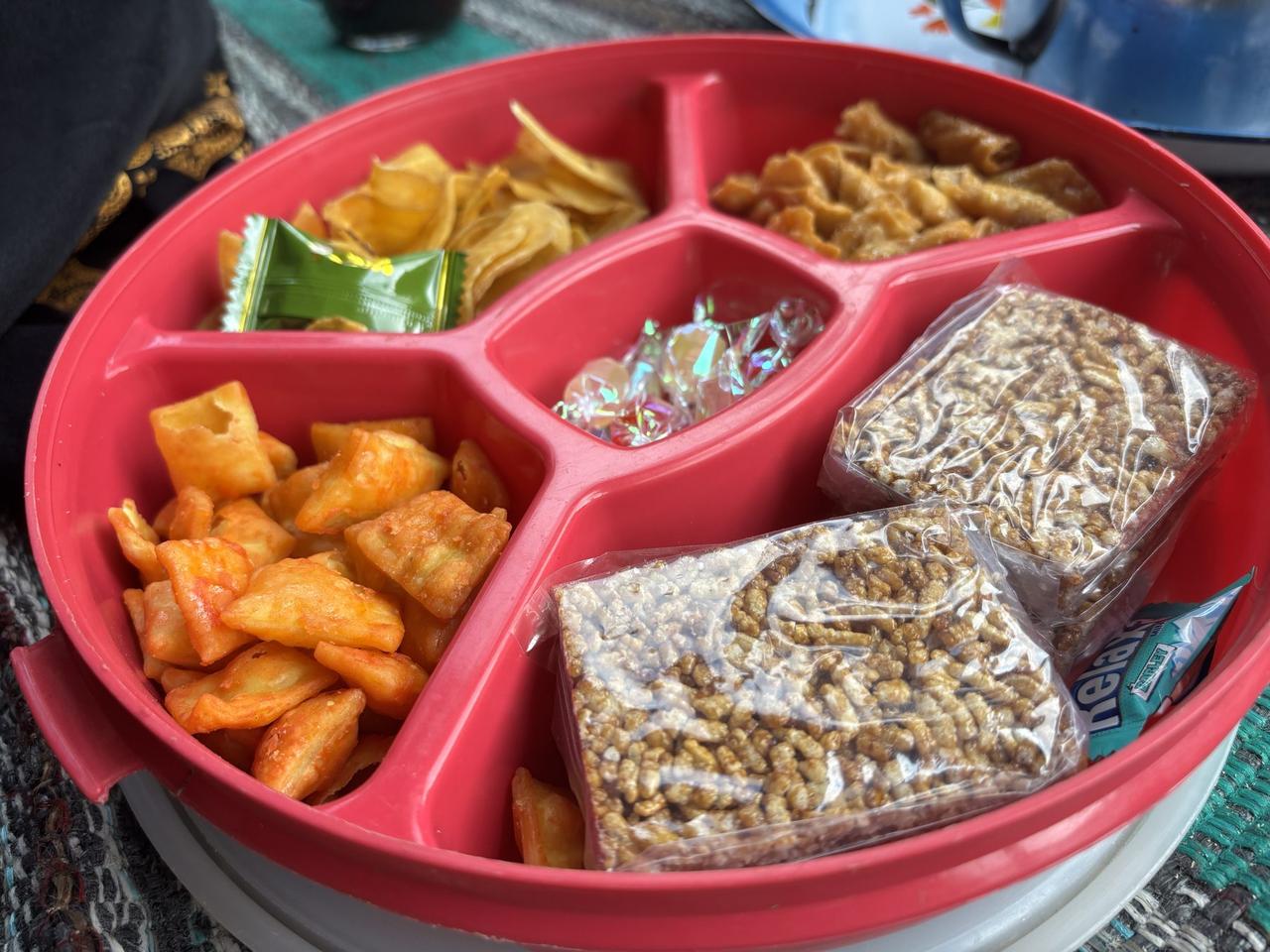
Around the plaza, temporary shelters called lantang had gone up since the day before, simple structures where arriving guests could sit, be served coffee or tea, and pick at trays of local snacks while they waited their turn to be formally welcomed. It felt almost domestic in the middle of everything else happening, a small, ordinary hospitality tucked into a much larger event. I was told that somewhere behind the scenes, someone was keeping track of exactly what each family brought, pig or buffalo, so the family hosting could properly credit the gift and, eventually, repay it themselves when the giver's turn came. Nothing here is left to memory alone.
Guests Welcomed Around the Plaza
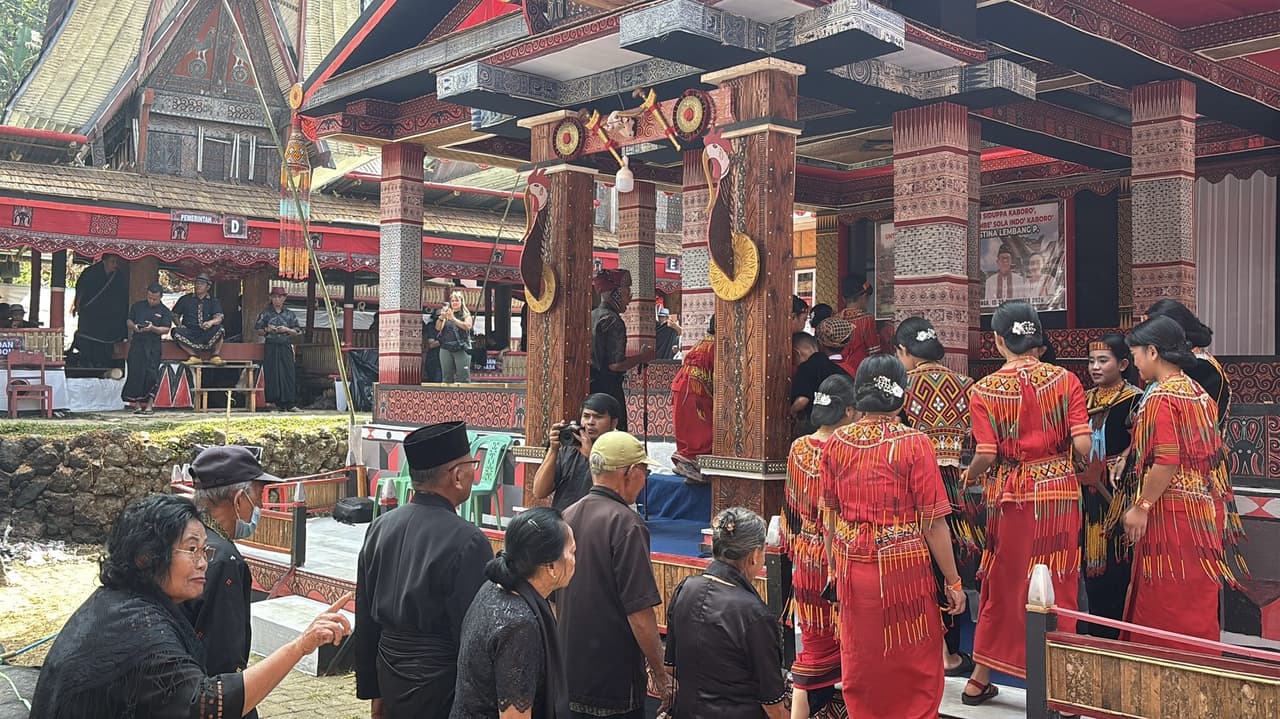
Once a family's turn came, the welcome itself was a small procession of its own. I watched a group arrive at one of the decorated structures near the tongkonan, women in bright red traditional dress with fringed sashes, moving together past the older men in black who'd come to receive them. It was the most colorful moment of the day by far, a deliberate contrast, it seemed, to the more solemn tone waiting later. Every family that walked through this welcome was, in effect, publicly stepping forward to say they remembered what they owed and had come to pay it.
Ma'badong: A Chant That Carries Grief
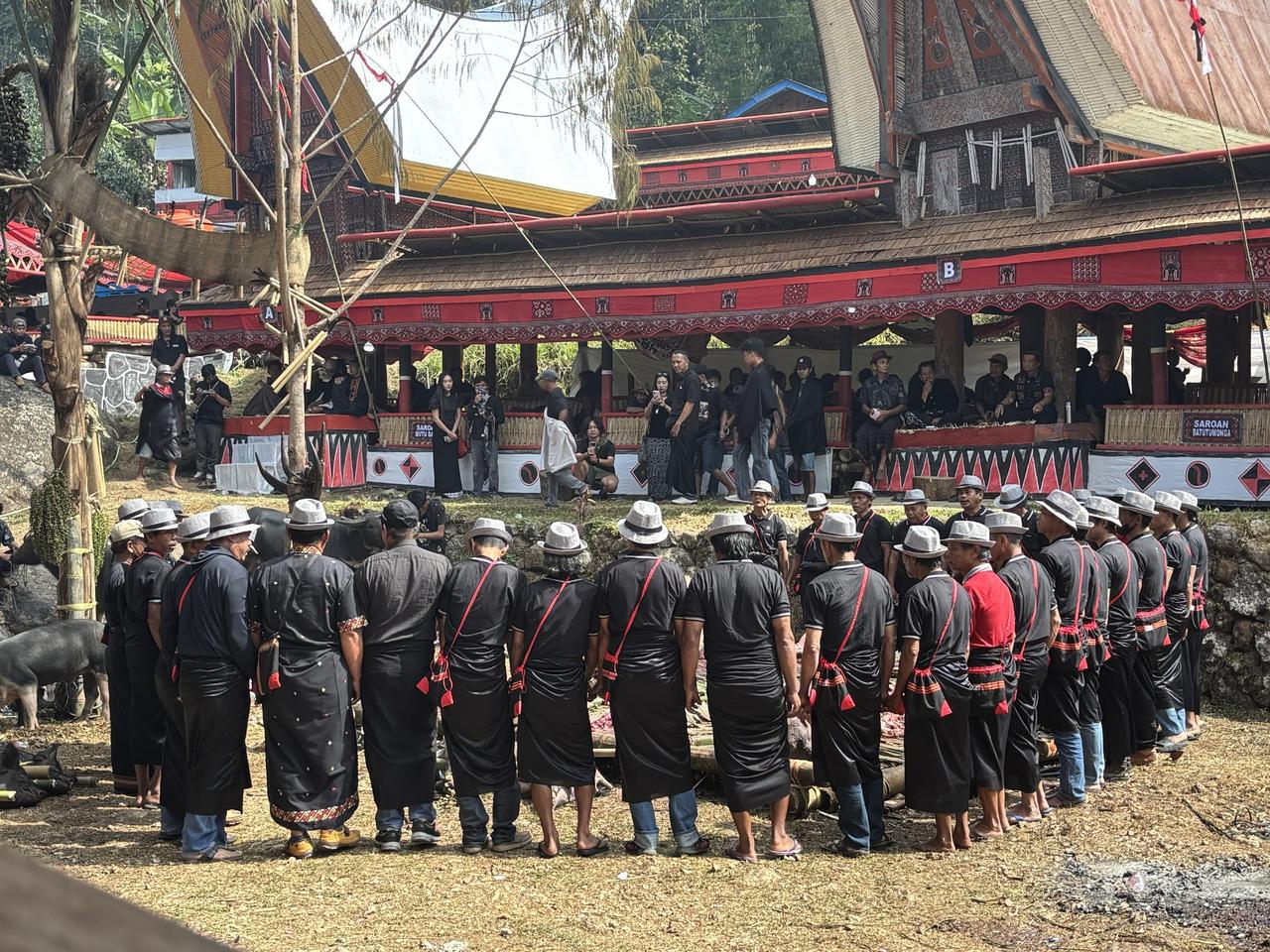
Somewhere in the middle of the welcoming, a large group of men in matching black shirts, red sashes, and pale fedora-style hats gathered off to one side, and I was told this was Ma'badong, a chant performed in a circle that's specifically meant to carry grief rather than celebration. Day One hadn't had anything like it. This was the first moment all ceremony where the mood shifted from busy and social to genuinely mournful, dozens of men's voices low and repetitive, more felt than understood since I couldn't follow the words. It was also the clearest signal yet that whatever lighter energy the guest-welcoming carried, the day was still, underneath it, a funeral.
A Buffalo, Announced by Name
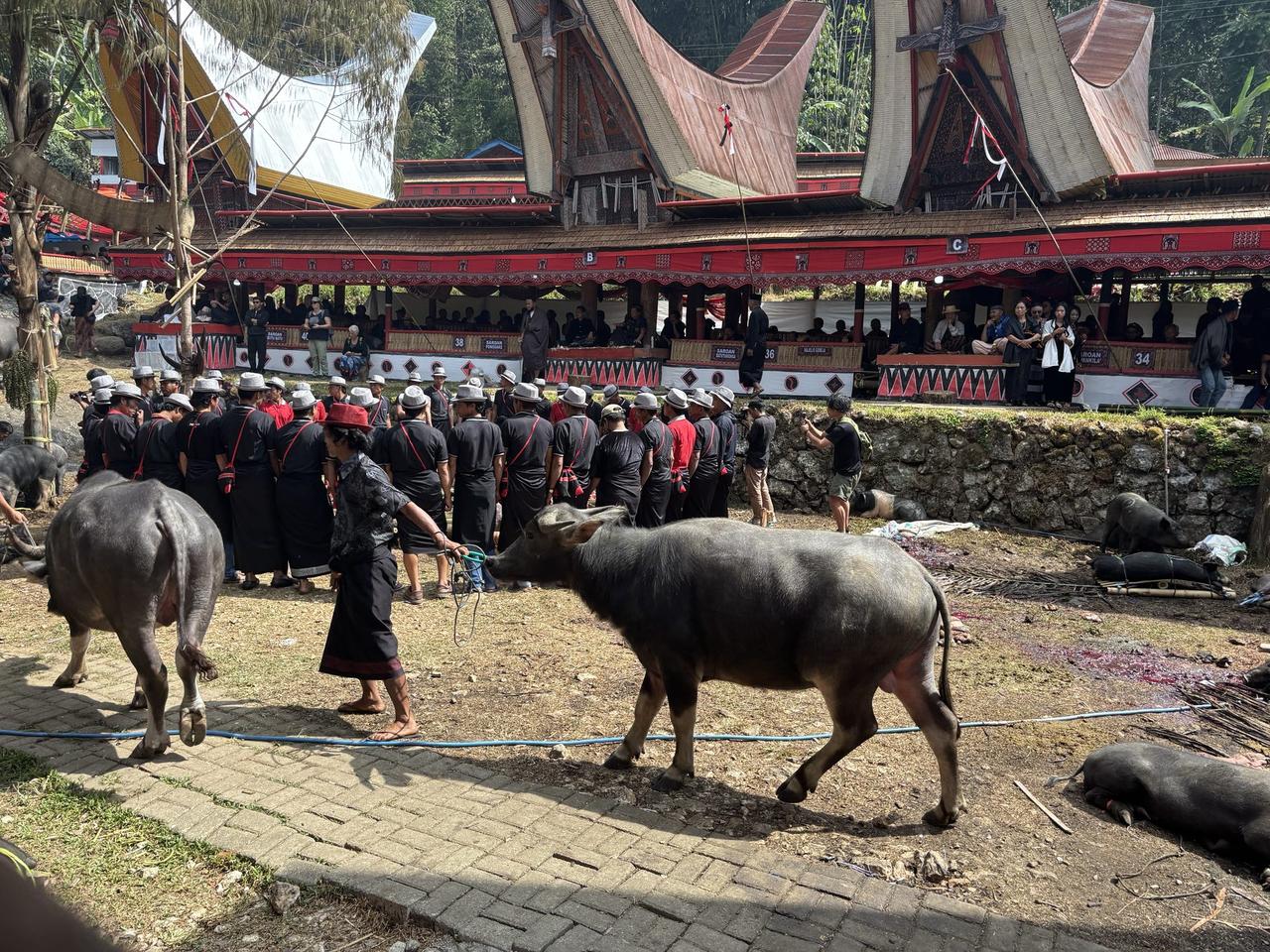
Later, one of the day's water buffalo was led through that same group of Ma'badong men and out into the open plaza, and this was where the reciprocity at the heart of the day became something everyone could actually watch. A formal announcement named the family presenting the animal, tying a specific buffalo to a specific act of memory rather than letting it pass through anonymously. Seeing it walked past the chanting men rather than off to the side made it feel less like livestock changing hands and more like a debt being read aloud before it was paid.
Two or Three Buffalo, and a Long Day Closing
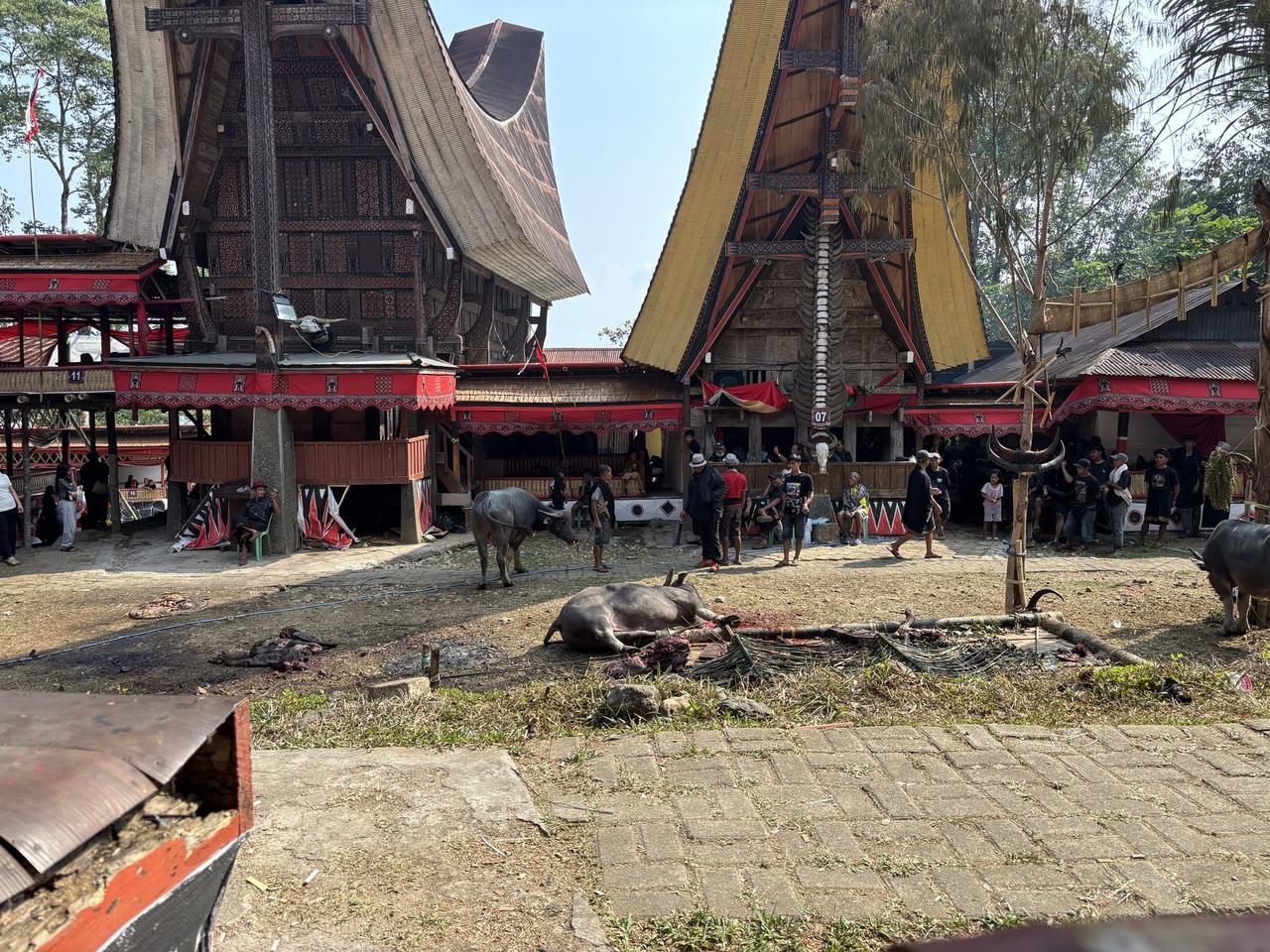
A note before this section: the photograph below shows the aftermath of a water buffalo sacrifice, including blood. If that's not something you want to see, feel free to skip past it.
By the time the second or third buffalo of the day had been brought down, the plaza had a different texture entirely than it had that morning, the chanting quieter, the crowd more spread out, everyone visibly aware of what each animal represented before it happened. I didn't take this lightly, and I don't think anyone around me did either. Whatever the reciprocity meant on paper, in the moment it was still a life being given, publicly, in front of the whole gathered community.
Riding away that evening, I kept thinking less about the ceremony's scale and more about how deliberately I'd tried to be there as something other than a tourist, following the family's lead on when to step back, when it was fine to photograph, when it clearly wasn't a moment for a stranger's camera at all. Day One had asked for quiet attention. Day Two asked for something closer to respect for a very old kind of bookkeeping, one where a gift is never really finished until it's been returned, sometimes years later, sometimes at a cost that would be unthinkable anywhere else I've traveled.