A Ramen Craving, Answered
I hadn't had ramen in a while, and once that craving sets in, it doesn't really go away on its own. So I went looking, half expecting the usual outcome in a country like this: an imported Japanese name charging import Japanese prices. What I found instead was Tsuka Ramen, and it changed how I thought the equation was supposed to work.
What Tsuka Actually Is
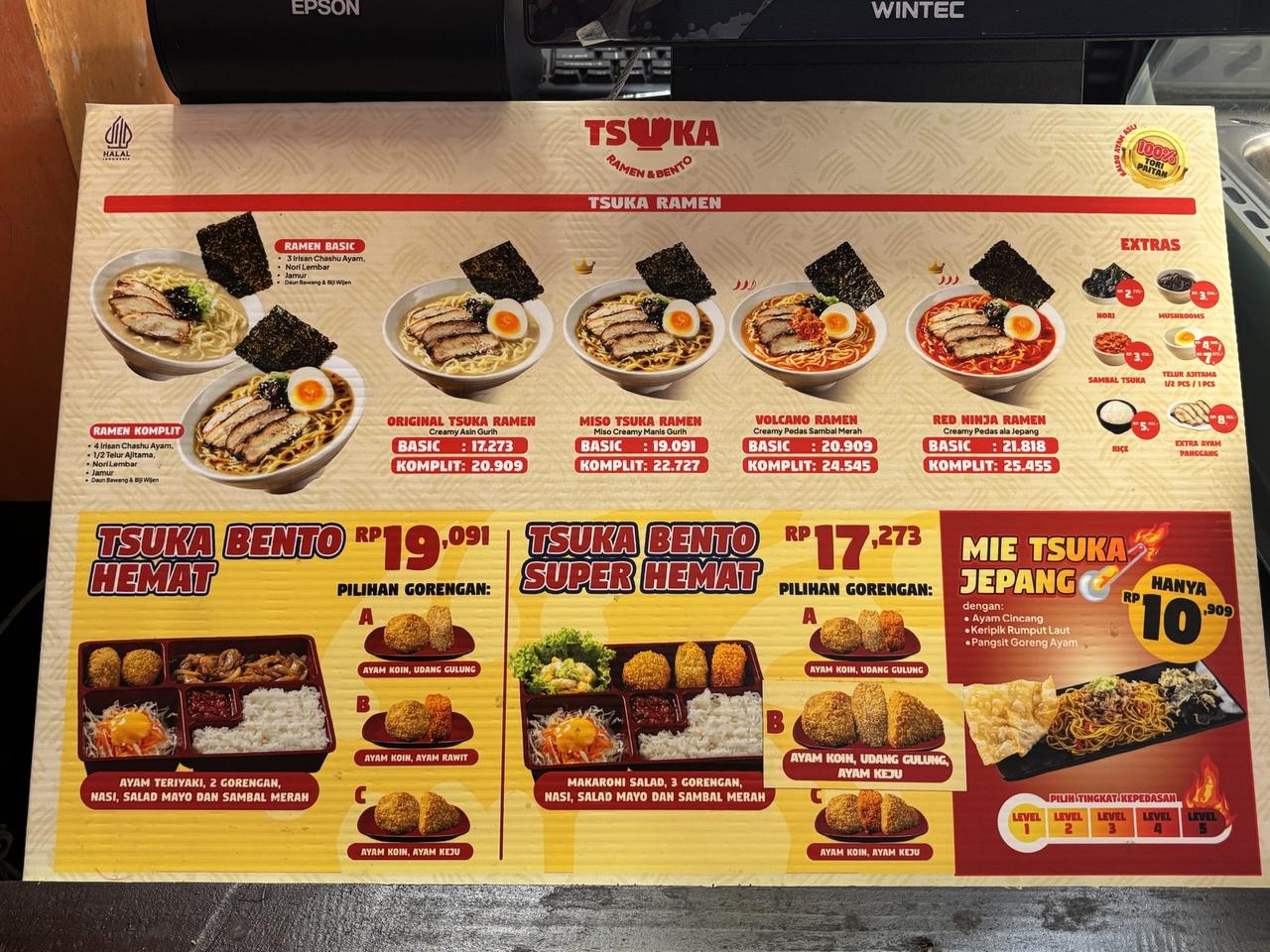
Tsuka Ramen belongs to Indonesia's Legit Group and carries full halal certification from MUI, the Indonesian Ulema Council, a detail printed right on the menu board alongside the chain's own tagline: Jagoan Ramen, roughly "the champion of ramen." It's not trying to be an obscure specialty shop. It's built to be approachable, the kind of place a family walks into without a second thought.
From Java to Sulawesi
The chain's official Instagram, with more than 65,000 followers, lists locations across Jakarta, Bogor, Depok, Bekasi, South Tangerang, Yogyakarta, Surabaya, and Bandung, the usual Java stronghold, but also Pekanbaru on Sumatra and Makassar on Sulawesi. That last one caught my attention. Makassar, the same city holding onto Somba Opu's fortress walls and a colonial city hall turned museum, now also has a modern Japanese ramen chain sitting somewhere in its everyday food scene. Both things are true about the same city at once.
Walking In
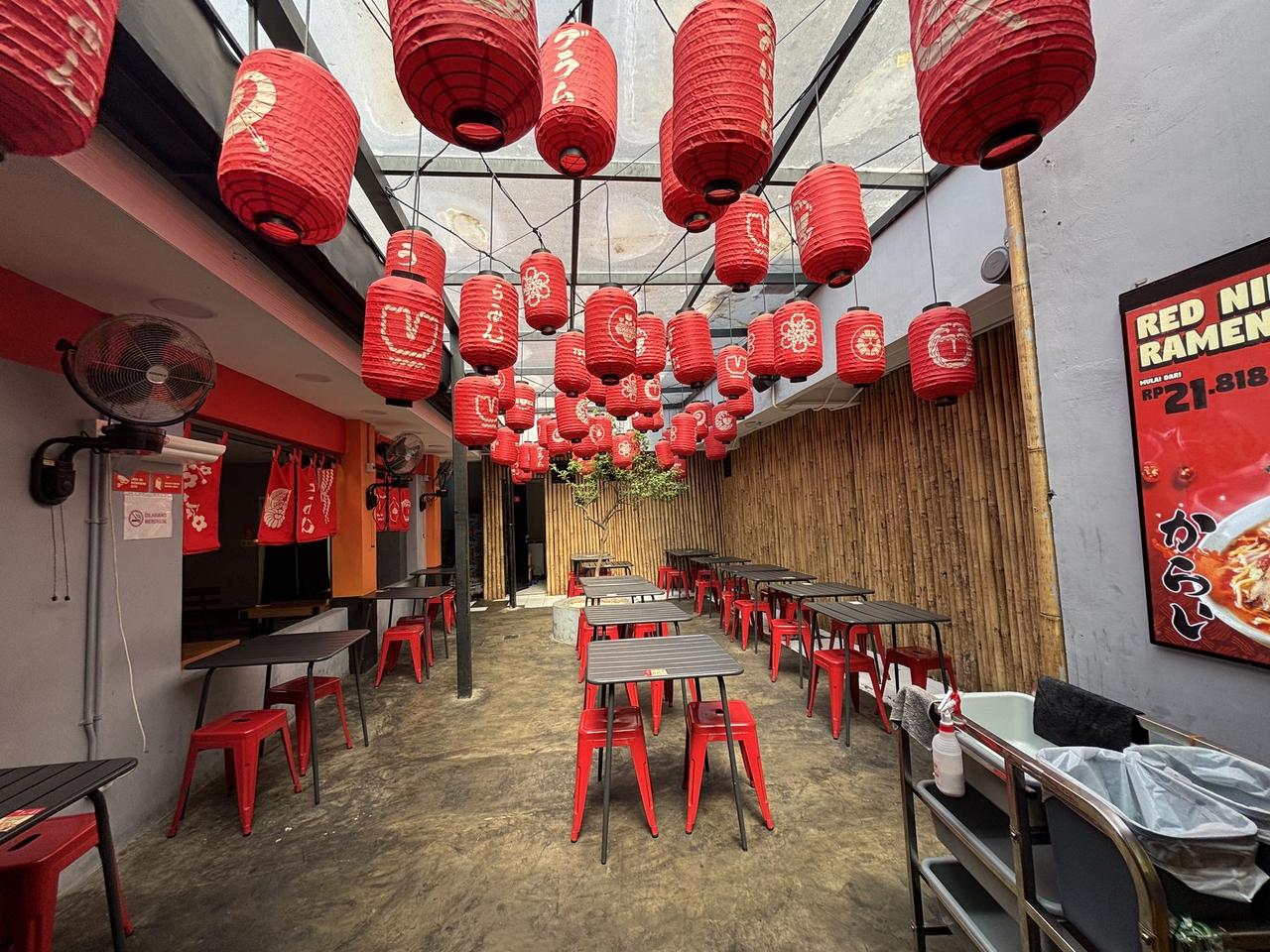
The location I visited had more atmosphere than I expected from a budget chain: a covered courtyard strung with rows of red paper lanterns overhead, each one printed with a different crest or motif, sunlight filtering down through the glass roof above them.
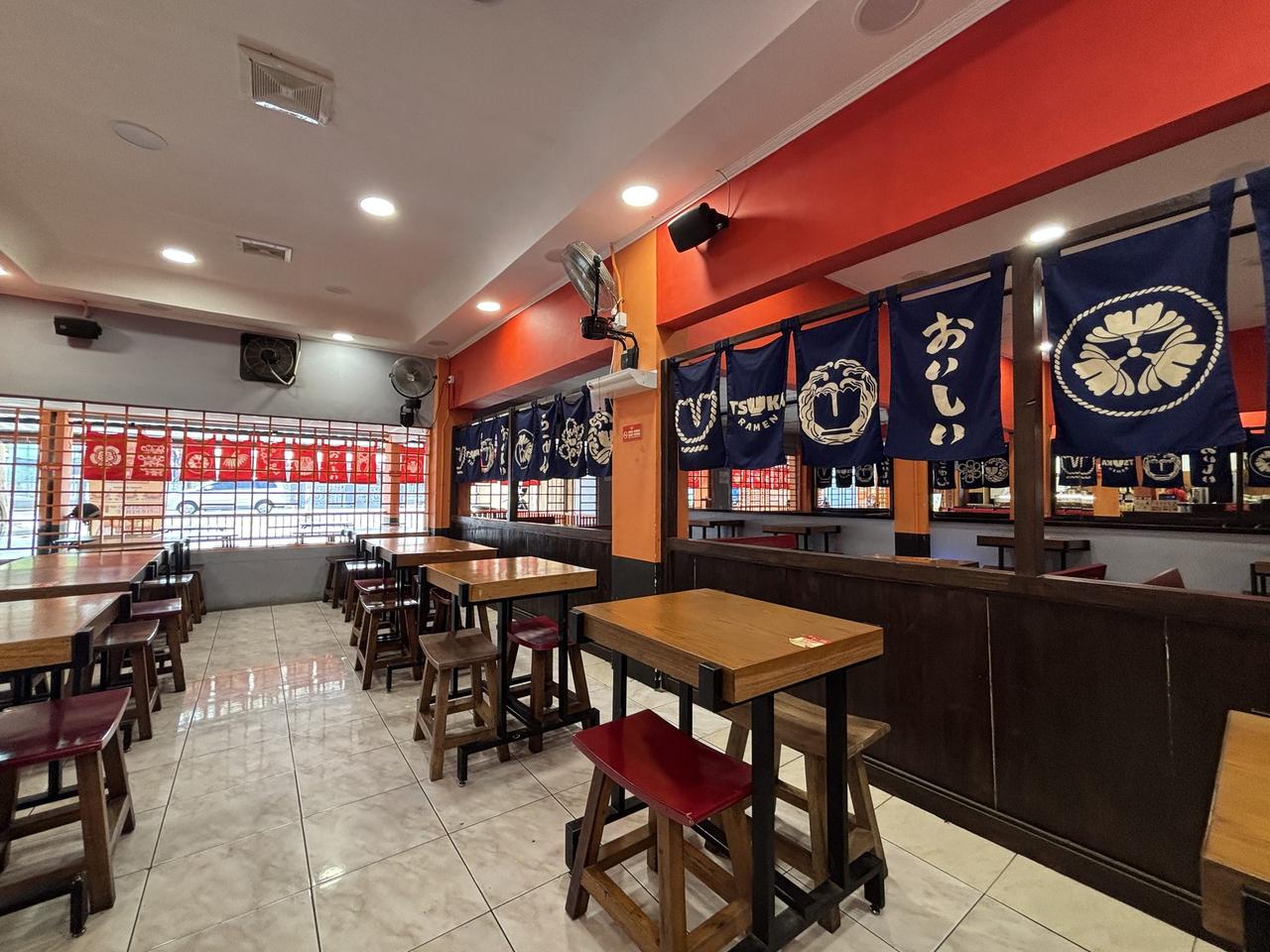
Inside, dark wood tables and stools sit under indigo noren curtains printed with the Tsuka crest and the word Oishii, delicious, stitched in white across one panel. It's a small, deliberate detail, but it works. Walking in feels considered rather than accidental.
Four Bowls, One Price Range
The menu keeps things simple: four ramen styles, each available Basic or Komplit, the Komplit version adding an extra slice of chashu and half a seasoned egg for a few thousand rupiah more. Original Tsuka Ramen is the creamy, savory baseline, starting at Rp17,273. Miso Tsuka Ramen goes creamy and slightly sweet from there. Volcano Ramen brings a creamy, chili-forward heat, and Red Ninja Ramen sits at the top of the spice scale, styled as the Japanese-heat option, topping out around Rp25,455 for the Komplit bowl. Extras are ordered à la carte at the counter: more nori, mushrooms, Tsuka's own sambal, a seasoned ajitama egg, rice, or grilled chicken on the side.
The Original, and Why the Upgrade Is Worth It
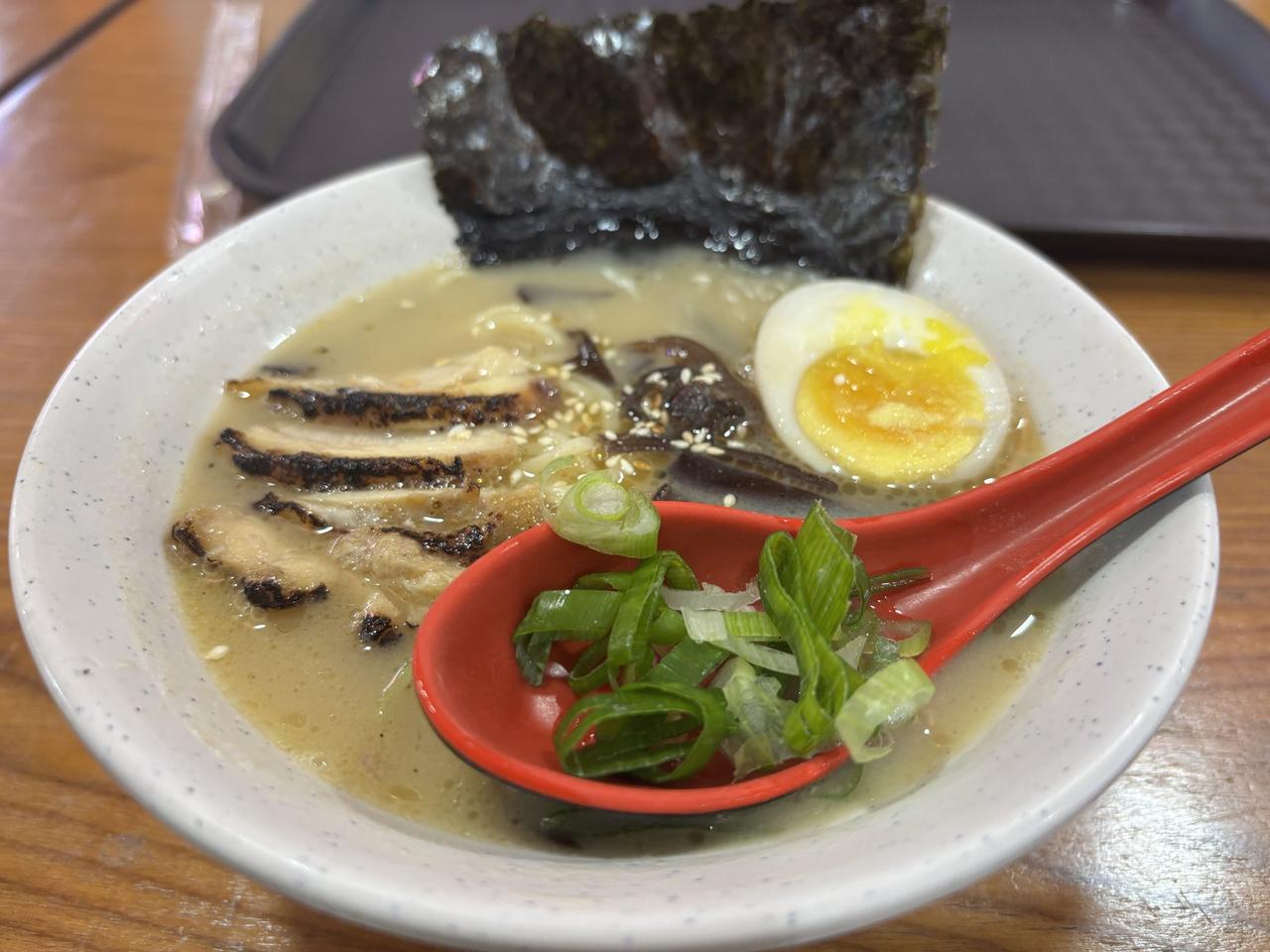
I started with the Original, and it's exactly what a baseline bowl should be: a savory, creamy broth, tender chashu, a soft-cooked egg holding its yolk, nori standing straight up out of the bowl. Paying the extra few thousand rupiah for Komplit over Basic gets you noticeably more, an additional piece of meat and that egg, and it's a difference worth paying for every time.
The Spicy End of the Menu
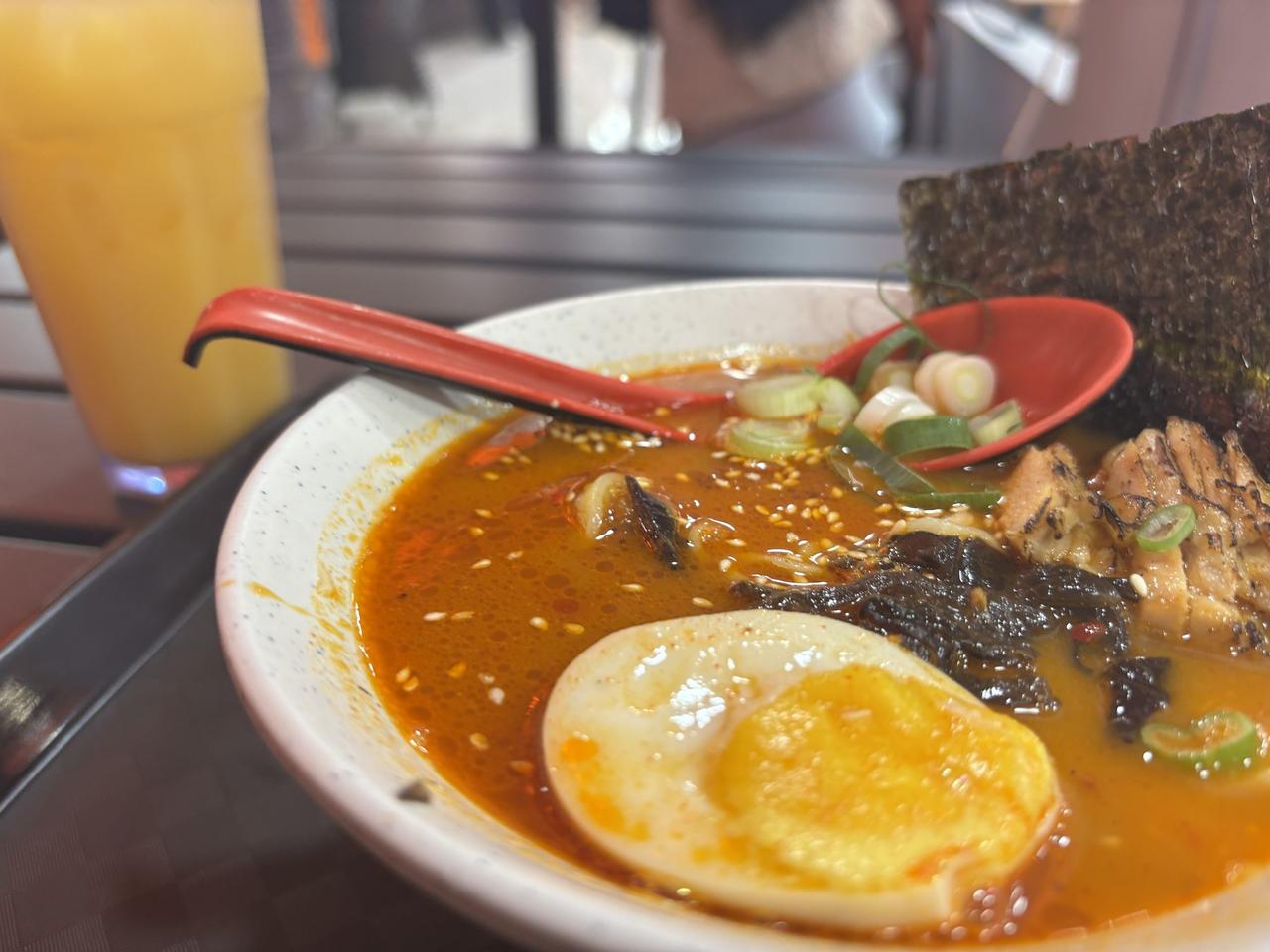
I also went for Red Ninja, the hottest option on the board, and it earned that ranking honestly. It was hot enough that I couldn't finish the broth, which almost never happens to me. Volcano, by comparison, brings real heat too but stays in a range I could comfortably eat through start to finish. Between the two, Volcano is the one I'd recommend to someone who wants spice without punishment; Red Ninja is for people who mean it when they ask for the spiciest thing on the menu.
Cheap, and Genuinely Good
Here's the part that actually surprised me: every bowl landed somewhere between Rp20,000 and Rp30,000, which is under 300 yen. I've eaten ramen in plenty of countries outside Japan, and it's almost always priced as a premium import, sometimes absurdly so. Tsuka doesn't play that game, and the quality doesn't suggest a discount either. If a Japanese ramen brand wanted to compete with a place like this on price, it would need to compete on quality instead, because there's no way to win on cost against a local chain built from the ground up to run this lean.
The Bento Deserves a Mention Too
I also tried a Tsuka Bento Hemat, the more affordable bento set, and the ayam teriyaki inside was close enough to what I'd expect from an actual Japanese teishoku counter that it genuinely surprised me. Between the ramen and the bento, the level of care clearly extends past just the noodles.
A Lifestyle Brand as Much as a Restaurant
Tsuka's TikTok account, @tsukaramen.id, carries more than 16,000 followers and upwards of 470,000 cumulative likes, and the content isn't limited to menu shots. There are posts on how to find a location, on the Tsuka Bento specifically, on new items as they roll out. It reads less like a restaurant's marketing account and more like a lifestyle brand keeping its audience engaged between visits, which tracks with how popular some locations have become; busy hours reportedly come with actual waiting lists.
A Different Kind of Cultural Import
The name Tsuka clearly signals its debt to Japanese ramen culture, but what it's actually built around, halal certification, aggressive pricing, and a social media presence tuned for a young Indonesian audience, is its own thing entirely, a homegrown answer to a foreign craving rather than an import of it. It sits at a different angle from something like Minahasa's paniki cooking, one of Indonesia's older, more rooted food traditions, but it belongs to the same larger picture: a country whose food culture keeps absorbing outside influence and turning it into something distinctly its own. If Jakarta or Makassar is on your route, it's worth ducking in, if only to see what 300 yen actually buys you.