Boarding
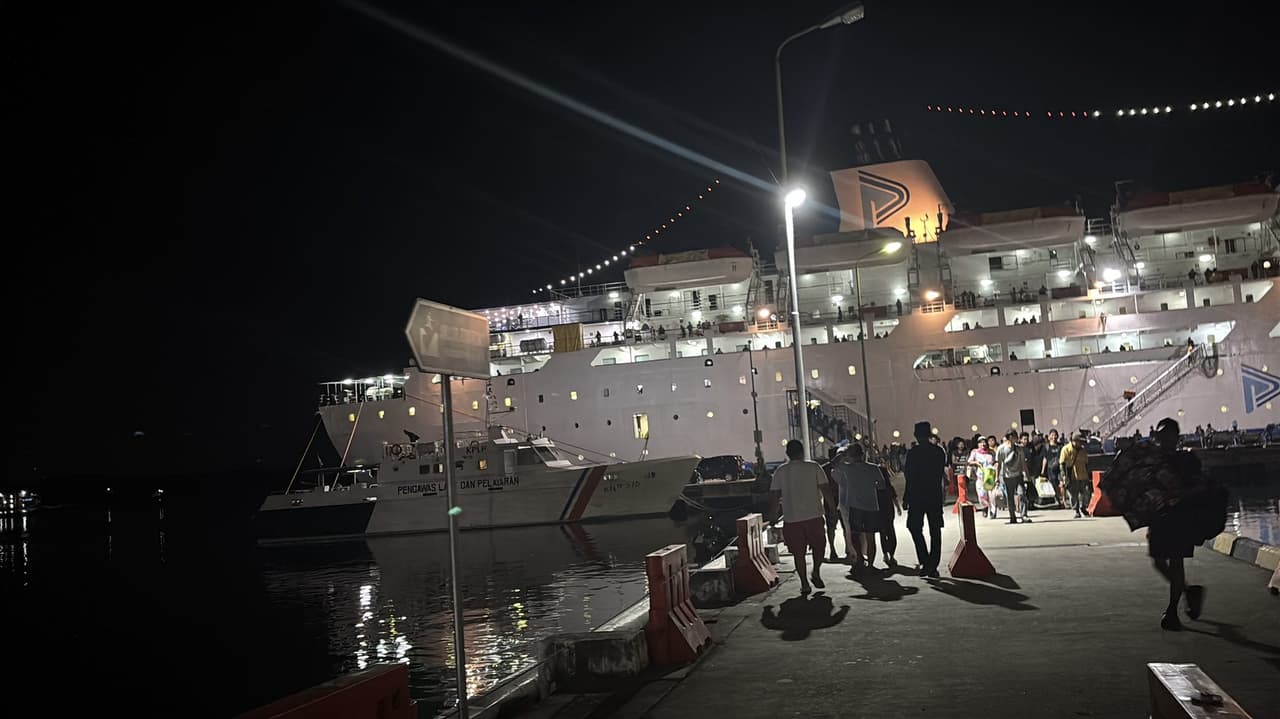
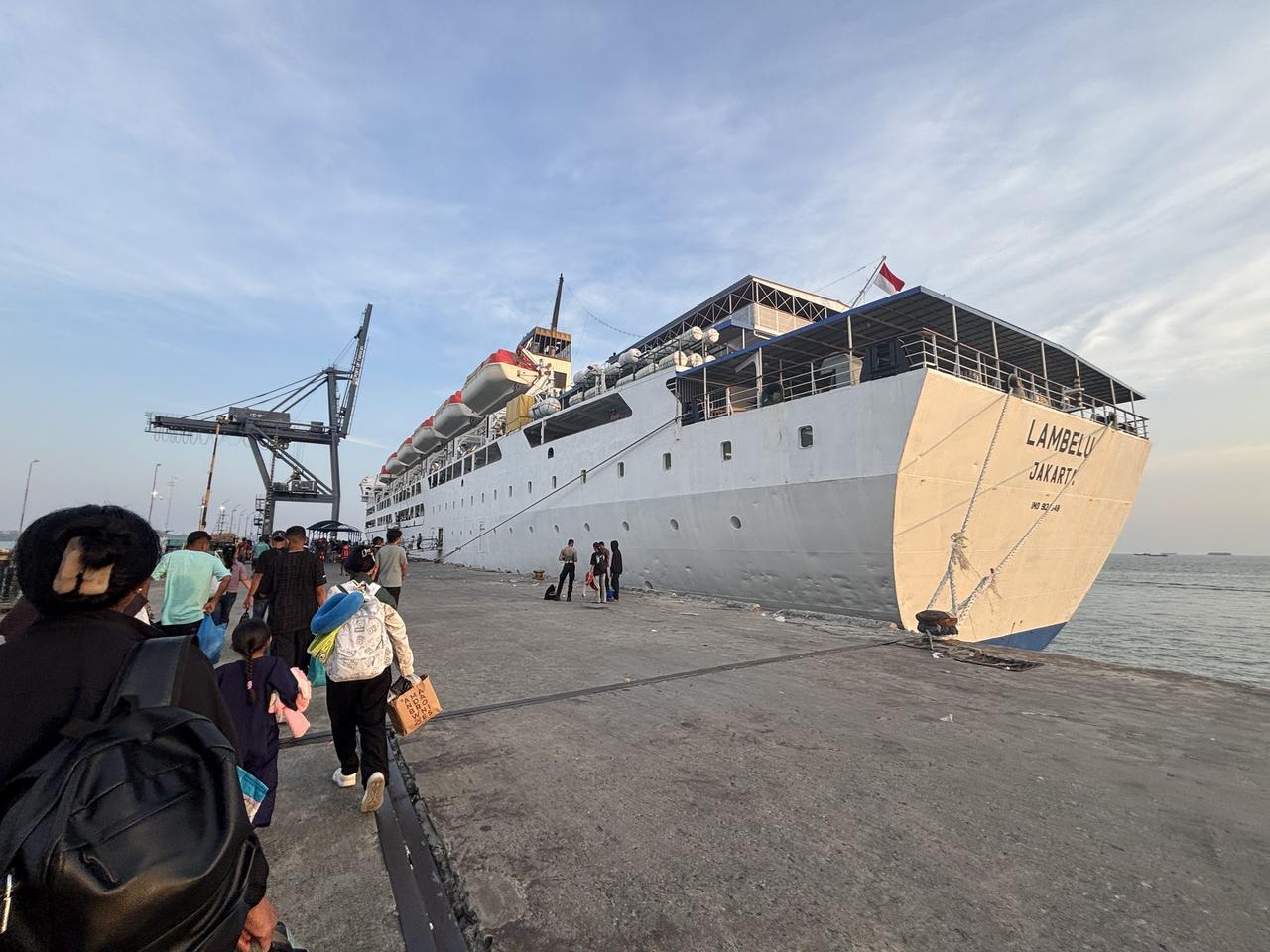
There's a particular moment that repeats itself at ports all over Indonesia: a wall of white and gray steel rising off the pier, a name painted across the stern in letters tall enough to read from the parking lot, and a loose line of people walking toward it with backpacks, plastic bags, and the occasional cardboard box held together with tape. The ship in front of me this time read LAMBELU, JAKARTA. It's a PELNI ship, one of the national passenger line's large ferries, and if you spend enough time moving around this country by sea rather than by air, that name starts to feel less like a brand and more like a fact of life.
A Navy Born From Independence
PELNI, formally PT Pelayaran Nasional Indonesia, is a state-owned shipping company, and it exists for a reason rooted in politics as much as geography. It was founded in 1952, not long after Indonesian independence, at a time when the waters connecting this archipelago were still largely run by Dutch shipping companies. Building a national line was as much a statement as a service: a newly independent country deciding its own seas should be sailed on its own ships. PELNI started small, just a handful of vessels, then expanded hard through the 1970s, 80s, and 90s into what people here still refer to as its golden era.
A Fleet Built for an Archipelago
The scale of what PELNI actually runs is easy to underestimate until you see the numbers. As of February 2026, the company operates 26 passenger ships. The largest, KM Labobar, carries up to 3,000 people at once, close to a small town's worth of passengers riding a single vessel. Others run smaller: KM Sirimau holds 1,000, and KM Egon, a Ro-Ro ship built to carry vehicles as well as people, takes 500. Between them, PELNI's ships connect 94 ports, stretching from Jakarta all the way to Makassar, Ambon, and as far as Jayapura in Papua. For islands where flights either don't exist or require multiple connections, a single PELNI route is often the only direct way in or out, and the ships are built with that in mind, cabins, restaurants, and onboard entertainment meant to make a multi-day crossing something closer to livable than just endured.
Class E, Every Time
I've used PELNI more than I can easily count at this point, almost always over flying, simply because so much of getting around this country means going from one island to another, and there are 17,000-plus of them to choose from. PELNI ships sell tickets across a range of classes, A down to E, and I take E every time. I've never once booked A, and by the time I'm buying a ticket at all, upgrading usually isn't even an option anymore. Economy class means a room built for a few hundred people at once, bunks or mat spaces technically divided from each other but close enough that rolling over in your sleep means touching the person next to you. The first time I experienced this, it hit hard: grandparents, small children, everyone crammed into what looks, at a glance, like organized chaos. And yet from a distance, on the pier, the same ship looks enormous and almost beautiful, the kind of scale that makes you excited just watching it come in.
No Two Ships Are Quite the Same
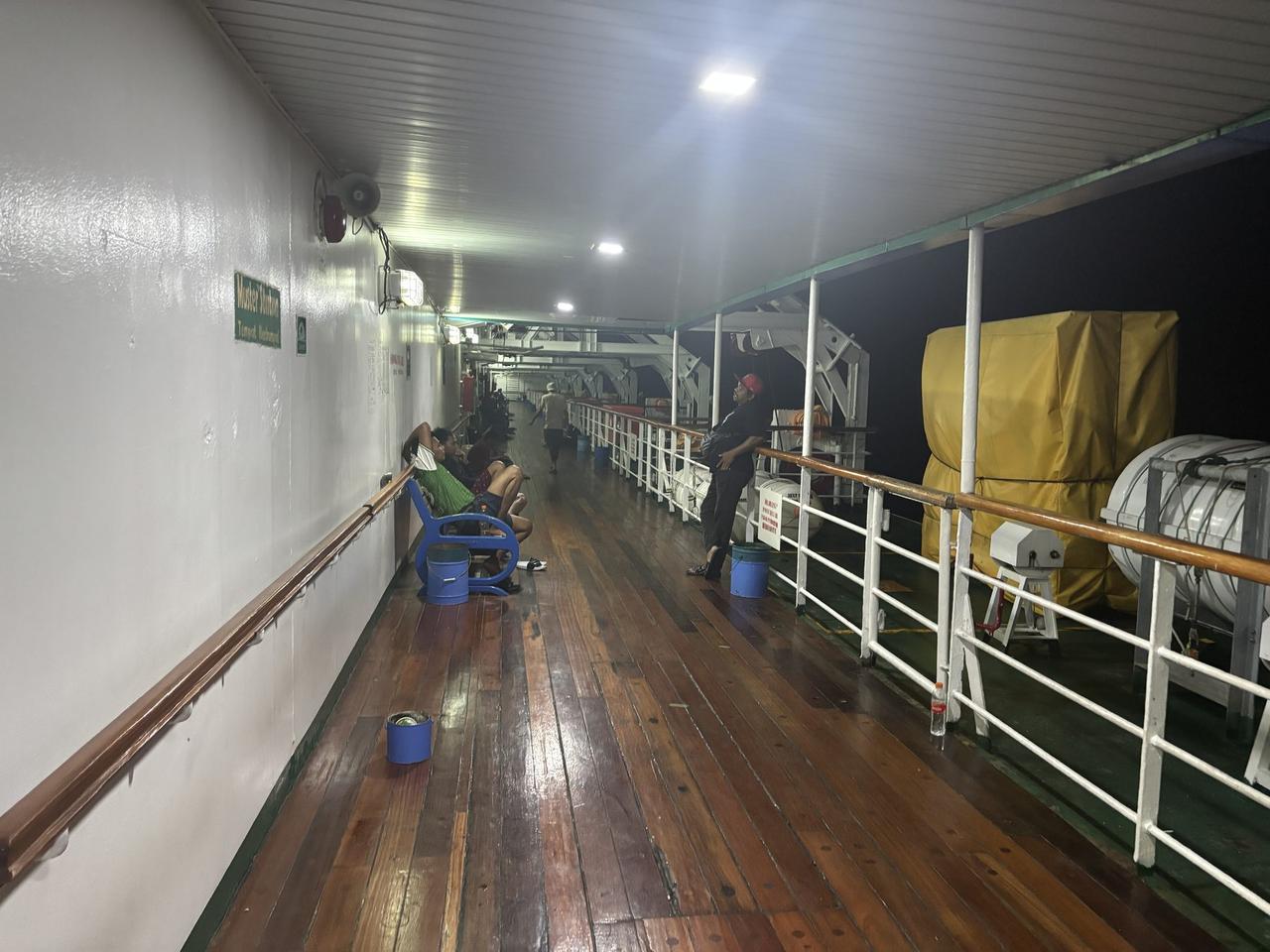
Even though they all fly the same PELNI name, the ships don't feel identical once you're aboard. Layout changes noticeably depending on the route and, it seems, the specific vessel assigned to it. Crossing from Tarakan to Palu, for instance, the dining area was unusually spacious, actual room to sit rather than just stand and eat. Other routes on other ships have given me the opposite: a dining space so tight there's barely anywhere to sit at all. I might simply be missing something in how these ships are laid out, but the contrast has been consistent enough across enough trips that I've stopped expecting any two PELNI crossings to feel the same.
Meals Three Times a Day
Food comes included, three times a day, and a pattern has held up across enough trips that I trust it by now: breakfast is the smallest portion, lunch is noticeably more generous, and dinner lands somewhere in between, usually served around six to six-thirty in the evening. It comes in a simple styrofoam tray, and there are always vendors circulating through the ship selling extra food and snacks too, so going hungry has never really been a risk. Still, if I had to give one piece of practical advice, it would be to buy something substantial before boarding. The onboard food does the job, but it's not the reason to look forward to the trip.
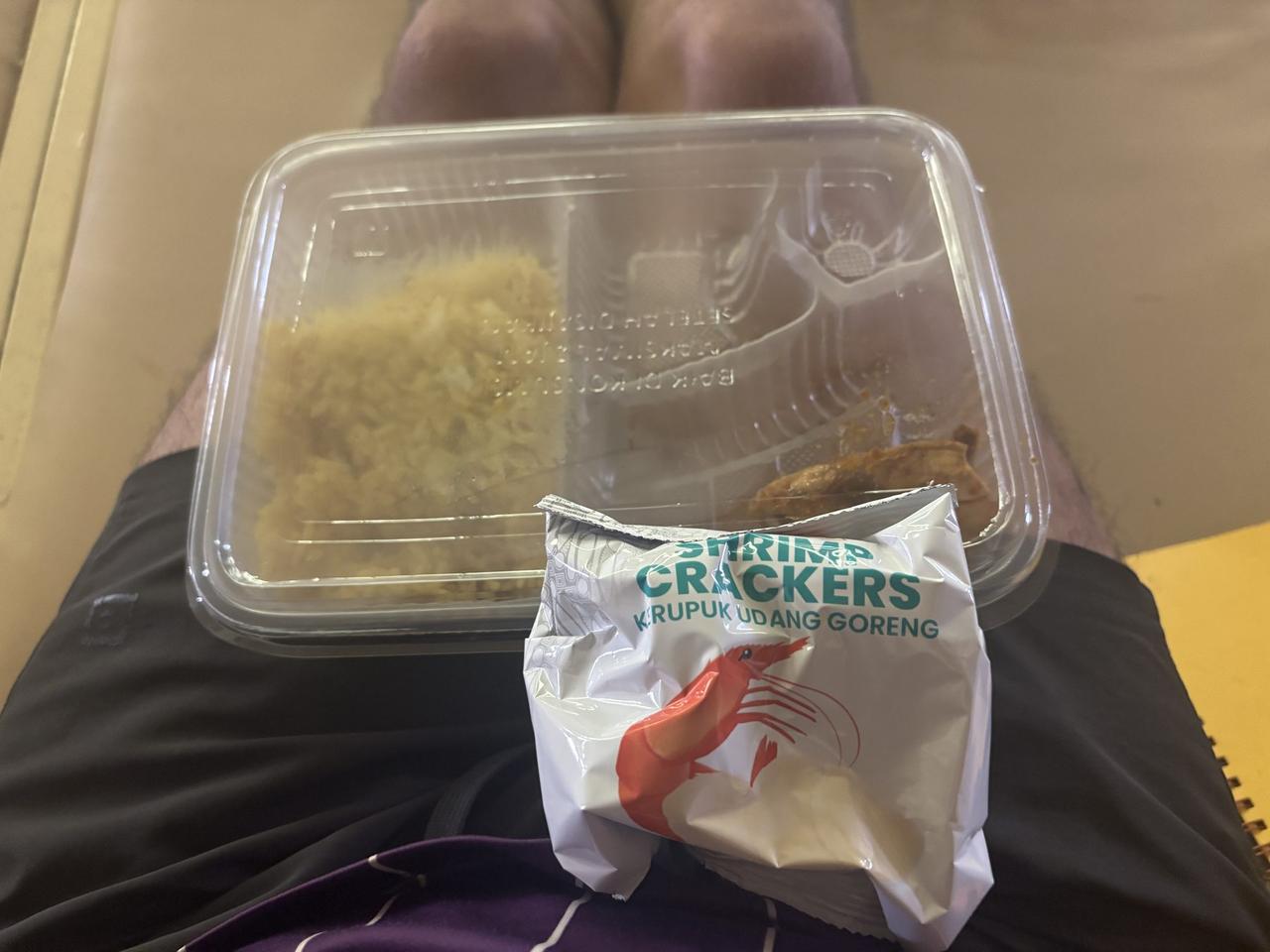
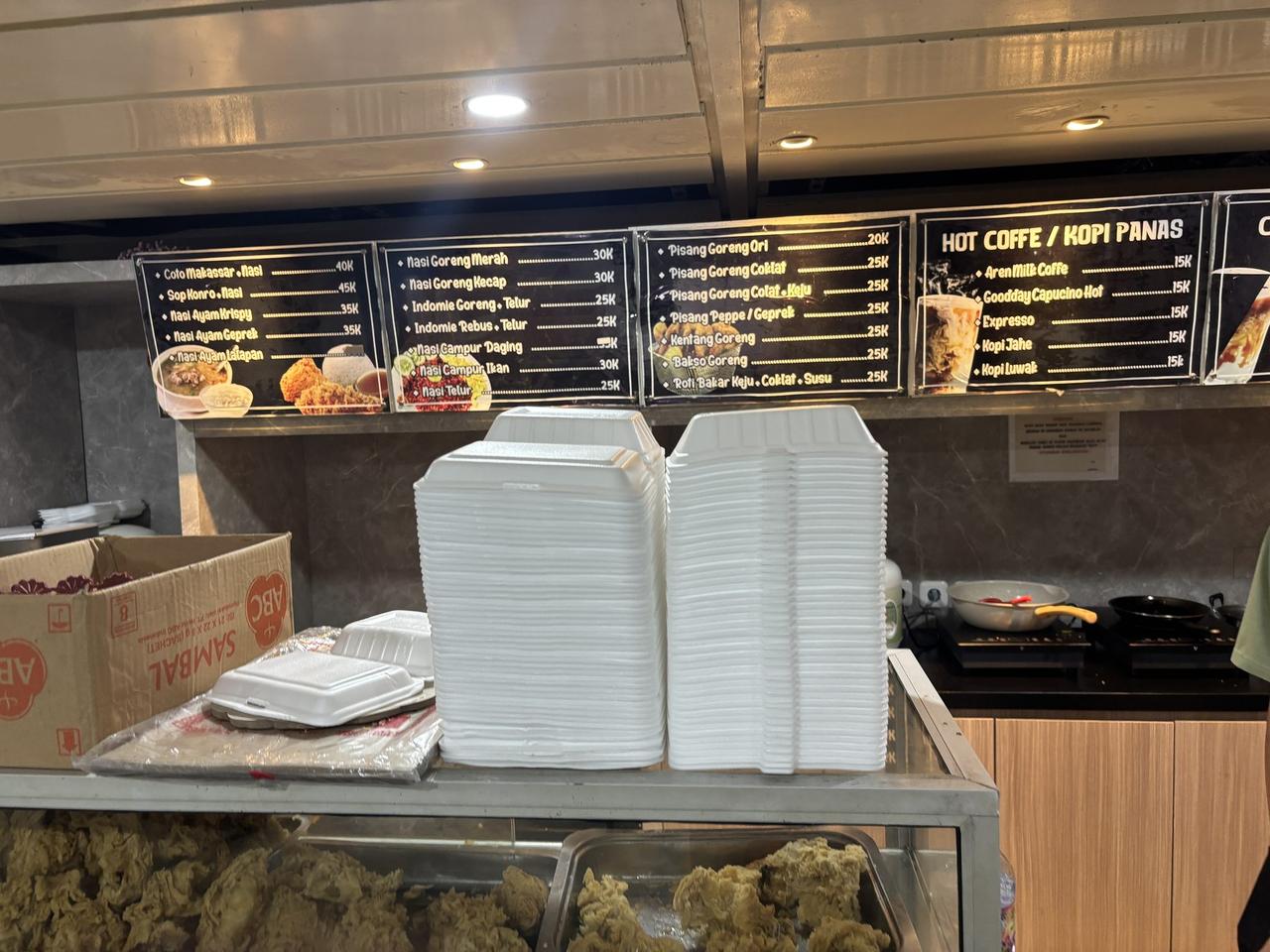
Bigger ships also carry their own small food stalls, menu boards listing Coto Makassar, Sop Konro, fried rice in a few varieties, banana fritters, and hot coffee, stacks of takeout containers ready to go for anyone who wants more than what the standard meal service provides.

Escaping to the Deck
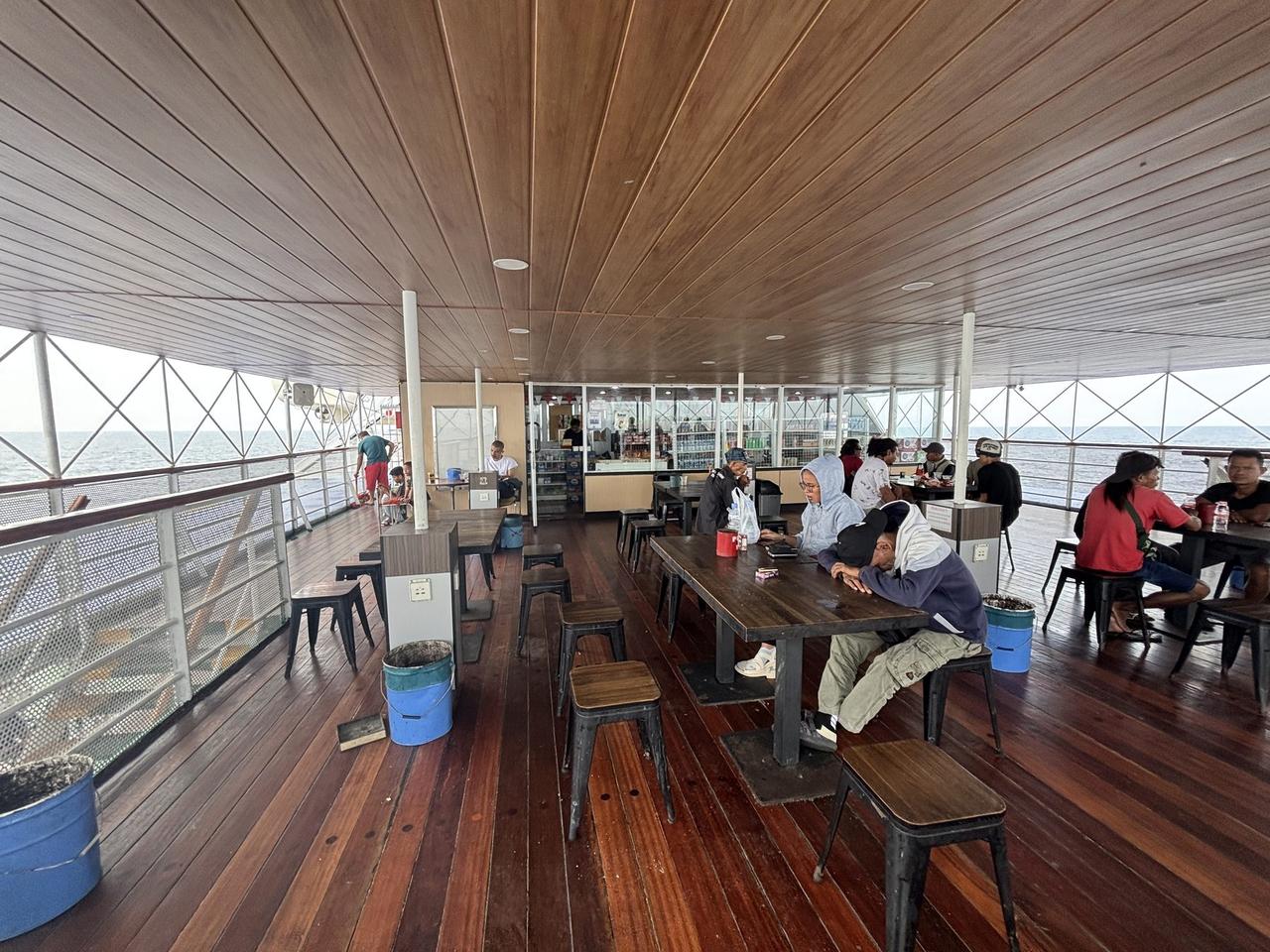
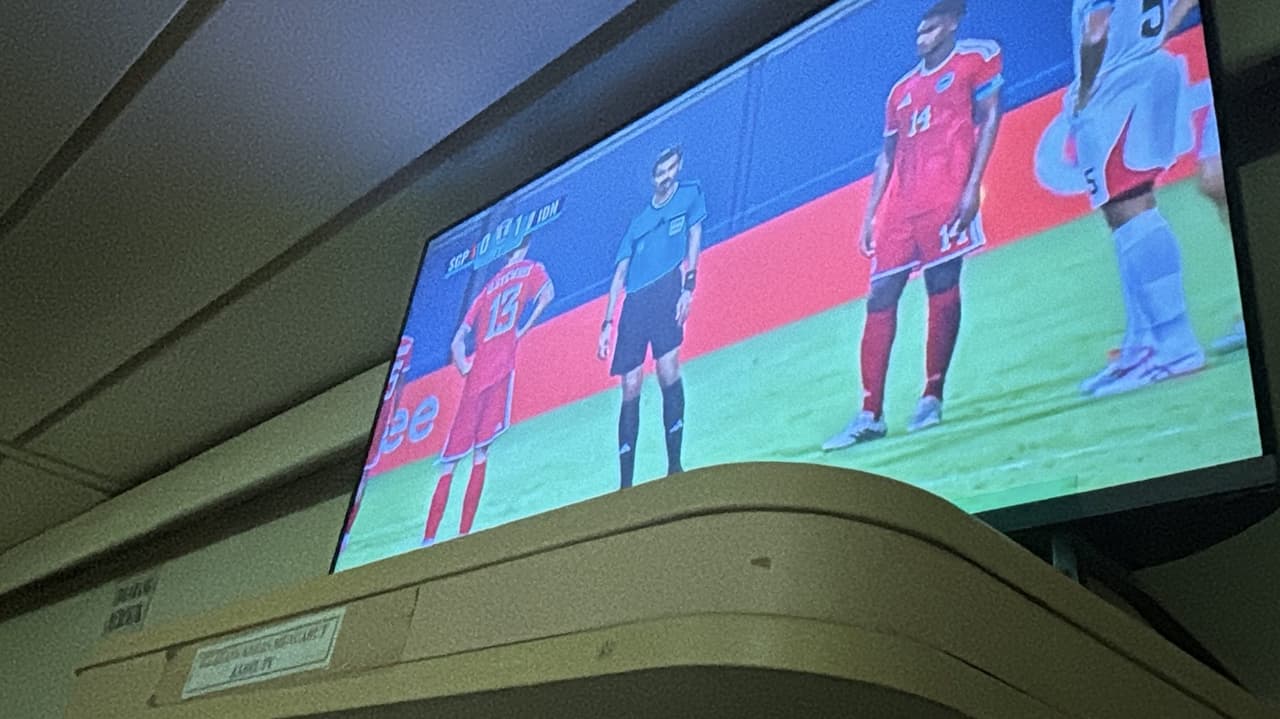
The interior gets stuffy fast, so people head outside, and the outdoor deck areas end up serving as the ship's real social space, tables and stools set up near a small canteen, open railings looking straight out at the water. The problem is that everyone has exactly the same idea, so the deck fills up quickly too, and finding an actual seat can take some patience. It's worth it anyway. Watching the ocean go by, or getting pulled into whatever's happening on the television mounted in the canteen, has produced some of the more genuine moments of the whole trip. One night the screen was showing an Indonesian national football match, and the entire room reacted together to every play, strangers a minute earlier suddenly invested in the same score.
By the Third Day, It Wears on You
What nobody tells you in advance is that the lights never really go off. There's no set lights-out time the way you'd expect on a long-haul flight or a night train; the fixtures overhead just stay on, and unless you cover your eyes somehow, actually falling asleep takes real effort. Trips run anywhere from a couple of nights on shorter routes to something like ten days for the longest ones, and the fatigue compounds. The first day or two are fine. By day three it catches up with you, a tiredness that doesn't really respond to rest anymore. Every so often I've ended up assigned to one of the lower, more enclosed decks instead of the open economy hall, which has its own trade-off: fewer people around, which sounds like a relief, but also no airflow at all, hot enough that you sweat sitting perfectly still. I've done this enough times now to know it's exactly the kind of thing you can't really understand secondhand. You have to be in that room, on that deck, to know what it actually costs and what it actually gives you.
A Fleet Running Past Its Years
Behind the day-to-day experience is a company quietly worried about the condition of its own ships. Of PELNI's 26 passenger vessels, 16 are already more than 30 years old, and 22 have passed the 25-year mark. The oldest, KM Umsini, has been in service for 38 years. Even the newest, KM Gunung Dempo, entered service back in 2008, more than a decade ago at this point. That's serious enough as a safety question that the Indonesian government has stepped in directly, committing roughly 4 trillion rupiah across 2024 and 2025 toward building three new ships. The project is still in the design phase, with actual service targeted for around 2029, a long runway for a country that depends on these ships running every single day in the meantime.
Surprisingly, Business Is Good
None of that aging infrastructure seems to be hurting the company financially. PELNI reported revenue of Rp 6.24 trillion in 2026, up 111 percent year over year, with net profit roughly doubling alongside it. Passenger fares are only part of that picture. The company also collects public service obligation subsidies from the government for routes that wouldn't be commercially viable on their own, runs cargo shipping, and has diversified into a hotel business and a shipbuilding subsidiary. It's a more complicated business than the ferry ticket in your hand would suggest.
The Sea Still Holds This Country Together
However far air travel advances here, the image of a PELNI ship loaded past comfort and pushing off toward some island days away still feels like the truest version of what Indonesia actually is. It's the same instinct I kept running into at Benteng Somba Opu and in Ambon's tifa and tototuan traditions, a country whose identity has always run through the water connecting it rather than in spite of it. PELNI is simply that same instinct still operating today, aging hulls and all, somewhere out of some port, loaded with passengers, departing again tonight.