From Tradition to the Kitchen
I've spent time already covering Ambon's more ceremonial side, Totobuang's music and Baju Cele's cloth among them. This time I wanted to look at something that runs underneath all of that, the market that actually keeps the city fed. Locals call it Pasar Ikan, the fish market, though technically it's one section inside a much larger market called Pasar Mardika.
What Pasar Mardika Actually Is
Pasar Mardika sits in the north of Ambon, close enough to the port, the main square, and government buildings that it functions as the literal center of the city. Local media has described it as a place that pulls residents back no matter how modernized the rest of the city becomes, comparing it to a grandmother's house. That comparison makes more sense once you see what's actually sold there: food, sure, but also daily necessities, hardware, clothing, and even banking services, alongside hundreds of food stalls that sailors freshly off a ship and worn-out shoppers alike duck into.
A Market Big Enough to Get Lost In
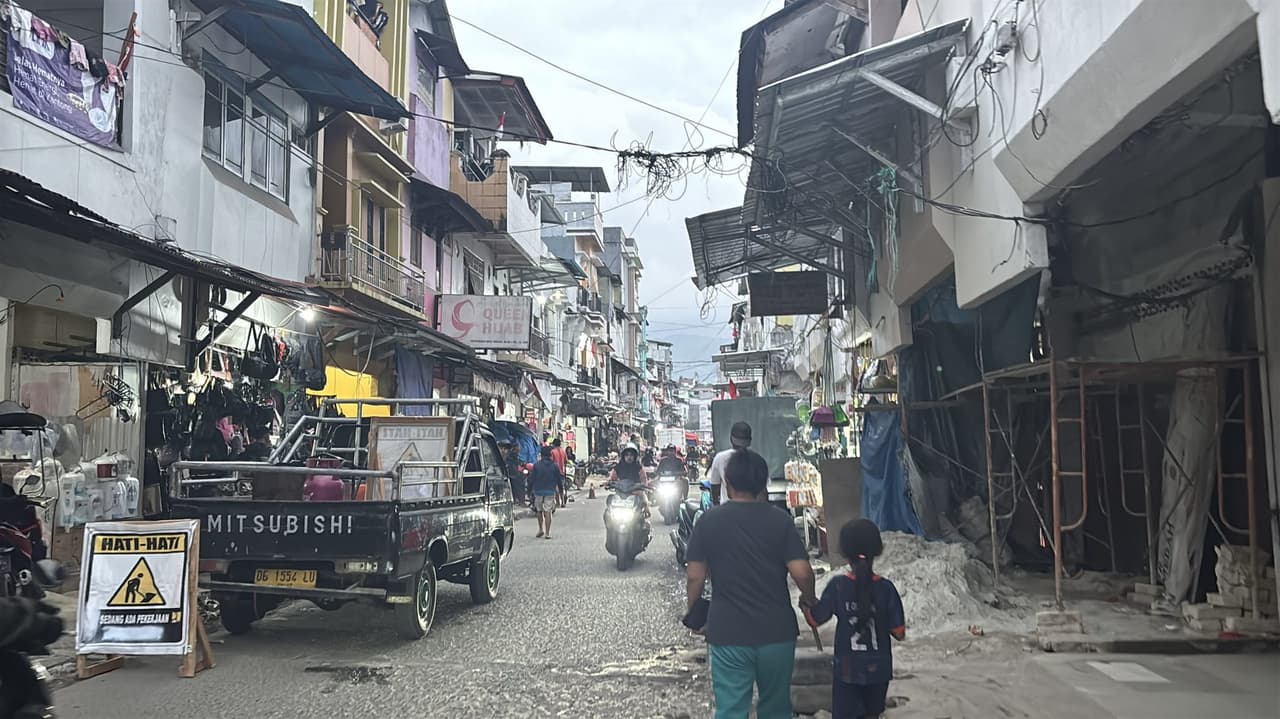
Walking through it myself, what struck me first was just how much space the whole thing takes up. It's not only fish; there are vegetables, daily goods, all kinds of shops lining narrow lanes with motorbikes weaving through and families walking past construction signs and parked delivery trucks. Getting from one end of the market to the other took roughly ten minutes on foot, and that's without stopping to look at anything along the way.
The Fish Market at Its Core
The section that gives the whole place its nickname is Pasar Ikan itself, and by most accounts it's the largest fish market in the city. Fisheries department data puts the number of fish vendors here at around 150, and the majority of the fish Ambon's residents actually eat passes through this one market, somewhere around 15 tons of it moving through daily. For a city that markets itself as Kota Ikan, the City of Fish, this market isn't just a convenient shopping stop. It's closer to the actual heart of that identity.
Tuna, More Tuna, and Not Much Octopus
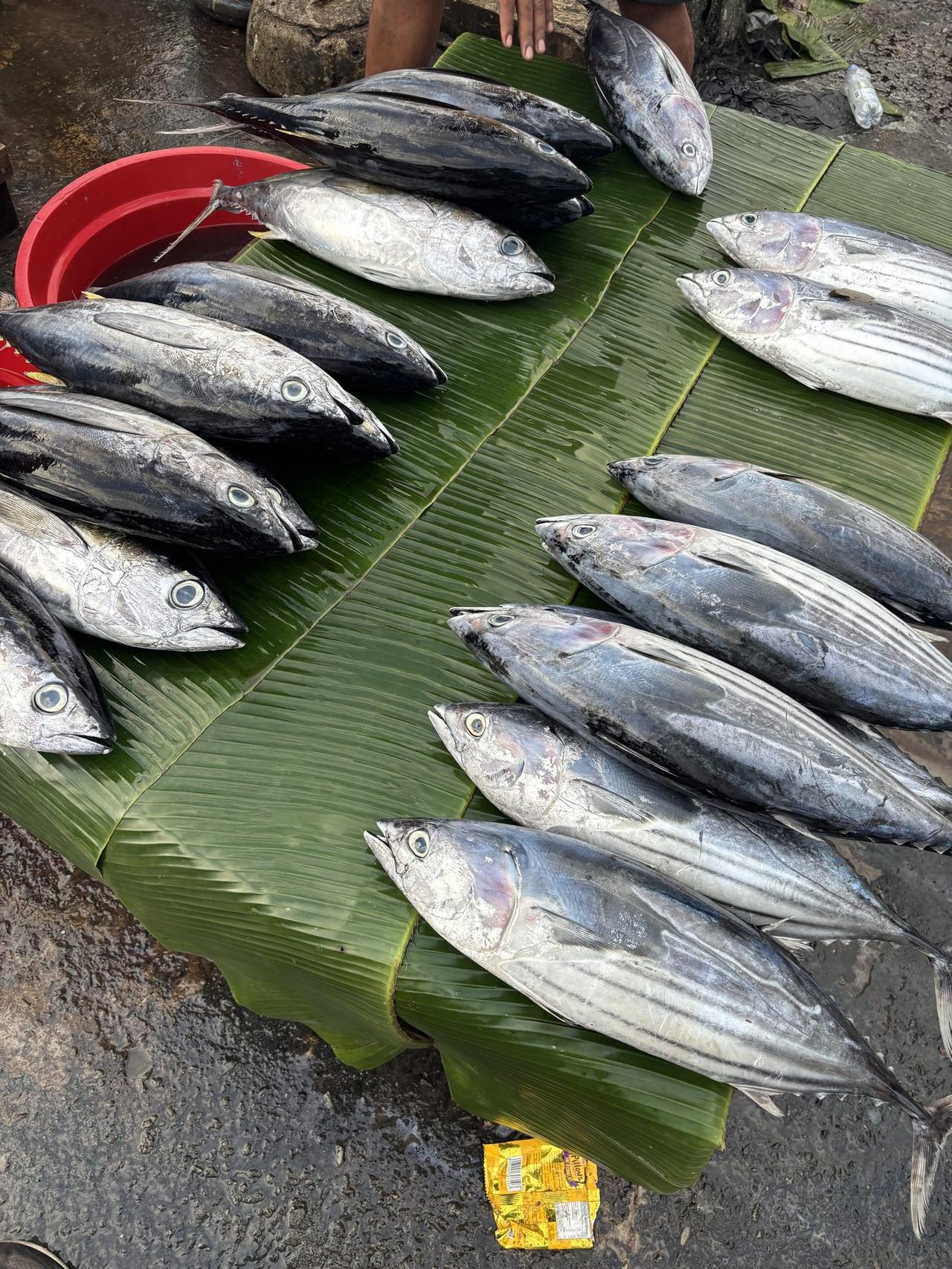
Walking the fish stalls themselves, octopus turned out to be rare, but everything else was there in scale, small fish up through genuinely sizable ones, and skipjack and tuna dominated by a wide margin. Some of the tuna on display was on the larger end, not enormous by any stretch, but noticeably bigger than the smaller reef fish stacked nearby. A few vendors reportedly offer to cook what you buy on the spot, though I can't personally vouch for how that actually plays out in practice.
The People Who Keep It Running
Behind the volume of fish moving through here every day are individual vendors putting in genuinely long hours. Local reporting has described one woman who's worked this market since she was ten years old, arriving before sunrise while the streets are still mostly empty, staying at her stall until as late as nine at night, buying more ice throughout the day just to keep the catch from spoiling in the heat. The market's energy isn't an abstract thing; it's built directly out of individual days like hers, repeated for years.
A Recent Renovation
Pasar Mardika went through a major overhaul recently. In April 2024, Maluku's governor at the time, Murad Ismail, formally opened a renovated market facility spanning more than 8,100 square meters, built to accommodate roughly 1,700 shops under national standards for cleanliness, safety, and comfort.
The Problems That Renovation Was Meant to Fix
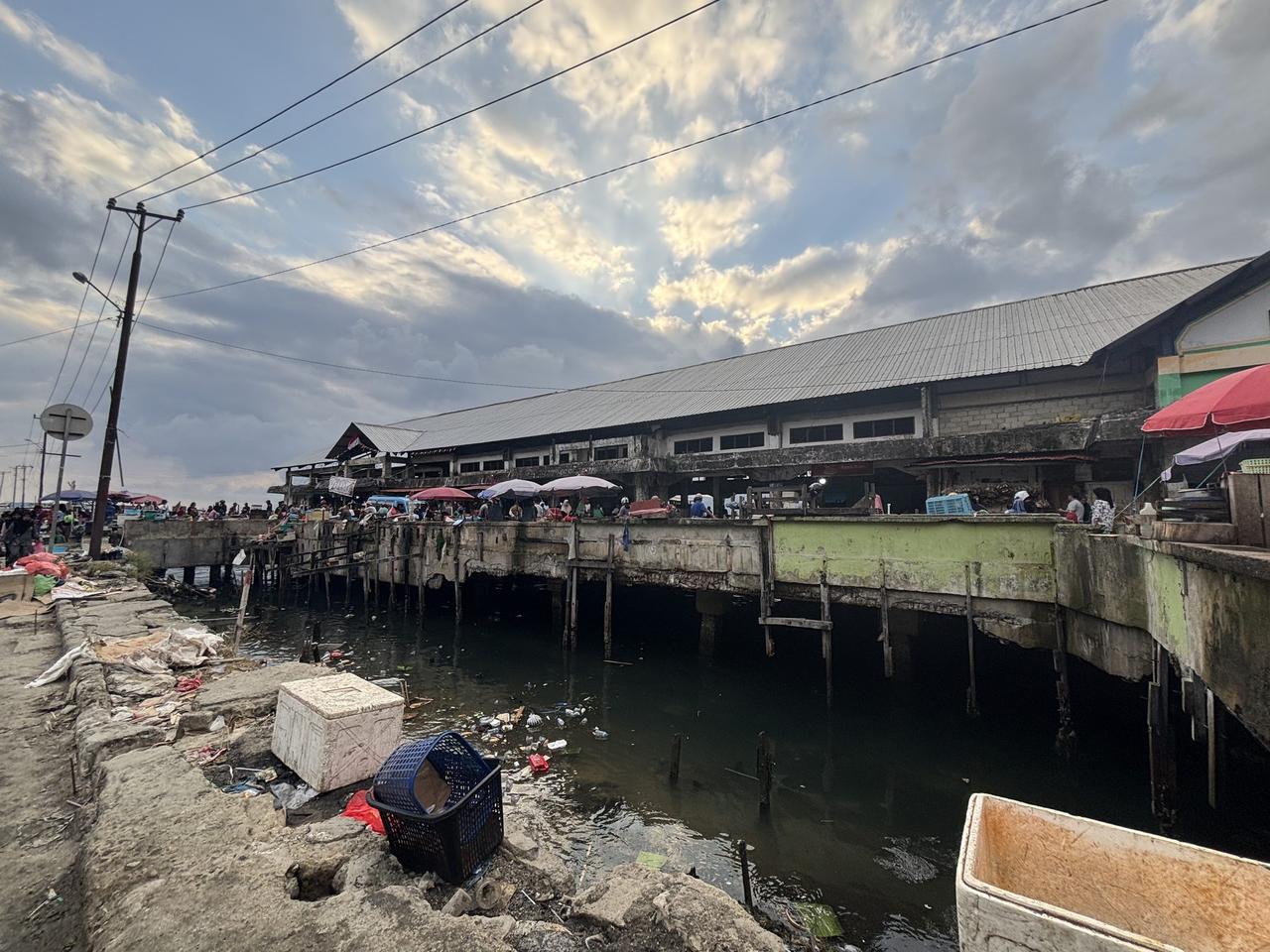
That upgrade wasn't happening in a vacuum. A 2019 report had flagged the fish market area over suspected E. coli contamination traced to toilet wastewater, with local authorities pushed to act quickly. At the time, the market relied heavily on privately managed hanging toilets that drained straight into the sea. Standing near the water myself, close to the market's edge, the smell was genuinely strong, and looking out at the water nearby, the amount of visible trash floating and piled up was hard to ignore. Whatever progress the renovation represents, some of what prompted it clearly hasn't fully gone away.
More Than Just Commerce
Local tourism materials frame Pasar Mardika as both an economic center and a cultural stage, pointing back to its role as a colonial-era tax hub and forward to its current draw for travelers looking to experience daily local life rather than a curated version of it. That framing tracks with what it actually felt like to walk through: less a tourist attraction dressed up for visitors, more an ordinary, working piece of the city that happens to be open to anyone who wants to walk in.
The Smell Is Part of the Deal
Between the genuine liveliness of the place and the very real sanitation problems still visible at its edges, Pasar Ikan isn't a polished stop. It's loud, it's large enough to actually get a little lost in, it smells exactly the way a market moving 15 tons of fish a day is going to smell, and none of that takes away from how alive the whole place feels once you're actually standing in the middle of it.