A City I'd Only Seen From the Hill
Between Istana Malige and the sheer scale of Benteng Keraton, I'd spent most of my time in Baubau looking at history rather than at the city itself. I hadn't really registered that Baubau is also a working port town on the southwestern coast of Buton Island until I finally made it down to the water. What I found there ended up being one of the better surprises of the whole trip.
Lower Expectations, Corrected Quickly
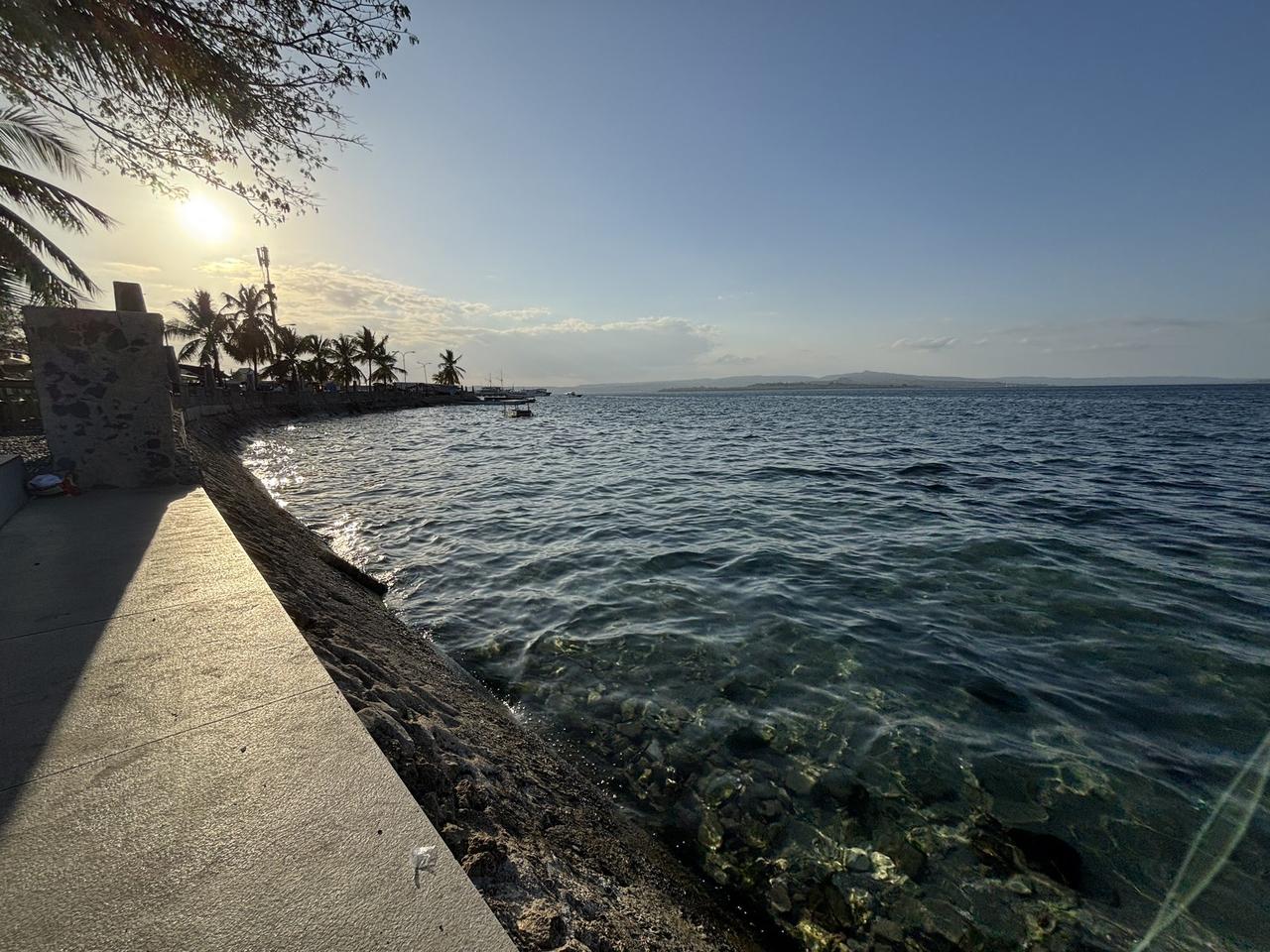
I'll admit I went in with modest expectations. In a lot of Indonesia's bigger cities, the water near the city center tends to be the least appealing part of it, cloudy, a bit neglected, more infrastructure than scenery. I assumed Baubau's waterfront would follow the same pattern. It didn't. The water here was clear enough to actually see through, and standing at the edge of it with the sun going down, I was genuinely caught off guard by how good it looked.
The Heart of the City: Pantai Kamali
The beach I'd wandered into is Pantai Kamali, right in the center of town, and it's built around three distinct sections. The western side handles parking and a long row of food stalls. The eastern side comes alive after dark with its own set of vendors. The center holds a dragon statue that locals point to as a symbol of the old Buton Sultanate's strength and resilience, and doubles as the spot where people come to unwind in the evening over a cup of sarabba, a warm local drink made with ginger and herbs. The whole stretch runs from four in the afternoon until midnight, which lines up exactly with when I happened to show up.
Arriving Right as the Market Woke Up
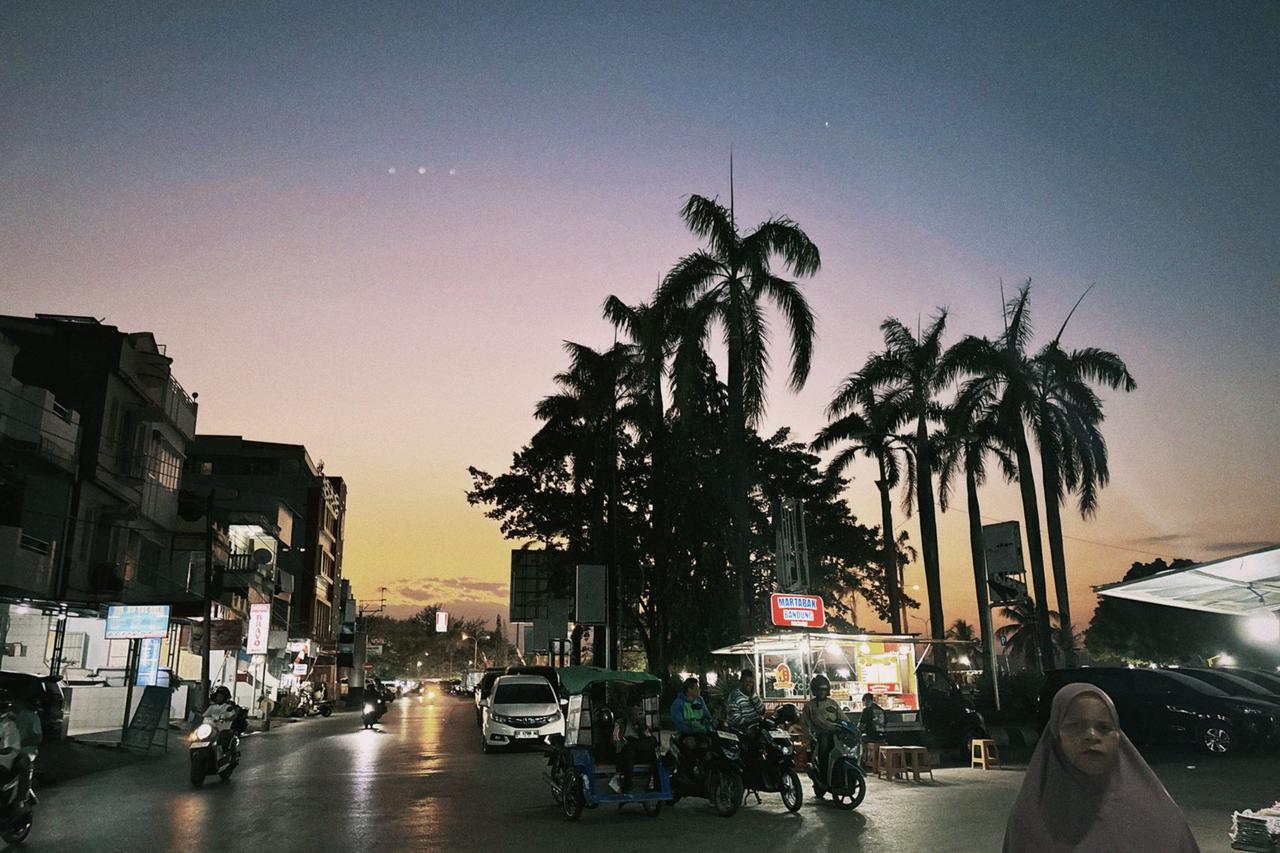
I got there as the light was starting to fade, right around five, which turned out to be exactly when the food stalls begin setting up for the evening. Motorbikes and becak pulled up along the street, a Martabak Bandung cart lit up under a row of tall palm trees, the sky behind it running through orange into deep blue. Eating while wandering through a market like that, with the sun actually going down in front of me, isn't something that happens often enough to take for granted.
A Working Harbor, Not Just a Beach
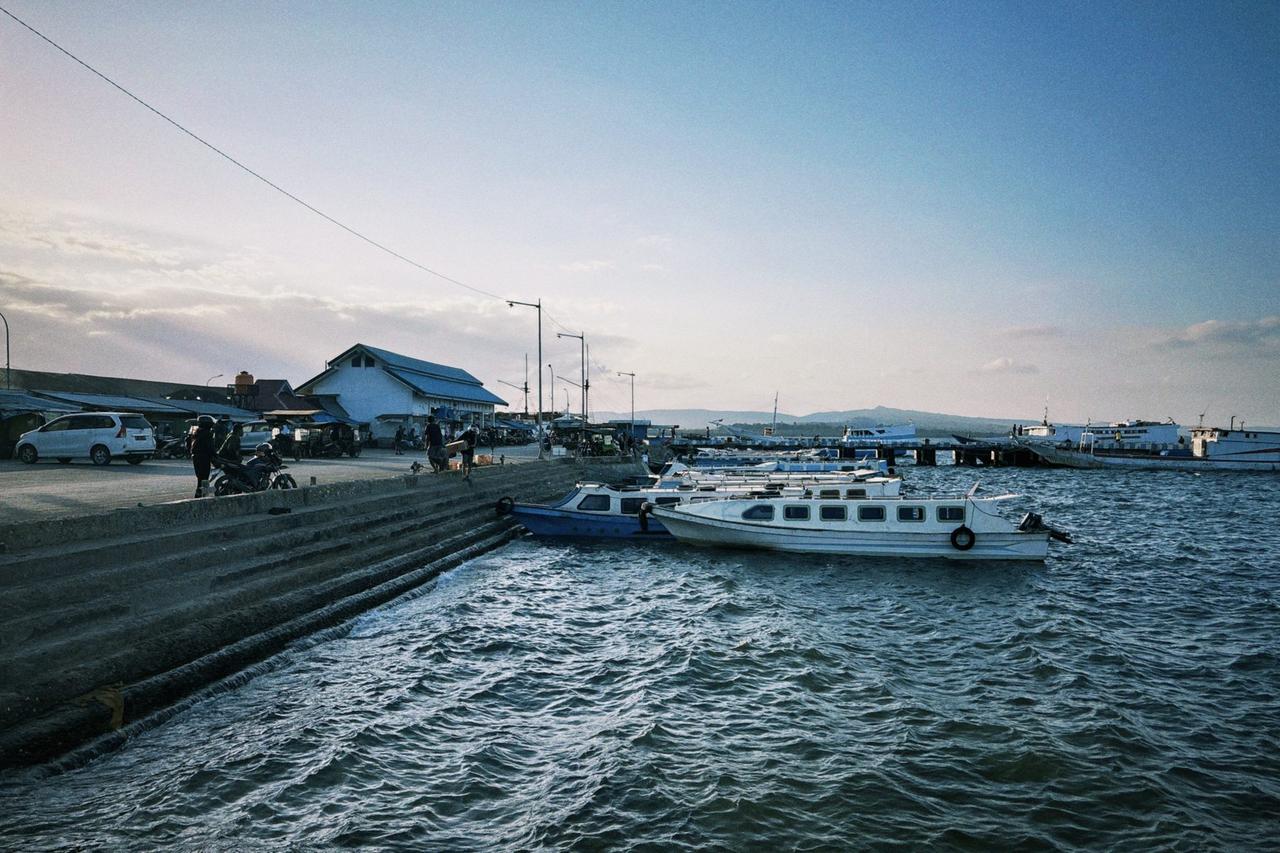
Just past the market stretch, the harbor itself came into view, small passenger and fishing boats tied up in a row along the pier, an old market building anchoring the shoreline behind them. It's easy to forget, looking at a postcard-clear sunset, that this stretch of coast is also doing actual work every day, moving people and goods between Buton and the rest of the archipelago the same way PELNI's ships do on a larger scale elsewhere in the country.
A Gate That Marks the City
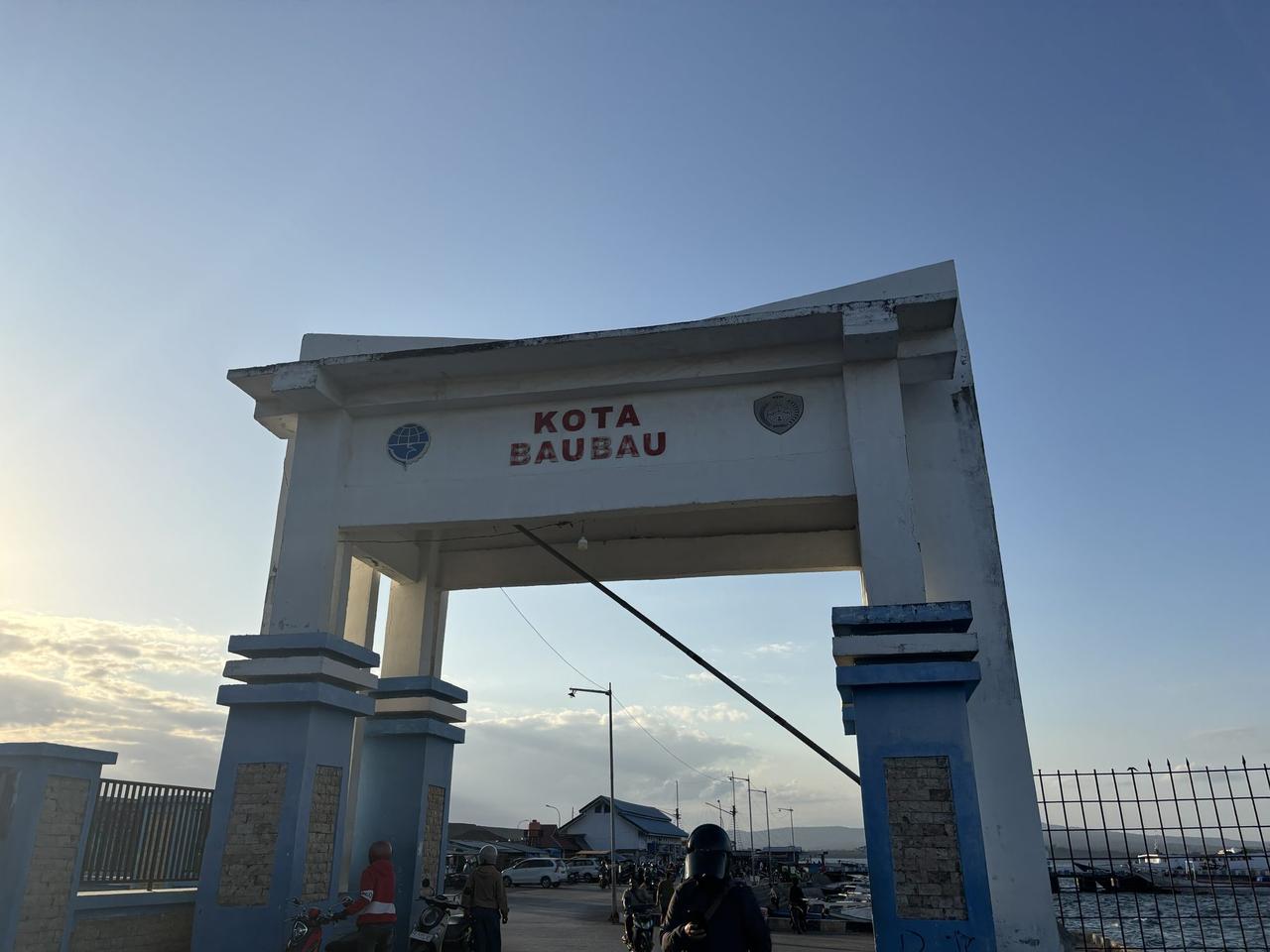
Near the harbor stands an arch reading Kota Baubau, City of Baubau, functioning less as a security checkpoint and more as a landmark, the kind of structure that tells you you've formally arrived somewhere rather than just passed through it. Motorbikes streamed underneath it in both directions the whole time I stood there.
Old Buildings Still Standing at the Water's Edge
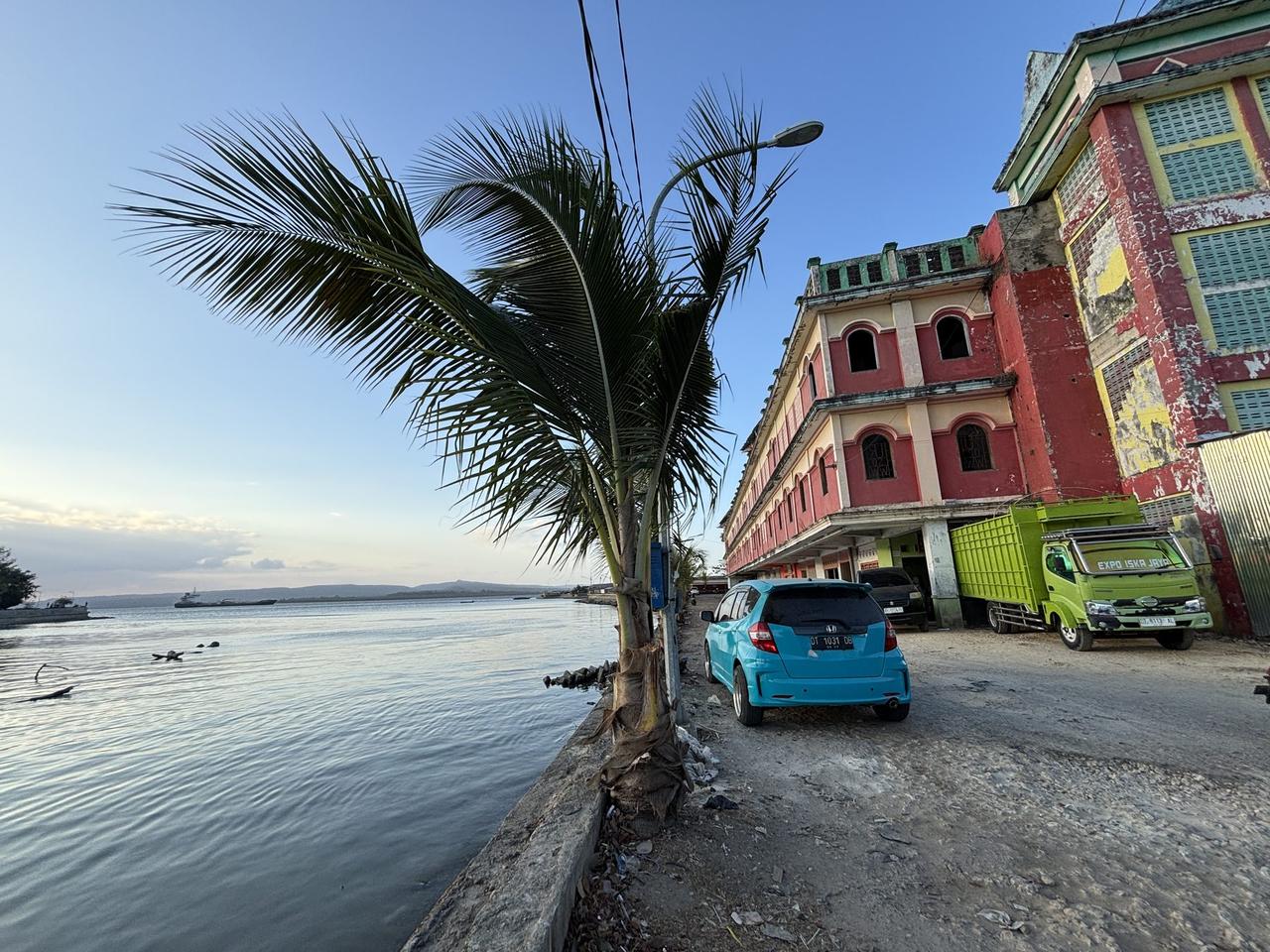
Further along the shoreline, a weathered three-story building in fading red and cream paint stood right at the water's edge, colonial in shape if not necessarily in exact age, a green delivery truck and a small blue hatchback parked in front of it. Buildings like this show up along enough Indonesian port towns that they start to feel like a shared architectural inheritance, evidence of how long these waterfronts have been doing business.
Empty by Day, Full by Night
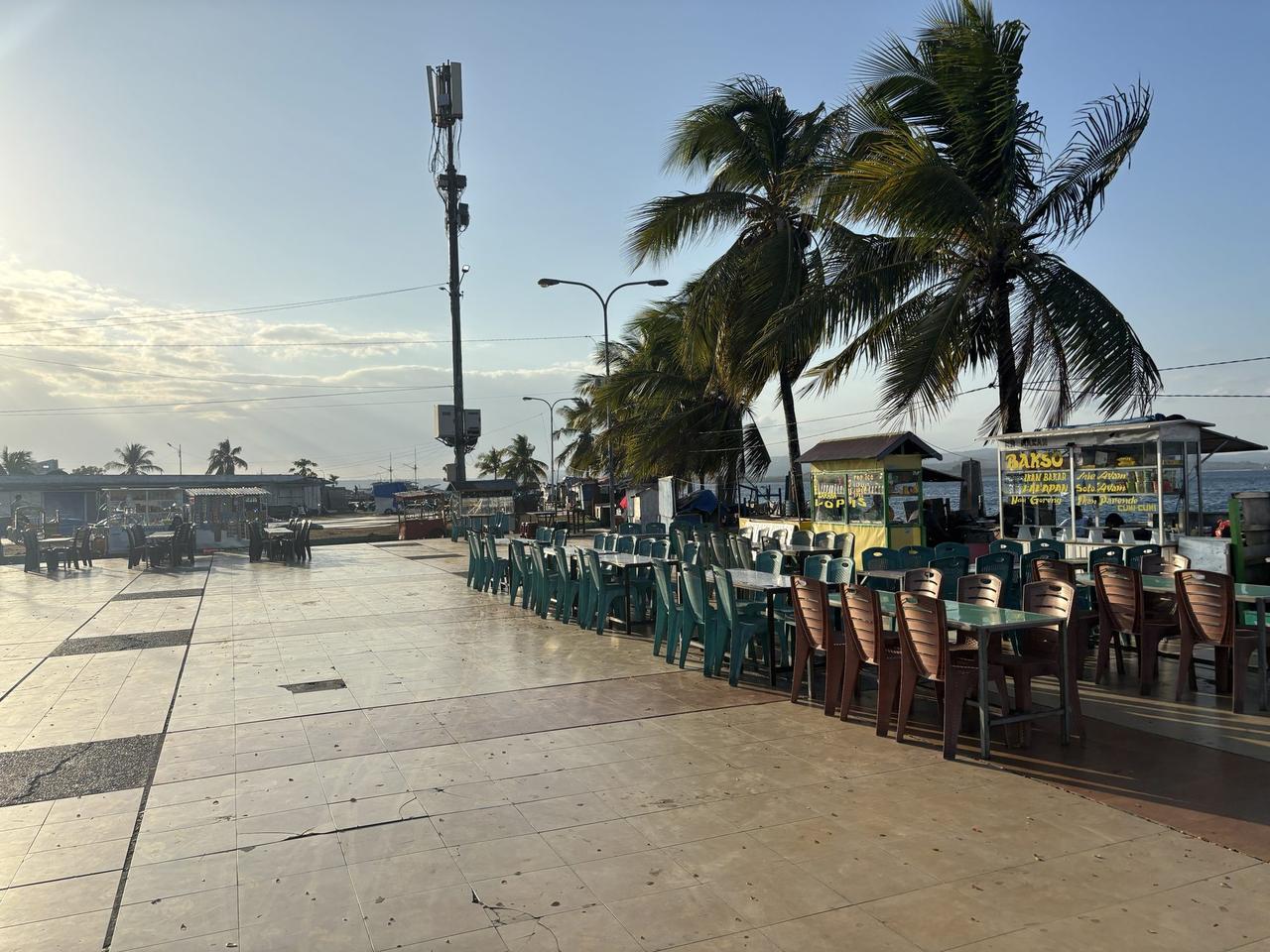
I also passed through the same plaza in daylight, rows of green and brown plastic chairs stacked around tables, a Bakso stall standing quiet under the palm trees, waiting for the evening crowd that would fill it back in a few hours. Seeing the same space empty made the contrast with the night market version of it even sharper, the same tables that had been packed with people were just sitting there in the sun, patient.
Better Water Than Some of the Places I'd Compared It To
Looking back across the trip, Baubau's water actually held up better than I expected against some of the other coastal stops I'd made. Ambon's coastline had impressed me too, and Palu I mostly remembered for how relentlessly windy it was rather than for the water itself. Baubau, going in with the lowest expectations of the three, ended up being the one that looked the cleanest and the calmest by the time the sun went down.
More Coastline Than I Had Time For
What I didn't get to, and only learned about afterward, is how much more of this coastline exists beyond Pantai Kamali. Pantai Nirwana, about 10 kilometers south in the Sula'a area, is apparently the default first stop for most visitors to Baubau, white sand and a well-regarded sunset, with Gua Moko cave nearby for anyone combining the two. Pantai Batu Sori, a half-hour drive out toward Bungi district, is known specifically for a wooden pier built for exactly the kind of photo you'd expect from a spot like that. Lakorapu Puma, out past Kokalukuna district, hosts the annual Festival Pulau Makassar and is reachable from Pantai Kamali itself by small motorized boat for next to nothing. There's also Bukit Wantiro, a hilltop with its own oversized Baubau sign overlooking the whole city and coast, and a mangrove forest along the Lakorogu coast that's apparently become part of the city's push into ecotourism.
A Fortress City That's Also a Beach Town
I came to Baubau for a fortress and a palace, and I'm glad I stayed long enough to find its waterfront too. It's easy to let one dramatic sight define an entire stop on a trip like this, and Benteng Keraton is dramatic enough to do exactly that. But Pantai Kamali at sunset, food stall smoke drifting past palm trees and a market waking up as the sky changed color, is the image of Baubau I actually keep coming back to.