Looking for Something to Do in Bitung
I was in Bitung without much of a plan, the kind of stop that usually just means waiting for a ferry, so I asked around for something worth doing. Someone mentioned a fish market down by the water, the kind of place where boats actually come in and the catch gets handled right there in front of you. That was enough to get me moving. I didn't expect it to turn into one of the more memorable stretches of the whole stay.
Through the Village on the Way
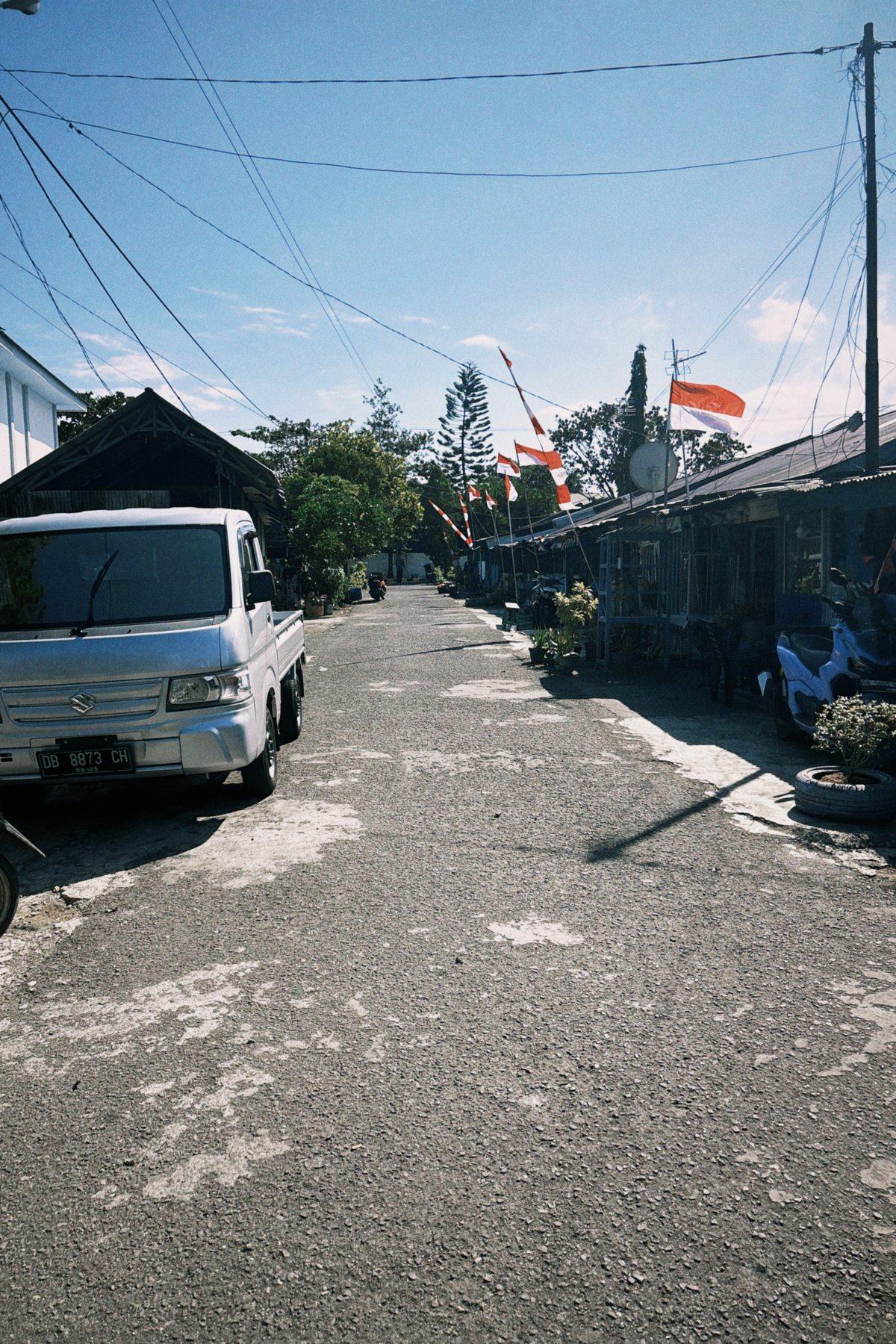
Getting there meant cutting through a stretch of village street first, red-and-white flags strung up along the road, a truck rolling past shopfronts on either side. Nothing about this part of the walk was dramatic, just an ordinary Bitung side street, but it's the kind of in-between scene that tells you more about how a place actually lives than the destination sometimes does.
A Monument at the Village Gate
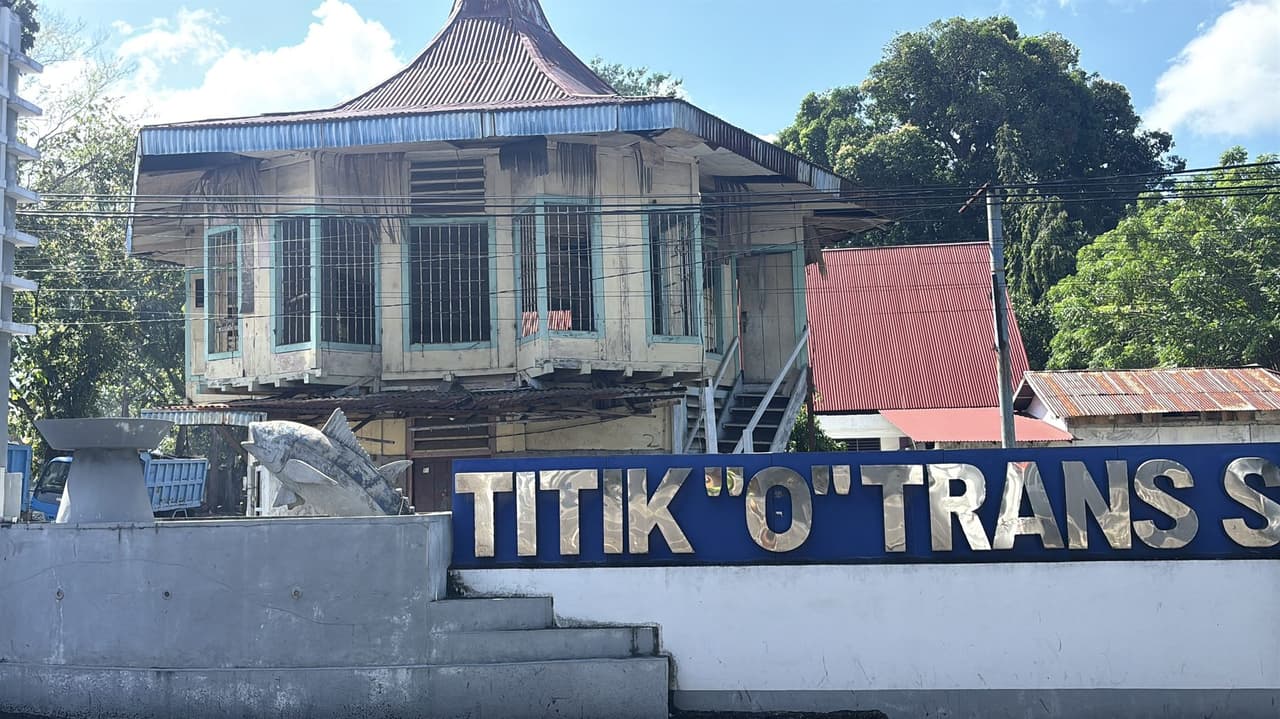
Right where the street gives way to the fishing village itself, an old wooden building on stilts stands next to a sign reading Titik Nol, a fish sculpture mounted below it. It functions as the marker for the fishing village, the kind of landmark placed exactly where you'd want one, right at the point where you stop being in Bitung generally and start being in the part of Bitung that runs on fishing specifically.
A Harbor Full of Boats
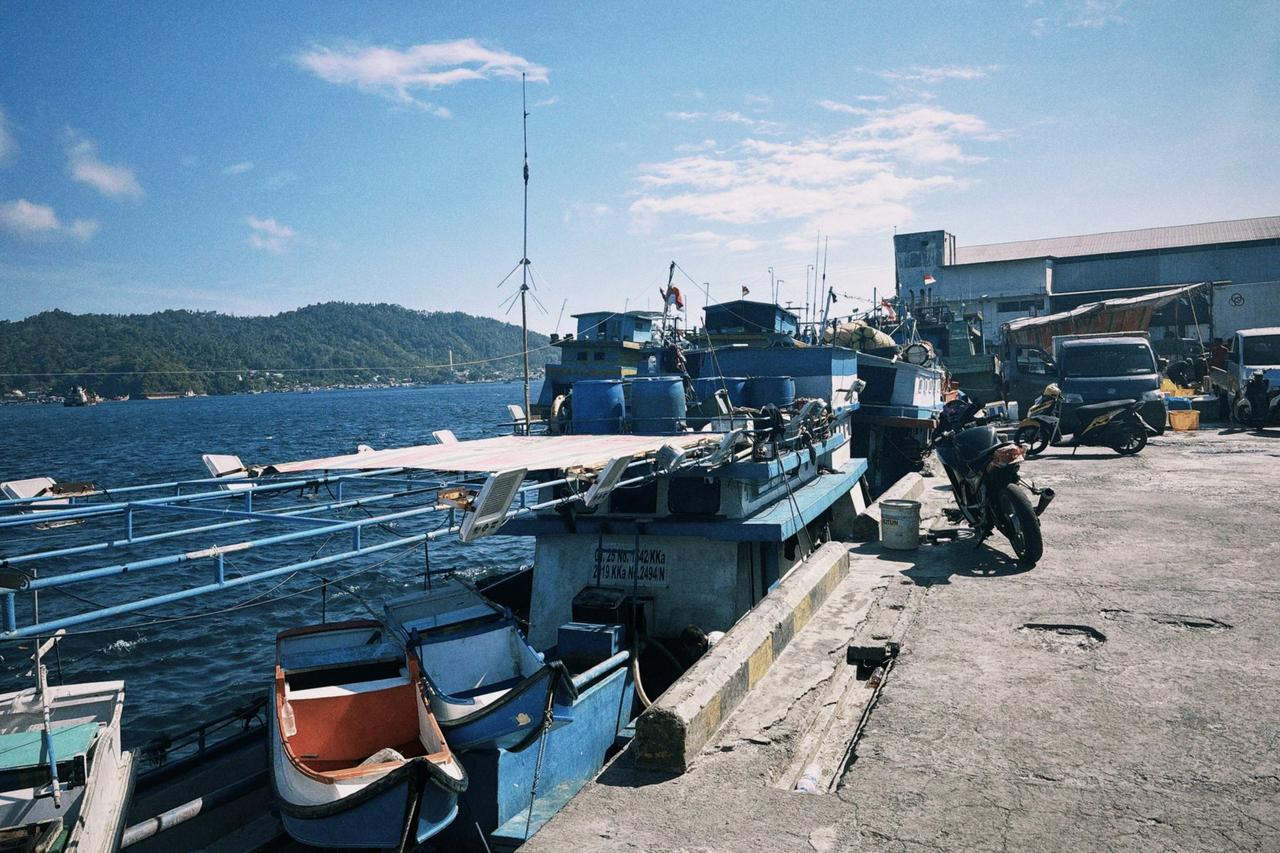
Past the monument, the harbor opened up, a long concrete pier with small wooden boats tied up in a row, blue pipe railings running along the edge, motorbikes parked wherever there was room. Further out, larger fishing vessels sat moored in clusters, more of them than I'd expected for a town I'd mostly thought of as a ferry stop. Just being able to see how many boats actually worked out of here told me something the ferry terminal never had a reason to show me.
The City of Skipjack
It didn't take long to hear the nickname locals use for this place: Kota Cakalang, the City of Skipjack. Bitung's economy runs heavily on cakalang, or skipjack tuna, along with full-size tuna, smaller tuna species collectively called tongkol, and small mackerel-like fish called layang. It's apparently established enough as a hub for these species that it comes up in academic writing on Indonesia's fisheries sector as a town well positioned to develop processing industries around exactly this catch. Standing at the harbor, none of that felt like an abstraction. It felt like watching the raw material for an entire local economy get carried past on somebody's shoulder.
Watching the Catch Come In
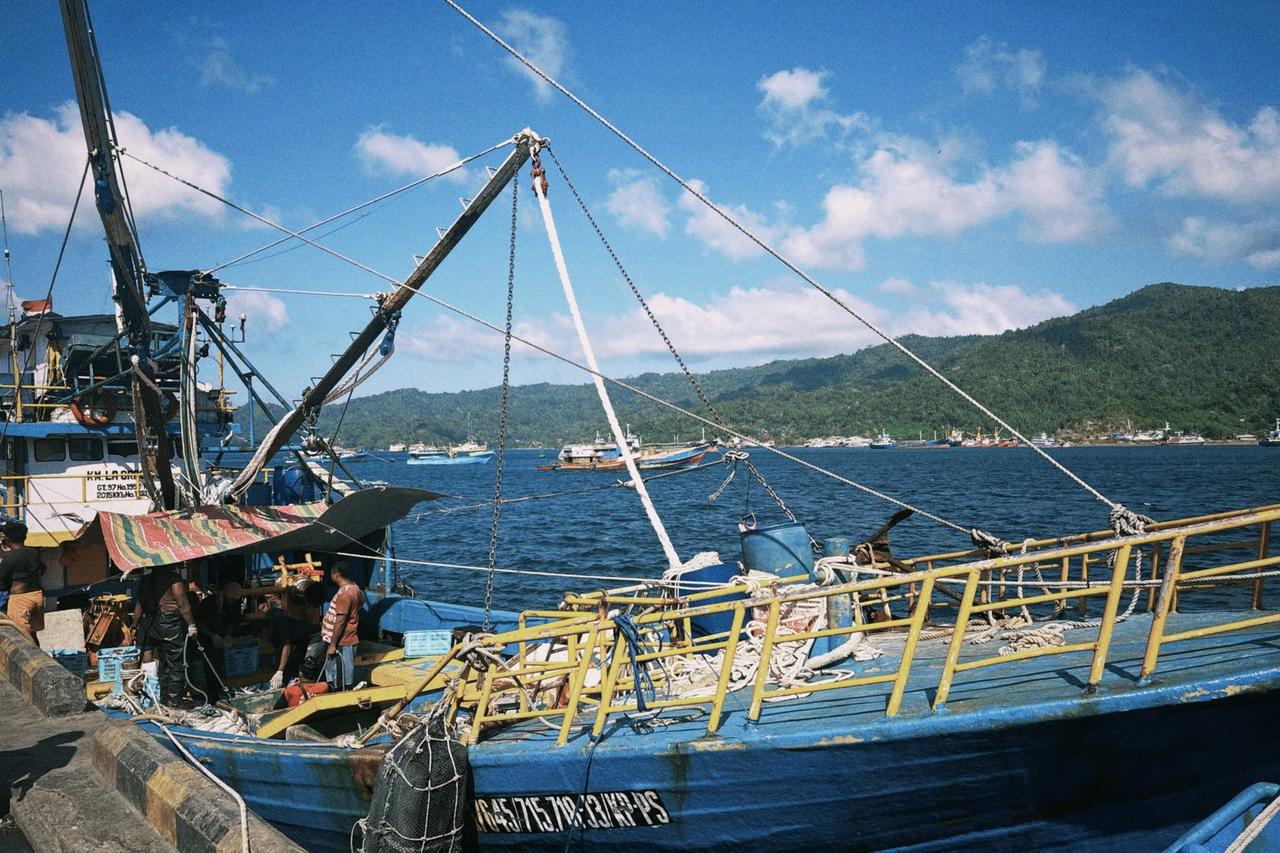
What I hadn't planned on was timing my visit to catch an actual unloading in progress. A boat had just come in, and I watched fish being moved from its deck onto a waiting truck, ropes and rigging overhead, the crew working fast in the heat. I don't get many chances to stand this close to the exact moment a catch changes hands from sea to land, and there's a rhythm to it that's hard to describe secondhand, everyone moving with the kind of efficiency that comes from doing this every single day.
Ordinary Port Life, Farther Out
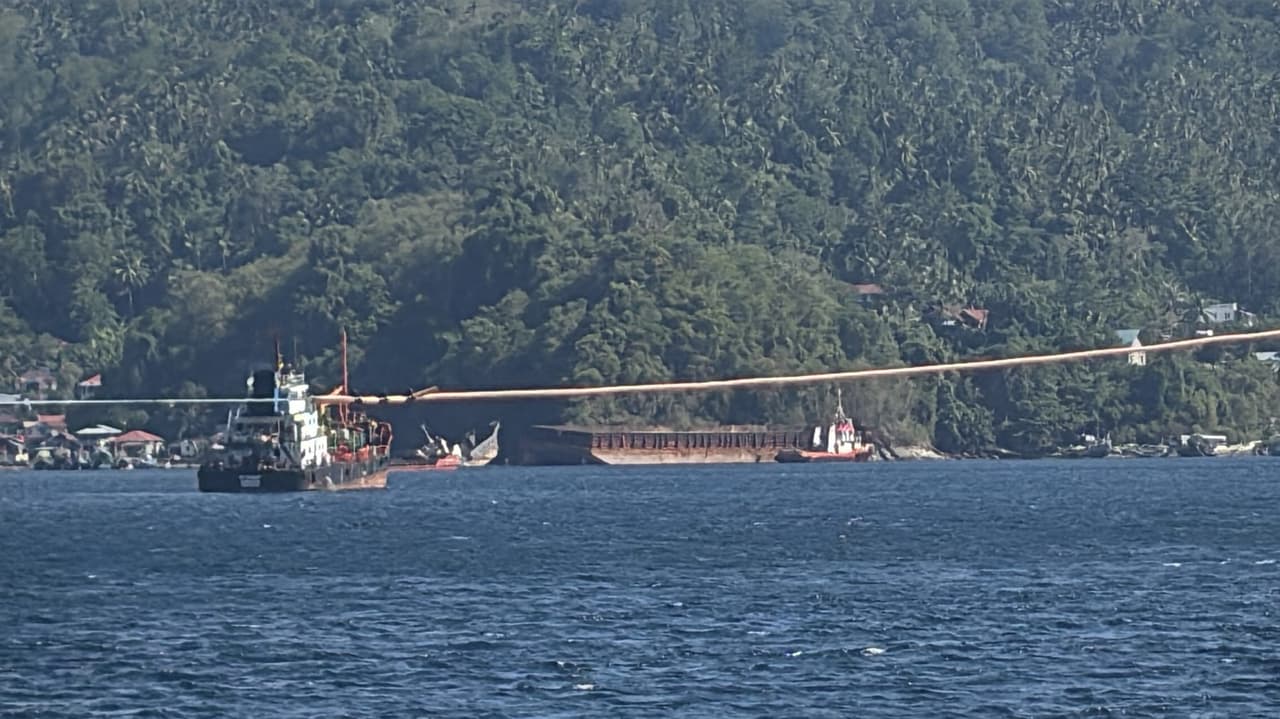
Looking farther down the shoreline, another boat was being towed along the coast, nothing urgent about it, just one more piece of the same daily choreography playing out a bit further from where I was standing. It's easy to fixate on the one dramatic moment in front of you and forget that a working harbor like this has several of these small operations running at once, most of them not meant for an audience at all.
Smaller Than I Pictured, and a Name I Hadn't Heard
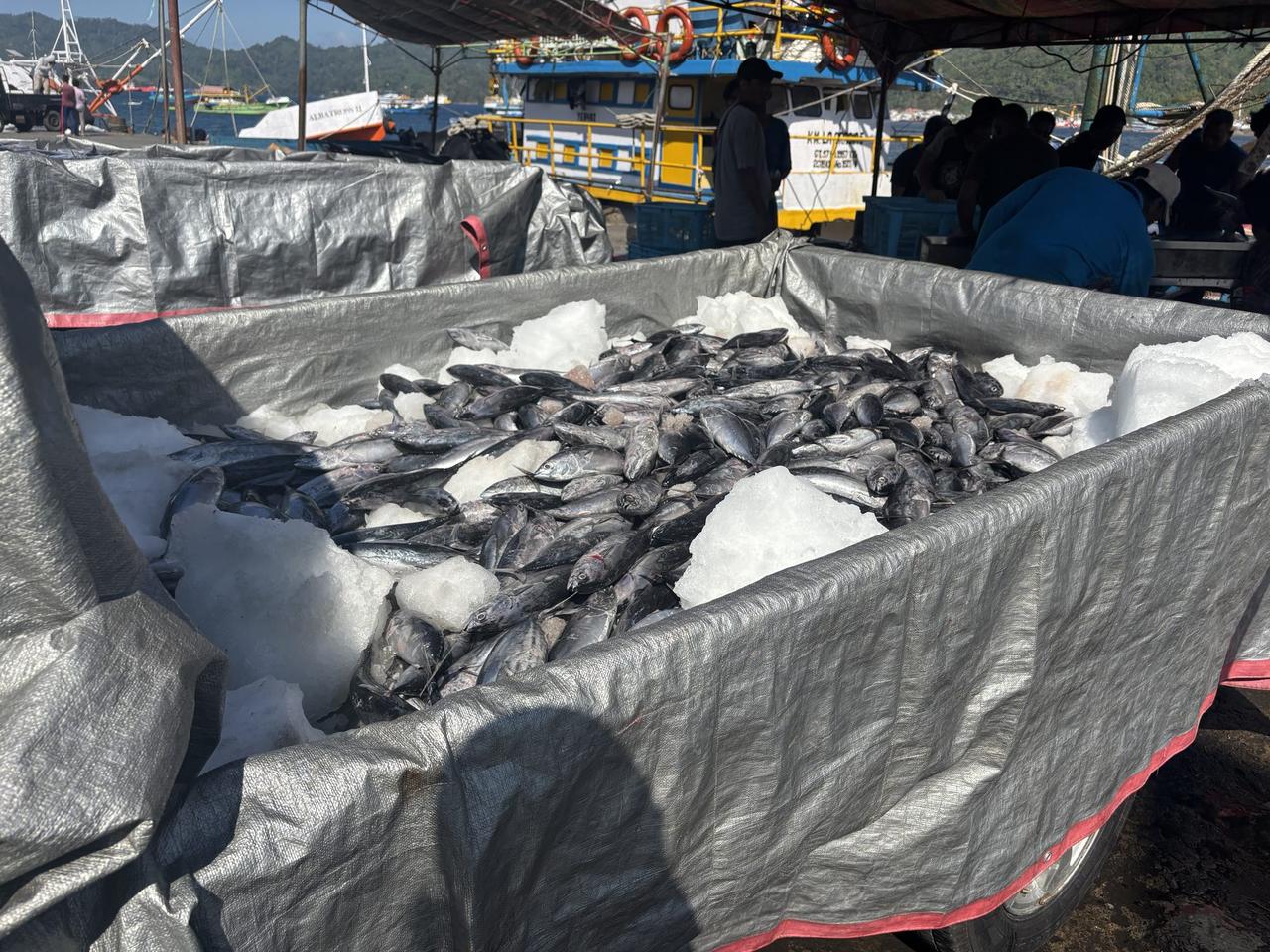
I've always pictured tuna as enormous, but what came off this boat was a more modest, almost manageable size, and someone on hand explained why: this was tongkol, a category of smaller tuna that includes types roughly equivalent to Japan's marusouda and hirasouda. It's not a lesser fish for being smaller, just a different one, and having a name to attach to what I was looking at made the whole scene click into place in a way that just watching it wouldn't have. The fish itself came off the boat and straight onto ice, no ceremony, no delay, exactly the kind of freshness the market is known for.
Cheap Because It's Close
Part of what makes this market worth the trip, beyond just watching the process, is how little the freshness costs. Travelers who've passed through have described it as a place where fish pulled straight from the sea sells for next to nothing, and standing there it wasn't hard to see why: there's no cold chain to pay for, no distributor taking a cut, just a boat, a pier, and a buyer close enough to walk over.
A Bigger Port Standing Behind This One
Aertembaga, the market and harbor I'd wandered into, sits in the shadow of something considerably larger: PPS Bitung, a national-scale ocean fishing port whose development was first announced back in 2001 under then-President Abdurrahman Wahid, formally upgraded to full PPS status in 2008. What I'd been watching at the smaller market felt like the retail, human-scale end of an operation that, a short distance away, also functions as serious national infrastructure. Two different scales of the same industry, running side by side.
More to Bitung Than a Layover
I'd more or less written Bitung off in my head as a town you pass through on the way to a ferry, and I was wrong about that in a way I probably should have expected by now. The interesting parts of a place like this rarely announce themselves from the terminal; they turn up because someone happens to mention them, the same way I first heard about Palu's floating mosque or stood inside Sou Raja without having planned either visit in advance. I'm grateful to whoever passed along the tip, and just as grateful to Bitung itself, for having more going on than it ever bothered to advertise.