A Serene Morning in the Shadow of the Tongkonan
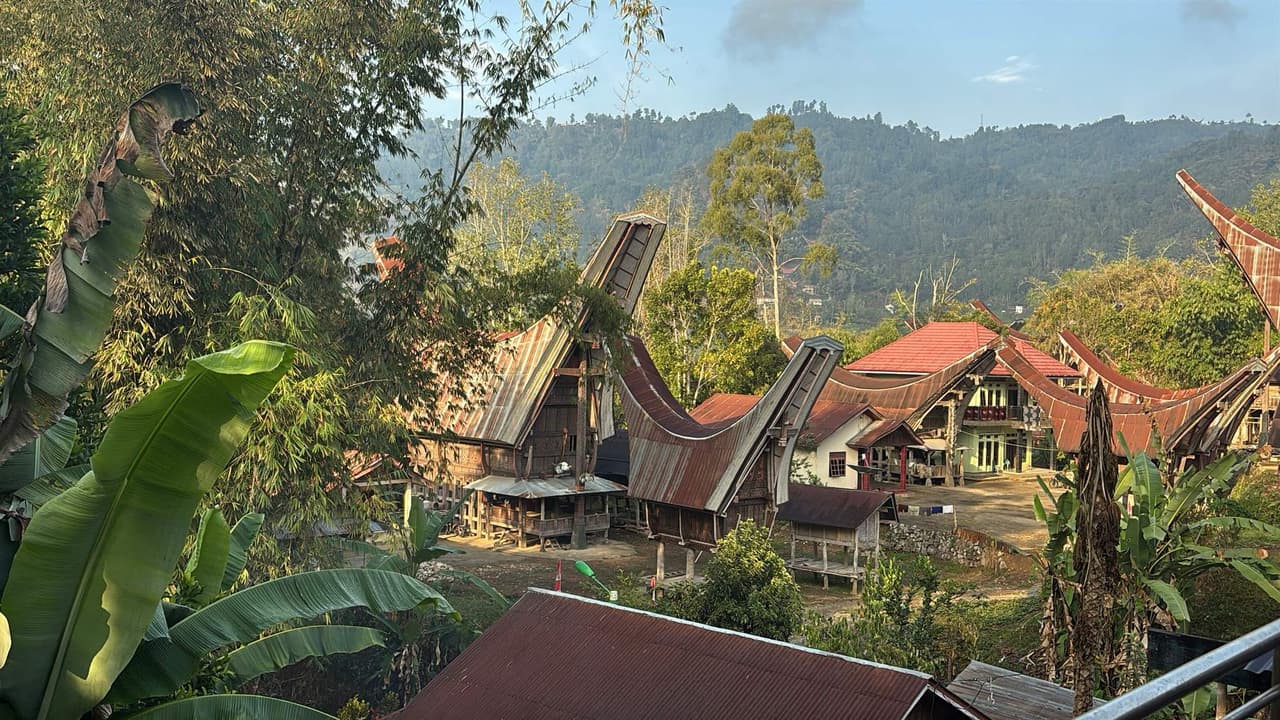
September 23rd marked the third day of the monumental Rambu Solo funeral ceremony in Tana Toraja. The previous night, I was graciously hosted at the family home of Eunice, a local contact I had formed a bond with earlier in my journey. In the crisp morning air, the sight of the traditional Tongkonan houses—with their distinctive boat-shaped roofs—illuminated by the rising sun was nothing short of breathtaking.
Festivals & Rituals
Rambu Solo, Days Three and Four: The Water Buffalo Sacrifice, Outside the Village and Within It
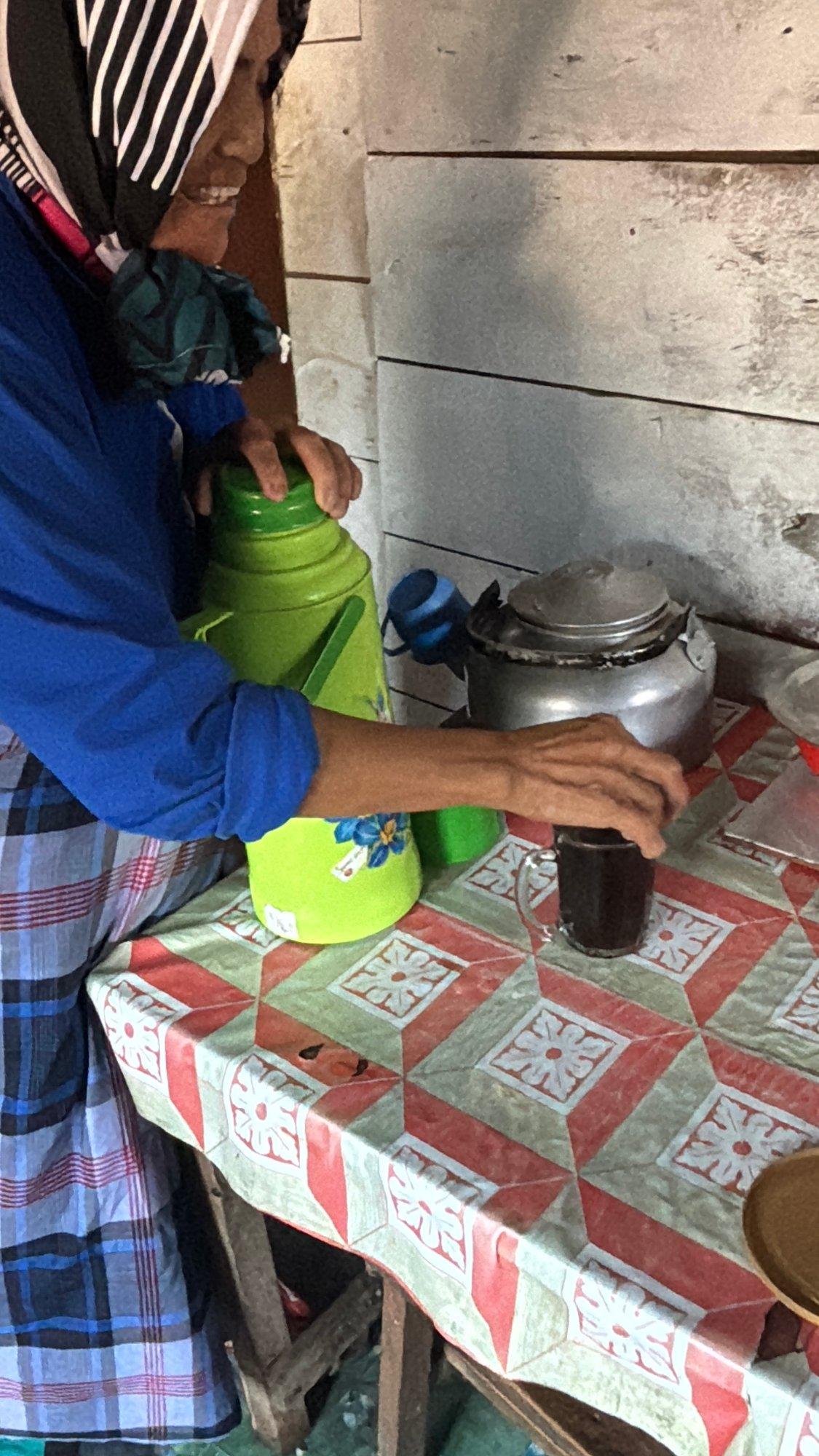
My host's mother had prepared a lavish morning feast to start the day.
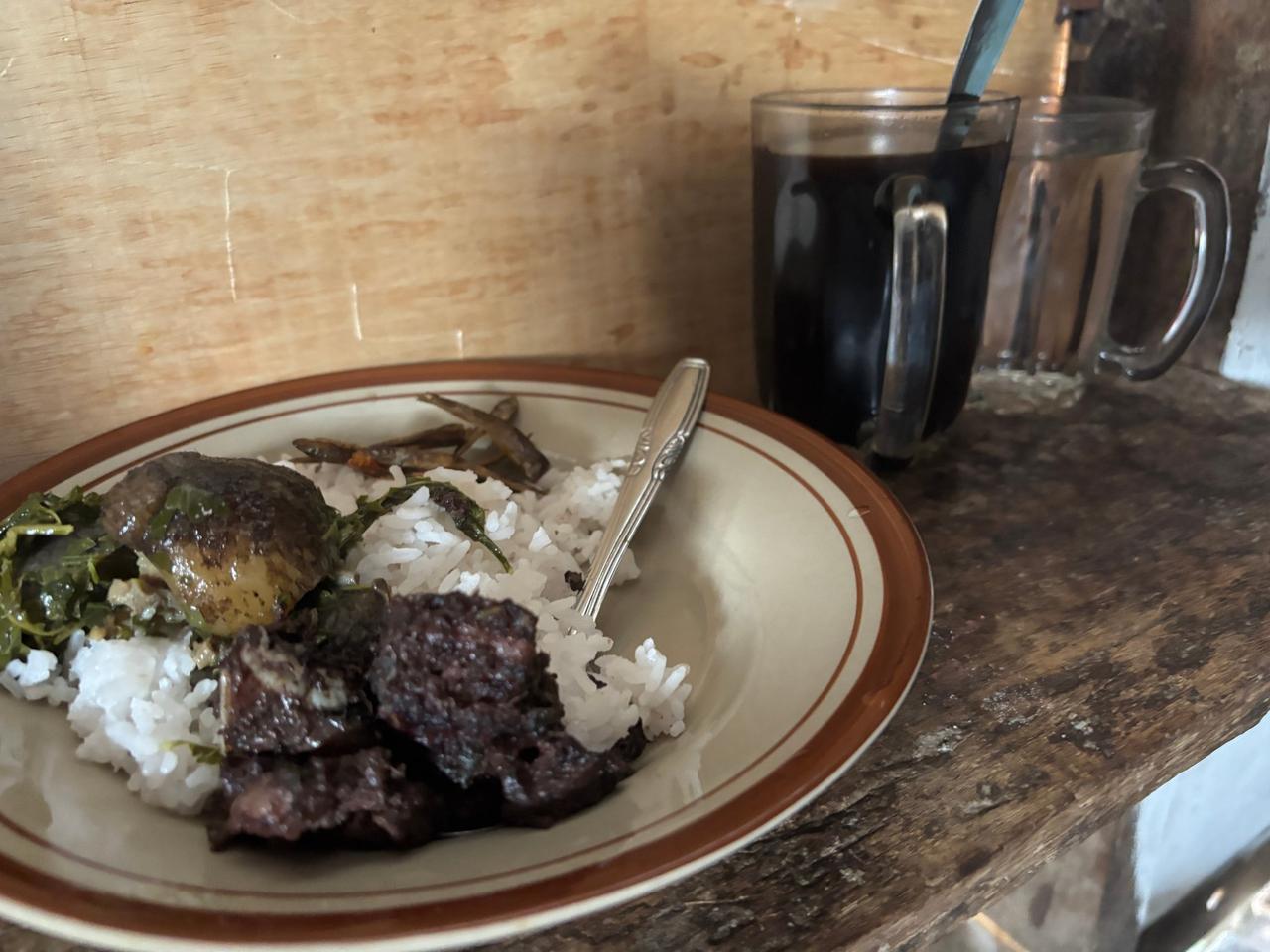
The table was adorned with babi (pork), sayur (vegetables), and a variety of small, salty-spicy fish dishes.
After fully savoring the gentle flavors of everyday Torajan village life, I took a commemorative photograph in front of the Tongkonan before setting off toward my next destination.
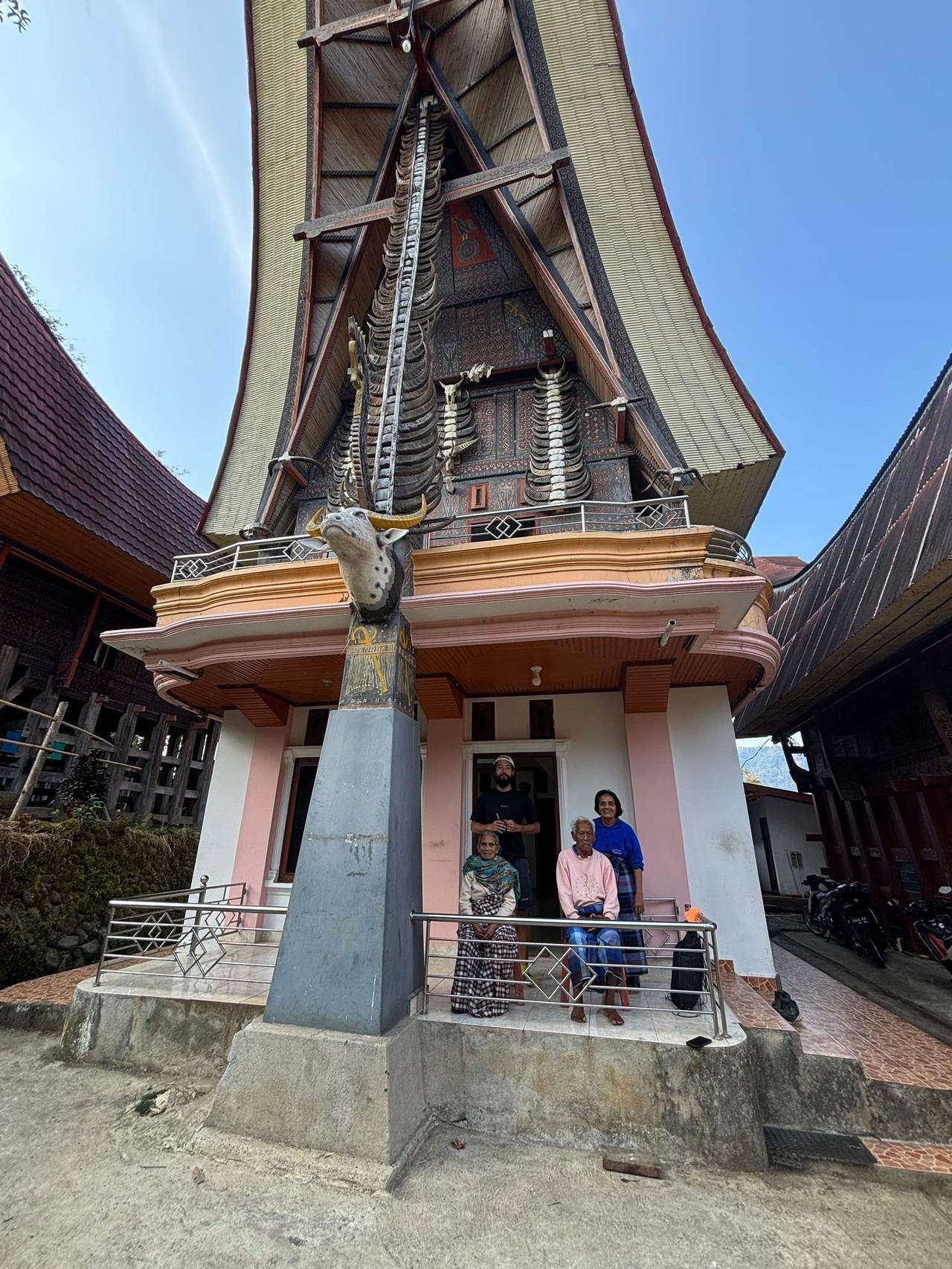
Through the Dry Season Paths to a Village of Reunion
Before heading to the ceremonial grounds, I deliberately took a detour. I wanted to walk to the village where I had stayed previously to bid a final farewell to my former hosts. Knowing that I might never cross paths with them again, I felt an undeniable need to convey my gratitude one last time.
The path leading to the village offered sweeping views of the dry season landscape, just ahead of the rains expected to arrive in October.
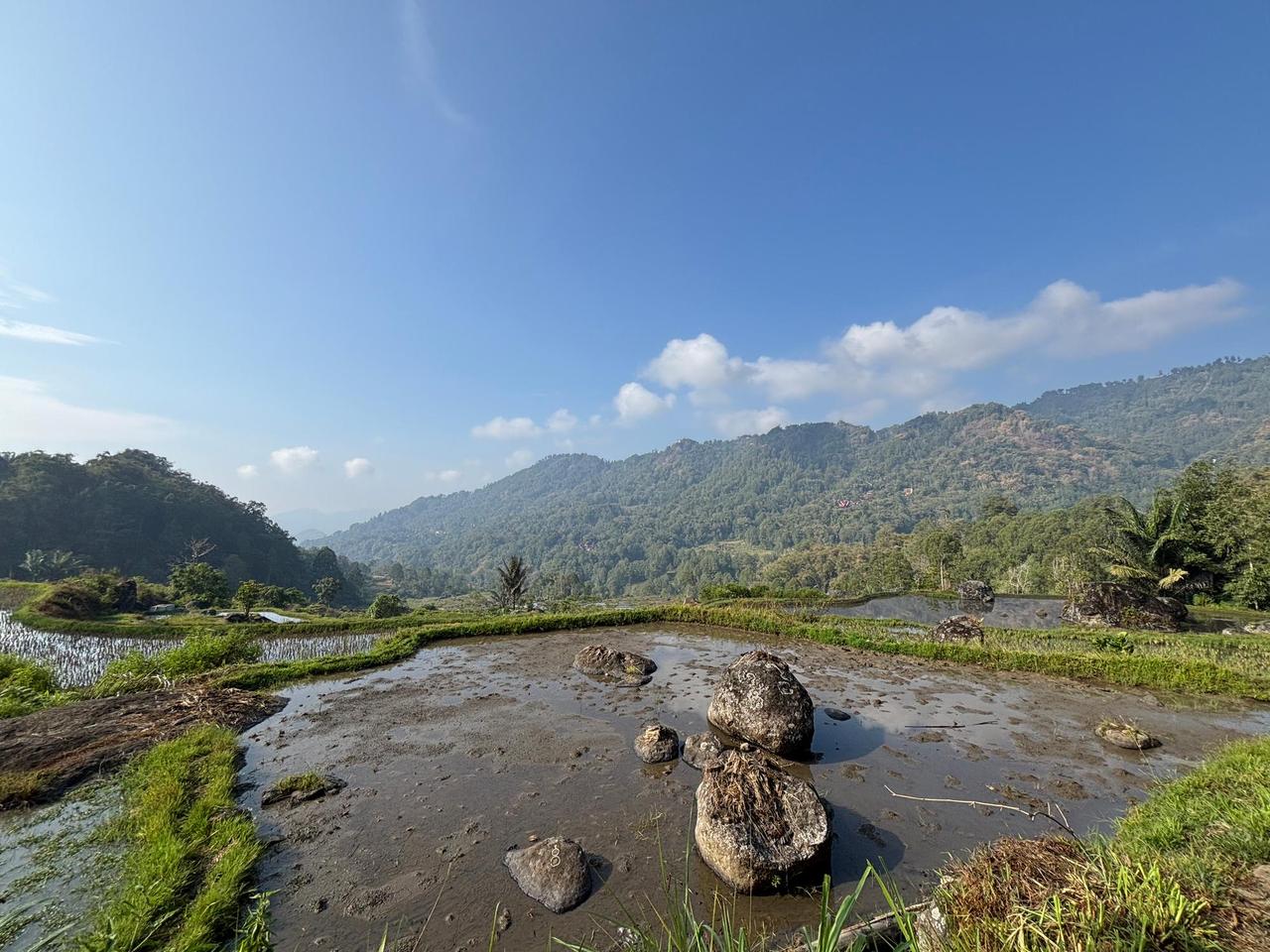
Although locals mentioned it was not the absolute peak of the region's beauty, the scenery was still profoundly moving.
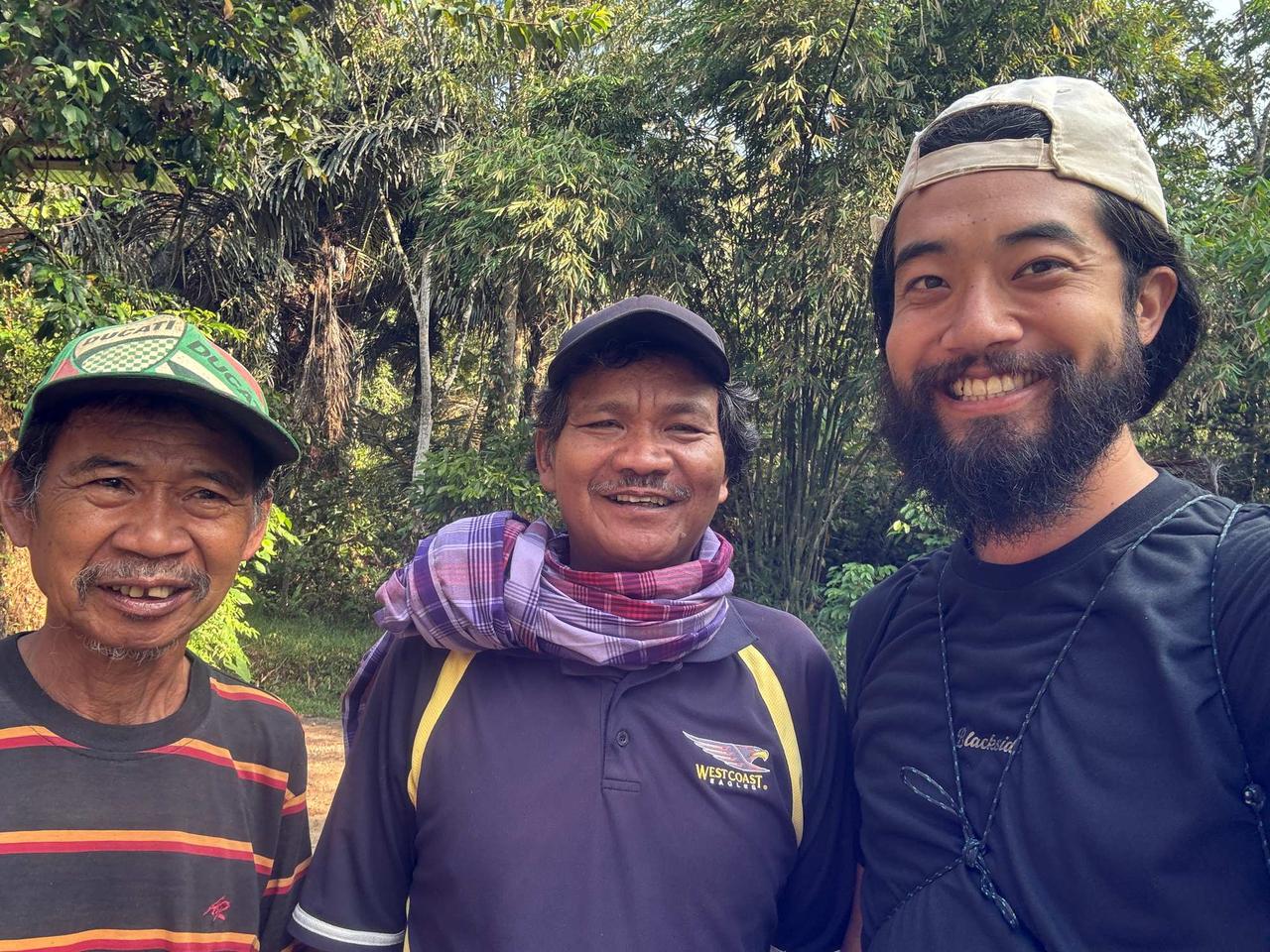
I successfully reunited with the family, exchanged warm farewells, and took a few final photographs.
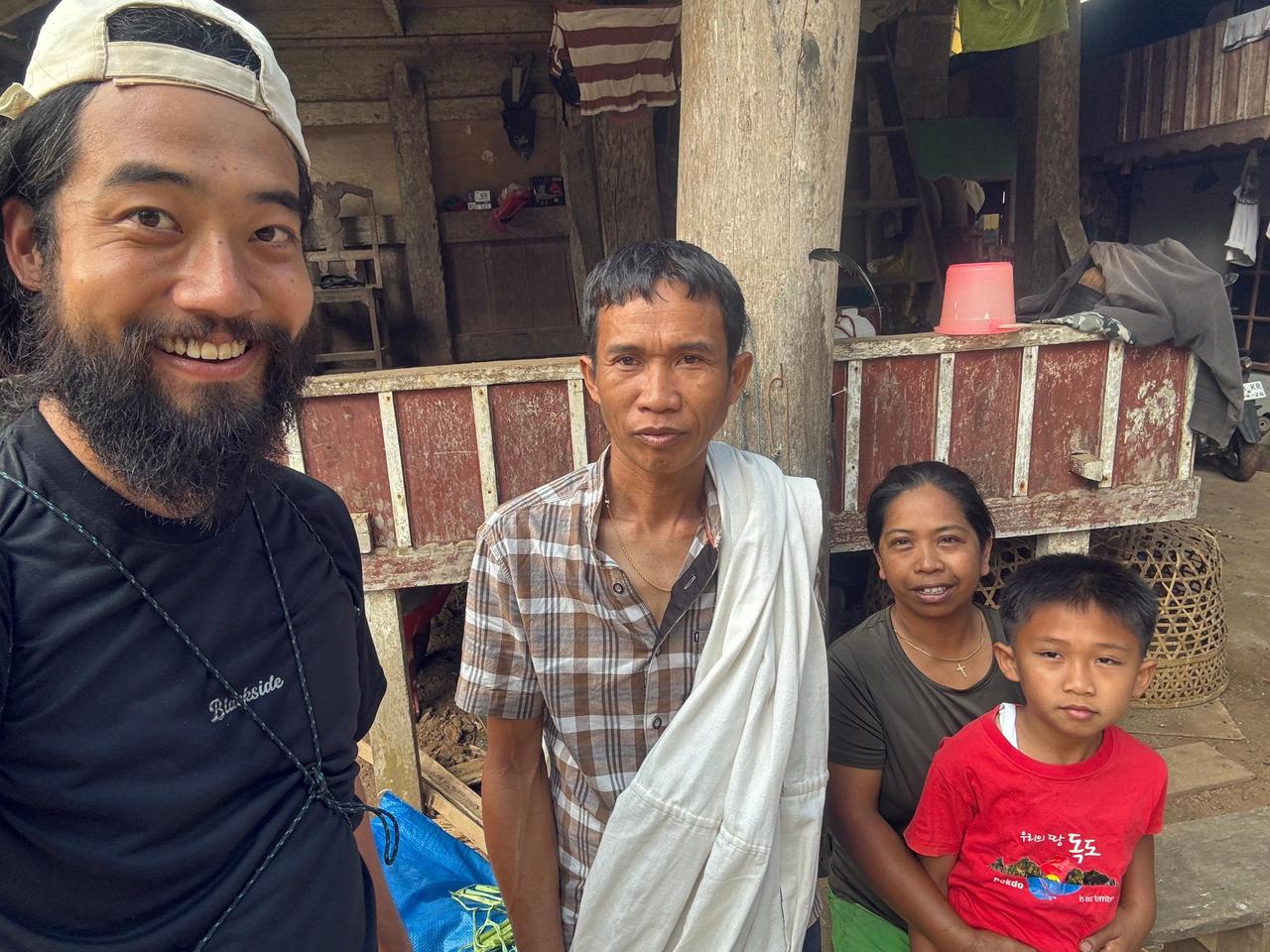
With every fleeting goodbye, the inherent solitude of the traveler becomes deeply intertwined with an enduring connection to the land.
The Plaza of Linked Lives and the Buffalo Rites
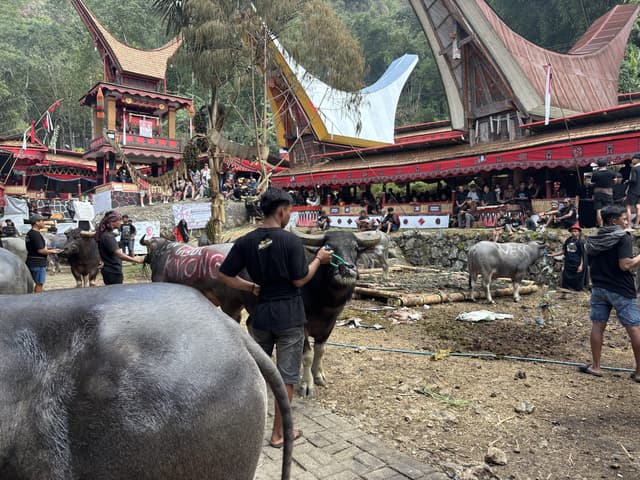
Upon arriving at the venue, I was enveloped in an atmosphere entirely different from the quiet morning. This day was dedicated to the most crucial and intense rite of the Rambu Solo: the buffalo sacrifice. Scanning the expansive plaza, I counted roughly 30 buffaloes tethered and waiting.
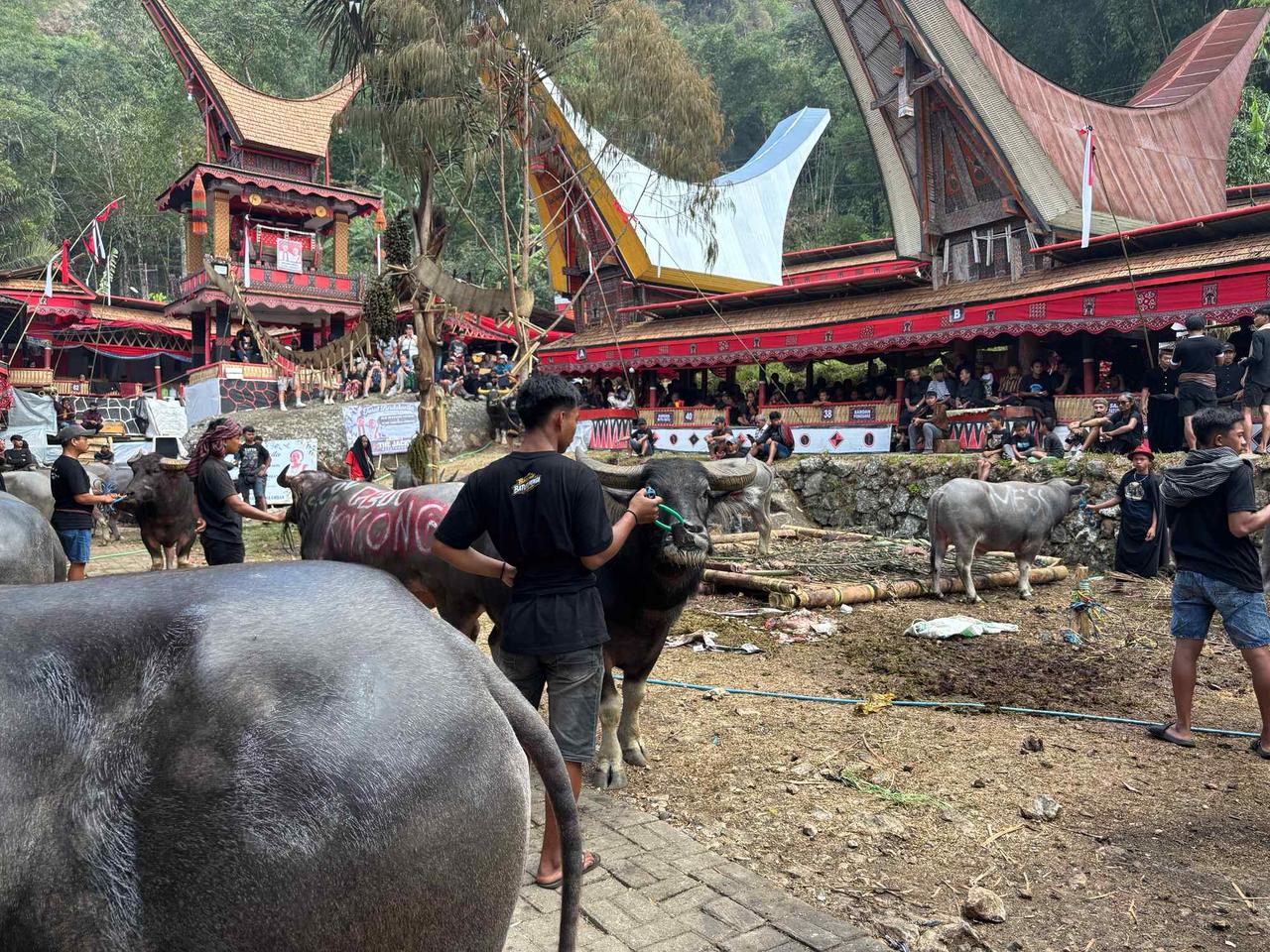
Astonishingly, these buffaloes were not purchased by the grieving family. Instead, they were brought by other families as reciprocal "return gifts" for buffaloes the current bereaved family had offered at past funerals. The Torajan funeral is not merely a display of wealth or consumption; it is sustained by a monumental, deeply rooted gift economy woven through the exchange of life itself.
A Table for the Wanderer and the Quest Ahead
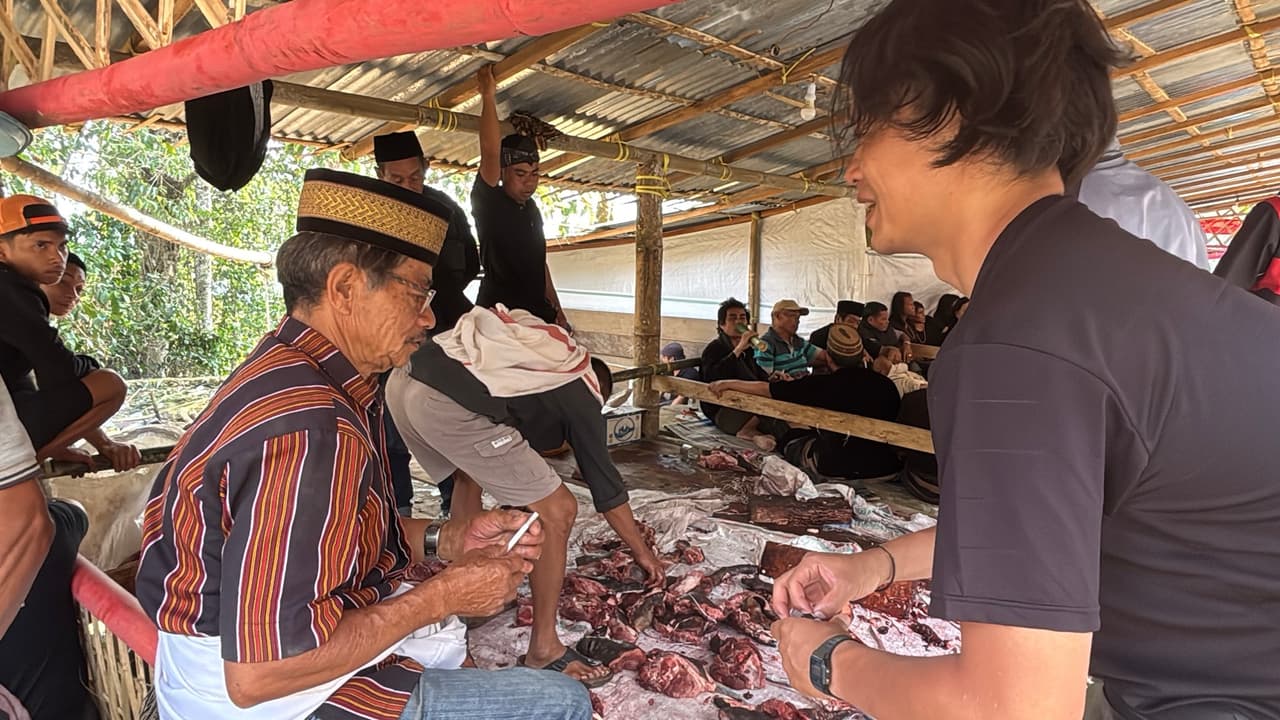
As lunchtime approached, I was warmly welcomed by the locals and invited to join their feast. I was served the meat of the sacrificed buffaloes.
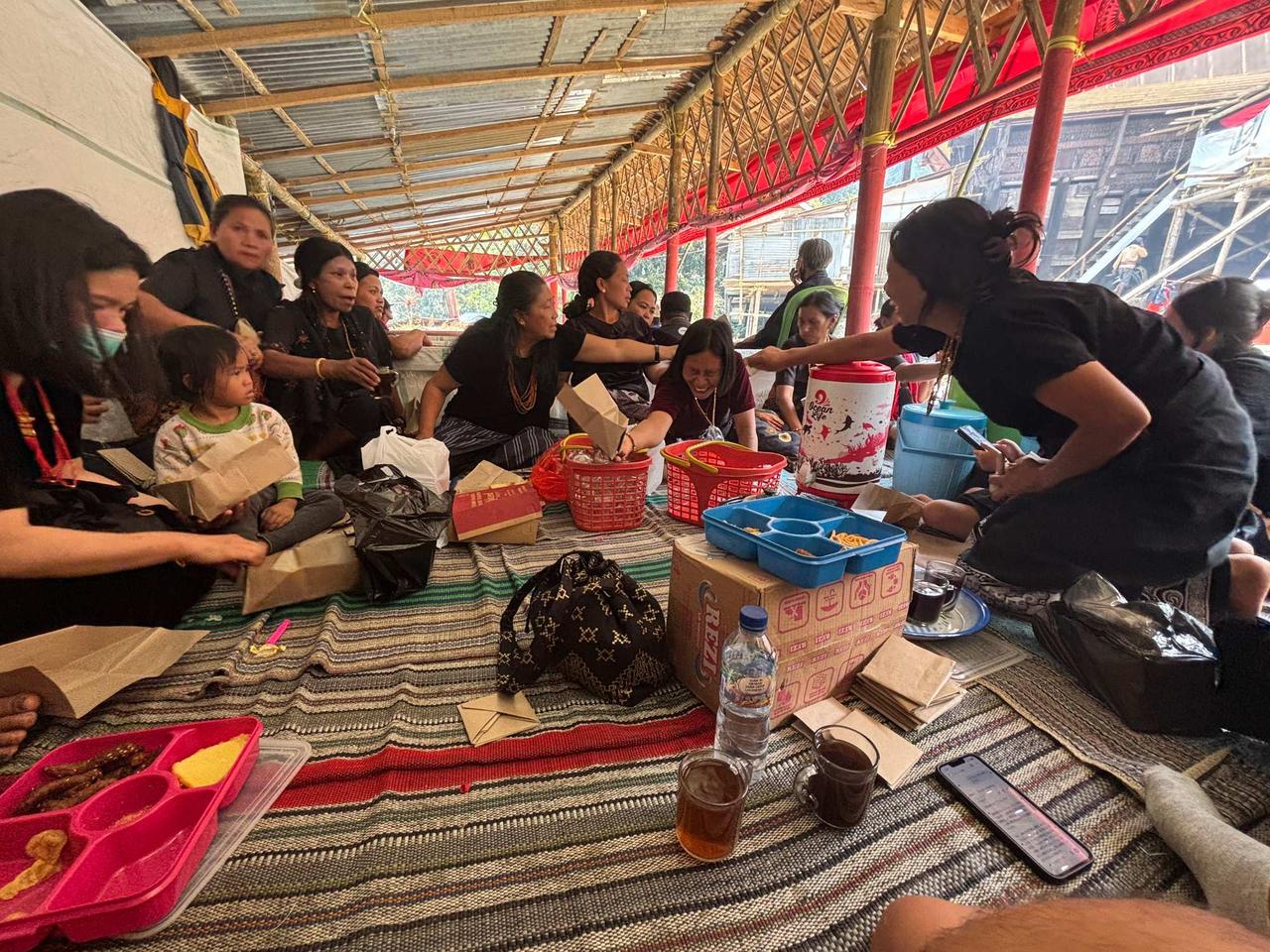
The fatty portions were rich and delectable, while the lean meat possessed a tough, resilient texture reminiscent of crocodile.
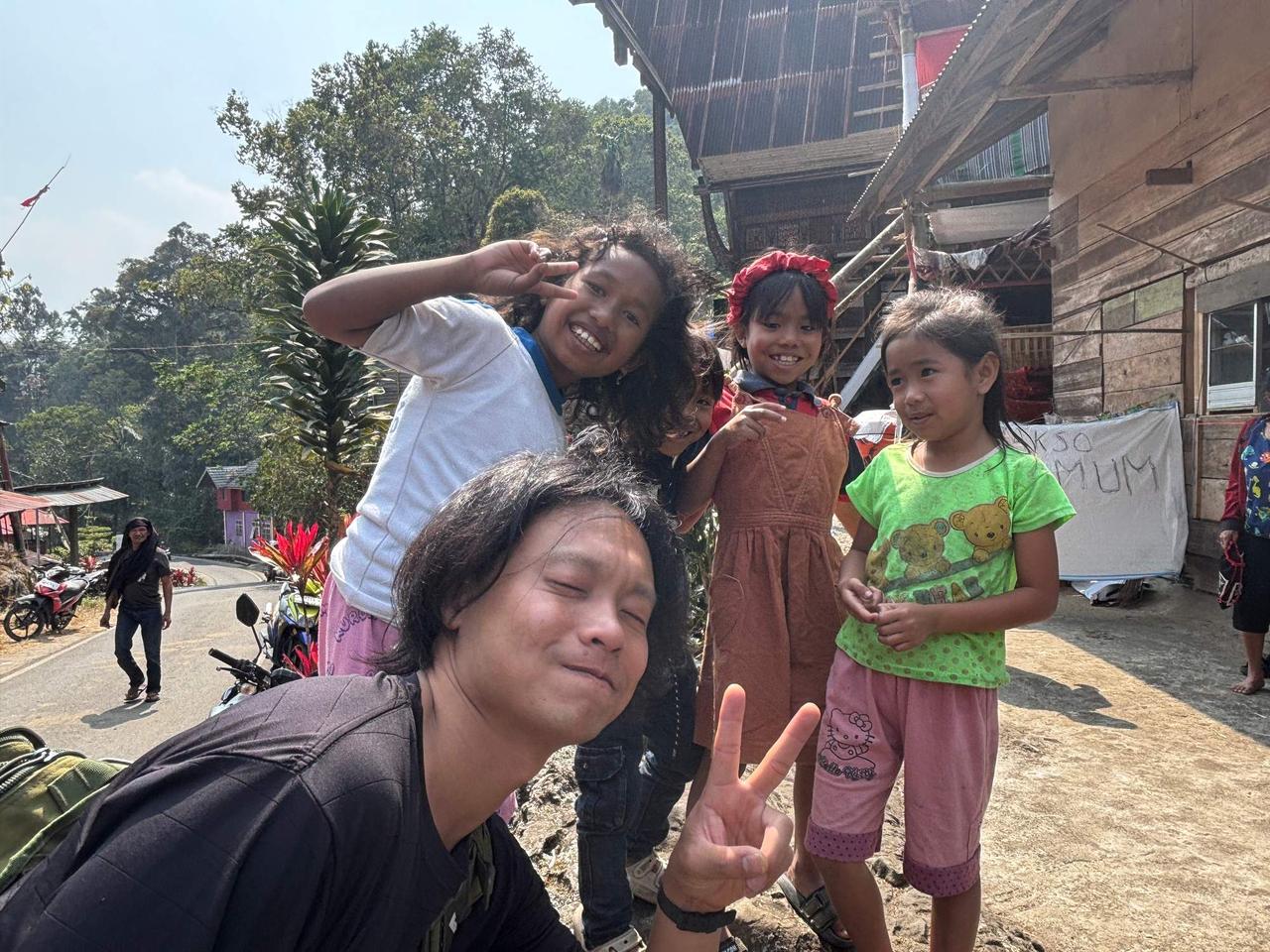
I shared a peaceful moment capturing photos with the local children, bridging our worlds through shared smiles and food.
Yet, the spectacle unfolding in the center of the plaza was uncompromisingly visceral. Watching the endless chain of buffaloes meeting their end was a brutal, overwhelmingly raw visual experience that forcefully awakened emotions I had previously kept on the periphery of my consciousness. I am certain that the intensity of this ritual will serve as a profound trigger for my future writing and perspectives on life and death.
Tomorrow, September 24th, I must attend to the bureaucratic necessity of extending my visa. Once that is completed, my plan is to visit the local buffalo farms—the true backstage of this grand ceremony. By exploring the breeding grounds of the lives that sustain these festivals of death, I will undoubtedly uncover yet another layer of Toraja's profound depths.