A Different Kind of Makassar Story
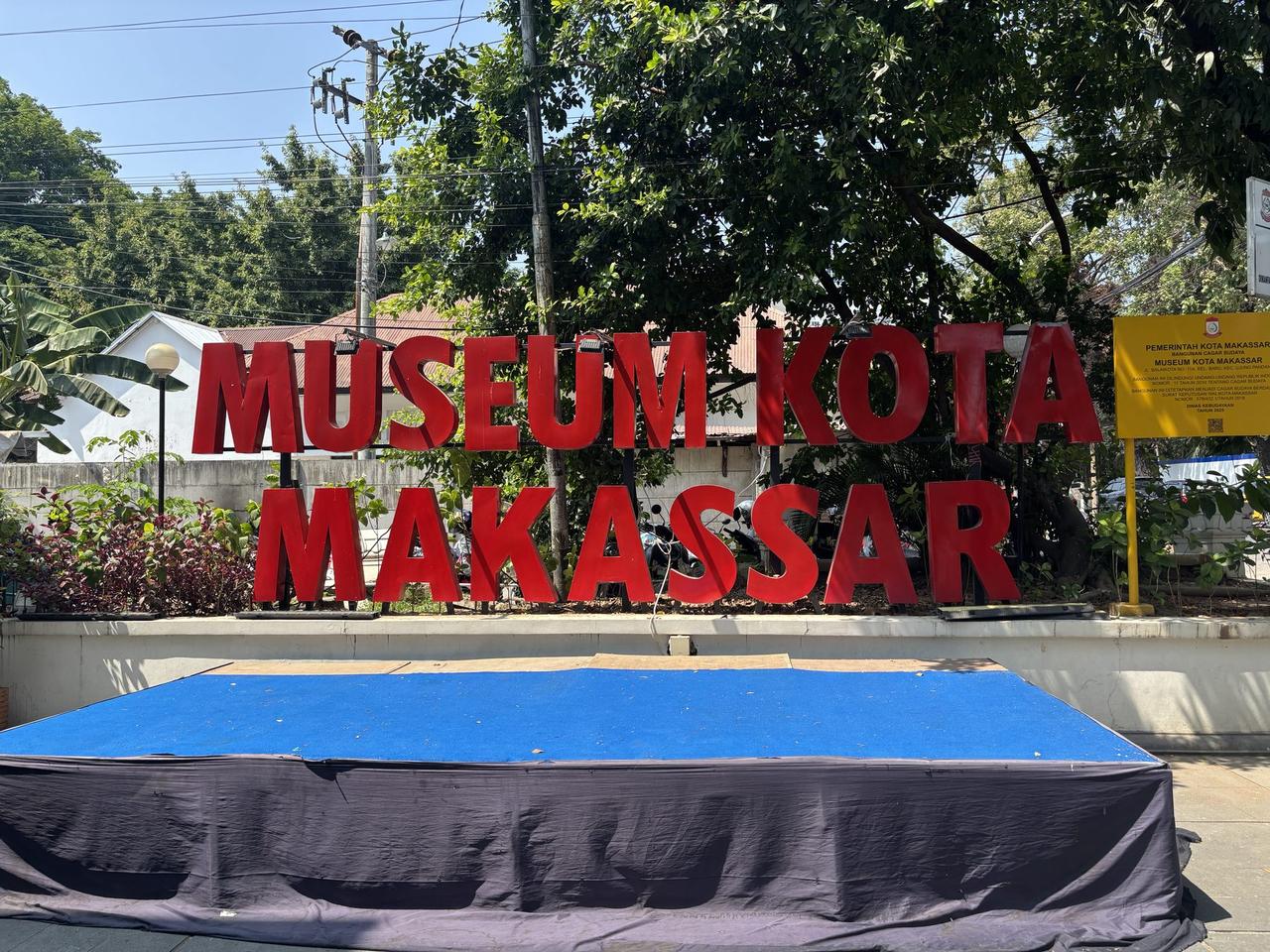
Everything I'd seen of this region so far told the story of the Gowa Kingdom, Somba Opu's fortress walls, Balla Lompoa's throne room, one dynasty's rise and fall across five centuries. Museum Kota Makassar tells a different story entirely, not a kingdom's but a city's. It sits right in central Makassar, easy to reach, easy to miss if you don't already know it's there, and it's free to walk through start to finish.
A Dutch City Hall, Reused Three Times Over
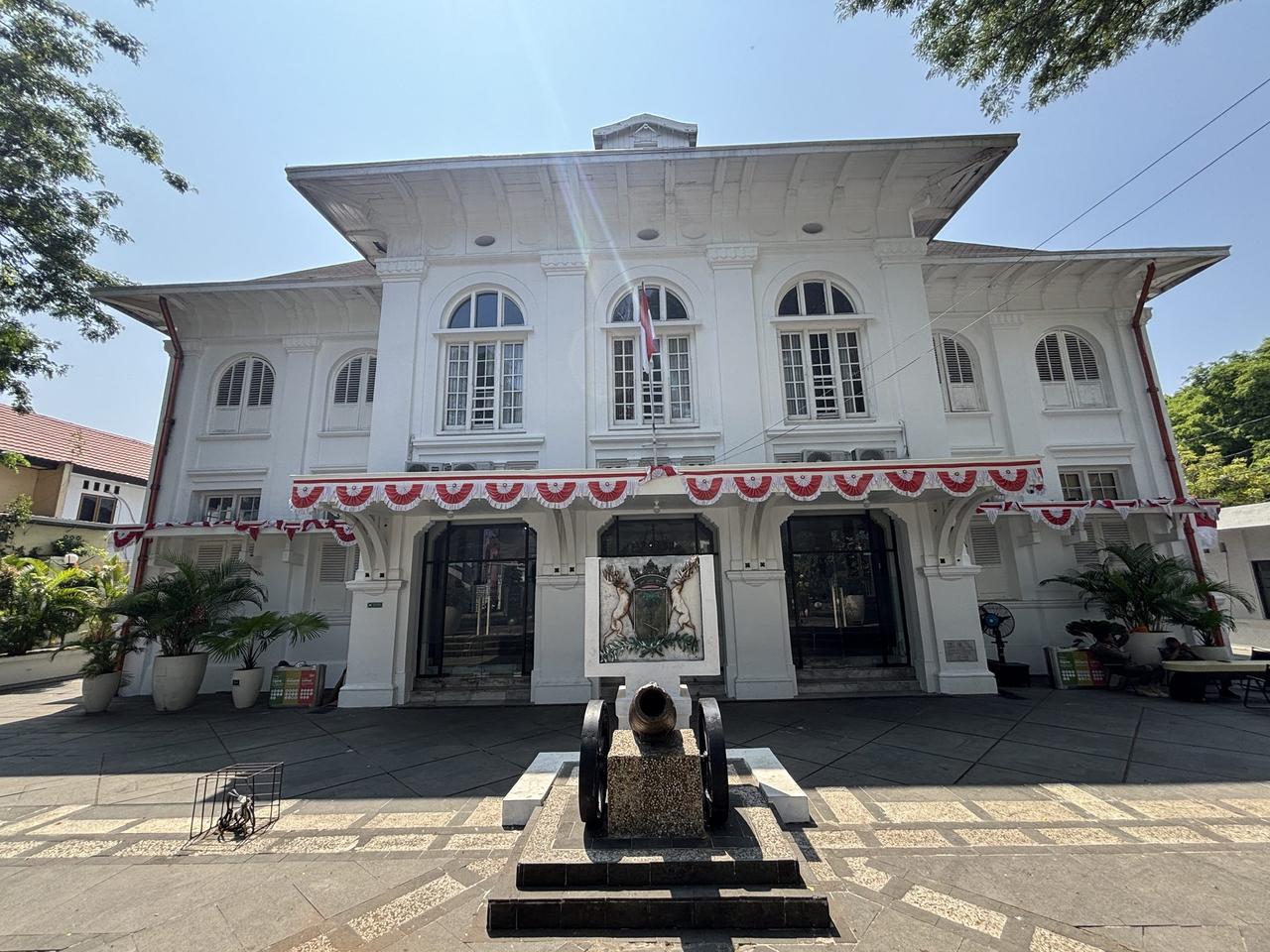
The building itself is the first exhibit. It went up in 1916 under Dutch colonial rule as the Balaikota, Makassar's city hall, in a European Art Deco style that still reads clearly today: white walls, a red-brown roof, tall arched windows, columns out front holding up a deep overhang. It was built for the moment Makassar was formally recognized as a Gemeente, a proper municipality, and functioned as the seat of city administration from there. A deer statue stands in the courtyard, one more detail from that original layout that's stuck around. After Indonesian independence the building passed to Bappeda, the regional development planning board, before finally reopening as a museum on June 7, 2000, an initiative credited to then-mayor Drs. H.B. Amiruddin Maula. Inside, a front building and a rear building connect through a central hall reached straight from the main entrance, with a symmetrical staircase anchoring the middle and an auditorium and audiovisual room built into the plan.
Bricks, Blades, and Wartime Banknotes
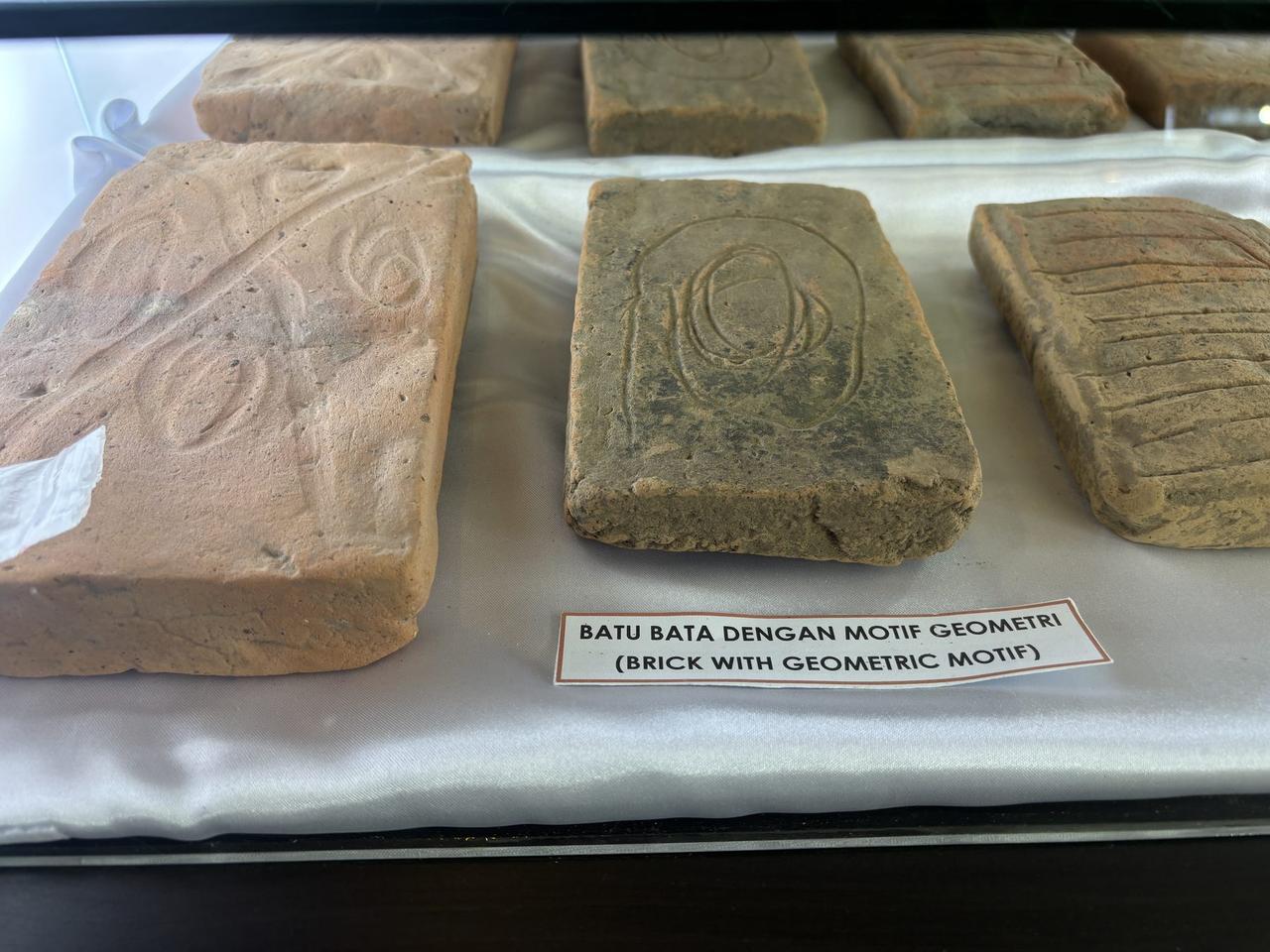
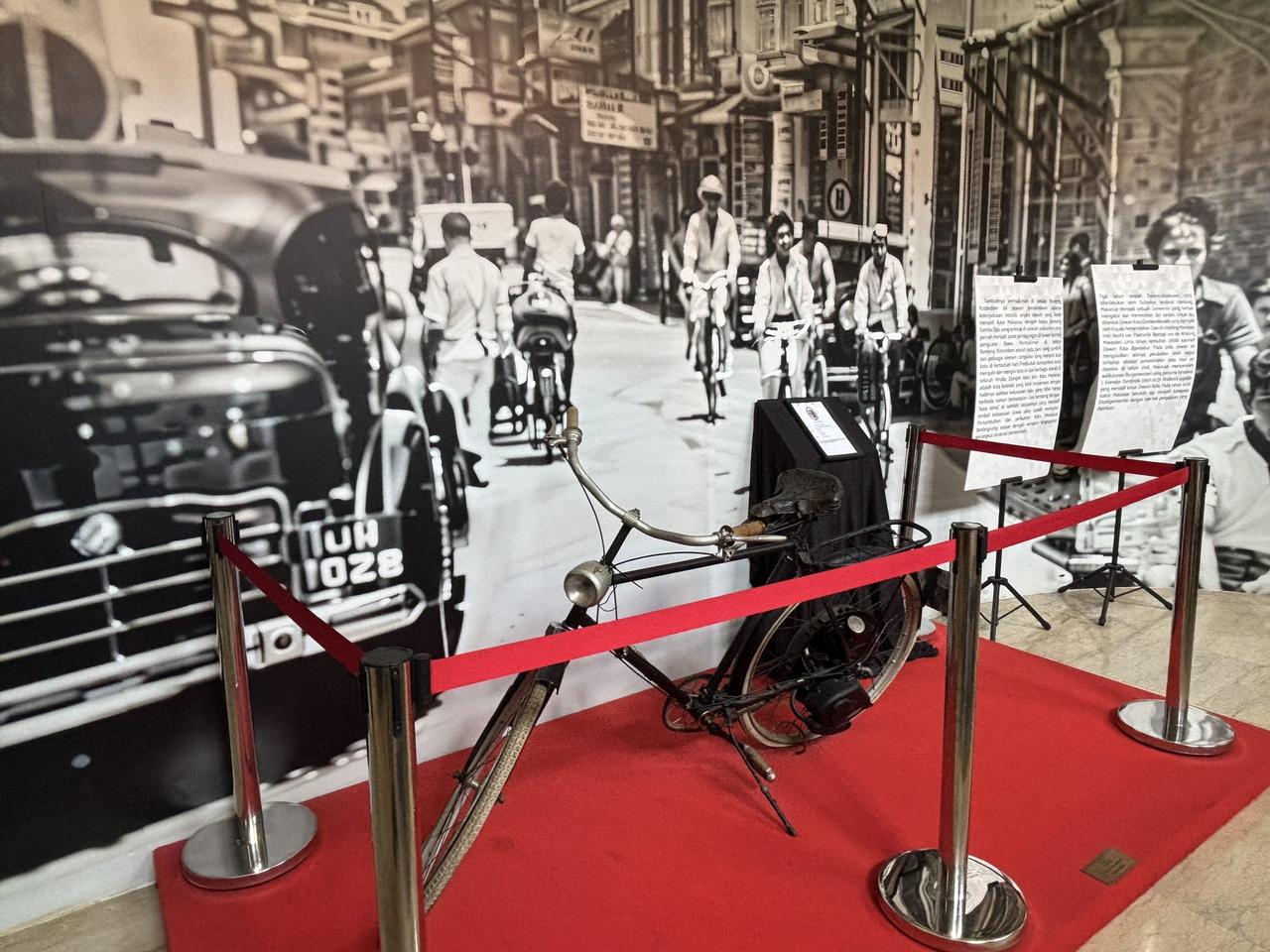
The visit starts on the ground floor, through the door on the left. The first room holds the museum's archaeological and historical collections together: bricks carved with geometric and animal motifs, pulled from the excavation of Somba Opu's fortress walls in 1987, the same discovery that eventually reopened that whole site to the public. Alongside them sit old cannons, a scatter of European militaria, Dutch and Spanish helmets and a Portuguese sword among them, and old maps charting the city and the fortresses that once ringed it. One case holds something more specific and stranger: banknotes issued during the Japanese occupation of Indonesia, currency that was actually circulating here during that period of the war. A little further along the same room, an old bicycle stands roped off in front of a blown-up black-and-white photograph of an old Makassar street, cyclists and pedestrians moving past shopfronts from another era entirely, the museum's small monument to what the city's streets used to look like day to day.
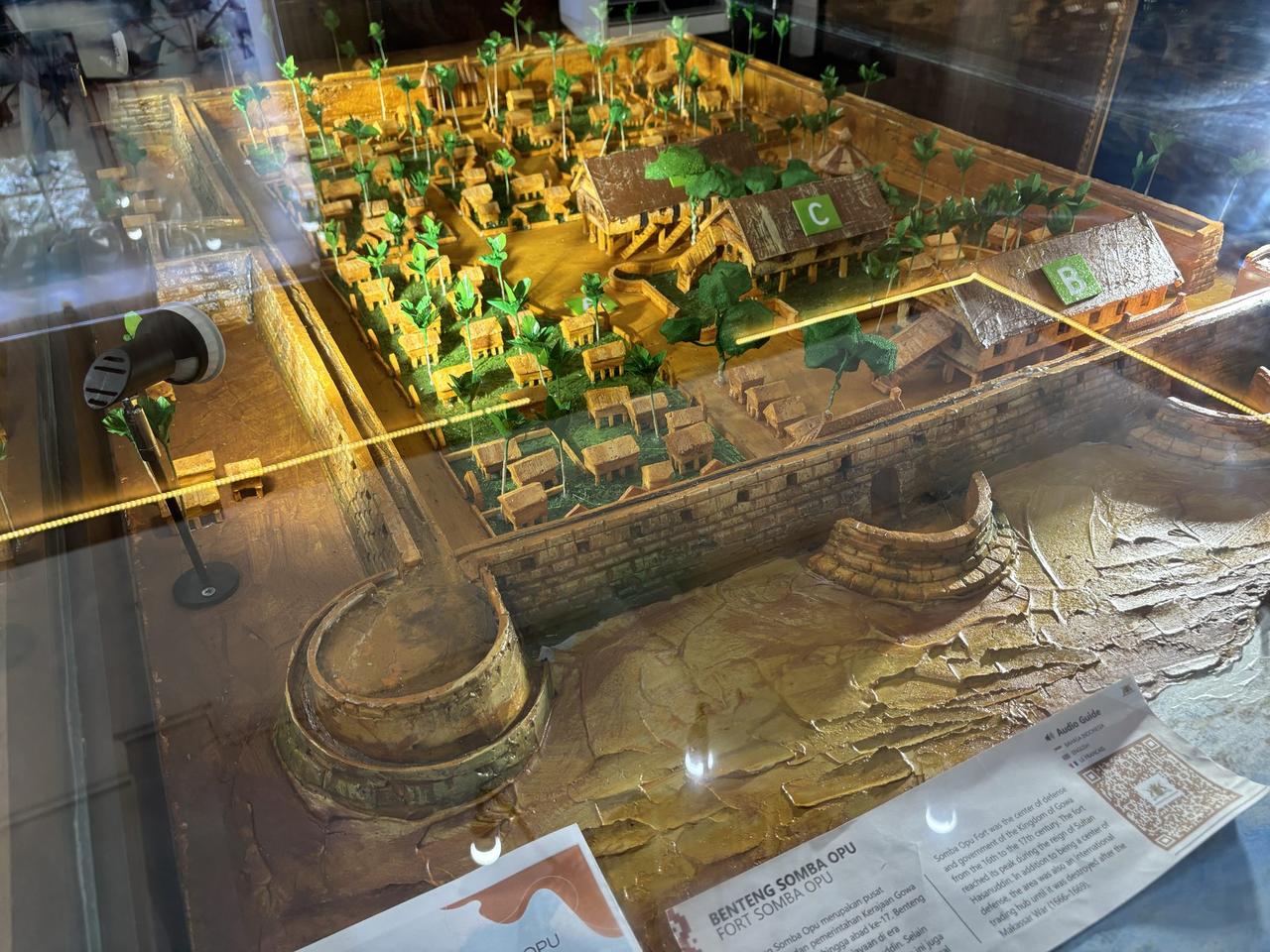
Set apart in its own case nearby is something I recognized instantly: a detailed miniature diorama of Benteng Somba Opu itself, walls, gate, the cluster of traditional houses laid out inside, built to a scale that made the whole site legible in a single glance in a way that walking its actual grounds never quite allows. Seeing it here, in a museum dedicated to the city rather than the kingdom, was a reminder of how tightly Makassar's urban story and Gowa's royal one stay wound around each other, whichever museum you happen to be standing in.
A Room Full of Instruments, and One Full of Silk
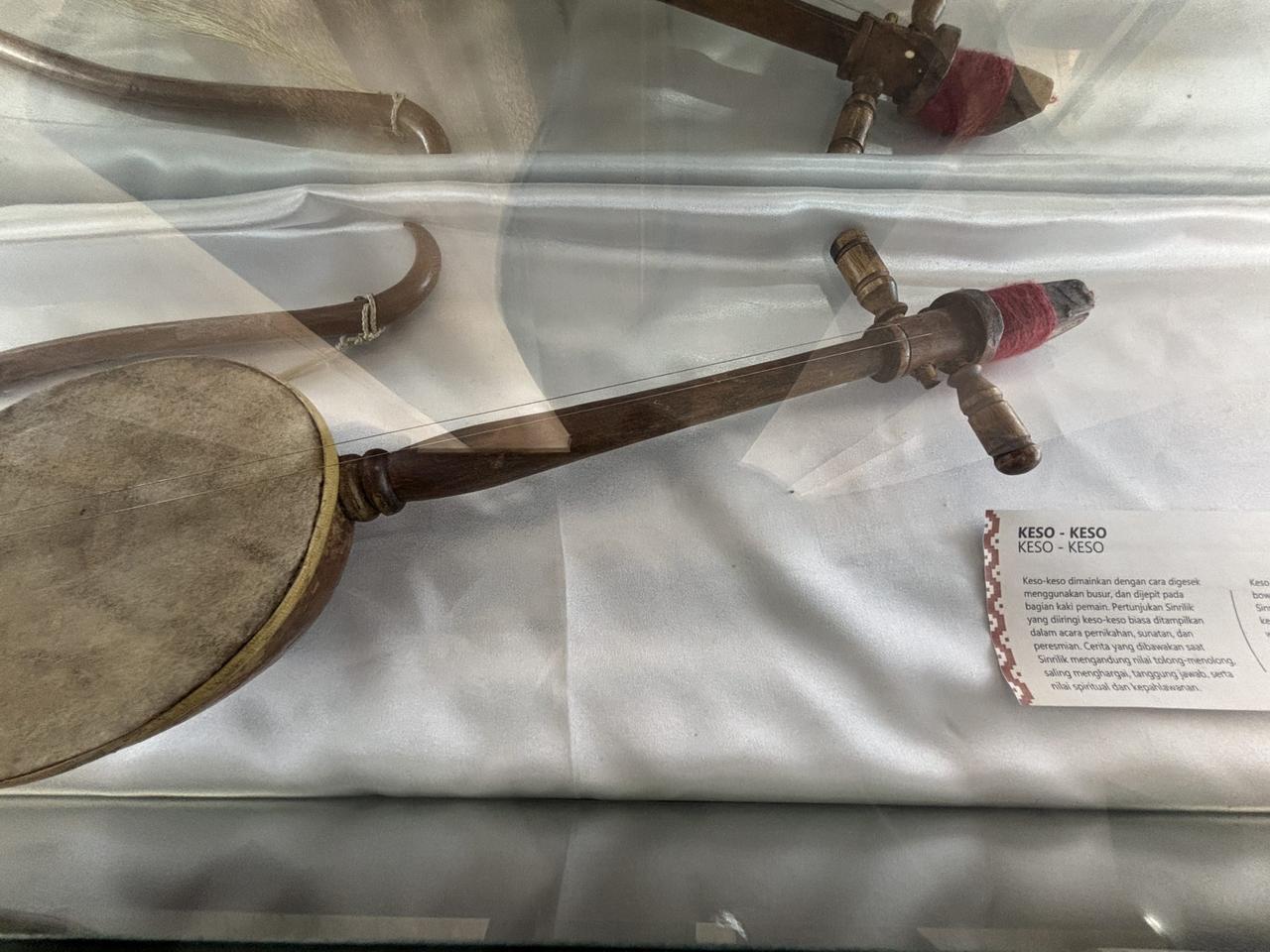
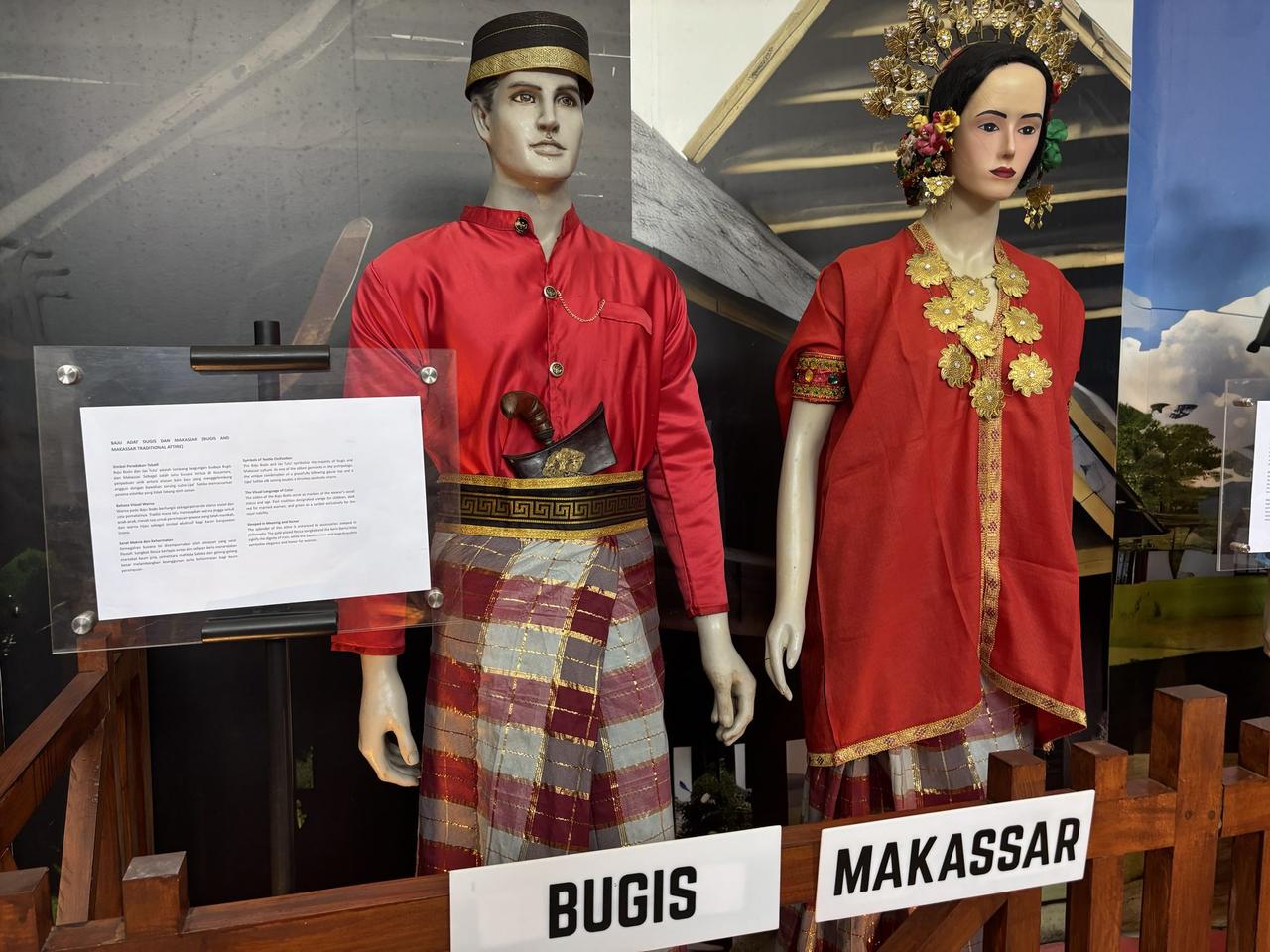
Further into the ground floor, the collection turns from history to culture. One room is given almost entirely to traditional instruments, more variety than I expected in a museum this size: kacapi, keso-keso, the bowed string instrument that gives the display case its name, gendang drums, and something close in shape to the tifa I'd picked up and started learning to play myself not long before this trip. Next to it, a room of traditional dress puts Bugis and Makassar clothing side by side on mannequins, red and gold formal wear heavy with symbolism that a nearby placard tries to unpack in a few dense paragraphs, color coding age and marital status, headdresses and bracelets signaling rank.
Upstairs, a Theater and a Mayor's Desk
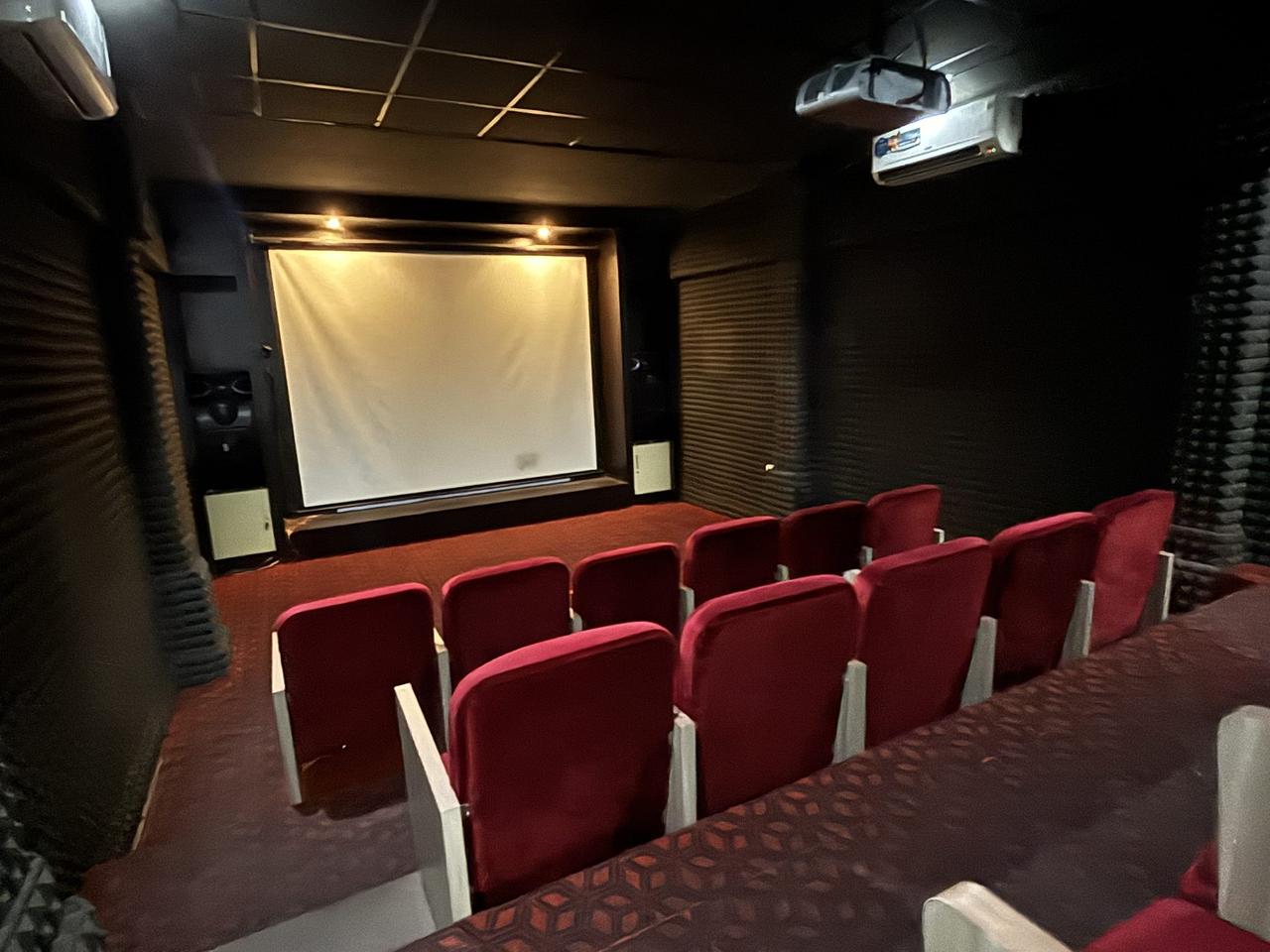
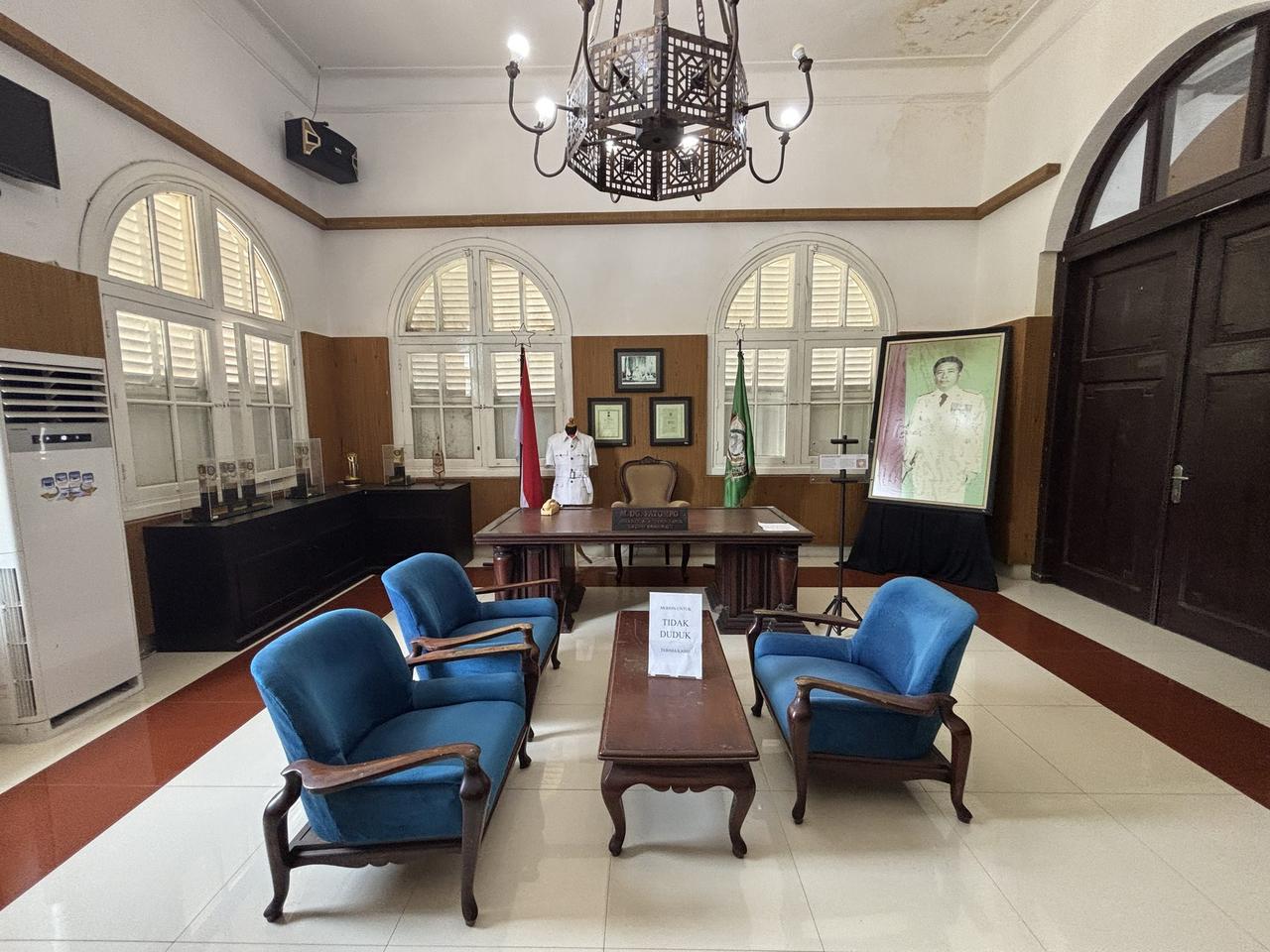
The upper floor holds two very different rooms. One is a small screening room, red velvet seats facing a modest projection screen, clearly meant for showing something, a history reel or an orientation film, though nothing was playing the day I visited. The other room entirely changes register: a preserved office, complete with a heavy wooden desk, blue upholstered armchairs, an ornate chandelier overhead, a white uniform mounted on a stand, and a large portrait watching over all of it. The desk's nameplate reads M. Dg. Patompo, a former mayor of Makassar, and the whole room reads less like a museum display case and more like the office itself, simply left standing rather than emptied out.
Nine Hundred Objects, and Two Ways to Read the Same City
The full collection runs to roughly nine hundred objects, organized under four official categories: Archaeologica, Historica, Keramologica for the museum's Chinese ceramics, and Numismatica for its coins and currency, that occupation-era banknote included. Elsewhere in the building, without my having photographed them, sit an 1905 photograph of Paotere port said to be among the museum's oldest holdings, a statue of Queen Wilhelmina left over from the colonial period, and older photographs of cobblestone streets, becak, and the sails of pinisi ships crowding the harbor.
Standing in that mayor's office near the end of the visit, I kept thinking back to Somba Opu and Balla Lompoa, and to how differently this building was choosing to remember the same stretch of coastline. Those places hold the memory of a kingdom, its throne room, its crown, its war. This one holds the memory of a city figuring out how to run itself after that kingdom's time had passed, one municipal office, one bicycle, one occupation-era banknote at a time. Together they read almost like two different clocks kept on the same wall, running on entirely different time.