A Quiet You Can't Explain
The ride out from Makassar takes maybe ten or fifteen minutes by motorbike — barely enough time to notice you've left the city before Sungguminasa's low rooftops start closing in around Jalan Sultan Hasanuddin, the same street named for the king who once led Gowa into war against the Dutch. Then the grounds open up wide and paved, and something about the place goes quiet in a way that's hard to explain. Motorbikes are still tearing past just beyond the fence. Somehow none of it seems to reach the courtyard. Maybe it's simple math — too much ground for too few people standing on it — but it felt like something more deliberate than that, like the silence had been built in along with the walls.
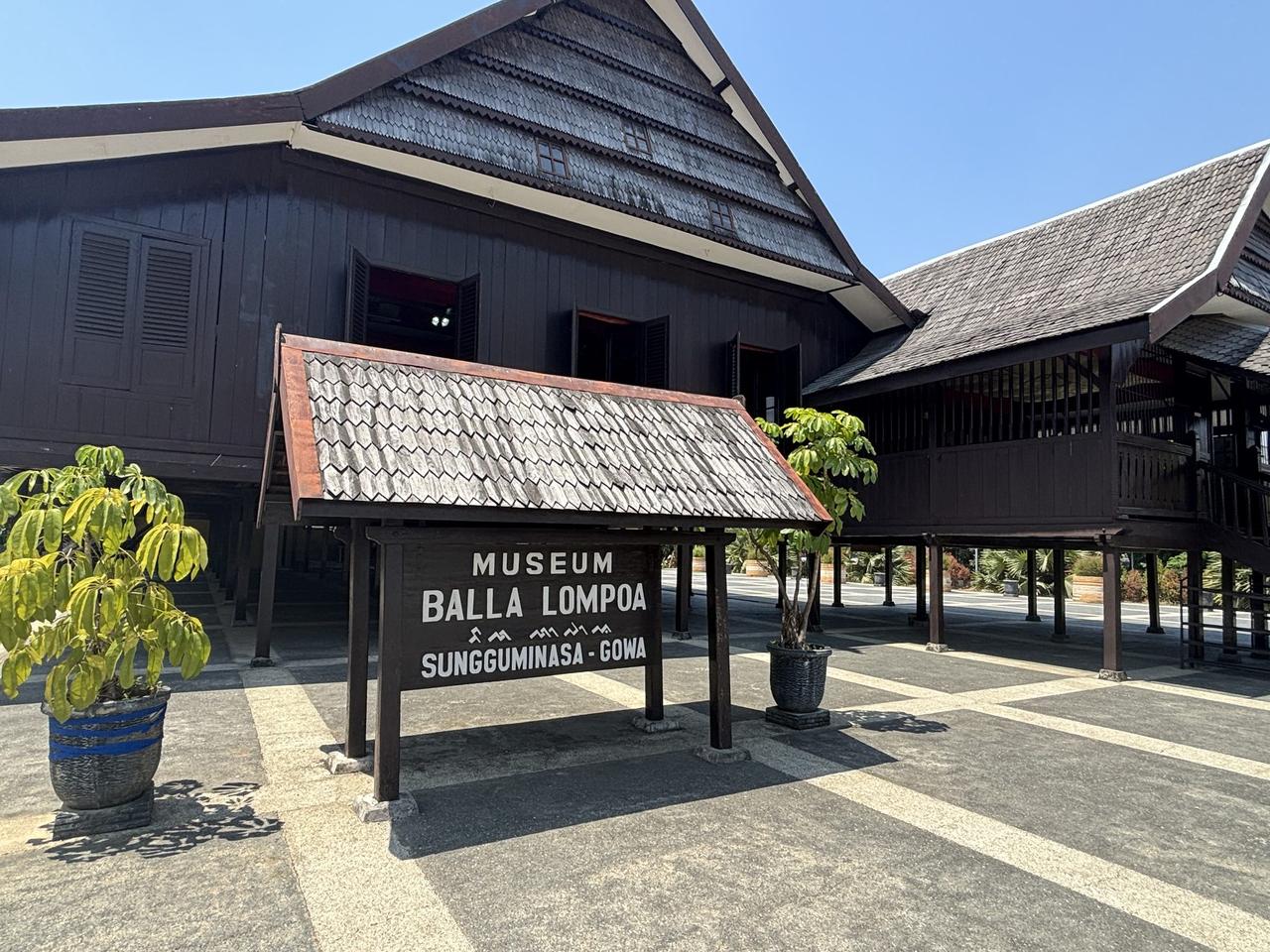
Two long wooden buildings face each other across the yard. The one on the left, I guessed, is kept for festivals and events — locked and still on the day I visited. The one on the right is where you go in.
The House Big Enough to Be Called a Palace
Balla Lompoa is Makassarese for something almost plain: big house. It's the people who lived in it that turned the phrase into something grander — a family the language treated as great enough that their big house simply became, over time, the palace. This one, still standing at Jalan Sultan Hasanuddin No. 44, went up in 1935 and 1936 under the thirty-fifth king of Gowa, I Mangi-mangi Daeng Matutu Karaeng Bontonompo, known by his royal title Sultan Muhammad Tahir Muhibuddin. He passed it to his successor, the thirty-sixth king, Andi Ijo, and it became — by circumstance more than design — the last Balla Lompoa the Gowa kingdom ever built. Others had carried the name before it. None of them survived.
Raised high on stilts the way a traditional Bugis-Makassar rumah panggung always is, it covers 7,663 square meters of ground, with 1,144 square meters of teak framing the house itself — a staircase over two meters tall just to reach the terrace, a few joints bolted rather than fitted, some brick worked quietly into the kitchen where tradition made room for convenience. Nothing about the building apologizes for either choice.
From Throne Room to Ticket Booth
The kingdom didn't outlast the house that was meant to be its last home for long. When Indonesia's administrative system folded the old self-governing swapraja territories into ordinary swatantra provinces, the king's role went with it — a monarch converted, on paper, into a regional regent. Balla Lompoa opened as a museum on December 11, 1973, the palace becoming, almost overnight, the kind of place where you pay 5,000 rupiah and take your shoes off at the door.
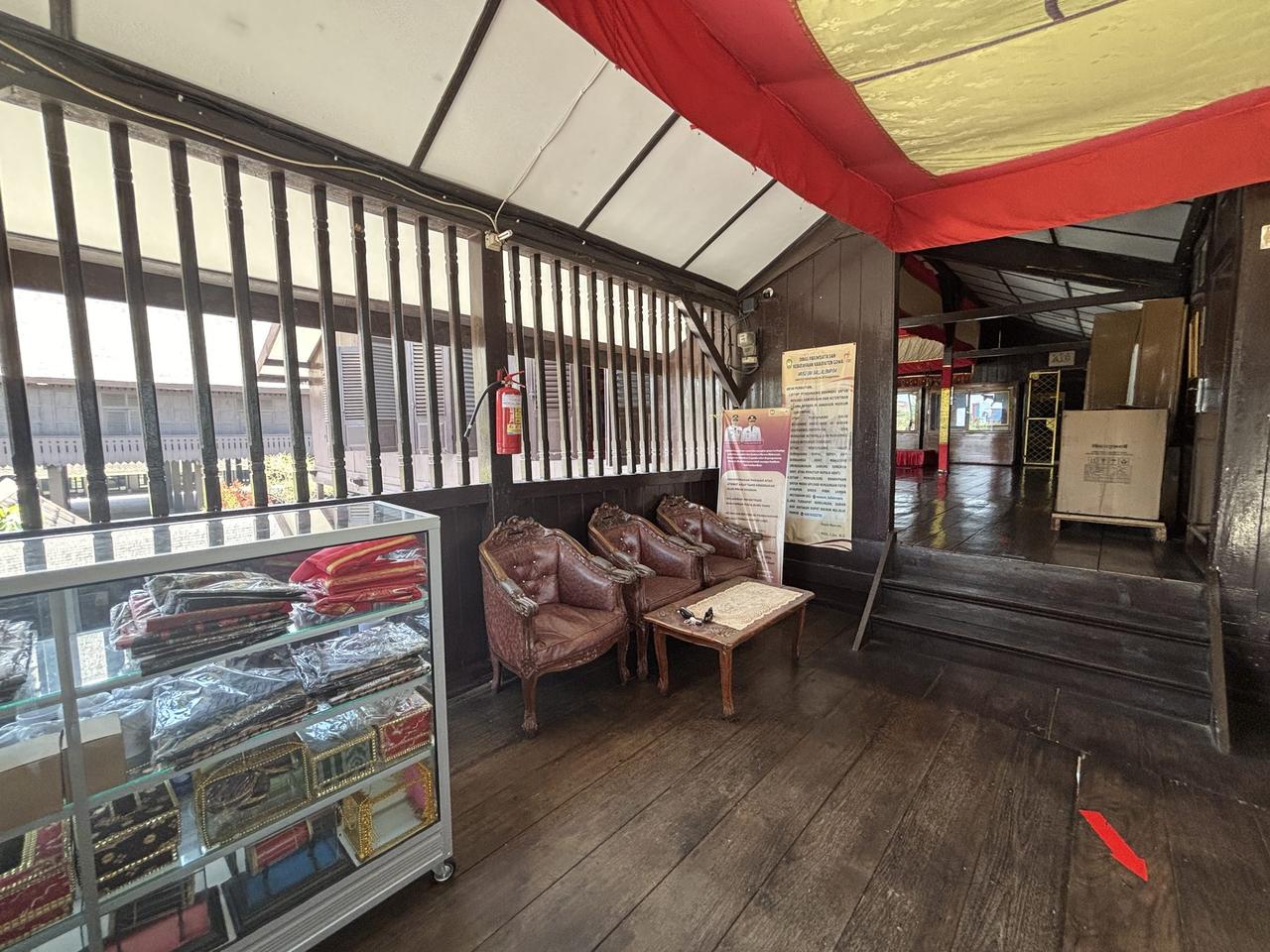
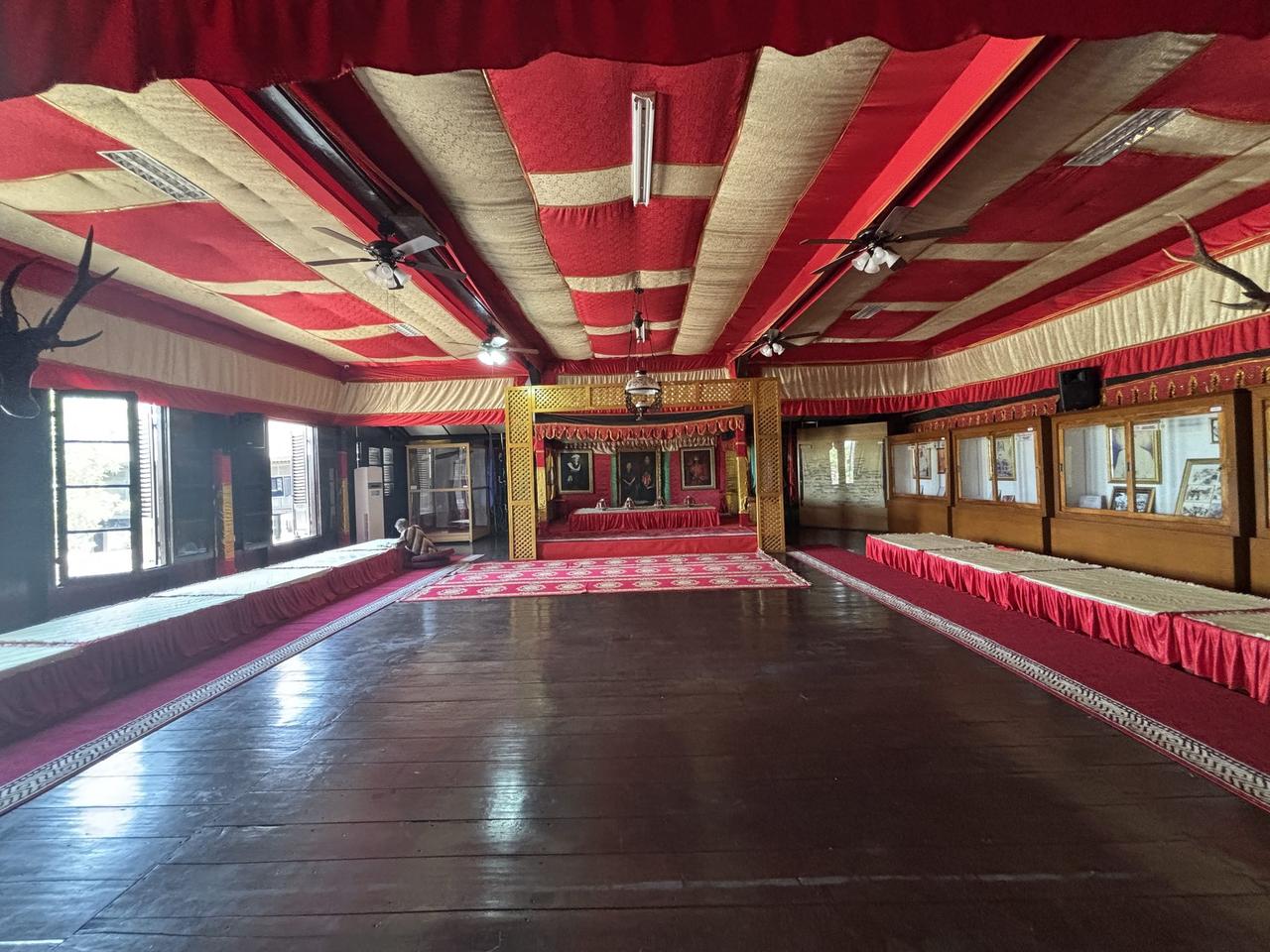
Inside, the first room does nothing to undersell the past it's protecting — deep red walls, gold trim, the whole space built around a raised, canopied dais where a king once would have sat, framed portraits watching from either side. It doesn't take long to walk through. It also doesn't feel like it should.
What's Kept Behind Glass
Counts vary depending on who's doing the counting — somewhere around 140 core artifacts, or as many as 465 once replicas and supporting pieces are folded in — but the collection is built less around volume than around a handful of objects doing a lot of work. Chief among them is the Saloko, a crown of solid gold said to have belonged to Karaeng Tumanurung Bainea, the first king of Gowa, sometime in the early fourteenth century — 1,766 grams of it, kept in a room the public never enters. What's on display is a replica. The real crown comes out exactly once a year, during Accera Kalompoang, a ceremony built entirely around cleaning the kingdom's heirlooms.
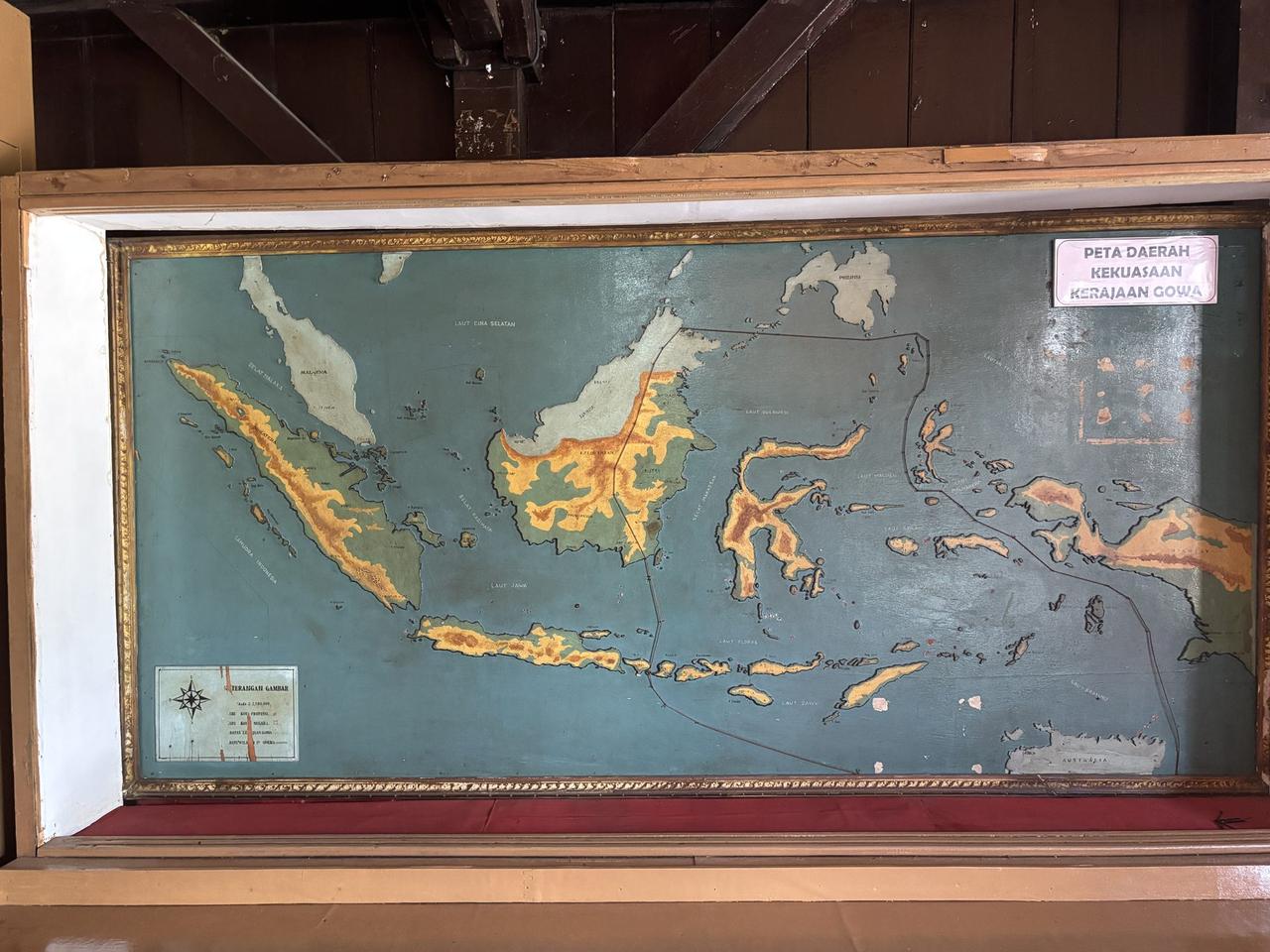
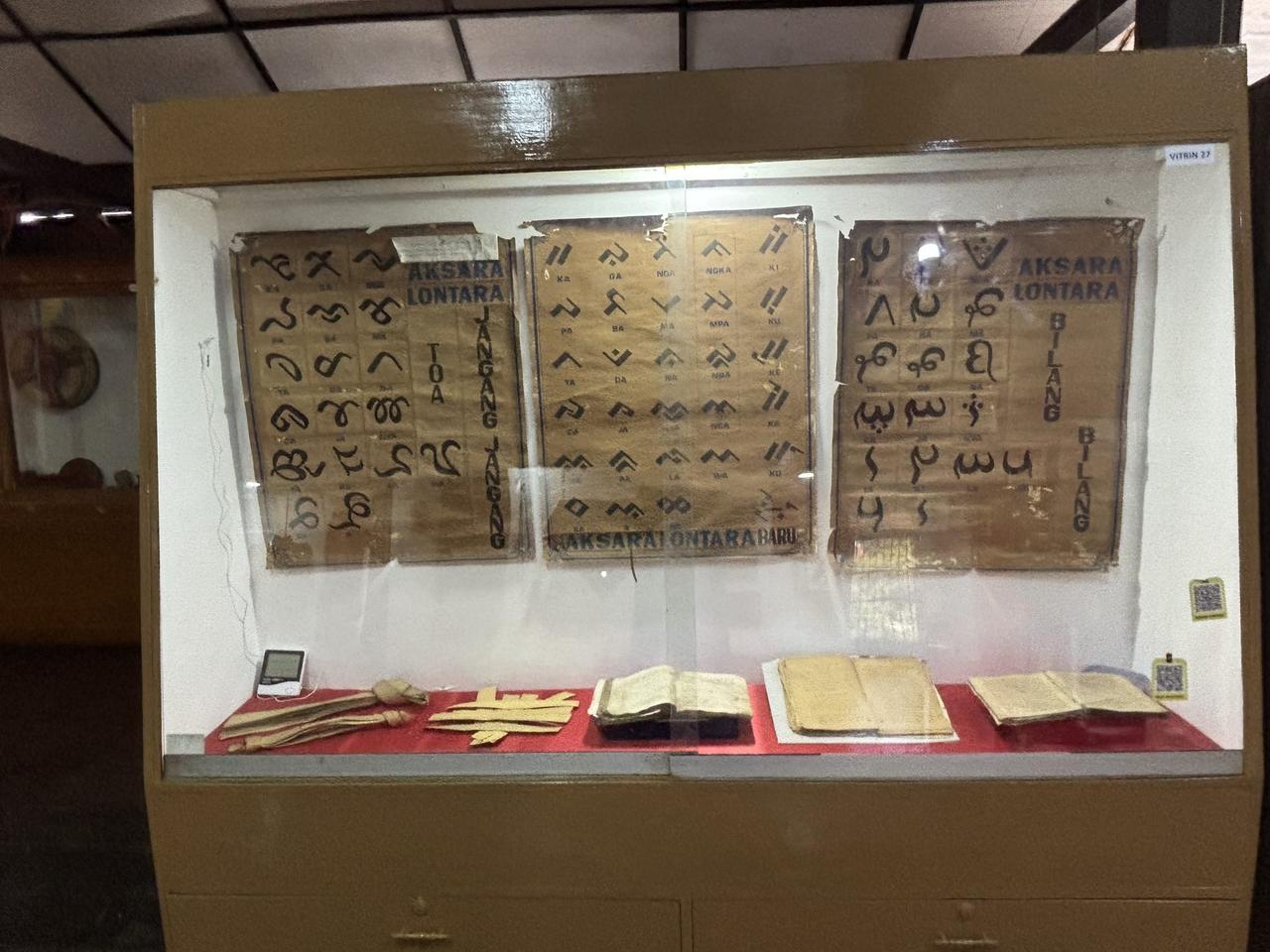
The rest of the room earns its glass cases honestly. Lasippo, an iron parang nicknamed Laupu Tuli, is spoken of as carrying its own spiritual force. The Ponto Janga-Jangaya bracelets curl into dragons — one head on the Maripuang, two on the Tanipatuang. A handwritten Quran from the sixteenth century sits not far from old Lontara manuscripts, the script that once carried South Sulawesi's own history in its own hand, long before anyone here needed anyone else's alphabet.
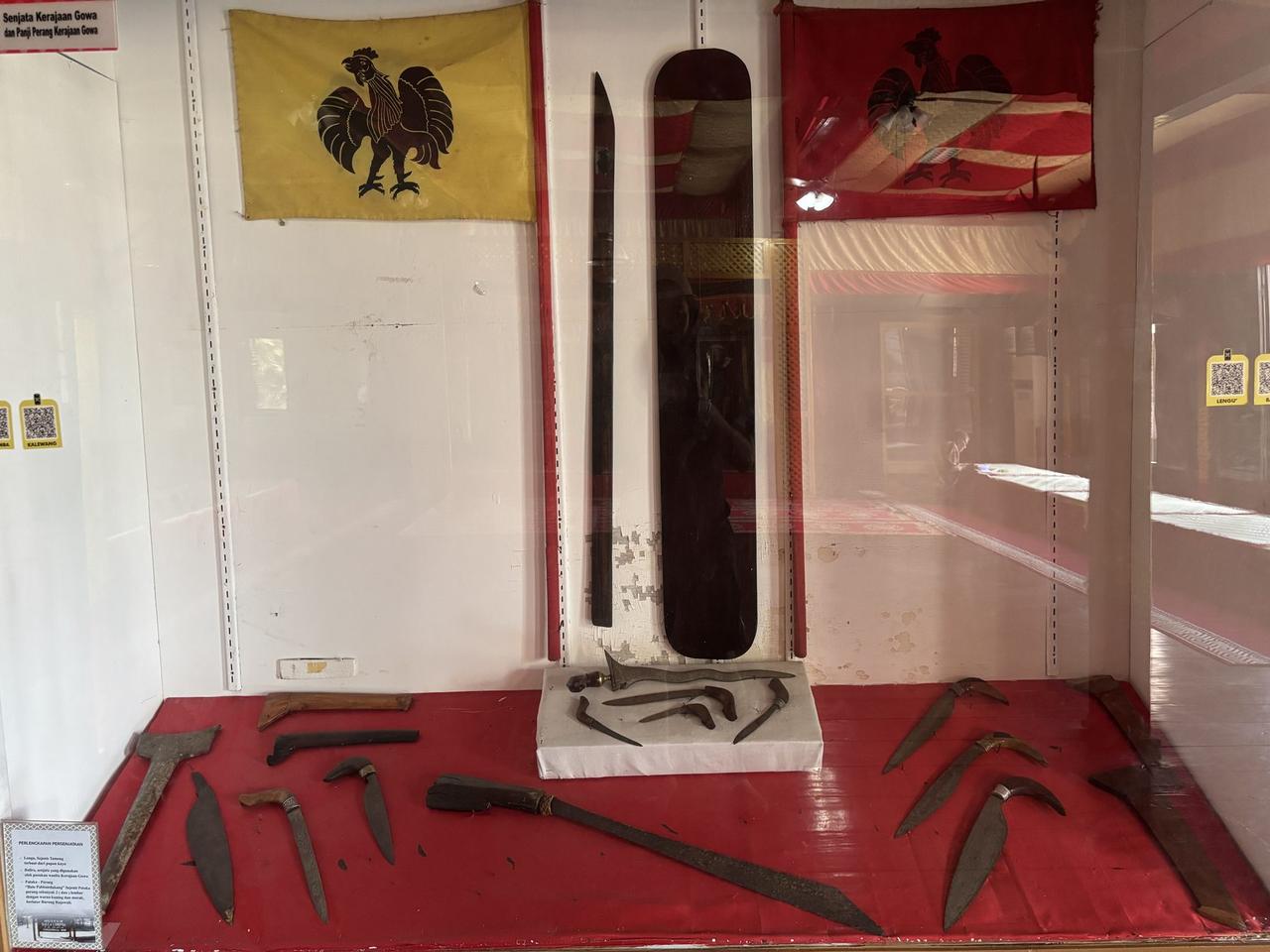
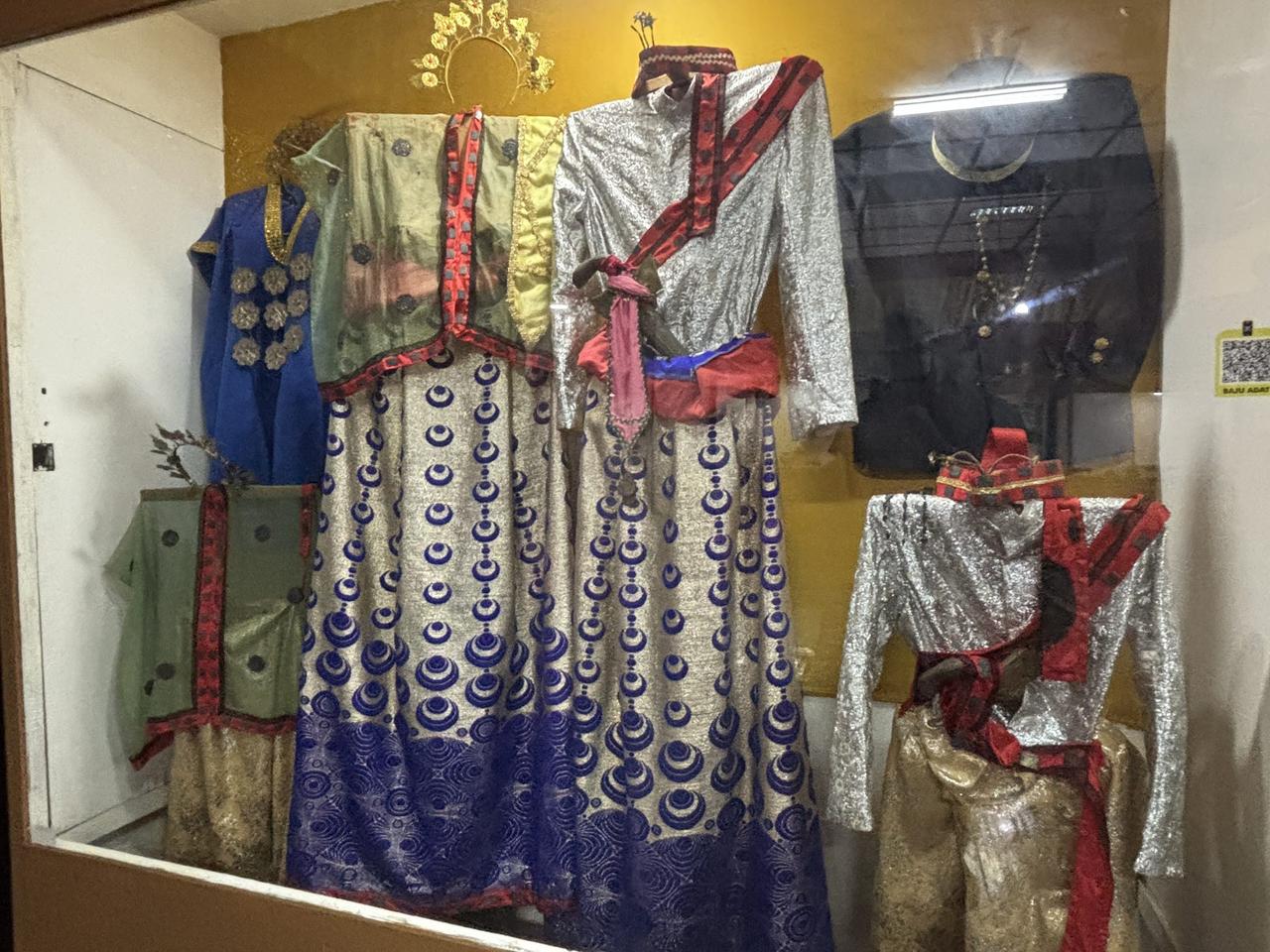
Weapons, court dress, silver and bronze coinage, traditional instruments, portraits of king after king going back further than anyone visiting could reasonably trace — one historian reads the whole collection as a kind of self-portrait the kingdom left behind, built around five ideas at once: the sea, splendor, ethnic identity, religion, and the will to fight. Standing in the room, that reading isn't hard to believe.
Two Rooms, and a Row of Carriages Outside
There are only two rooms, really, and neither takes long. But almost no one else was there the day I went, so I let myself go slower than the museum probably expects, and a guide walked with me through most of it, filling in whatever the placards left out. It turned into more time well spent than the size of the place would suggest.
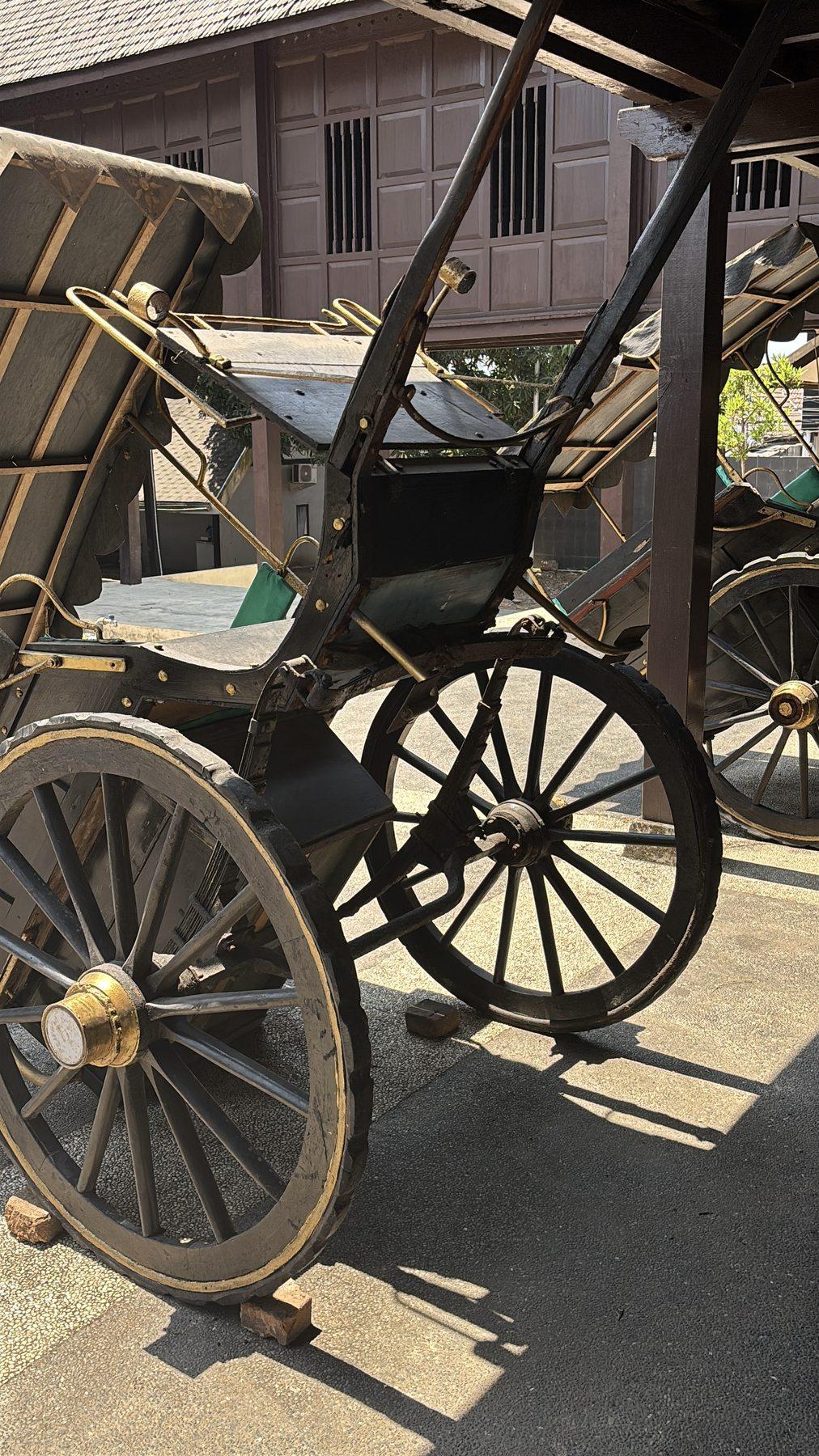
Outside again, past the ticket booth, a row of old wooden carriages sat parked in the shade — something close to Japan's old jinrikisha, pulled instead of pedaled, gold trim worn thin along the wheel rims. Nobody was offering rides. They were just sitting there, one more thing the kingdom had kept, the same as the crown nobody gets to see and the manuscripts almost no one can read anymore. Five thousand rupiah, and somehow all of that came with it.