Leaving the Guesthouse in Sisophon
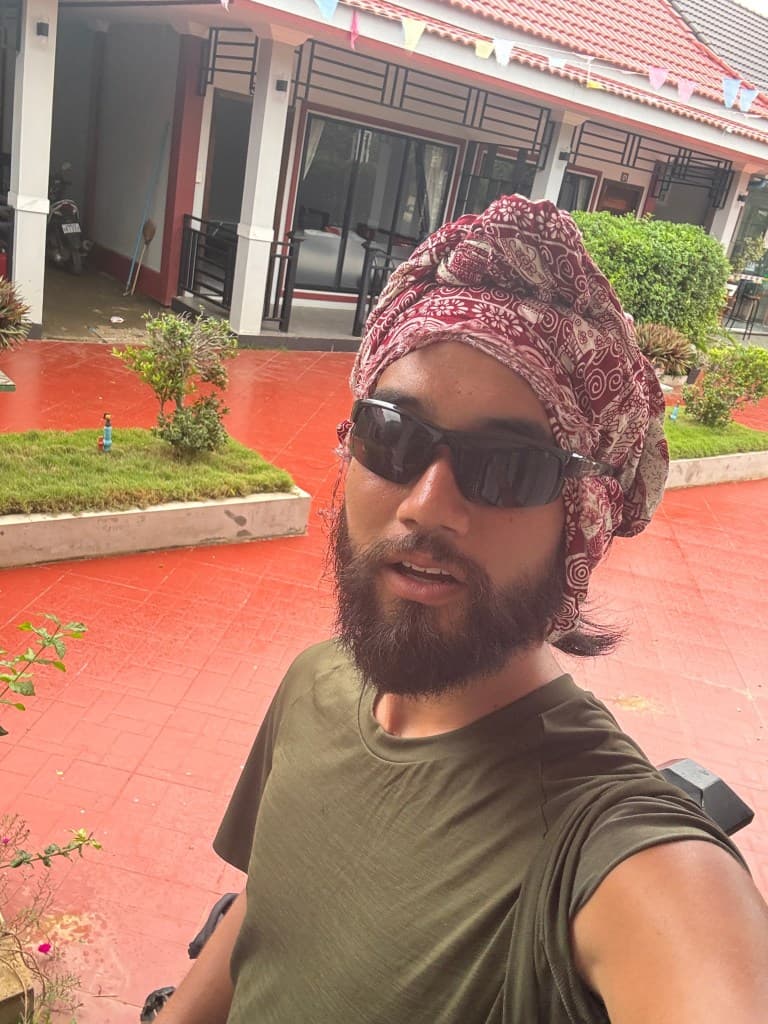
September 25. The day I would finally leave Cambodia and cross into Thailand. I woke up at six in the morning, determined to finish my writing and a bit of work before the road ahead.
My clothes, though, told a different story. The laundry I had washed refused to dry. The smell was unbearable. It had only been two days without proper washing, and already it felt overwhelming. I wondered what would happen if I ever went ten days without a wash. The thought alone was enough to make me restless.
I packed up my things, reminding myself of one of my travel mottos: “Leave it cleaner than when you arrived.” But this time, I failed. The bedding—I realized too late—had not received the same care. I promised myself I would do better at the next guesthouse.
With those thoughts, I set out toward Poipet, the border town that stood between Cambodia and Thailand.
The Rough Road to Poipet
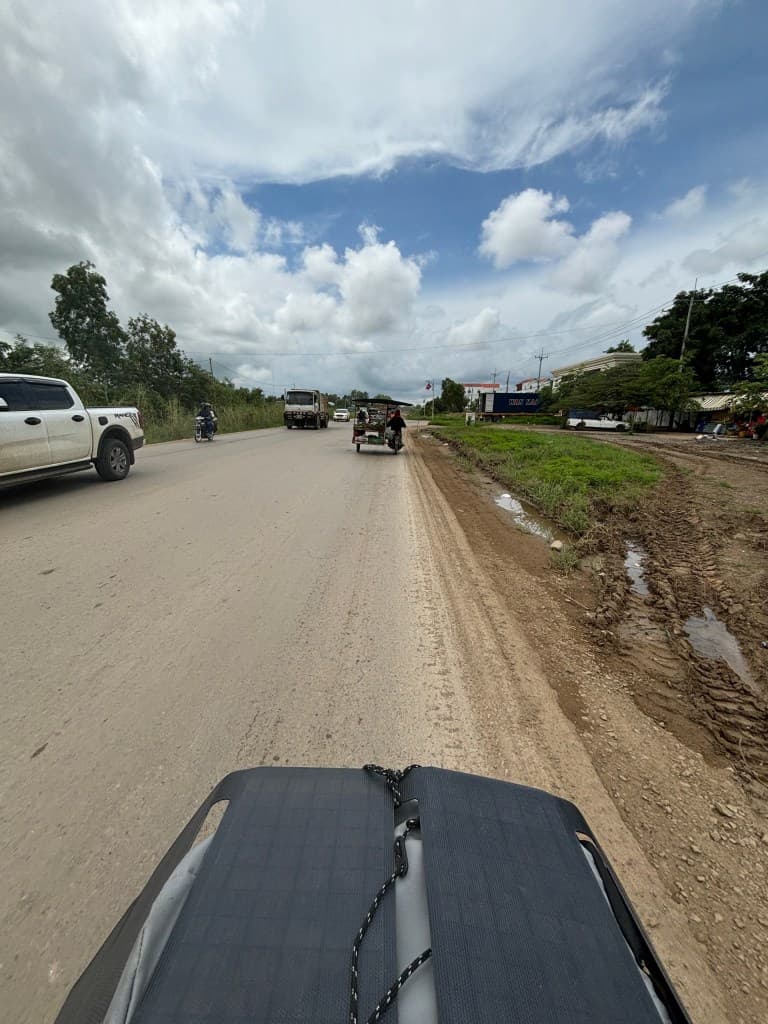
The road from Sisophon to Poipet was harsh, narrow, and under construction. Heavy machines worked to widen it, but for now, the lanes were tight, forcing cars and bicycles far too close for comfort.
At one point, I pulled into a small town just before Poipet to rest. My wallet held only 6,000 riel—about 212 yen. Anxiety crept in: would that be enough for food? Luckily, I found a bowl of noodles for 5,000 riel.
That last Cambodian meal felt like a gift. The broth reminded me of Ichiran ramen in Japan—rich, flavorful, comforting. It was, without doubt, one of the best bowls of noodles I had eaten in Cambodia.
But the road still had more challenges. A patch of deep mud caught my wheels, covering every tire in heavy layers of dirt. My bike felt two kilograms heavier. After scraping off the mud for half an hour, I pushed forward again, but the road remained narrow and crowded. The closer I got to the border, the faster the cars sped past. For any cyclist planning this route: be careful.
At the Cambodian Border
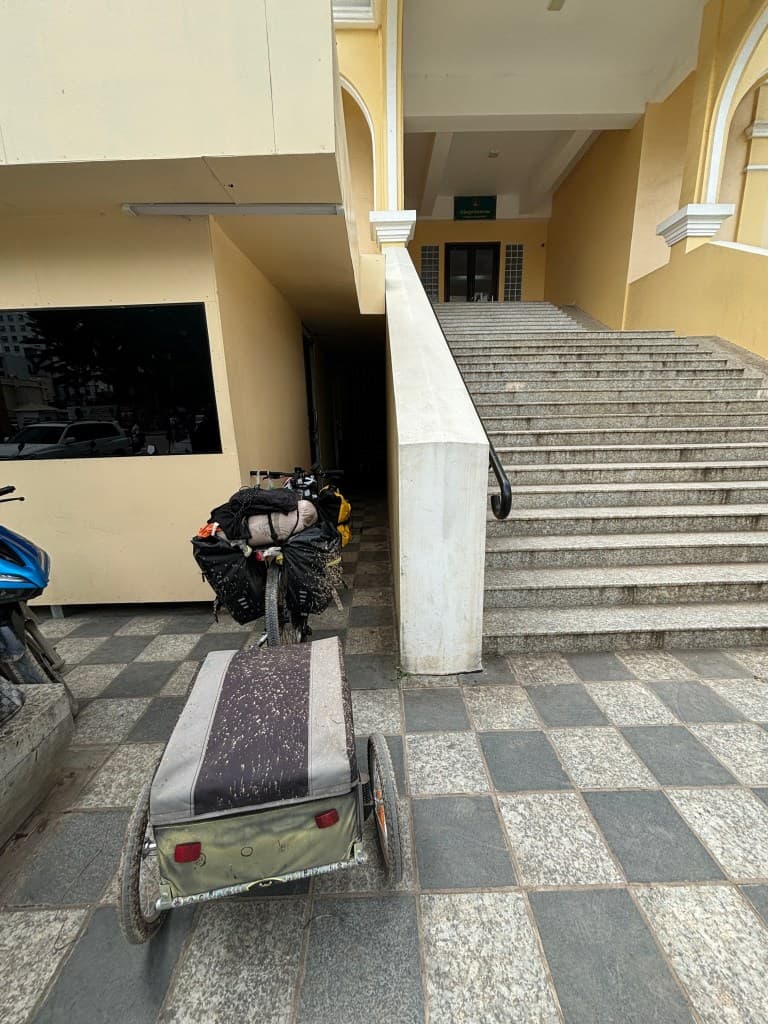
Finally, the red-roofed immigration buildings came into view. Before entering, I exchanged my money. Two exchange booths stood side by side, but only the one on the left accepted Japanese yen for Thai baht.
When I parked my bicycle near the exit building, a Cambodian man scoffed at me. He looked at my mud-splattered bicycle and said, “No one will steal from such a dirty bike.” His words stung. It wasn’t just the insult—it was the dismissal of everything my bike meant to me. Still, I swallowed the sadness and moved forward.
Then came the real challenge. During the exit procedure, an officer demanded 200 baht—around five dollars. It was, quite clearly, a bribe.
I stood firm. “Show me the document where this rule is written. If it exists, I will pay.” My voice was calm, but my heart was pounding. They looked at me, annoyed, then waved me through without payment.
I had read on Google Maps reviews that bribery at the Poipet border was common, but I never expected it to happen to me. Now I knew. And I hope anyone else who passes through will stand their ground with the same firmness.
Entering Thailand: A Breath of Relief
The moment I crossed into Thailand, the roads widened. Cars gave space. Breathing became easier.
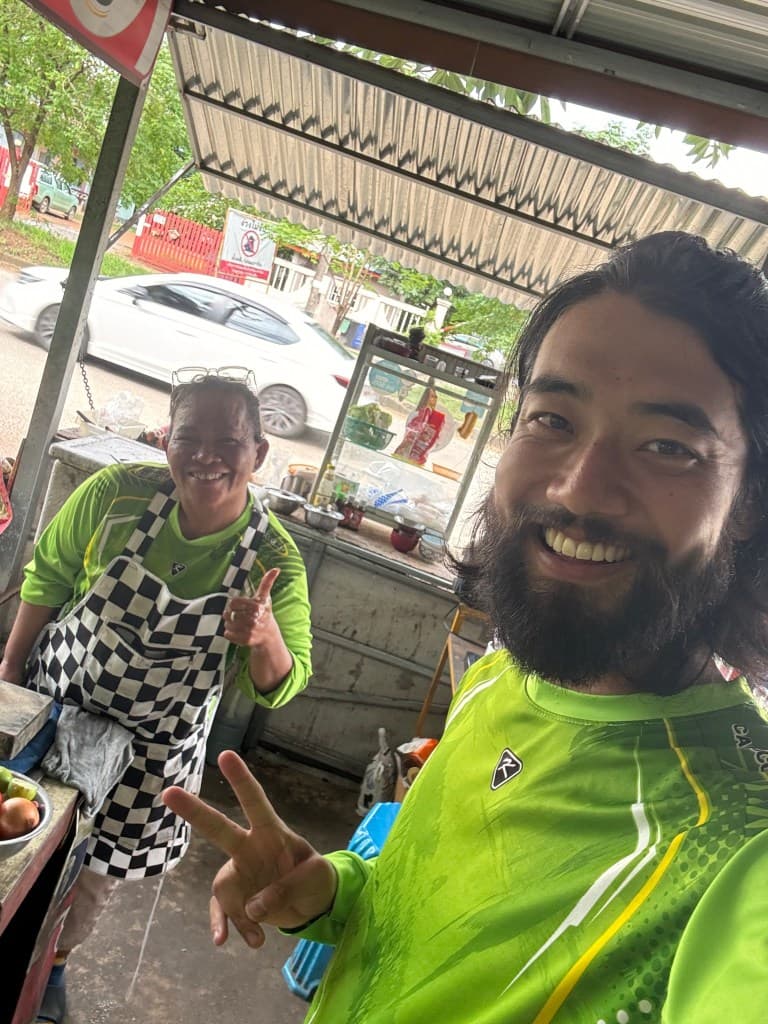
Hungry again, I stopped at a roadside shop. I had passed a similar one earlier but chose this one instead—and it turned out to be the right decision.
The woman running the place was kind and lively. When I complimented her shirt, she laughed and handed me a matching one. A long-sleeve shirt, exactly what I needed. The timing felt perfect, as if the road itself had delivered it.
The food she served was equally wonderful—my first taste of Thai cooking on this journey. The warmth of her smile and the flavors of that meal felt like a welcome from the country itself.
Before I left, she even introduced me to a safe place to sleep.
Finding Shelter in Thailand
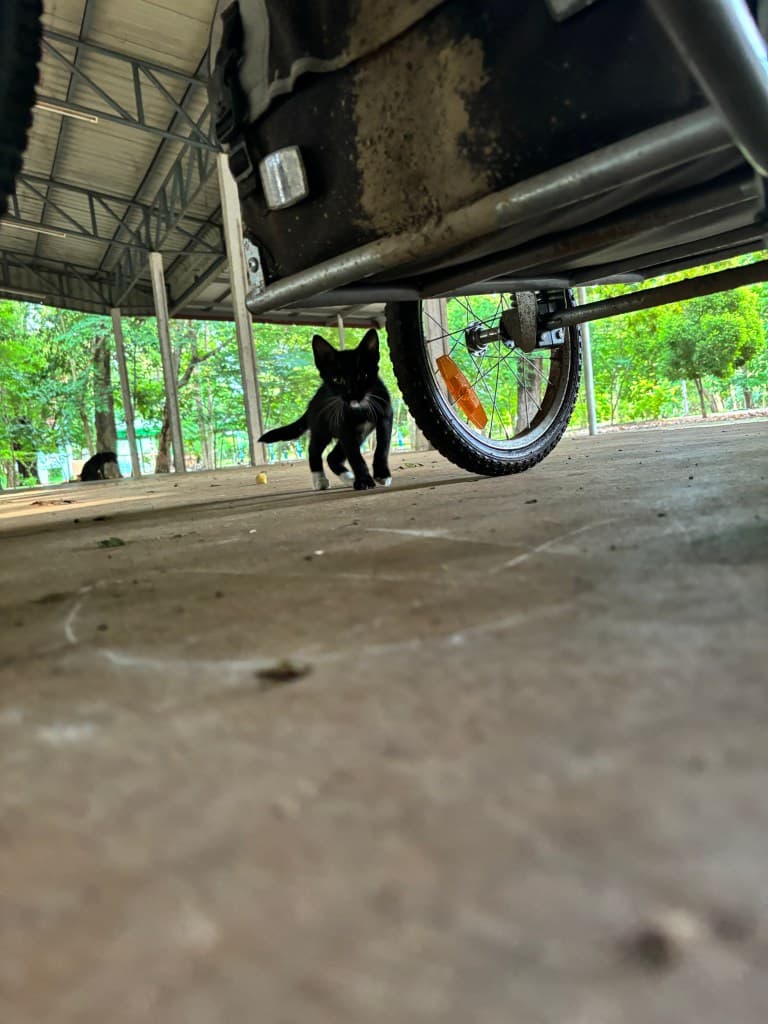
That night, I pitched myself under a roofed spot that kept the rain away. It wasn’t a hotel, but it was perfect. Secure, dry, and offered through the kindness of a stranger’s guidance.
As I lay down to rest, I thought about the day: the insult at the Cambodian border, the demand for money, the tension of the narrow roads—and then the relief of Thai hospitality. Every hardship had been followed by an act of kindness. That rhythm of travel—struggle and gratitude, difficulty and connection—was what gave meaning to the road.